
Wooden Decorative Objects That Add Warmth
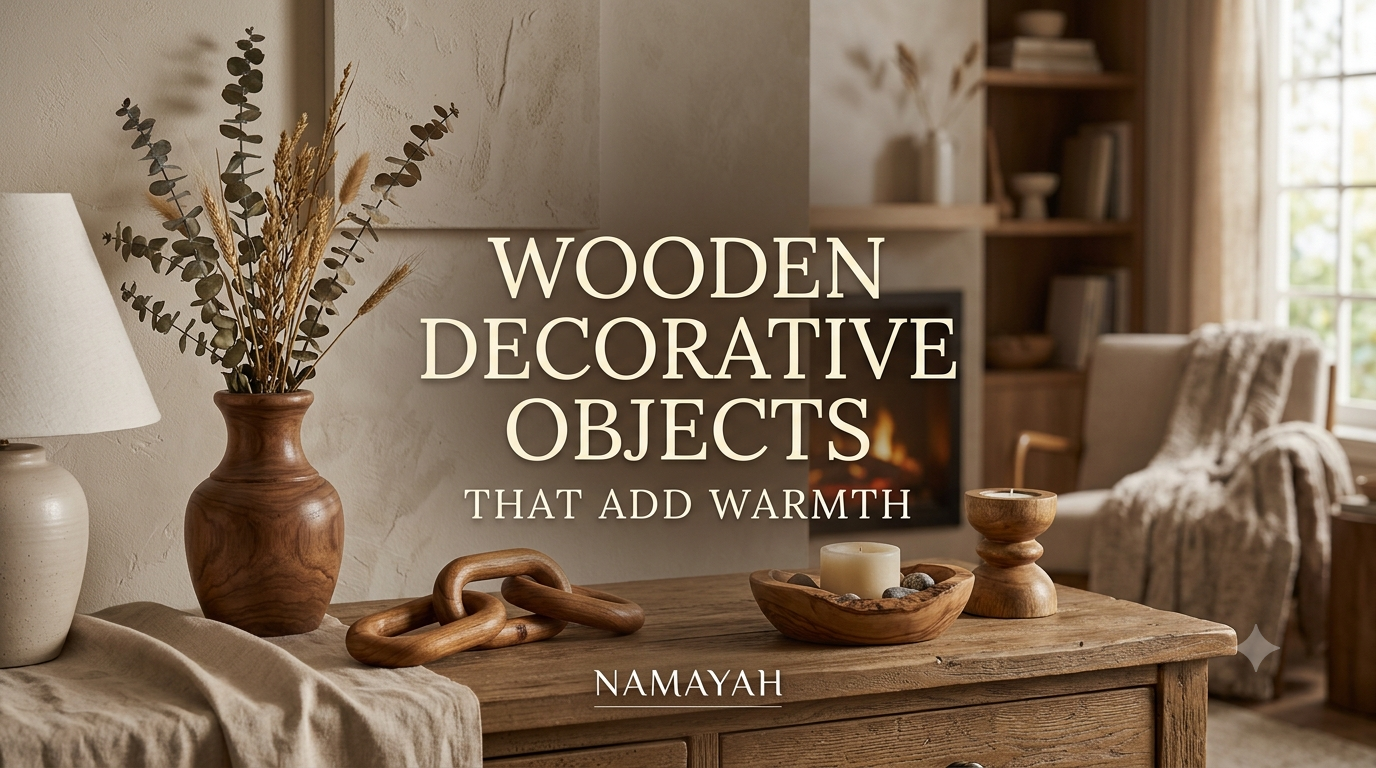
Wooden decorative objects can instantly make an interior feel warmer, softer, and more connected to nature. From a simple carved bowl on a coffee table to sculptural wooden pieces displayed on shelves, wood introduces natural grain, texture, and visual character that can complement both contemporary and traditional spaces.
The appeal of wooden décor also comes from its versatility. A smooth, streamlined object can work beautifully in a minimalist room, while distressed, carved, or irregular pieces can reinforce rustic, farmhouse, bohemian, or organic interiors.
If a room feels cold, overly polished, or unfinished, introducing a few carefully selected wooden decorative objects can provide the warmth and contrast it needs.
Why Wooden Decorative Objects Make a Room Feel Warmer
Wood has a naturally inviting visual quality. Its grain patterns, earthy tones, knots, and variations prevent interiors from feeling too uniform.
This becomes particularly useful in rooms dominated by harder materials. Glass, metal, stone, tile, and polished surfaces can create clean and sophisticated interiors, but too many of them together may make a space feel visually cold. Wooden accessories provide contrast without requiring major changes to furniture, flooring, or architectural finishes.
Wooden decorative objects can also introduce several design elements at once:
- Natural texture
- Earth-inspired colors
- Organic shapes
- Visual contrast
- Handcrafted character
- A connection between furniture and smaller accessories
You do not need to fill a room with wooden decorations to achieve the effect. One or two thoughtfully positioned pieces may be enough to change the visual balance.
Wooden Bowls for Natural Texture
Decorative wooden bowls are among the easiest wood accents to introduce into a room.
A shallow wooden bowl can become a focal point on a coffee table, dining table, kitchen island, console, or sideboard. Because bowls have simple shapes, they can add texture without making a surface appear overly decorated.
For a clean look, leave a sculptural wooden bowl empty and allow its shape and grain to become the decoration. Alternatively, use an appropriate bowl to display decorative objects such as pinecones, dried botanicals, or other suitable accessories.
The finish can significantly influence the overall effect. Smooth wood feels more refined and contemporary, while visible grain, irregular edges, or hand-carved details can create a more rustic or organic appearance.
Wooden Sculptures and Figurines
Wooden sculptures turn a natural material into a stronger artistic statement.
Abstract sculptures are especially versatile because they can introduce height, curves, or geometric forms without tying a room to a particular theme. Small sculptures can be placed on bookshelves and consoles, while larger pieces can serve as standalone accents.
Carved animals, human forms, architectural shapes, and botanical-inspired pieces can also add personality. The key is selecting objects that support the overall character of the room rather than filling every available surface.
In minimalist interiors, consider one distinctive wooden sculpture surrounded by negative space. In eclectic or bohemian rooms, carved wooden pieces can be layered with ceramics, books, baskets, plants, and textiles.
Decorative Wooden Trays
Wooden trays combine decoration with practical organization.
Place one on a coffee table to visually group several small accessories. A tray can hold objects such as a vase, decorative beads, coasters, or a candle while making the arrangement look intentional rather than scattered.
Wooden trays also work well on:
- Entryway consoles
- Bedroom dressers
- Dining tables
- Kitchen counters
- Bathroom vanities
- Ottomans and coffee tables
Choose a tray that complements the scale of the surface. An oversized tray can overwhelm a small table, while a tiny tray may look disconnected on a large console.
For contemporary interiors, simple shapes and clean edges often work best. For rustic or farmhouse spaces, reclaimed-looking finishes and visible grain can contribute additional character.
Wooden Candle Holders for a Cozy Atmosphere
Wooden candle holders combine the visual warmth of timber with the atmosphere created by candlelight.
Turned wood candlesticks can introduce traditional elegance, while chunky or sculptural holders work well in modern organic interiors. Arranging candle holders at different heights can also create movement across a mantel, dining table, or console.
When styling candles with wooden objects, safety should always take priority. Use stable holders designed for candles, keep flames away from combustible materials, and follow the candle manufacturer’s safety instructions.
If open flames are unsuitable for the space, appropriately designed flameless candles can provide another decorative option.
Wooden Vases and Decorative Vessels
A wooden vase or vessel provides an alternative to familiar glass and ceramic accessories.
These pieces are particularly effective when you want to introduce natural materials without adding another piece of furniture. A tall wooden vessel can create height on a console, while a rounded object can soften shelves filled with books and angular accessories.
Consider using decorative wooden vessels alone or, when suitable for their construction, with dried arrangements.
Not every wooden vessel is designed to hold water or fresh flowers. Check its intended use before adding liquids.
A sculptural vessel does not necessarily need anything inside it. Interesting grain, carving, proportion, or shape can make the object visually complete on its own.
Wooden Boxes and Decorative Containers
Good decoration does not have to be purely ornamental.
Decorative wooden boxes can add texture while providing concealed storage for small items. They are useful on coffee tables, desks, nightstands, dressers, and shelves.
A small box can help hide everyday objects that would otherwise create visual clutter. Larger decorative boxes can become part of a layered shelf or tabletop arrangement.
Look for details that fit your room, such as:
- Carved surfaces
- Inlay
- Natural grain
- Minimal hardware
- Rounded edges
- Distressed finishes
- Geometric patterns
Stacking two boxes of different sizes can also create height for another small decorative object.
Wooden Bookends for Warmer Shelves
Bookshelves often contain many straight lines and repeated shapes. Wooden bookends can soften this structure while remaining functional.
Simple geometric bookends suit contemporary rooms, while carved or sculptural designs can make a bookshelf more expressive.
Try combining books with a few carefully selected wooden objects instead of filling every shelf from edge to edge. Leaving open areas gives individual pieces more visual importance and prevents the display from becoming crowded.
A wooden bookend can also connect shelving to other wood elements in the room, such as a coffee table, dining table, chair frame, or picture frame.
Wooden Wall Objects and Carved Panels
Wooden decorative objects do not need to stay on tables and shelves.
Carved wall panels, wooden reliefs, sculptural wall objects, and decorative plaques can introduce warmth at eye level. They can be particularly effective on walls where a conventional framed print does not provide enough texture.
Large carved panels can work as focal points above consoles, beds, or sideboards, provided their size and installation are appropriate for the location.
Smaller wall objects can be arranged in a restrained collection. Repeating related shapes or finishes helps multiple pieces feel connected.
Always use mounting hardware suitable for the object’s weight and the wall construction.
How to Style Wooden Decorative Objects
Buying attractive objects is only part of the process. Their placement determines how effectively they contribute to the room.
A successful arrangement usually considers scale, texture, height, color, and negative space.
Mix Wood With Contrasting Materials
Wood becomes more noticeable when placed beside materials with different visual qualities.
Consider pairing wooden decorative objects with:
| Material | Effect When Paired With Wood |
|---|---|
| Glass | Light, clean contrast |
| Metal | Modern or industrial edge |
| Ceramic | Soft, handcrafted appearance |
| Stone | Earthy, substantial look |
| Linen | Relaxed and natural feeling |
| Wool | Added softness and texture |
| Greenery | Stronger connection to nature |
For example, a wooden bowl on a stone coffee table creates an immediate material contrast. A carved wooden sculpture beside a smooth ceramic vase can achieve a similar effect.
The objective is not to match every object but to create visual relationships between different textures.
Mix Wood Tones Carefully
Different wood tones can coexist in the same room.
Trying to make every wooden item exactly the same color can sometimes make an interior appear overly coordinated. Instead, use repetition to make different tones feel intentional.
For example, a room might contain a light wood table, a medium-toned decorative bowl, and darker wooden picture frames. Repeating one of those tones elsewhere can help connect the arrangement.
Pay attention to the overall undertones and visual balance rather than expecting every piece to be identical.
Create Small Decorative Groupings
Instead of spreading many small objects evenly around a room, create a few purposeful arrangements.
A console might include:
- A tall wooden vessel
- A stack of books
- A small ceramic object
A coffee table might use:
- A wooden tray
- A candle or decorative object
- A small plant or vase
Varying heights and materials gives the eye multiple points of interest.
Negative space is equally important. An empty section of a table or shelf allows the objects around it to stand out.
Choosing Wooden Objects for Your Interior Style
One reason wooden decorative objects are so versatile is that the material can take on dramatically different appearances depending on its shape and finish.
Modern interiors often benefit from smooth wooden objects with simple silhouettes, geometric forms, and restrained detailing.
Minimalist spaces can use one or two sculptural objects rather than collections of small accessories. Look for clean forms where the grain itself provides decoration.
Rustic interiors naturally accommodate textured, distressed, reclaimed-looking, or hand-carved wooden pieces.
Farmhouse interiors can incorporate wooden bowls, trays, candle holders, boxes, and other practical objects with traditional forms.
Bohemian interiors work well with carved pieces, irregular shapes, mixed wood tones, woven materials, greenery, and handcrafted-looking accessories.
Scandinavian-inspired spaces can benefit from lighter wood tones and uncomplicated forms combined with neutral textiles and simple ceramics.
Modern organic interiors can combine wood with stone, linen, textured ceramics, soft upholstery, and curved forms.
Rather than buying an object simply because it is made of wood, consider whether its shape, scale, color, and finish support the room’s broader design language.
What to Look for When Buying Wooden Decorative Objects
Before choosing a decorative wooden object, consider where it will be displayed.
Start with scale. A tiny ornament may disappear visually on a large dining table, while an oversized sculpture may make a small shelf feel crowded.
Next, examine the finish. Decide whether you want a polished, refined appearance or something more tactile and natural.
Craftsmanship matters as well. Look at joins, edges, carving, stability, and surface finishing where applicable. If an item is intended to perform a practical function—such as holding food, water, or candles—confirm that it is designed and finished for that specific use.
Finally, think about longevity. Decorative trends change, so pieces with shapes and materials you genuinely enjoy may be easier to incorporate as your interior evolves.
FAQs About Wooden Decorative Objects
What wooden decorative objects make a home feel warmer?
Wooden bowls, trays, sculptures, candle holders, vases, boxes, bookends, frames, and carved wall objects can all introduce natural texture and warmer visual tones. The best choice depends on the room’s style and the size of the surface being decorated.
Can you mix different types of wood in one room?
Yes. Different wood tones can be mixed successfully when the overall arrangement feels intentional. Repeating similar tones in multiple areas and balancing light, medium, and dark finishes can help create a connected look.
Where should I place wooden decorative objects?
Coffee tables, consoles, bookshelves, mantels, dining tables, kitchen islands, dressers, and wall displays are all possible locations. Choose the placement according to the object’s size, function, and visual importance.
What colors look good with wooden décor?
Wood can complement a wide range of colors. Neutral shades such as cream, beige, white, gray, and taupe can create a calm backdrop, while greens, blues, and other earth-inspired shades can strengthen a nature-influenced palette. The wood’s individual tone should also guide the choice.
How do I decorate with wood without making my home look rustic?
Choose wooden objects with smooth surfaces, streamlined shapes, minimal ornamentation, and contemporary proportions. Pair them with materials such as glass, metal, stone, or simple ceramics to create a cleaner, more modern aesthetic.
Are wooden decorative objects suitable for minimalist interiors?
Yes. Minimalist interiors can use wooden objects to introduce warmth without adding excessive visual clutter. A single sculptural bowl, vase, or abstract wooden object can provide texture while maintaining a restrained aesthetic.
Should wooden decorations match wooden furniture?
Not necessarily. Decorative pieces can coordinate with furniture without matching it exactly. Similar undertones, repeated finishes, or intentional contrast can create a more layered interior than using one identical wood finish throughout the room.
How many wooden accessories should I use in one room?
There is no universal number. Consider the room’s size, existing furniture, other materials, and available surfaces. A few well-placed pieces are often more effective than filling every table and shelf with wooden accessories.
How do I care for decorative wooden objects?
Follow the maker’s care instructions because finishes and wood types vary. In general, keep decorative wood away from unnecessary moisture and excessive heat, remove dust gently, and use only cleaning or conditioning products appropriate for the specific finish.
Bring Natural Warmth Into Your Home
Wooden decorative objects offer a simple way to introduce warmth, texture, and natural character without redesigning an entire room.
Start small. A wooden bowl on a coffee table, a sculptural object on a bookshelf, or a decorative tray on a console may be all that is needed to soften a space.
The most successful approach is selective rather than excessive. Choose wooden decorative objects whose shape, finish, scale, and craftsmanship complement your existing interior. Then combine them with contrasting materials such as ceramics, stone, glass, textiles, and greenery.
Whether your home is modern, minimalist, rustic, Scandinavian-inspired, bohemian, or somewhere in between, thoughtfully chosen wooden décor can help create an interior that feels layered, welcoming, and naturally warm.