
Why Sustainable Gifts Are Becoming More Popular
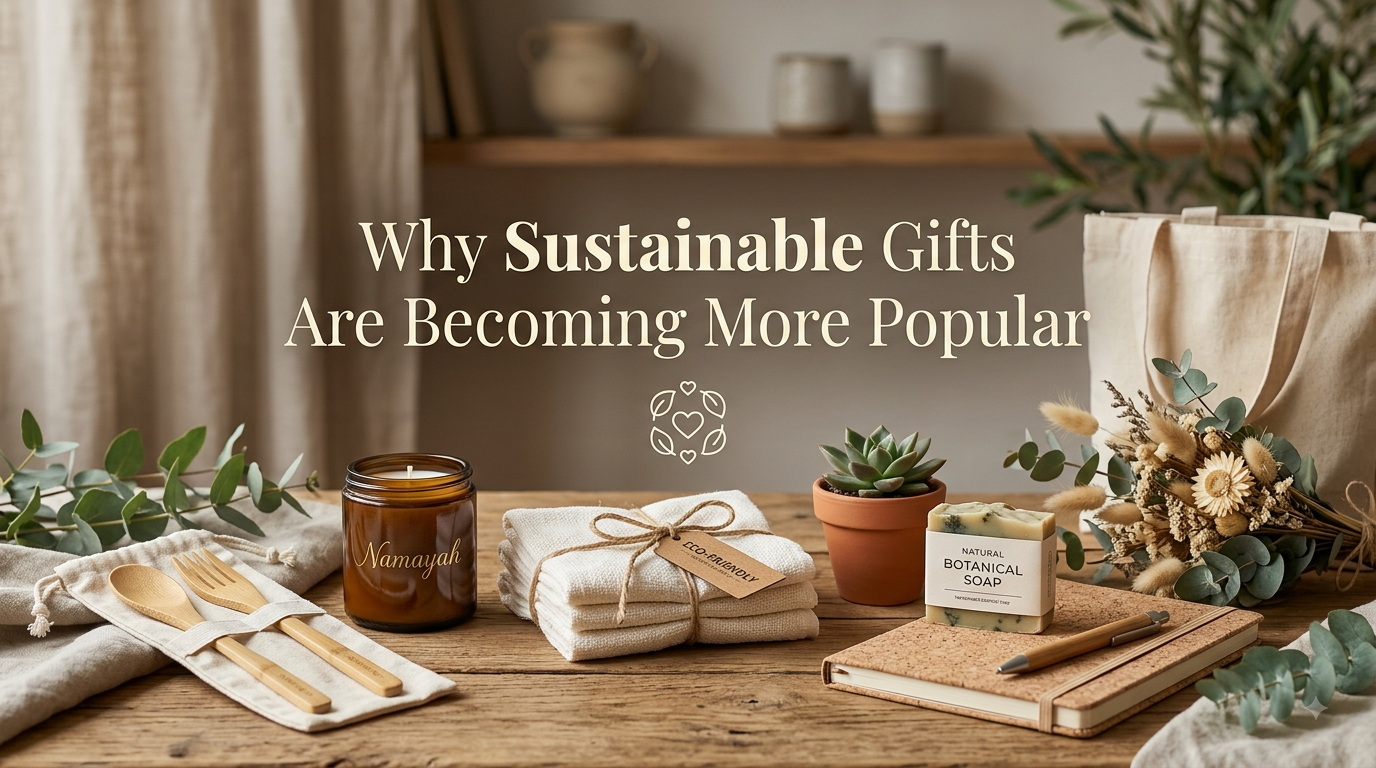
Giving a gift is traditionally about showing appreciation, celebrating an occasion, or strengthening a relationship. But increasingly, people are thinking about what happens after the gift is opened.
That shift is helping sustainable gifts become more popular. Instead of choosing products simply because they look attractive or trendy, shoppers are increasingly considering durability, usefulness, materials, packaging, production practices, and waste.
Sustainable gifting does not mean every present must be made from recycled materials or carry an environmental label. It can also mean choosing something useful, buying secondhand, supporting a responsible local business, giving an experience, or avoiding unnecessary packaging.
The broader movement reflects a growing interest in more responsible consumption. The United Nations Environment Programme describes sustainable consumption as meeting needs while minimizing the use of natural resources and the waste and pollution associated with products throughout their life cycles.
What Are Sustainable Gifts?
Sustainable gifts are presents selected with environmental, social, and long-term usefulness in mind. They may be made from recycled, renewable, reused, or responsibly sourced materials, designed to last longer, or produced using more responsible manufacturing and labor practices.
Examples can include:
- Reusable everyday products
- Recycled or upcycled accessories
- Secondhand or vintage items
- Locally made products
- Durable clothing and home goods
- Plant-based or responsibly sourced products
- Repairable products
- Plantable gifts
- Experiences instead of physical products
- Donations made in someone’s name
- Handmade gifts using existing materials
However, the word “sustainable” should not automatically be accepted as proof that a product has a lower environmental impact. UNEP notes that consumers need reliable, relevant, transparent, and verifiable sustainability information because vague or self-declared environmental claims can make responsible purchasing difficult.
Why Are Sustainable Gifts Becoming More Popular?
Several factors are influencing the growth of conscious gifting.
1. Growing Environmental Awareness
One of the biggest reasons people are reconsidering traditional gifts is greater awareness of consumption and waste.
Every product requires resources to make, package, transport, use, and eventually dispose of. Some products have short useful lives and can quickly become unwanted possessions.
UNEP recommends that consumers think before buying, prioritize products that last longer, and consider sharing, repairing, and other ways to reduce unnecessary consumption.
This idea fits naturally with gifting. Instead of buying something simply because an occasion requires a present, shoppers can ask:
Will the recipient actually use this?
A durable product that someone uses for years may be more meaningful than several inexpensive items that quickly become clutter.
2. People Want More Meaningful Gifts
Sustainable gifting is also connected to a broader desire for gifts that feel personal.
A generic product can be easy to purchase, but a carefully selected present can communicate more thought. Choosing a handmade product from a local maker, a vintage item connected to someone’s interests, or an experience that two people can share can make the gift feel more personal.
This is one reason sustainability and thoughtful gifting often overlap.
A sustainable gift does not have to be expensive. Its value can come from its usefulness, story, craftsmanship, longevity, or connection to the recipient.
3. Less Waste and More Reuse
Waste is another important consideration.
Traditional gifting can involve more than the product itself. There may be boxes, plastic inserts, ribbons, disposable bags, shipping materials, and wrapping paper.
Choosing products with minimal or reusable packaging can help reduce unnecessary material use.
Secondhand and upcycled gifts take this idea further. Rather than requiring new raw materials for every product, shoppers can give existing items another useful life.
This does not mean every secondhand product is automatically the most sustainable choice. Condition, durability, transportation, and whether the recipient actually wants the item all matter.
The principle is simple: the most sustainable gift is often one that is genuinely wanted and used.
4. Support for Ethical and Responsible Businesses
Sustainable gifts can also allow shoppers to support businesses whose production practices align with their values.
Some consumers look for products made with responsibly sourced materials, fair labor practices, local production, transparent supply chains, or credible environmental certifications.
This is particularly important because sustainability claims can be difficult to evaluate.
UNEP recommends credible sustainability information supported by science and transparent approaches such as recognized ecolabels, standards, and life-cycle information.
Rather than choosing a product because its packaging says “green” or “eco-friendly,” shoppers can look for specific information about:
- Where the product was made
- What materials were used
- How long it is designed to last
- Whether materials are recycled or renewable
- Whether the product can be repaired
- How it should be disposed of
- Whether sustainability claims are independently verified
5. Experiences Are Replacing Some Physical Gifts
Not every gift needs to be an object.
Experiences can include:
- Concert or theater tickets
- Cooking classes
- Museum memberships
- Local activities
- Workshops
- Travel experiences
- Fitness or wellness classes
- Restaurant experiences
- Outdoor activities
Experiences can be particularly appealing when someone already has enough physical possessions.
They also shift the focus of gifting from owning something to doing something.
However, experiences are not automatically impact-free. Travel, transportation, food, energy use, and other factors can still create environmental impacts. The more useful question is whether the experience is meaningful and appropriate rather than assuming every non-material gift is inherently sustainable.
What Makes a Gift Truly Sustainable?
There is no single feature that automatically makes a gift sustainable.
A better approach is to consider the product’s overall life cycle.
Ask these questions before buying:
Is it durable?
A product designed to last can reduce the need for frequent replacement.
Is it useful?
A gift that is regularly used is less likely to become waste.
What is it made from?
Look for clear information about materials rather than relying only on broad environmental language.
Can it be repaired or reused?
Repairability and reuse can extend a product’s useful life.
Is the packaging necessary?
Minimal, recyclable, reusable, or compostable packaging may be preferable where appropriate.
Where did it come from?
Local production can sometimes reduce transportation requirements, although the full environmental impact depends on the product and supply chain.
Are environmental claims supported?
Look for credible, specific evidence rather than vague claims.
This approach is more useful than simply searching for a “green” label.
Popular Types of Sustainable Gifts
There are many ways to make gifting more environmentally conscious.
Reusable Everyday Gifts
Reusable bottles, food containers, bags, coffee cups, and other practical items can replace disposable alternatives when the recipient genuinely needs them.
Recycled and Upcycled Gifts
Products made from existing materials can give discarded or surplus materials another purpose.
Upcycled products can also have a distinctive story, making them appealing for recipients who value originality.
Secondhand Gifts
Secondhand books, vintage clothing, furniture, collectibles, jewelry, and other items can be thoughtful presents.
For the right recipient, a vintage or pre-owned item may be more interesting than a newly manufactured equivalent.
Handmade Gifts
Handmade products can offer a personal alternative to mass-produced goods. They may also provide an opportunity to support independent makers and small businesses.
However, handmade does not automatically mean sustainable. Materials, production methods, transportation, and durability still matter.
Plant-Based and Garden Gifts
Plants, seeds, gardening supplies, and related products can make attractive gifts for people interested in nature.
A living plant can also become something the recipient cares for rather than a disposable decorative item.
Sustainable Home Products
Durable kitchenware, reusable textiles, repairable household products, and responsibly sourced home accessories can combine practicality with conscious consumption.
Experience Gifts
Giving an activity instead of another physical possession can be an effective option for someone who prefers memories over objects.
Sustainable Gifting Is Not Always About Buying More
One of the most important points about sustainable gifting is that buying an eco-friendly product is not automatically sustainable consumption.
If someone does not need a product, purchasing it simply because it has an environmental claim can still contribute to unnecessary consumption.
Sometimes the better choice is to give:
- A homemade meal
- A handwritten letter
- A shared activity
- A repaired or restored item
- A secondhand item
- A donation
- A subscription to something the recipient already uses
- Help with a task
- Quality time together
This reflects a broader principle of sustainable lifestyles: consumption decisions should consider whether purchases actually improve people’s lives while reducing unnecessary resource use and waste.
How to Choose Better Sustainable Gifts
Step 1: Start With the Recipient
The most important question is not “What is the most eco-friendly product?”
It is:
“What will this person genuinely value and use?”
A durable product that matches someone’s lifestyle is usually a better choice than an environmentally marketed item that sits unused.
Step 2: Prioritize Quality and Longevity
Look for products designed for repeated use.
Consider construction, materials, warranties, repair options, and expected lifespan where that information is available.
Step 3: Check the Materials
Read the product description carefully.
Instead of accepting broad claims, look for specific information about recycled content, material sourcing, manufacturing, and certifications.
Step 4: Reduce Packaging
Choose products that do not require excessive packaging.
When wrapping the gift, reusable fabric, a reusable bag, or paper that can be recycled may be preferable to elaborate disposable packaging, depending on local recycling systems.
Step 5: Consider Secondhand Options
Do not assume that a gift must be brand new.
A carefully selected vintage book, collectible, piece of furniture, or piece of clothing can be both personal and useful.
Step 6: Consider the Whole Life Cycle
Think beyond the moment of purchase.
A product’s environmental impact can involve raw materials, manufacturing, transportation, use, maintenance, and disposal. UNEP emphasizes life-cycle approaches when communicating product sustainability information.
Common Sustainable Gifting Mistakes to Avoid
Choosing a Gift Only Because It Says “Eco-Friendly”
A marketing claim is not the same as verified sustainability information.
Look for specific evidence whenever possible.
Buying Something the Recipient Does Not Need
An unnecessary “sustainable” product can still become clutter.
Recipient relevance should come first.
Assuming Natural Materials Are Always Better
Natural materials can have environmental benefits in some situations, but their impact depends on sourcing, processing, transportation, durability, and end-of-life options.
Overlooking Packaging
A product may use sustainable materials while arriving in excessive layers of disposable packaging.
Consider the complete purchase rather than the product alone.
Treating Sustainability as a Luxury
Responsible gifting does not have to mean buying expensive premium products.
Secondhand goods, handmade gifts, experiences, homemade items, and practical presents can all be alternatives.
The Future of Sustainable Gifting
Sustainable gifting is likely to continue evolving as consumers become more interested in the impact of what they buy.
Recent gift guides and consumer discussions increasingly highlight recycled, upcycled, secondhand, reusable, and experience-based options. For example, recent holiday coverage has featured secondhand goods, upcycled products, reusable wrapping, homemade gifts, and experiences as alternatives to conventional presents.
The important change is not simply that more products are being marketed as “sustainable.” The more meaningful shift is that people are questioning the idea that every celebration needs more new stuff.
The future of gifting may therefore focus more heavily on usefulness, longevity, personalization, reuse, experiences, and transparency.
For businesses, this creates an important responsibility as well. Clear and verifiable information can help consumers distinguish genuine sustainability efforts from vague environmental marketing. UNEP specifically identifies reliable consumer information as an important part of enabling more sustainable choices.
FAQs About Sustainable Gifts
What are sustainable gifts?
Sustainable gifts are presents selected with factors such as durability, material use, reuse, waste, ethical production, and long-term usefulness in mind. They can include reusable products, secondhand goods, handmade items, experiences, and products supported by credible sustainability information.
Why are sustainable gifts becoming more popular?
Sustainable gifts are becoming more popular because consumers are paying greater attention to waste, resource use, product longevity, ethical production, and meaningful consumption. The growth of secondhand, reusable, upcycled, and experience-based gifting also reflects this shift.
Are sustainable gifts more expensive?
Not necessarily. Sustainable gifting can include secondhand products, homemade gifts, experiences, donations, and practical reusable items. Price alone does not determine whether a gift is sustainable.
What is the best sustainable gift?
There is no single best sustainable gift. The best choice is usually something the recipient genuinely wants or needs, is likely to use for a long time, and can be sourced with reasonable environmental and social considerations.
Are secondhand gifts sustainable?
Secondhand gifts can be a useful way to extend the life of existing products and avoid purchasing something new. However, the sustainability of a particular item depends on factors such as durability, condition, transportation, and whether the recipient will actually use it.
Is handmade gifting sustainable?
Handmade gifts can be a thoughtful alternative to mass-produced products, particularly when they use durable or existing materials and support local makers. However, “handmade” alone does not prove that a product has a lower environmental impact.
How can I make gift wrapping more sustainable?
Consider reusable bags, fabric wrapping, recyclable paper, or packaging that can be reused. Avoid unnecessary layers of packaging and choose an approach that works with local recycling and waste systems.
Are experience gifts more sustainable than physical gifts?
Experience gifts can reduce the need to purchase another physical object, but they are not automatically impact-free. Travel, transportation, food, and energy use can all contribute to an experience’s environmental footprint.
Conclusion
The popularity of sustainable gifts reflects a broader change in how people think about consumption. Instead of focusing only on how impressive a present looks when it is opened, shoppers are increasingly considering whether it is useful, durable, responsibly produced, reusable, or genuinely meaningful.
The strongest approach is not to buy something simply because it carries an “eco-friendly” label. Instead, consider the recipient, product lifespan, materials, packaging, sourcing, and likely usefulness.
Sometimes the most sustainable gift is a durable product. Sometimes it is a secondhand treasure, a handmade item, a shared experience, or simply something the recipient truly needs.
Ultimately, sustainable gifting is less about perfection and more about making thoughtful choices that reduce unnecessary consumption while preserving the personal meaning of giving.