
Why Indian Handicrafts Are Globally Appreciated
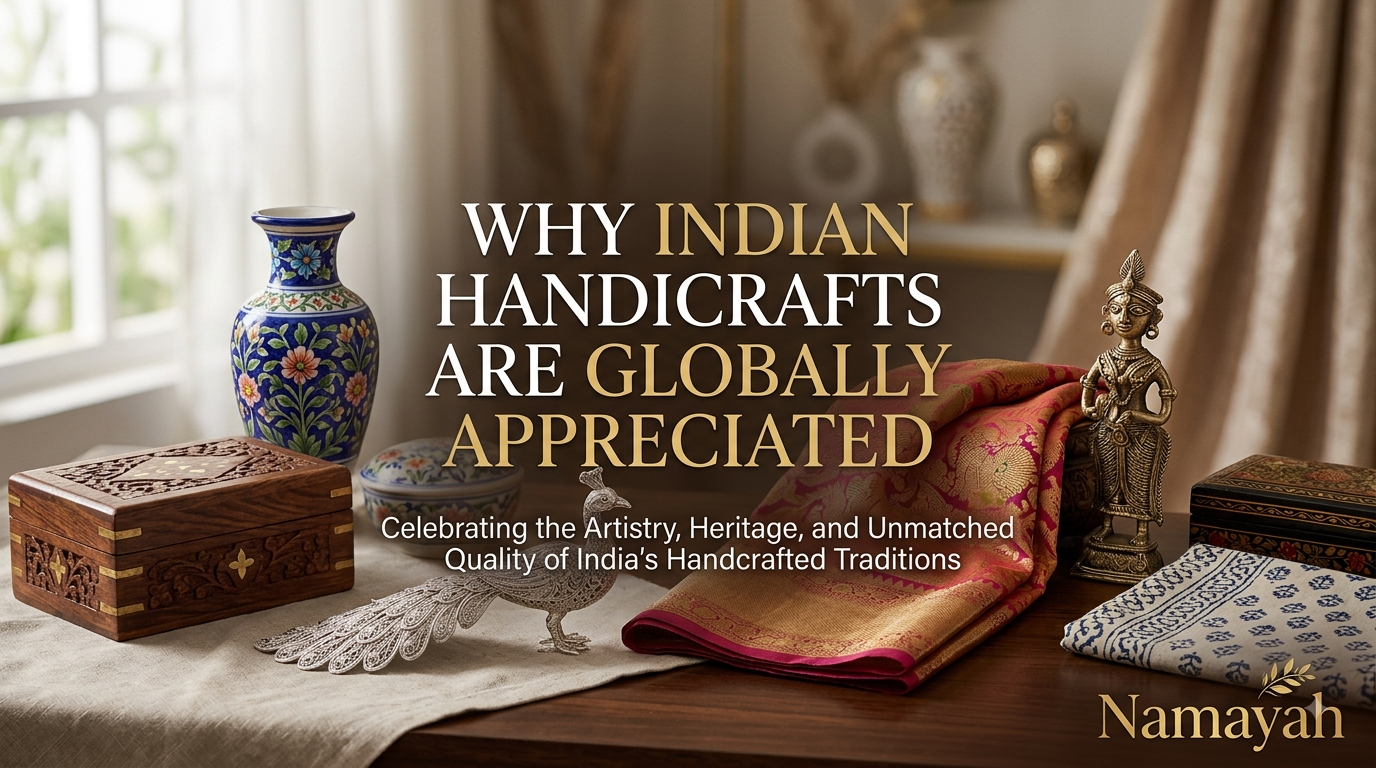
Indian handicrafts are globally appreciated because they combine traditional craftsmanship, cultural heritage, regional diversity, distinctive designs, and handmade authenticity. From intricate textiles and embroidery to metalwork, pottery, wood carving, jewelry, and decorative arts, Indian crafts reflect skills and traditions developed across generations. Their appeal extends beyond decoration: many handmade objects carry stories about the communities, materials, techniques, and cultural practices behind them.
The international reach of Indian handicrafts is also reflected in the country’s export sector. According to the Export Promotion Council for Handicrafts (EPCH), exports of handicrafts excluding hand-knotted carpets reached approximately ₹33,122.79 crore in 2024–25, compared with ₹386.57 crore in 1986–87.
What Makes Indian Handicrafts Special?
The greatest strength of Indian handicrafts is their combination of skill and identity.
Unlike mass-produced objects that are often designed for uniformity, handmade crafts can preserve variations in technique, texture, pattern, and finish. These differences are often part of their appeal because they demonstrate the human process behind the object.
Indian handicrafts also represent a wide range of artistic traditions. A textile from one part of India may look completely different from metalwork, pottery, basketry, or woodwork produced in another region.
This variety makes Indian handicrafts relevant to different tastes while maintaining a recognizable connection to Indian culture.
Rich Cultural Heritage Behind Indian Crafts
Indian handicrafts are closely connected with the country’s cultural heritage. Craft traditions can reflect local customs, religious practices, historical influences, natural surroundings, and community knowledge.
UNESCO describes traditional craftsmanship as part of intangible cultural heritage because it includes the knowledge and skills used to produce traditional crafts and pass them from one generation to another.
India provides many examples of this relationship between craftsmanship and living heritage. UNESCO’s Intangible Cultural Heritage lists include the traditional brass and copper craft of utensil making among the Thatheras of Jandiala Guru in Punjab, inscribed in 2014.
This demonstrates why handicrafts can be more than physical products. The object represents a body of knowledge that communities preserve and adapt over time.
Remarkable Regional Diversity
One reason Indian handicrafts attract international attention is India’s enormous regional diversity.
Different parts of the country have developed their own approaches to materials, colors, patterns, techniques, and decorative styles. This means the term “Indian handicrafts” covers an exceptionally broad collection of products rather than one single artistic style.
Examples include:
- Handwoven and hand-printed textiles
- Embroidery and decorative needlework
- Pottery and terracotta
- Brass and copper objects
- Wooden carvings
- Bamboo and cane products
- Traditional jewelry
- Stone carving
- Leather crafts
- Folk paintings
- Decorative household items
Regional variation gives buyers and collectors opportunities to discover different artistic traditions while exploring the cultural diversity of India.
Traditional Skills Passed Through Generations
Many Indian crafts depend on specialized skills that cannot simply be reproduced through industrial production.
An experienced artisan may spend years learning how to select materials, prepare tools, create patterns, control a particular technique, and complete a product. In traditional craft communities, these skills may be learned through family and community networks.
This knowledge is valuable because it represents accumulated experience.
UNESCO notes that the importance of intangible cultural heritage lies significantly in the knowledge and skills transmitted from one generation to another.
As a result, purchasing an authentic handmade object can provide a connection to a much longer creative tradition.
Unique Designs and Artistic Expression
Indian handicrafts are also appreciated for their visual richness.
Traditional Indian designs frequently incorporate detailed patterns, geometric forms, natural motifs, symbolic elements, and regionally distinctive decoration. Colors and patterns can vary substantially between craft traditions.
Handcrafted products can therefore add individuality to interiors, wardrobes, gifts, and collections.
For international consumers who want alternatives to standardized products, this distinctive appearance can be particularly attractive.
The appeal is not necessarily about complexity alone. Some Indian crafts are valued for elaborate decoration, while others are admired for simple forms, natural materials, or understated traditional techniques.
Use of Natural and Local Materials
Indian artisans have historically worked with materials available within their surroundings and craft traditions.
Depending on the region and craft, these may include:
- Cotton
- Silk
- Wool
- Wood
- Clay
- Metal
- Bamboo
- Cane
- Natural fibers
- Leather
- Stone
The choice of material influences the appearance, texture, durability, and character of the finished product.
For modern consumers, materials and production methods can also be part of the story behind a product. However, it is important not to assume that every handmade product is automatically environmentally sustainable. Sustainability depends on factors such as material sourcing, production methods, durability, transportation, and working conditions.
Handmade Authenticity in a Mass-Produced World
Modern manufacturing makes it possible to produce large quantities of identical products. This has many advantages, but it has also created interest in objects that feel more individual and connected to human craftsmanship.
Indian handicrafts offer that sense of individuality.
Small variations can distinguish one handmade item from another. Instead of being viewed as imperfections, such differences may demonstrate that an artisan has physically created the object.
For buyers looking for distinctive home décor, gifts, clothing, accessories, or collectible pieces, this authenticity can be a major attraction.
Indian Handicrafts and Global Markets
Indian handicrafts have developed a significant international market.
The Export Promotion Council for Handicrafts was established in 1986–87 to promote, support, protect, maintain, and increase handicraft exports from India. EPCH also works to project Indian handicrafts internationally and facilitate connections between exporters and overseas buyers.
EPCH reports that handicraft exports excluding hand-knotted carpets reached ₹32,758.80 crore in 2023–24 and increased to ₹33,122.79 crore in 2024–25.
The international market includes categories such as art metalware, woodware, embroidered and crocheted goods, hand-printed textiles, imitation jewelry, and other handicrafts.
This commercial reach demonstrates that Indian handicrafts are not appreciated only by domestic consumers. They have established a presence among international buyers and markets.
Cultural Identity and Storytelling
A major reason people value handicrafts is the story attached to them.
A handmade product can communicate information about:
- Where it was made
- Which community produced it
- What materials were used
- Which traditional technique was followed
- How the design developed
- Which cultural influences shaped the craft
This storytelling gives a product context.
Instead of being simply a decorative object, a traditional craft can become a physical representation of a place, community, or artistic tradition.
This connection is especially meaningful for travelers and international consumers interested in cultural products.
Indian Handicrafts and Sustainable Consumption
Handicrafts are increasingly discussed alongside ideas such as responsible consumption, local production, and cultural preservation.
UNESCO has highlighted the importance of safeguarding traditional craftsmanship while recognizing that globalization can create challenges for traditional craft practices.
Some handicraft production can support longer-lasting consumption because products may be designed around repair, reuse, traditional materials, or skilled manual work. But sustainability should be evaluated on a product-by-product basis rather than assumed simply because an item is handmade.
Supporting responsible artisans and transparent supply chains can help consumers make more informed purchasing decisions.
Famous Types of Indian Handicrafts
India’s craft landscape is extremely diverse. Some widely recognized categories include:
Textiles and Embroidery
Indian textiles are known for their variety of weaving, printing, dyeing, embroidery, and embellishment techniques. Traditional textiles can reflect the history and identity of particular regions and communities.
Metal Handicrafts
Metalworking includes decorative and functional objects made from materials such as brass and copper. The traditional brass and copper utensil-making craft of the Thatheras of Jandiala Guru is recognized by UNESCO as intangible cultural heritage.
Woodcraft
Wooden handicrafts can include furniture, decorative objects, toys, sculptures, boxes, and carved architectural elements. Different regions use different woods, motifs, and carving techniques.
Pottery and Terracotta
Clay-based crafts range from practical vessels to decorative sculptures and traditional objects. Their shapes and surface treatments often reflect local traditions.
Jewelry and Decorative Crafts
Indian artisans also create jewelry and decorative accessories using metals, beads, stones, textiles, and other materials.
Basketry and Natural-Fiber Crafts
Bamboo, cane, grasses, and other fibers are used to create baskets, storage products, furniture, accessories, and decorative items.
Together, these categories illustrate why Indian handicrafts cannot be reduced to a single design language.
Challenges Facing Traditional Artisans
Despite their global appeal, traditional handicrafts face important challenges.
Industrial manufacturing can make standardized products cheaper and easier to distribute. Younger generations may also have fewer incentives to continue traditional occupations when alternative employment opportunities are available.
UNESCO specifically identifies globalization as a challenge for the survival of traditional craftsmanship.
Other challenges can include access to markets, changing consumer preferences, intellectual-property concerns, raw-material costs, limited visibility for individual artisans, and competition from machine-made products marketed as traditional.
Preserving handicrafts therefore requires more than simply celebrating their beauty. It requires sustainable opportunities for the people who possess and practice the skills.
How Indian Handicrafts Are Reaching New Audiences
Traditional crafts are increasingly being presented through international exhibitions, contemporary design collaborations, online marketplaces, cultural initiatives, and export networks.
EPCH organizes international trade activities and major handicraft fairs designed to connect Indian producers with overseas buyers.
UNESCO has also highlighted initiatives connecting traditional Indian crafts with contemporary design and cultural preservation. Its Rural Crafts and Cultural Hubs Project in West Bengal, for example, has worked with more than 50,000 artists and artisans across 20 districts and 35 traditional art forms, according to UNESCO.
These developments show that traditional craftsmanship does not necessarily have to remain frozen in the past. It can evolve while retaining important elements of its heritage.
Why Indian Handicrafts Will Remain Relevant
Indian handicrafts have an advantage that many mass-produced products cannot easily reproduce: a connection between object, maker, place, and tradition.
Their future will depend on the ability to balance heritage with changing consumer expectations.
That may involve:
- Preserving traditional techniques.
- Creating fair opportunities for artisans.
- Improving access to domestic and international markets.
- Protecting traditional designs and intellectual property.
- Introducing crafts to younger audiences.
- Adapting traditional techniques to contemporary products.
- Providing buyers with accurate information about materials and production.
The global appreciation of Indian handicrafts is therefore not simply about their appearance. It is also about the knowledge, identity, creativity, and human effort represented by each craft tradition.
FAQs About Indian Handicrafts
Why are Indian handicrafts famous around the world?
Indian handicrafts are famous for their cultural diversity, skilled craftsmanship, distinctive designs, traditional techniques, and connection to regional communities. Their variety allows them to appeal to international buyers interested in art, décor, fashion, culture, and handmade products.
What makes Indian handicrafts unique?
Their uniqueness comes from the combination of regional traditions, artisan skills, locally influenced materials, traditional patterns, and handmade production. Different Indian regions have developed distinctive craft techniques and visual styles.
Why do people buy Indian handicrafts?
People may buy Indian handicrafts because they want unique decorative objects, cultural products, handmade gifts, traditional textiles, or products with a strong connection to craftsmanship and place.
Are Indian handicrafts exported to other countries?
Yes. Indian handicrafts are exported internationally. EPCH reported exports of handicrafts excluding hand-knotted carpets of approximately ₹33,122.79 crore in 2024–25.
How do Indian handicrafts preserve culture?
Handicrafts preserve culture by maintaining traditional techniques, designs, materials, and knowledge. When these skills are taught to new generations, craft traditions can continue evolving rather than disappearing.
Are Indian handicrafts environmentally friendly?
Some handicrafts may have characteristics associated with responsible production, such as manual manufacturing or the use of natural materials, but not every handicraft is automatically sustainable. Environmental impact depends on materials, sourcing, production, transportation, durability, and other factors.
What are some popular Indian handicrafts?
Popular categories include textiles, embroidery, pottery, metalwork, woodcraft, jewelry, basketry, natural-fiber products, traditional paintings, and decorative objects.
How can consumers support Indian artisans?
Consumers can support artisans by purchasing authentic products, learning about their origin, choosing transparent sellers, valuing craftsmanship, and avoiding products that misrepresent machine-made goods as traditional handmade crafts.
Conclusion
Indian handicrafts are globally appreciated because they bring together heritage, craftsmanship, creativity, regional diversity, and authenticity. Each craft tradition can represent generations of knowledge while continuing to evolve for modern audiences.
Their international success is also supported by established export networks and organizations working to connect Indian artisans and exporters with overseas markets.
Most importantly, Indian handicrafts remind consumers that an object can be more than a product. It can carry the identity of a place, the skill of a maker, and the history of a living tradition.
As global consumers continue to explore meaningful, distinctive, and culturally connected products, Indian handicrafts have strong reasons to remain an important part of the international craft landscape.