
Why Handmade Products Develop Character Over Time
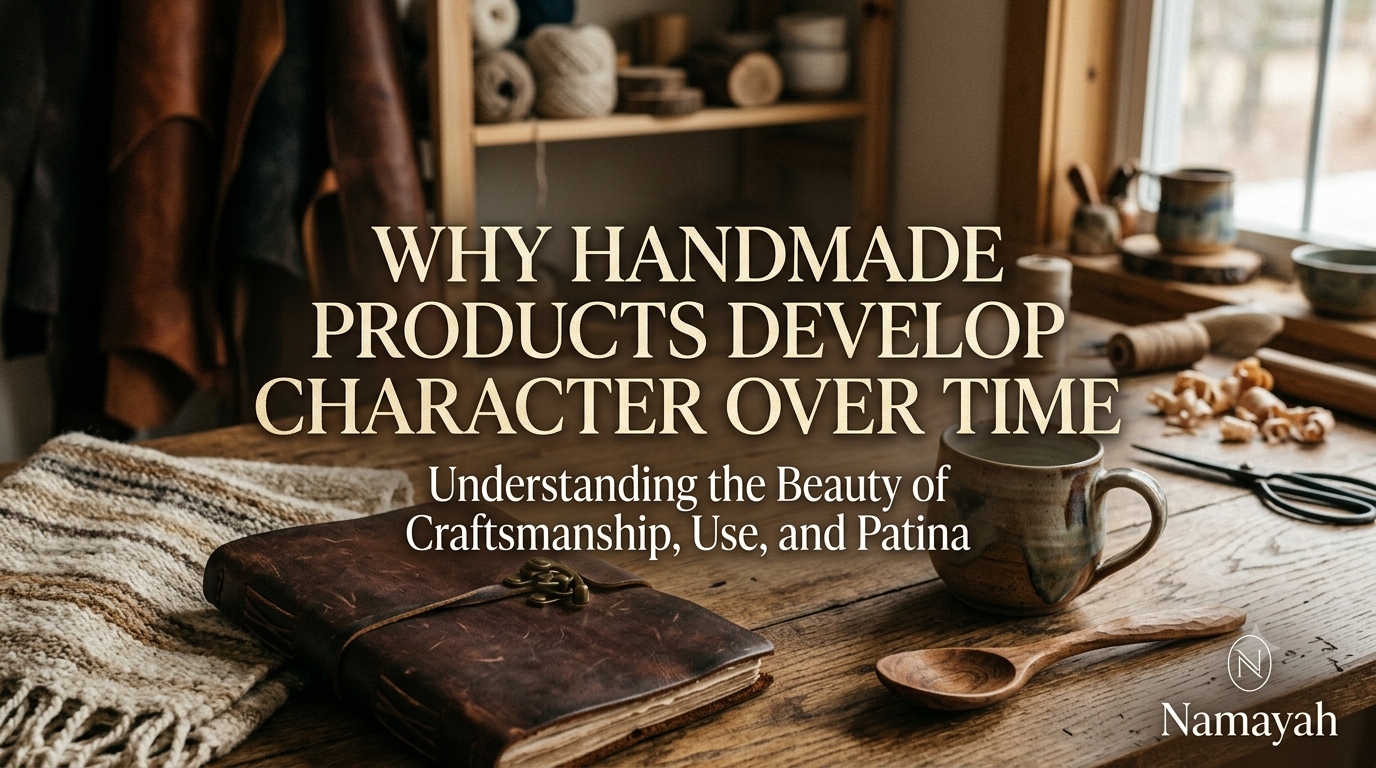
A handmade product often tells two stories: the story of how it was made and the story of how it was used. Unlike objects designed to remain visually unchanged, many handmade goods become more distinctive as they encounter daily life. A leather wallet develops a deeper tone, a wooden bowl gains subtle changes in color and texture, and a copper object may gradually develop a patina.
This transformation is one reason people are drawn to handmade products. Their appeal is not always about looking perfect forever. Instead, the marks of careful use can become part of the object’s identity.
What Does “Character” Mean in a Handmade Product?
When people say a handmade product develops character, they usually mean that its appearance, texture, and small imperfections become more distinctive with age.
This can include:
- A change in color
- A smoother or softer surface
- Small marks from handling
- Variations in texture
- Natural changes in wood grain
- A developing sheen on leather
- Patina on certain metals
- Minor signs that show how the product has been used
Patina is a useful term for some of these changes. It describes surface changes that develop naturally through age, handling, oxidation, and environmental exposure. On materials such as wood, leather, and metal, these changes can create a more nuanced appearance over time.
Character, however, is broader than patina. It also includes the physical evidence of craftsmanship and ownership: the places where a person grips an object, the way a wooden surface becomes familiar through use, or the subtle differences that make one handmade item unlike another.
Handmade Products Begin With Natural Variation
One of the defining qualities of handmade goods is that they are not always perfectly uniform.
An artisan may work with natural leather, timber, clay, stone, fibers, or metal. These materials can contain differences in grain, color, texture, density, and surface structure. Even when an artisan follows the same process, the final products may not be identical.
That variation can become even more noticeable as an item ages.
Two handmade leather wallets, for example, may begin with similar colors but develop different patterns of wear depending on how frequently they are carried, where they are stored, and how they are handled. The result is an object that gradually reflects its particular history.
This is part of the attraction of handmade craftsmanship: the finished piece can have a visual identity rather than simply reproducing a standardized surface.
Time Reveals the Maker’s Craftsmanship
A handmade product is not judged only by how it looks on the day it is purchased.
Construction becomes important over time.
Stitching, joinery, finishing, material selection, hardware, and surface treatments all influence how an object responds to regular use. A well-considered design can allow certain materials to wear naturally while remaining functional.
This does not mean every handmade product will last indefinitely. Handmade does not automatically mean durable, and natural aging is not proof of superior quality. The materials, construction methods, intended use, and maintenance all matter.
But when craftsmanship and material choice work together, time can reveal qualities that are difficult to see when an object is brand new.
How Everyday Use Changes Handmade Materials
Everyday interaction is one of the main reasons handmade products develop a unique appearance.
Hands touch handles. Clothing rubs against bags. A wooden utensil encounters food and washing. A metal surface meets air and moisture. A frequently used notebook develops softened edges.
These interactions are not identical from person to person. As a result, the aging process can become individual.
Leather Develops Patina
Leather is one of the clearest examples of a material that can develop character through use.
Natural leather can change in color, surface sheen, and texture as it is handled. Oils from skin, friction, movement, light, and environmental conditions can contribute to these changes. Some types of leather, particularly certain full-grain and vegetable-tanned leathers, are well known for developing visible patina.
A wallet may become darker where it is handled frequently. A bag may develop a subtle sheen around its handles. A belt can show changes at the points where it bends most often.
These changes create an appearance that is difficult to reproduce exactly because they depend on the object’s individual history.
However, healthy aging should not be confused with deterioration. Deep cracks, mold, excessive dryness, peeling finishes, or structural damage are maintenance problems rather than desirable patina.
Wood Gains Depth and Warmth
Wood is another material whose appearance can change with time.
Light exposure can alter wood’s color, while changes in humidity can cause wood to absorb or release moisture. Conservation guidance notes that light can darken some light woods or bleach darker woods, while changing humidity can cause wood to expand and contract.
For a handmade wooden object, these changes may contribute to its evolving appearance.
A cutting board can acquire subtle knife marks. A wooden spoon may become smoother where it is held. Furniture can show gradual changes in tone and surface sheen.
Some of these marks are evidence of use rather than defects. At the same time, excessive moisture, extreme dryness, direct sunlight, or poor storage can cause genuine damage. Good care helps distinguish natural aging from avoidable deterioration.
Metal Develops Surface Changes
Certain metals can also develop distinctive surfaces as they react with their environment.
Copper is a well-known example. Exposure to the atmosphere causes copper to oxidize and gradually change in appearance. Depending on conditions and exposure, its surface can move through different colors and eventually develop a characteristic patina. Scientific research has documented the complex chemical layers involved in natural copper patination.
For handmade copper objects, this process can add visual depth.
The important point is that the final appearance is influenced by the environment. Two objects made from similar copper may not develop identical surfaces because their exposure histories can differ.
Imperfections Can Become Part of the Story
A new handmade product may have small variations that would never appear on a mass-produced object.
A tiny difference in grain. A slight variation in glaze. A subtle change in stitching. A minor difference in color.
These details can initially seem insignificant. Over time, they can become part of what makes the object recognizable.
The same is true of marks created through use.
A scratch on a handmade wooden table may remind its owner of years of family meals. A worn leather handle may show exactly where someone repeatedly carried a bag. A polished spot on a frequently used object can reveal how the owner’s hands interact with it.
Not every imperfection needs to be romanticized. A serious crack, broken component, or structural failure should be repaired rather than celebrated. But small evidence of honest use can give an object a sense of history.
Handmade Items Reflect Their Owners
One of the strongest reasons handmade products develop character is that ownership changes them.
Consider two identical handmade bags purchased on the same day. One may be used for commuting every day. Another may be carried only on weekends. One might travel frequently, while the other stays mostly indoors.
After several years, they can look noticeably different.
This makes aging personal.
The product becomes a record of habits and experiences. Its condition can communicate something about how it was used without requiring a written explanation.
That personal quality is difficult to create with a completely standardized object.
Character Is Different From Damage
A useful distinction is the difference between natural character and preventable damage.
| Natural character | Preventable damage |
|---|---|
| Gradual color changes | Severe fading from excessive exposure |
| Gentle surface wear | Deep scratches or gouges |
| Softening from regular use | Cracking caused by neglect |
| Natural leather patina | Mold or excessive dryness |
| Normal wood color changes | Splitting from poor environmental conditions |
| Natural metal patina | Corrosion that compromises the object |
The line can vary by material and product.
For example, an aged copper surface may be part of the intended aesthetic, while corrosion that threatens the underlying material is a different matter. Likewise, a softer leather surface may indicate normal use, while extensive cracking can indicate deterioration.
Understanding the material helps owners make better decisions about care.
Good Care Helps Products Age Gracefully
Buying a handmade product does not mean ignoring maintenance.
Good care can help preserve both function and appearance.
Start by following the maker’s care instructions whenever they are available. Different finishes and materials respond differently to cleaning products, moisture, heat, and light.
For wooden objects, controlling environmental conditions can matter because wood responds to changes in humidity. Conservation guidance recommends protecting wooden furniture and objects from damaging light and unsuitable humidity conditions.
For leather, avoid assuming that more conditioning is always better. The appropriate care depends on the type and finish of leather. Gentle handling and product-specific care are generally preferable to aggressive cleaning.
For metal, understand whether the existing surface is intended to remain as a natural patina or whether the object has a particular finish that needs protection.
The goal is not necessarily to keep a handmade product looking new.
The goal is to help it remain functional while allowing appropriate signs of age to develop naturally.
Why Aging Can Add Emotional Value
A handmade object can become more valuable emotionally as its history grows.
This is different from monetary value.
A ten-year-old handmade chair may not be worth more financially than a new chair, but its owner may value it more because of the memories associated with it.
Objects become connected to routines.
A handmade mug may be present every morning. A leather notebook may accompany someone through school or work. A wooden table may become part of family gatherings. A handmade bag may travel through different cities and stages of life.
Over time, the physical changes become reminders of those experiences.
This is one reason an object’s imperfections can become meaningful. They demonstrate that the item has been used rather than simply stored.
Handmade vs. Mass-Produced Aging
Mass-produced products can certainly develop character too. Handmade goods do not have an exclusive claim on meaningful aging.
The difference is often found in the starting point.
Mass production generally emphasizes consistency. Handmade production often accepts, and sometimes highlights, material variation and evidence of the maker’s process.
That means a handmade product may begin with more visible individuality. As it ages, that individuality can combine with the owner’s use.
| Handmade product | Mass-produced product |
| Often contains natural or process-related variation | Usually designed for greater visual consistency |
| May show individual maker decisions | Usually follows standardized manufacturing |
| Can develop use-specific marks | Can also develop wear from use |
| Materials may be selected for tactile or visual qualities | Materials vary widely by product |
| Repairability depends on the maker and construction | Repairability depends on design and manufacturer |
Neither approach is automatically better. The important question is whether the product is designed, made, and maintained appropriately for the way you intend to use it.
How to Choose Handmade Products That Age Well
If you want a handmade item that can develop character over time, look beyond its appearance on day one.
1. Examine the materials
Learn what the product is made from and how that material typically responds to use.
Natural materials can change significantly over time, so understanding those changes helps you know what to expect.
2. Look at construction
Pay attention to stitching, joints, edges, handles, hardware, finishes, and other high-stress areas.
Good design should consider how the object will be used.
3. Ask about care
A responsible maker should be able to explain basic care requirements where appropriate.
Ask what cleaners, oils, storage conditions, or environmental exposures should be avoided.
4. Consider repair
For long-term ownership, repairability can matter as much as initial durability.
Find out whether worn components can be replaced or repaired and whether the maker offers maintenance support.
5. Accept that the product may change
If you want something to look exactly the same for years, a material designed for visual stability may be a better choice.
If you enjoy evolving surfaces, natural variation, and signs of use, handmade products can be particularly rewarding.
The Long-Term Value of Handmade Goods
The appeal of handmade products is often strongest when you stop thinking of them as finished objects.
They are finished in the sense that the maker has completed the work. But their visual story may only be beginning.
Use, touch, light, environment, maintenance, and time continue to influence the object. Leather can become richer. Wood can change tone. Copper can develop patina. Surfaces can become smoother in the places where people interact with them most.
That process can make a product feel less like a disposable possession and more like a long-term companion.
The best handmade products do not necessarily resist every trace of time. Instead, they can accommodate appropriate aging while continuing to serve their purpose.
FAQs About Handmade Products and Aging
Do handmade products get better with age?
Some handmade products can become more attractive or personally meaningful with age, especially when made from materials such as certain leathers, woods, and metals that naturally change through use. However, aging does not automatically improve every product, and damage should not be confused with desirable character.
What is patina on a handmade product?
Patina is a naturally developed change in a material’s surface caused by factors such as age, handling, oxidation, light, and environmental exposure. It can appear as changes in color, sheen, or texture. The exact process depends on the material.
Why does handmade leather develop character?
Leather can respond to handling, friction, natural oils, light, and environmental conditions. Certain natural leathers can gradually develop deeper color and surface sheen, producing a unique patina.
Does wood change color as it ages?
Yes. Wood can change color and surface appearance through light exposure and other environmental factors. Humidity also affects wood because it absorbs and releases moisture, causing it to expand and contract.
Is every mark on a handmade product a sign of quality?
No. Small variations and normal wear can contribute to character, but serious cracks, structural damage, mold, severe corrosion, or finish failure are not necessarily desirable signs of age.
How can I help a handmade product age well?
Use it as intended, follow the maker’s care instructions, protect it from unsuitable environmental conditions, and avoid aggressive cleaning or unnecessary refinishing. The right approach depends on the material.
Why are imperfections valued in handmade products?
Imperfections can provide evidence of the material, maker, or object’s history. Small variations may distinguish one handmade item from another, while marks from use can make a product feel more personal.
Are handmade products more durable than mass-produced products?
Not automatically. Durability depends on material quality, construction, design, intended use, and maintenance. Handmade production can allow careful material selection and craftsmanship, but the term “handmade” alone does not guarantee longevity.
Can a handmade product become more valuable over time?
It can become more valuable emotionally, especially when it accumulates memories and signs of personal use. Monetary value is a separate issue and depends on factors such as maker reputation, rarity, condition, provenance, and market demand.
Conclusion
Handmade products develop character over time because materials respond to the world around them and because people leave traces of their lives through use.
A leather bag may become softer and develop a richer surface. A wooden object may gradually change in color and texture. Copper can form a natural patina through exposure to the atmosphere. These transformations are influenced by material, environment, craftsmanship, care, and everyday habits.
The result is an object that can become increasingly individual.
That is perhaps the most appealing part of handmade goods: they do not have to remain frozen in the condition in which they were purchased. When made from appropriate materials and cared for properly, they can change alongside their owners.
A small mark can become a memory. A softened edge can show years of use. A changing surface can reveal time passing.
In that sense, character is not simply something a handmade product has.
It is something that develops.
And sometimes, the most beautiful part of a handmade object is the part that could only appear after you have lived with it.