
Why Artisan Craftsmanship Is the New Definition of Luxury
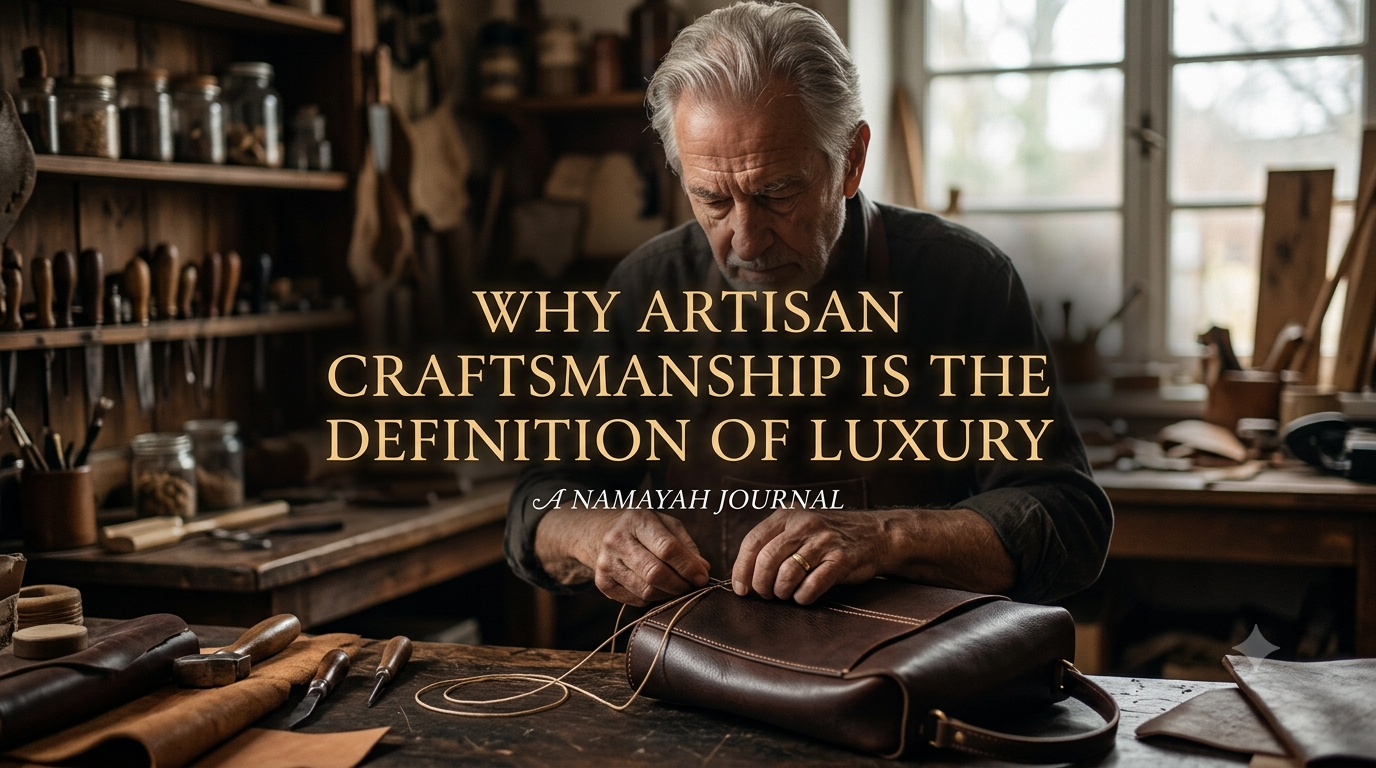
Luxury has traditionally been associated with exclusivity, prestigious labels, rare materials, and high prices. But the meaning of luxury is changing. Artisan craftsmanship is becoming increasingly important because it adds something mass production cannot easily replicate: human skill, cultural heritage, individuality, and a visible connection between the maker and the finished object.
For modern consumers, luxury can mean knowing how something was made, who made it, where its techniques originated, and whether the product is designed to last. This shift is visible across fashion, jewelry, interiors, textiles, leather goods, and other premium categories. Recent luxury coverage has highlighted craftsmanship as an increasingly valuable form of differentiation, while luxury houses are investing in artisan training, heritage preservation, and craft-focused storytelling.
What Is Artisan Craftsmanship?
Artisan craftsmanship refers to skilled making in which knowledge, technique, precision, and creative judgment play a significant role in producing an object.
It is more than simply calling something “handmade.” Genuine craftsmanship can involve years of training, specialized tools, traditional methods, careful material selection, and decisions made throughout the production process.
An artisan may repeat the same technique thousands of times, yet each finished piece can retain subtle differences created by the human hand.
That distinction matters in luxury.
A mass-produced object is generally optimized for consistency and scale. An artisan-made object can place greater emphasis on skill, detail, material character, and the maker’s expertise.
The result is not necessarily better simply because it was made by hand. Rather, the value comes from the combination of meaningful technique, quality, design, and execution.
Why Luxury Is Moving Beyond Logos
For decades, visible branding was one of the easiest ways to communicate luxury. A recognizable logo could signal status without requiring the viewer to understand the product itself.
Today, that equation is becoming more nuanced.
Luxury consumers can increasingly ask different questions:
- What materials were used?
- Who made the product?
- Where was it produced?
- Is the technique traditional?
- How long should it last?
- Can it be repaired?
- Does the design have cultural or artistic significance?
- Is the brand transparent about its production?
This does not mean logos or brand heritage have lost their importance. Instead, they increasingly exist alongside other forms of value.
Craftsmanship offers a quieter form of luxury because its quality can be appreciated without prominent branding.
The Human Skill Behind Exceptional Products
One of the strongest reasons artisan craftsmanship matters is the value of expertise.
A highly skilled craftsperson does more than follow instructions. Their experience can influence how materials are cut, shaped, stitched, embroidered, carved, polished, woven, or assembled.
This knowledge is often difficult to replace with automation because it combines technical ability with judgment.
Luxury companies are responding by investing in training and the transmission of specialist knowledge. For example, Bvlgari says its expanded Italian manufacturing facility is intended to support the transmission of savoir-faire and includes training initiatives for new generations of artisans.
That investment reveals an important principle: craftsmanship is not only a production method; it is knowledge that has to be preserved.
Heritage Gives Luxury a Deeper Meaning
Luxury becomes more meaningful when an object carries a connection to place and history.
Traditional weaving, embroidery, metalwork, leatherwork, ceramics, jewelry, and other crafts can represent generations of accumulated knowledge.
The technique itself becomes part of the product’s story.
This is one reason heritage craftsmanship remains influential in luxury markets. Recent reporting from Lake Como, for example, highlights how historic textile traditions continue to contribute to the region’s identity and contemporary luxury environment.
Italian luxury houses have also explicitly connected craftsmanship with national and regional heritage. Dolce & Gabbana, for instance, describes its Made in Italy approach as closely connected with preserving Italian craftsmanship and artisanal traditions.
The broader lesson is simple: heritage can transform an object from a product into a cultural expression.
Craftsmanship Creates Authenticity
In a world filled with digitally generated images, rapid trends, and mass-produced products, authenticity has become increasingly valuable.
Artisan craftsmanship provides a tangible form of authenticity because there is a real process behind the finished object.
A piece may have:
- A recognizable technique
- A known place of production
- A traceable material
- A distinctive maker or workshop
- A documented cultural tradition
- Evidence of individual workmanship
Transparency is becoming especially relevant to luxury. Digital product passports and traceability initiatives are creating new ways for brands to communicate information about products and their origins.
For consumers, this can make the purchase feel more informed rather than purely aspirational.
Quality and Longevity Matter More Than Ever
A luxury object does not become valuable simply because it takes longer to produce. The craftsmanship must contribute to the quality of the finished product.
When skilled making is combined with strong materials and thoughtful design, the result can be an object intended for long-term use.
That changes the relationship between the consumer and the product.
Instead of buying something for a single season, a customer may view it as an item to maintain, repair, collect, or eventually pass to another generation.
This is particularly relevant to fashion and accessories, where durability can challenge the disposable logic of fast-changing trends.
The idea of longevity also strengthens the emotional side of luxury. An object that ages gracefully can accumulate memories and personal meaning.
The Connection Between Craftsmanship and Sustainable Luxury
Craftsmanship and sustainability are often discussed together, but the relationship deserves nuance.
Artisan production is not automatically sustainable. A handmade product can still use unsuitable materials, involve poor working conditions, or create unnecessary waste.
However, craft-led production can support sustainability when it is built around durability, responsible sourcing, repairability, fair working practices, and appropriate production volumes.
Research into sustainable luxury increasingly identifies heritage and artisanal value as important dimensions of perceived luxury.
This makes craftsmanship potentially powerful because sustainability becomes connected to the product’s physical and cultural lifespan—not merely its marketing.
Indian Craftsmanship and the Global Luxury Market
India offers an especially rich example of how artisan craftsmanship can shape contemporary luxury.
The country’s craft traditions include embroidery, weaving, leatherwork, jewelry, textile dyeing, metalwork, woodwork, and many regionally specific techniques.
Indian craftsmanship is also increasingly visible in global luxury conversations. In 2026, Prada announced a limited-edition collection inspired by Kolhapuri chappals, manufactured in India by skilled artisans from Maharashtra and Karnataka. The project also included an artisan training component designed to support the continuation of the traditional craft.
The significance goes beyond one collection.
It demonstrates how traditional craft can move into contemporary luxury without necessarily losing its cultural identity.
For Indian luxury brands and international companies working with Indian artisans, the opportunity is to treat craftsmanship as intellectual and cultural value—not simply decorative labor.
Technology Can Strengthen Traditional Craft
It is tempting to frame craftsmanship and technology as opposites.
They do not have to be.
Technology can support artisans through better design visualization, documentation, material research, quality control, traceability, education, and access to global markets.
The most compelling model may therefore be human craftsmanship supported by appropriate technology.
Bvlgari’s approach illustrates this hybrid direction, combining traditional goldsmithing knowledge with modern methods and dedicated training infrastructure.
Technology should not replace the distinctive expertise that gives a craft its meaning. Instead, it can help preserve, document, teach, and expand that expertise.
The Rise of Quiet, Personal Luxury
Another reason artisan craftsmanship resonates today is the growth of understated luxury.
Not every luxury consumer wants an obvious logo or highly recognizable design. Some prefer products where the value is discovered through material, construction, detail, and provenance.
This creates an important distinction:
Loud luxury communicates status. Craft-led luxury can communicate taste, knowledge, and appreciation.
That does not make one inherently superior to the other. They simply communicate value differently.
For collectors and design-conscious consumers, the ability to recognize quality can become part of the pleasure of ownership.
How to Recognize Genuine Artisan Craftsmanship
Consumers should also be cautious. The word “artisan” can be used as a marketing term without providing meaningful information about how a product was made.
Before purchasing a craft-led luxury product, consider asking:
- Who made it?
Look for information about the workshop, makers, or production community. - Where was it made?
A specific location is more informative than vague heritage language. - What technique was used?
Look for clear explanations rather than generic claims about being “handcrafted.” - What materials were selected?
Quality materials should be described accurately and transparently. - Can the product be repaired or maintained?
Repairability can be an important indicator of long-term thinking. - Does the brand explain its artisan relationships?
Responsible brands should be able to explain how they work with craftspeople without reducing them to anonymous marketing imagery. - Is the story verifiable?
Look for evidence, documentation, certifications where relevant, and specific production information.
The goal is not to assume that every handcrafted object is luxurious. It is to distinguish substantive craftsmanship from craftsmanship-themed marketing.
Why the Story Behind an Object Matters
A luxury object can have financial value, but its emotional value often comes from its story.
Consider two similar objects.
One is simply described as a premium product.
The other has a documented history: a traditional technique, a specialist workshop, carefully selected materials, and a recognizable cultural connection.
The second object gives the owner more context.
That context can create attachment.
This is one reason luxury brands increasingly use ateliers, artisans, exhibitions, workshops, and behind-the-scenes storytelling to communicate value. Vogue’s recent analysis of luxury’s renewed focus on craft similarly identifies authenticity and human connection as important parts of the industry’s shift.
The story should, however, reflect reality. Storytelling cannot substitute for genuine quality or responsible production.
The Future of Luxury Is Human
The future of luxury will not necessarily reject technology, branding, or scale.
Instead, it is likely to place greater value on what those systems cannot easily manufacture: human expertise, provenance, cultural meaning, individuality, and trust.
Artisan craftsmanship fits this changing definition because it connects several forms of value at once.
It can provide:
- Exclusivity through limited or individualized production
- Quality through skilled execution
- Authenticity through identifiable techniques and origins
- Heritage through cultural continuity
- Emotional value through the human story behind an object
- Potential longevity through thoughtful construction and materials
- Cultural value through preservation of specialist knowledge
This does not mean every luxury product must be handmade.
It means the luxury industry is increasingly being challenged to explain why a product deserves its value.
Craftsmanship provides one of the most compelling answers.
FAQs About Artisan Craftsmanship and Luxury
What is artisan craftsmanship in luxury?
Artisan craftsmanship in luxury refers to skilled production that relies significantly on specialized human knowledge, technique, precision, and creative judgment. It often incorporates traditional methods, high-quality materials, and distinctive forms of workmanship.
Why is artisan craftsmanship considered luxurious?
Artisan craftsmanship can be luxurious because it combines expertise, time, individuality, heritage, and attention to detail. When these qualities are supported by excellent materials and design, they can create products with strong functional, cultural, and emotional value.
Is handmade always better than machine-made?
No. Handmade does not automatically mean higher quality. Luxury depends on the quality of materials, design, construction, durability, and expertise. Machines can also deliver exceptional precision. The value of artisan production comes from the particular skills and qualities it contributes to the final product.
How does craftsmanship support sustainable luxury?
Craftsmanship can support sustainable luxury when products are designed for durability, repair, responsible sourcing, and long-term use. However, handcrafted production is not automatically sustainable, so consumers should examine materials, labor practices, sourcing, and production methods.
Why is Indian craftsmanship important to modern luxury?
Indian craftsmanship offers a broad range of established textile, embroidery, jewelry, leather, and decorative traditions. Contemporary collaborations, including Prada’s work inspired by Kolhapuri chappals, demonstrate how Indian artisanal techniques can participate in global luxury while maintaining connections to their heritage.
Can traditional craftsmanship work with modern technology?
Yes. Technology can support traditional craftsmanship through training, documentation, design development, traceability, and quality processes. The strongest approach preserves the distinctive human knowledge of the craft while using technology where it adds genuine value.
How can consumers identify authentic artisan products?
Consumers can look for specific information about makers, workshops, production locations, techniques, materials, sourcing, and repair or aftercare. Vague claims such as “handcrafted” or “heritage-inspired” are less informative without supporting details.
Will craftsmanship replace logos as the definition of luxury?
Probably not completely. Logos, brand heritage, exclusivity, design, materials, and craftsmanship can all contribute to luxury. The more important shift is that craftsmanship is becoming a stronger part of how consumers understand and evaluate luxury.
Conclusion
Artisan craftsmanship is redefining luxury by shifting attention from what a product signals to what it represents.
A luxury object can be valuable because of its brand, but craftsmanship gives that object another dimension: the knowledge of how it was made, the people behind it, the heritage it carries, and the possibility that it can remain meaningful for years.
As luxury becomes more focused on authenticity, transparency, cultural heritage, and longevity, the human hand is gaining renewed importance.
The new definition of luxury may therefore be less about owning something that everyone recognizes—and more about owning something whose quality, story, and craftsmanship you genuinely understand.