
The Importance of Preserving Indian Artisan Heritage
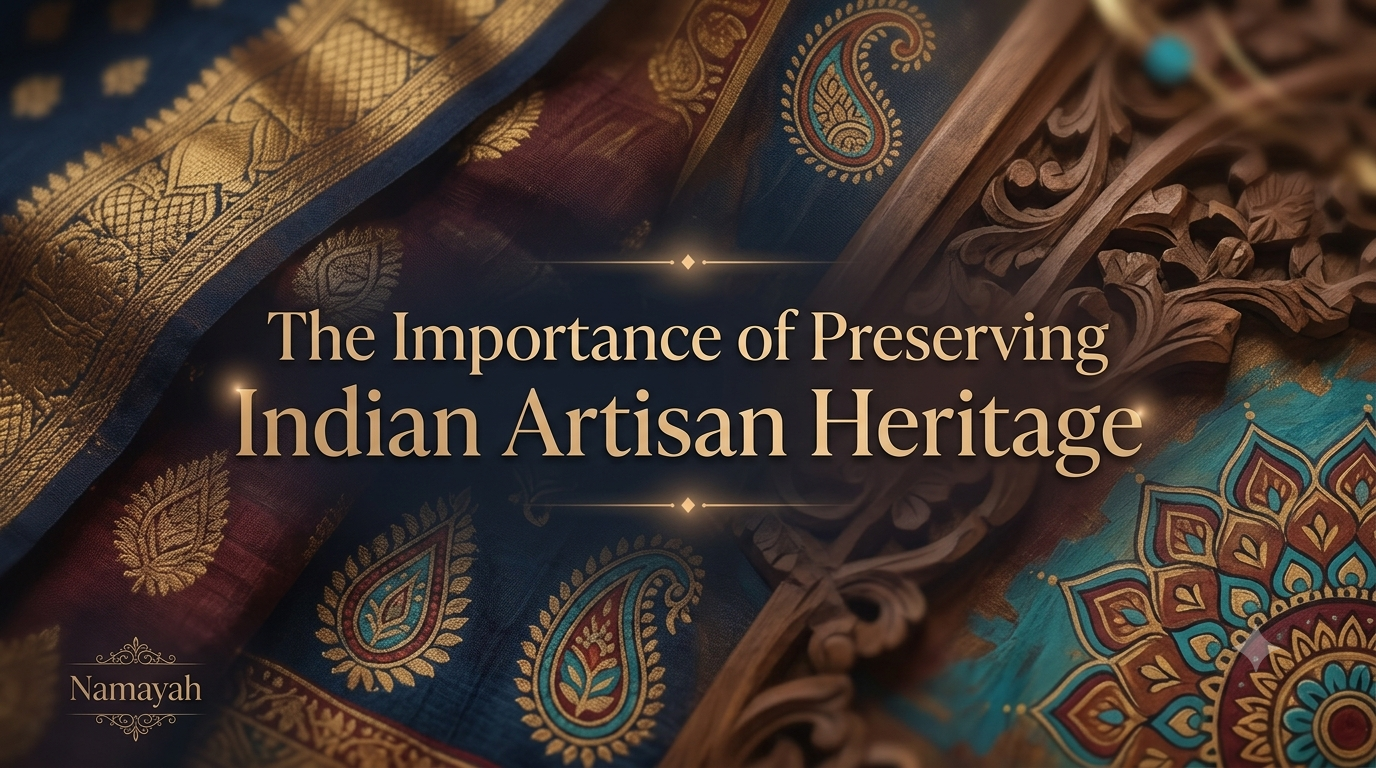
Introduction to The Importance of Preserving Indian Artisan Heritage
India is home to one of the world’s richest traditions of craftsmanship. From intricately woven textiles and hand-painted pottery to exquisite jewelry and wood carvings, every region of the country reflects a unique artistic identity. The Importance of Preserving Indian Artisan Heritage extends far beyond maintaining beautiful objects. It is about protecting centuries of knowledge, sustaining millions of livelihoods, and preserving the stories that define India’s diverse cultural landscape.
Traditional artisans have passed their skills from one generation to the next through hands-on learning rather than formal education. These techniques often require years of practice and represent an irreplaceable part of India’s intangible cultural heritage. Yet rapid industrialization, changing consumer preferences, and inexpensive factory-made products have placed many traditional crafts at risk.
Preserving artisan heritage is not simply a nostalgic effort to safeguard the past. It is an investment in sustainable development, cultural diversity, and economic resilience. Handmade products often use eco-friendly materials, support local communities, and promote ethical consumption. As consumers become increasingly interested in authentic and sustainable products, Indian artisans have an opportunity to reach wider markets while maintaining their cultural identity.
This article explores why preserving Indian artisan heritage matters, the challenges artisans face today, and the practical steps governments, businesses, and consumers can take to ensure these remarkable traditions continue to thrive.
What Is Indian Artisan Heritage?
Indian artisan heritage encompasses the traditional skills, techniques, and artistic expressions developed across thousands of years. Every craft reflects local geography, available materials, religious beliefs, and community traditions.
Traditional Craftsmanship Across Regions
Different regions specialize in distinctive crafts. Kashmir is renowned for intricate shawls and papier-mâché, Rajasthan for block printing and blue pottery, Gujarat for embroidery and mirror work, Odisha for Pattachitra paintings, and Tamil Nadu for bronze sculptures. These crafts are not merely decorative—they represent local histories, identities, and ways of life.
Artisan families often dedicate generations to mastering a single craft. Children learn by observing elders, gradually acquiring skills through practice and experience. This apprenticeship system ensures that knowledge is preserved within communities.
Cultural Significance of Handmade Products
Handmade crafts are deeply connected to Indian festivals, weddings, rituals, and everyday life. Traditional textiles, handcrafted jewelry, and ceremonial objects carry symbolic meanings that strengthen cultural continuity. Each handcrafted piece tells a story about the artisan, the community, and the region where it was created.
Historical Evolution of Indian Artisan Heritage
Indian craftsmanship dates back to the Indus Valley Civilization, where archaeologists have discovered beautifully crafted pottery, beads, and metal artifacts. Over centuries, successive kingdoms, empires, and cultural exchanges enriched India’s artistic traditions.
Trade routes connected Indian artisans with international markets, allowing textiles, spices, and handcrafted goods to reach Europe, Africa, and Asia. During the Mughal period, arts such as miniature painting, marble inlay, and fine embroidery flourished. Colonial rule disrupted many traditional industries, but artisans adapted by preserving their skills despite changing economic conditions.
Today, many ancient techniques continue to survive, demonstrating the resilience and creativity of artisan communities.
Major Traditional Indian Crafts
India’s diversity is reflected in its extraordinary range of crafts.
- Textiles and Weaving: Handloom sarees, shawls, carpets, and natural dye fabrics remain globally admired.
- Pottery and Ceramics: Clay vessels, terracotta sculptures, and decorative ceramics showcase centuries-old techniques.
- Wood Carving and Metalwork: Intricate furniture, temple architecture, and brass utensils display remarkable craftsmanship.
- Jewelry and Embroidery: Fine beadwork, silver ornaments, zari embroidery, and mirror work continue to attract international attention.
These crafts contribute significantly to India’s cultural reputation while supporting countless artisan families.
Why The Importance of Preserving Indian Artisan Heritage Cannot Be Ignored
Preserving artisan heritage protects cultural diversity, strengthens local economies, and safeguards traditional knowledge.
Traditional crafts reinforce India’s cultural identity by maintaining regional customs and artistic expressions. When a craft disappears, valuable knowledge accumulated over generations is lost forever.
Artisan communities also provide employment opportunities, particularly in rural areas where alternative livelihoods may be limited. Supporting artisans helps reduce migration to cities while encouraging balanced regional development.
Furthermore, traditional craftsmanship often promotes sustainability. Many artisans use locally sourced materials, natural dyes, and low-energy production methods that minimize environmental impact compared to mass manufacturing.
Economic Impact of Artisan Communities
The handicraft sector contributes substantially to employment and exports. Millions of artisans depend on craft production for their income, with women playing a particularly important role in embroidery, weaving, basketry, and other traditional industries.
Growing demand for ethical fashion and handmade goods has created new opportunities through tourism, exhibitions, online marketplaces, and international trade. Visitors frequently purchase authentic crafts as cultural souvenirs, generating income that benefits local economies.
Digital platforms have also enabled artisans to reach customers directly, reducing dependence on intermediaries and improving profitability.
Challenges Facing Indian Artisans Today
Despite their remarkable skills, artisans face numerous obstacles:
- Competition from inexpensive machine-made products.
- Limited access to national and international markets.
- Difficulty obtaining affordable financing.
- Declining interest among younger generations.
- Inadequate infrastructure and marketing support.
- Vulnerability to economic disruptions.
Addressing these challenges requires coordinated efforts from governments, businesses, educational institutions, and consumers.
Role of Government and Non-Government Organizations
Various initiatives support artisans through skill development, financial assistance, design innovation, and market access. Government schemes encourage entrepreneurship, while non-government organizations provide training, fair-trade certification, and business mentoring.
Craft fairs, exhibitions, and digital marketplaces help artisans showcase their work to wider audiences. Geographic Indication (GI) protection also helps preserve the authenticity of region-specific crafts and enhances their market value.
Technology and the Revival of Traditional Crafts
Technology has become a valuable tool for preserving artisan heritage.
E-commerce platforms allow artisans to sell directly to customers around the world. Social media enables them to share stories about their creative processes, increasing appreciation for handmade products. Digital payments simplify transactions, while online training programs introduce artisans to modern marketing strategies without compromising traditional techniques.
How Consumers Can Support Indian Artisans
Consumers play a vital role in preserving artisan heritage by making informed purchasing decisions.
- Buy authentic handmade products whenever possible.
- Support fair-trade and ethically sourced crafts.
- Learn about the cultural significance behind traditional products.
- Share artisan stories through social media.
- Visit local craft exhibitions and artisan markets.
- Encourage younger generations to appreciate handmade traditions.
Even small purchasing choices can have a lasting impact on artisan livelihoods.
Success Stories of Indian Artisan Communities
Across India, many artisan groups have successfully revived traditional crafts by combining heritage with innovation. Women’s self-help groups have transformed embroidery and weaving into thriving businesses, while cooperatives have strengthened bargaining power and expanded export opportunities.
Collaborations between designers and artisans have introduced traditional crafts to contemporary markets without sacrificing authenticity. These partnerships demonstrate that heritage and innovation can successfully coexist.
The Future of Indian Artisan Heritage
The future depends on balancing preservation with adaptation. Education, digital technology, sustainable production, and global awareness can help ensure traditional craftsmanship remains economically viable.
Young entrepreneurs are increasingly recognizing the value of handmade products, creating new brands that celebrate Indian craftsmanship while appealing to modern consumers. As sustainability becomes a global priority, artisan-made goods are well positioned to meet growing demand for ethical and environmentally responsible products.
Frequently Asked Questions (FAQs)
1. Why is preserving Indian artisan heritage important?
It protects cultural traditions, supports artisan livelihoods, preserves traditional knowledge, and promotes sustainable production.
2. What are some famous Indian handicrafts?
Handloom textiles, Madhubani paintings, Pattachitra art, blue pottery, Channapatna toys, Bidriware, and Kashmiri shawls are among India’s renowned crafts.
3. What challenges do Indian artisans face today?
They face competition from machine-made goods, limited market access, low incomes, inadequate financing, and declining interest among younger generations.
4. How can consumers help preserve artisan heritage?
By purchasing authentic handmade products, supporting ethical businesses, promoting artisan work, and learning about traditional crafts.
5. Does technology help traditional artisans?
Yes. E-commerce, digital payments, online marketing, and social media have expanded market opportunities while helping artisans connect directly with customers.
6. Is preserving artisan heritage connected to sustainability?
Absolutely. Many traditional crafts use renewable materials, natural dyes, and low-impact production methods, making them environmentally friendly.
Conclusion
The Importance of Preserving Indian Artisan Heritage reaches far beyond safeguarding beautiful handcrafted objects. It is about protecting centuries of accumulated knowledge, strengthening rural economies, promoting sustainable development, and celebrating India’s remarkable cultural diversity. Every handcrafted item carries the story of a community, a tradition, and an artisan whose skills have been refined over generations.
Governments, businesses, educators, and consumers all have a role to play in ensuring these traditions endure. By valuing authentic craftsmanship, supporting ethical markets, and embracing innovation alongside tradition, we can help India’s artisan heritage flourish for generations to come.
For more information on India’s cultural heritage and preservation initiatives, visit UNESCO’s official website: https://whc.unesco.org/