
The Future of Indian Handicrafts
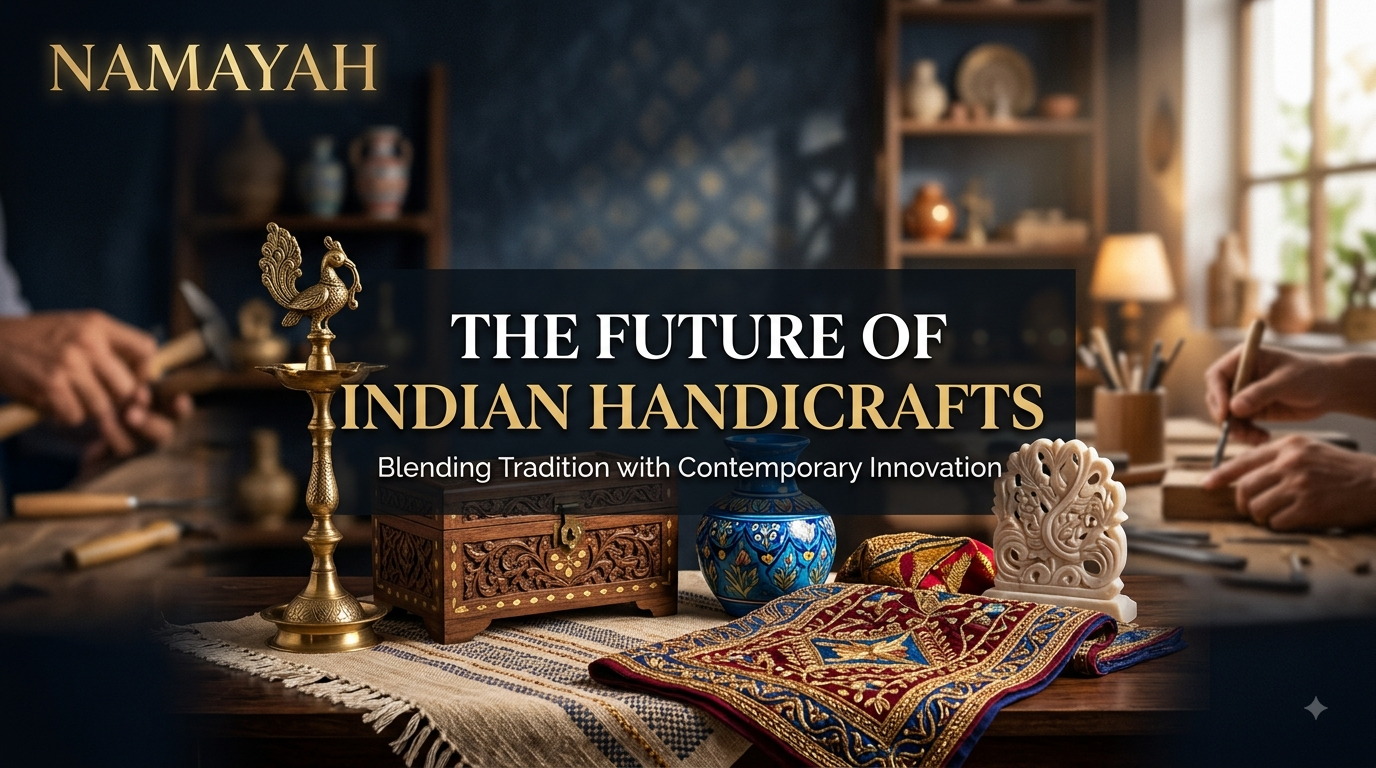
Indian handicrafts have survived for centuries because they are more than decorative products. They represent regional identities, inherited skills, local materials, community traditions, and stories passed from one generation to another. As consumer preferences, technology, and global markets change, the future of Indian handicrafts will depend on how successfully traditional craftsmanship adapts without losing its identity.
The future is likely to combine heritage with innovation. Digital commerce can give artisans access to customers beyond their local markets. Better design and packaging can make traditional products more relevant to contemporary consumers. Sustainable materials can strengthen their appeal, while government programs can provide training, tools, credit, and market support.
India’s official handicrafts portal currently highlights programs focused on competitive products, modern technology, branding, marketing, sustainable livelihoods, and preservation of traditions.
Why Indian Handicrafts Still Matter
Indian handicrafts are closely connected to the country’s cultural diversity. Different regions have developed distinctive traditions involving textiles, pottery, wood, metal, bamboo, stone, leather, jewellery, painting, basketry, and other materials.
The importance of handicrafts extends beyond aesthetics. For many communities, craft production provides an economic activity while also preserving knowledge and techniques that cannot simply be replaced by machines.
This cultural dimension is increasingly important in a world where consumers often want products with a story, a sense of place, and visible human involvement.
UNESCO describes intangible cultural heritage as living expressions of identity that evolve as societies change. Its listing for India includes the traditional brass and copper craft of the Thatheras of Jandiala Guru in Punjab, demonstrating the cultural significance of traditional artisanal knowledge.
The future of Indian handicrafts, therefore, should not be viewed only as a commercial question. It is also a question of how traditional knowledge can remain relevant in modern life.
Current State of Indian Handicrafts
The Indian handicrafts sector is increasingly being supported through formal programs, digital platforms, exhibitions, training initiatives, and market-development activities.
The Government of India’s Indian Handicrafts portal is designed to digitize the delivery of schemes and services for artisans and other stakeholders. Its current dashboard also reports millions of artisan-related enrollments and benefits across its programs.
Industry organizations are also working to connect Indian craft producers with international buyers. The Export Promotion Council for Handicrafts, for example, organizes major trade fairs and international promotional activities for Indian handicrafts.
These developments point toward a sector that is gradually becoming more connected to formal markets while continuing to rely heavily on traditional skills.
Key Trends Shaping the Future of Indian Handicrafts
1. Digital Commerce Will Expand Market Access
One of the biggest opportunities for Indian artisans is the ability to sell beyond their immediate geographic area.
Previously, an artisan might depend primarily on local customers, exhibitions, wholesalers, or intermediaries. Digital commerce can create additional routes to consumers through online marketplaces, social media, artisan websites, and direct-to-consumer businesses.
Digital channels can also help artisans communicate the story behind a product. A buyer can learn where an item was made, which material was used, how it was produced, and what community or tradition it represents.
However, simply putting products online is not enough. Successful digital selling requires good photography, accurate descriptions, reliable packaging, pricing discipline, customer service, and dependable delivery.
The future will therefore favor artisans and craft businesses that combine craftsmanship with digital skills.
2. Technology Will Support Traditional Craftsmanship
Technology does not necessarily mean replacing handmade production.
In many cases, technology can support artisans by improving design development, product visualization, inventory management, communication, payments, marketing, and access to customers.
Digital tools can also help document traditional techniques and product information. This may become increasingly valuable as communities seek ways to preserve knowledge for younger generations.
The challenge is to use technology where it adds value without turning handmade products into standardized factory goods.
The strongest future model may be a hybrid one: human craftsmanship at the center, with technology supporting the business around it.
3. Sustainable and Eco-Friendly Crafts Will Gain Attention
Sustainability is another important opportunity.
Many traditional crafts already make use of locally available materials and manual production methods. Bamboo, natural fibers, wood, clay, metal, and other materials can form part of craft-based product lines, although environmental impact depends on how materials are sourced and processed.
Future consumers are likely to pay closer attention to questions such as:
- Where did the material come from?
- Who made the product?
- Was the material responsibly sourced?
- How long will the product last?
- Can it be repaired or reused?
- Is the packaging environmentally responsible?
This creates an opportunity for Indian handicraft businesses to communicate sustainability transparently rather than treating it simply as a marketing slogan.
4. Modern Design Will Meet Traditional Techniques
Traditional crafts do not have to remain limited to traditional product categories.
A craft technique historically used for decorative objects, for example, can potentially be applied to contemporary home décor, fashion accessories, furniture, stationery, lighting, or lifestyle products.
Design collaboration can help bridge this gap.
Designers can work with artisans to preserve important techniques while adapting shapes, colors, dimensions, functionality, and packaging for modern consumers.
The goal should not be to erase traditional identity. Instead, the opportunity is to create products that feel contemporary while retaining a recognizable connection to their craft heritage.
5. Global Markets Will Create New Opportunities
Indian handicrafts already have an international presence, and export promotion remains an important part of the sector’s development.
Organizations such as the Export Promotion Council for Handicrafts support international trade fairs and promotional activities that connect Indian handicraft businesses with overseas buyers.
Global growth, however, requires more than attractive products.
International buyers may expect consistent quality, appropriate packaging, reliable delivery, documentation, product specifications, and professional communication.
Craft businesses that can combine authentic products with dependable business practices may be better positioned to compete internationally.
Government Support for Indian Artisans
Government programs are likely to remain an important part of the future of Indian handicrafts.
One significant initiative is PM Vishwakarma, launched in 2023 to support traditional artisans and craftspeople working with their hands and tools. The program covers 18 traditional trades and includes recognition, skill development, toolkit incentives, credit support, digital transaction incentives, and marketing support.
The scheme was approved with a total financial outlay of ₹13,000 crore for five years from FY 2023–24 to FY 2027–28.
By December 2025, the government reported that 30 lakh beneficiaries had registered under PM Vishwakarma and 23.09 lakh had received training.
The Ministry of Textiles’ National Handicrafts Development Programme also focuses on areas such as product development, technology, branding, marketing, environmental considerations, and sustainable livelihoods.
Such initiatives can help address one of the sector’s biggest challenges: connecting traditional skills with the resources and markets needed to sustain them.
Challenges Facing Indian Handicrafts
The future is promising, but growth is not guaranteed.
Skill transmission
Traditional knowledge can be difficult to preserve when younger generations choose other occupations. Craft communities need viable economic reasons for younger people to continue learning specialized skills.
Competition from mass-produced goods
Machine-made products can often be manufactured faster and sold at lower prices. Handmade products therefore need to compete through quality, originality, cultural value, durability, design, and storytelling rather than price alone.
Access to markets
An artisan may be highly skilled but lack knowledge of branding, e-commerce, logistics, export requirements, or customer acquisition.
Quality consistency
Scaling a handmade business while maintaining consistent quality can be difficult. Buyers may expect repeatable specifications even when every product is individually crafted.
Raw materials
Changes in the availability or cost of natural and traditional materials can affect production. Responsible sourcing will become increasingly important.
Intellectual property and imitation
Successful craft designs can be copied by mass producers. Protecting distinctive designs, techniques, and geographical identities can therefore become an important part of long-term growth.
What the Future of Indian Handicrafts May Look Like
The most realistic future is not one where traditional handicrafts become entirely modern or entirely unchanged.
Instead, Indian handicrafts are likely to become more connected, more digitally accessible, more design-conscious, and more commercially organized while retaining handmade techniques and cultural identity.
Several developments could define this transition:
- Direct-to-consumer sales may reduce dependence on traditional distribution channels.
- Digital storytelling may help buyers understand the people and traditions behind products.
- Design collaborations may introduce traditional techniques to new product categories.
- Sustainable materials and production may become stronger selling points.
- Government and industry programs may improve training, finance, tools, and market access.
- International exhibitions and e-commerce may connect more Indian craft businesses with overseas buyers.
- Younger artisans may combine inherited skills with contemporary design and digital entrepreneurship.
The key is balance. Commercial innovation should strengthen the craft ecosystem rather than disconnect products from the communities that created them.
How Consumers Can Support Indian Artisans
Consumers also have a role in shaping the future of Indian handicrafts.
When purchasing a handmade product, buyers can look for information about the artisan, craft tradition, materials, and place of origin. Buying directly from recognized artisan businesses, cooperatives, reputable craft organizations, or responsible retailers can help create demand for authentic products.
Consumers can also:
- Choose durable handmade products over disposable alternatives.
- Learn about regional Indian crafts.
- Support artisan-owned or artisan-focused businesses.
- Share authentic craft businesses through social media.
- Pay attention to responsible sourcing claims.
- Avoid assuming that the cheapest product represents the best value.
Every purchase sends a market signal. Greater demand for authentic, well-designed, fairly represented crafts can encourage more investment in traditional skills.
FAQs About the Future of Indian Handicrafts
What is the future of Indian handicrafts?
The future of Indian handicrafts is likely to combine traditional craftsmanship with digital commerce, modern design, sustainable production, and improved market access. Government initiatives and export promotion may also support artisan businesses.
How can technology help Indian handicrafts?
Technology can help artisans with online selling, digital payments, marketing, product design, inventory management, customer communication, documentation, and access to wider markets without necessarily replacing handmade production.
Will traditional Indian handicrafts disappear?
Some craft traditions may face pressure from changing consumer preferences, limited incomes, and declining transmission of skills. However, training, market access, contemporary design, documentation, and consumer demand can help traditional crafts remain economically and culturally relevant.
Why are Indian handicrafts important?
Indian handicrafts preserve traditional knowledge, regional identities, artistic techniques, and cultural practices while also providing economic opportunities for artisans and craft communities.
What is PM Vishwakarma?
PM Vishwakarma is a Government of India scheme launched in 2023 to support traditional artisans and craftspeople in 18 identified trades. It includes measures such as skill training, toolkit incentives, credit support, digital transaction incentives, and marketing support.
How can Indian handicrafts reach international customers?
Artisans and craft businesses can use e-commerce, social media, international trade fairs, export organizations, distributors, and professional websites. Success also requires suitable packaging, product consistency, logistics, documentation, and international customer service.
Can Indian handicrafts become more sustainable?
Yes, many craft businesses can explore responsible material sourcing, durable product design, low-waste processes, reusable packaging, repairability, and transparent environmental claims. Sustainability strategies should be appropriate to each craft and material.
How can young people contribute to the future of Indian handicrafts?
Young people can combine traditional craft skills with contemporary design, entrepreneurship, photography, digital marketing, e-commerce, content creation, and business management. This combination can help traditional crafts reach new audiences.
Conclusion
The future of Indian handicrafts will not be determined by tradition alone or by technology alone. It will depend on how effectively the two can work together.
India’s traditional crafts carry cultural knowledge that has developed across generations. At the same time, artisans need access to modern markets, tools, training, finance, design capabilities, and digital channels if their work is to remain economically viable.
Government initiatives such as PM Vishwakarma, along with handicraft development and export-promotion programs, are already creating mechanisms to support artisans and connect traditional skills with modern markets.
The strongest future for Indian handicrafts is therefore one where heritage becomes an advantage rather than a limitation. When authentic craftsmanship is combined with thoughtful design, responsible production, digital access, and fair market opportunities, Indian handicrafts can remain relevant to both Indian and international consumers for generations to come.