
The Best Natural Décor Materials for Sophisticated Interiors
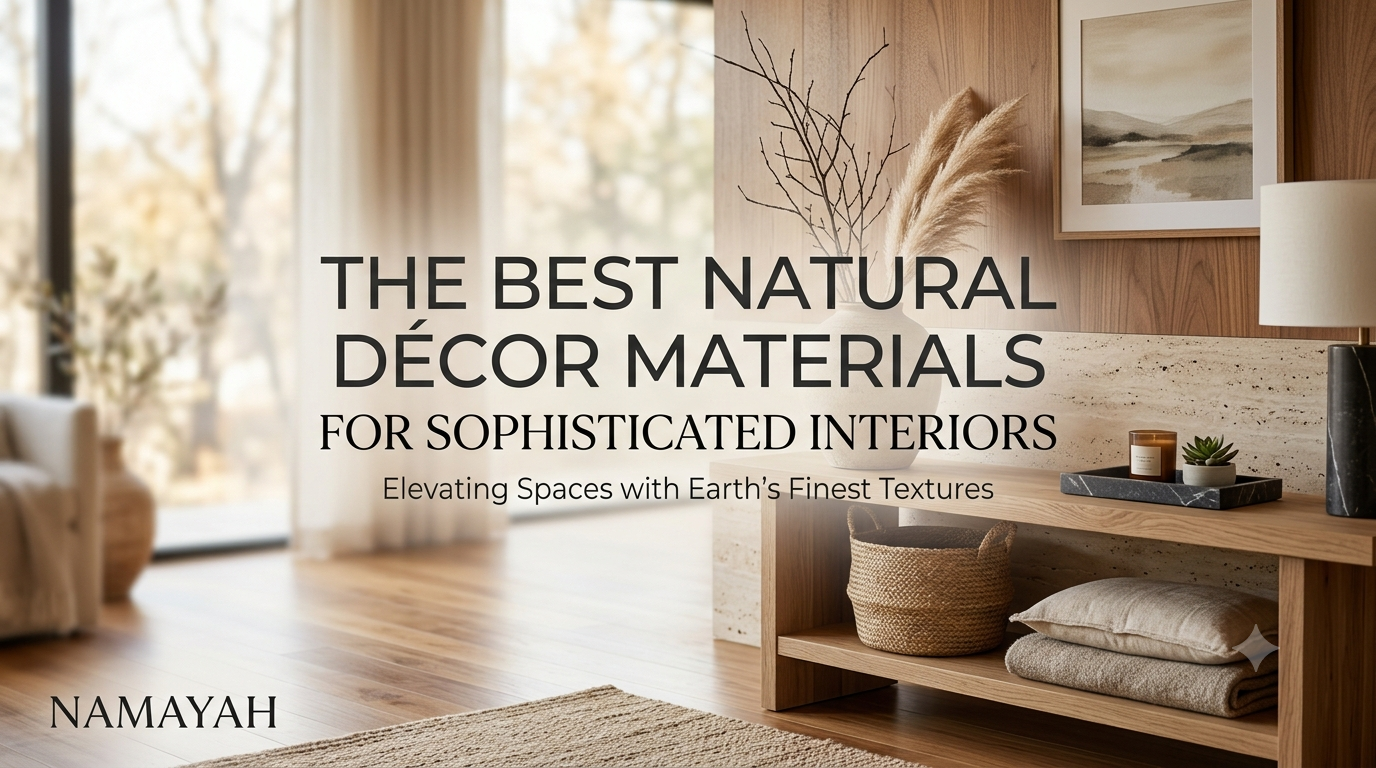
Sophisticated interiors do not need to feel formal, cold, or overly decorated. In many of the most inviting spaces, elegance comes from a carefully balanced combination of natural materials, restrained colors, tactile surfaces, and quality craftsmanship.
The best natural décor materials for sophisticated interiors include wood, natural stone, linen, wool, rattan, cane, jute, sisal, cork, clay, terracotta, and bamboo. Rather than using every material at once, combine a few complementary textures—such as warm wood with stone, linen, and woven fibers—to create depth without visual clutter. Current interior-design coverage continues to emphasize layered natural textures, organic materials, and craftsmanship as important elements of warm, refined spaces.
Why Natural Materials Make Interiors Feel More Sophisticated
Natural materials have an advantage that many mass-produced finishes struggle to replicate: variation.
Real wood has individual grain patterns. Stone has natural veining and movement. Linen has an irregular weave, while handmade ceramics can have subtle differences in shape and glaze. These imperfections can make a room feel considered rather than manufactured.
Natural materials also provide different forms of texture. A polished stone surface can contrast with rough wood, while soft linen can balance a woven rattan chair. This layering creates visual interest without requiring excessive decoration.
The approach also works particularly well with design styles such as Japandi, Scandinavian, contemporary, Mediterranean, rustic modern, and warm minimalism. Architectural Digest’s overview of Japandi, for example, highlights wood, stone, cotton, rattan, neutral colors, craftsmanship, and uncluttered spaces as defining characteristics.
1. Natural Wood
Wood is one of the most versatile choices for natural décor.
It can provide structure, warmth, contrast, and a sense of craftsmanship in almost any room. A solid-wood dining table can become the visual anchor of a dining area, while a smaller wooden stool, console, tray, or picture frame can introduce natural texture without dominating the room.
For sophisticated interiors, consider finishes that allow some of the wood’s character to remain visible. Oak, walnut, ash, teak, and other species can create very different effects depending on their color, grain, and finish.
The key is not necessarily to use the most expensive wood. Quality, proportion, finish, and placement matter more than simply adding more wood.
Try pairing warm wood with:
- Natural linen upholstery
- Cream or stone-colored walls
- Matte ceramics
- Natural stone
- Wool rugs
- Woven accessories
Responsible sourcing also matters. Reclaimed or responsibly sourced wood can be a useful option when environmental considerations are part of the design brief.
2. Natural Stone
Natural stone brings weight, permanence, and a sense of luxury to an interior.
Marble, limestone, travertine, slate, and granite can be used for flooring, countertops, tables, fireplaces, wall applications, and decorative objects. Each has its own visual character, so the right choice depends on the atmosphere you want to create.
For a softer, understated look, limestone or travertine can complement warm neutrals and natural wood. Marble can create a more dramatic focal point, particularly when its veining is allowed to remain visible.
Stone works especially well when it is balanced with softer materials. A stone coffee table, for example, can look more inviting when surrounded by linen upholstery, wool textiles, and warm lighting.
The goal is contrast rather than uniformity: hard stone becomes more elegant when paired with tactile, softer surfaces.
3. Linen
Linen is one of the easiest ways to introduce natural texture into a sophisticated interior.
Use it for curtains, cushions, upholstery, bedding, table linens, or loose throws. Its slightly relaxed texture prevents neutral interiors from looking sterile.
Linen is especially effective in shades such as:
- Warm white
- Ivory
- Sand
- Oatmeal
- Beige
- Soft gray
- Muted earth tones
Instead of matching every textile perfectly, vary the textures while keeping the colors related. This creates a layered look that feels intentional but not overly styled.
For example, combine a linen sofa with a wool rug, a textured cotton cushion, and a wooden coffee table. Each material contributes something different.
4. Wool
Wool adds softness, warmth, and tactile depth.
It is particularly useful for rugs, throws, cushions, and upholstery. A wool rug can visually anchor a seating area while softening the harder surfaces of wood or stone.
For an elegant natural interior, look beyond highly patterned designs. A simple neutral rug with visible texture can provide a sophisticated foundation for more sculptural furniture and decorative objects.
Wool also works beautifully with other natural materials. Pair it with:
Wood + wool: warm and comfortable
Stone + wool: balanced and refined
Linen + wool: relaxed and layered
Rattan + wool: organic and welcoming
5. Rattan and Cane
Rattan and cane bring craftsmanship and a lighter visual texture to interiors.
They can appear on dining chairs, cabinet fronts, headboards, pendant lights, baskets, screens, and accent furniture. Their woven structure introduces pattern without relying on printed decoration.
The key to keeping rattan sophisticated is restraint. One or two well-designed pieces can be more effective than filling an entire room with woven furniture.
Rattan also pairs naturally with wood, linen, stone, and neutral palettes. Contemporary designers continue to use these materials to bring warmth and texture into otherwise minimalist interiors.
6. Jute and Sisal
Jute and sisal are useful natural fibers for rugs and other woven décor.
They bring a subtle, organic texture to floors and can help visually define furniture arrangements. A natural-fiber rug beneath a dining table or living-room seating group can make an open space feel more grounded.
Jute tends to have a softer, more relaxed character, while sisal is often chosen when greater durability is needed. Both should be selected according to the room’s traffic, moisture exposure, and maintenance requirements.
Rather than treating a natural-fiber rug as a decorative afterthought, use it as part of the room’s overall material palette.
7. Cork
Cork is an understated option that deserves more attention.
It can be used for flooring, wall treatments, furniture components, and accessories. Its naturally warm appearance and distinctive texture can add personality without making a room feel visually busy.
Cork can also be appealing in projects where renewable materials are a priority. However, sustainability should always be evaluated based on the specific product, manufacturing process, transportation, finish, and expected lifespan rather than assuming that every natural material is automatically environmentally superior.
8. Clay and Terracotta
Clay, ceramics, and terracotta introduce an unmistakably handcrafted quality.
Think sculptural vases, bowls, planters, lamps, tiles, and decorative objects. Their earthy surfaces work particularly well against clean architectural backgrounds.
A single oversized ceramic vessel can create a strong focal point, while a collection of smaller handmade pieces can add personality to shelves or consoles.
Terracotta is particularly effective with:
- Cream
- Warm white
- Olive
- Brown
- Natural wood
- Soft black
- Muted green
These combinations create an earthy palette without requiring a fully rustic interior.
9. Bamboo
Bamboo can introduce a clean, lightweight natural element to furniture, screens, lighting, and decorative features.
Its visual character can suit minimalist and contemporary interiors, particularly when paired with simple silhouettes and neutral colors.
As with wood and other plant-based materials, however, the sustainability of bamboo depends on how it is cultivated, processed, transported, finished, and manufactured. Material choice should therefore consider the complete product rather than the material’s reputation alone.
How to Combine Natural Materials Without Overdoing Them
The biggest mistake with natural décor is assuming that more materials automatically create a better interior.
A sophisticated room usually benefits from three layers of material contrast:
- A structural material — wood, stone, or another substantial surface.
- A soft material — linen, wool, cotton, or another textile.
- A textured accent — rattan, cane, jute, clay, or a woven fiber.
For example, imagine a living room with an oak coffee table, a linen sofa, and a jute rug. Add a stone lamp or ceramic vase, and you already have several distinct textures without overcrowding the space.
Repeat materials subtly rather than introducing a new material in every corner.
Best Natural Material Combinations by Room
Living Room
A strong combination is wood + linen + stone + wool.
Use wood for furniture, linen for upholstery or curtains, stone for a coffee table or side table, and wool for the rug.
Bedroom
Choose softer materials such as wood + linen + wool + cane.
A wooden bed frame, linen bedding, wool throw, and cane accent chair can create a calm, sophisticated atmosphere.
Dining Room
Try wood + stone + linen + ceramic.
A solid-wood dining table can be paired with upholstered or woven chairs, a natural stone centerpiece, linen napkins, and handmade ceramics.
Entryway
Keep the material palette simple: wood + stone + woven fiber.
A wooden console, stone tray, and woven basket can create a polished first impression without filling the space with accessories.
Bathroom
Stone and wood-inspired elements can work particularly well, complemented by natural textiles and handmade ceramics. Because bathrooms involve moisture, choose materials and finishes specifically rated for the environment and follow appropriate maintenance requirements.
Natural Materials and Sustainable Interior Design
Natural does not automatically mean sustainable.
A material’s environmental impact can depend on sourcing, extraction or cultivation, processing, manufacturing, transportation, finishing, maintenance, and lifespan. This is why responsible design should look beyond labels.
When possible, investigate:
- Where the material was sourced
- Whether wood comes from responsible sources
- How long the product is expected to last
- Whether it can be repaired or refinished
- Whether finishes have relevant environmental certifications
- How much processing the material requires
- Whether the product can eventually be reused or recycled
Durability is also part of responsible design. A beautiful material that lasts for decades may be preferable to an inexpensive finish that needs frequent replacement.
Common Mistakes to Avoid
Using Too Many Wood Tones
Different wood tones can work together, but uncontrolled variation can make a room feel fragmented. Establish a dominant wood tone and introduce secondary tones deliberately.
Making Everything Beige
Natural materials do not require a completely neutral palette. Deep green, charcoal, terracotta, muted blue, and other restrained colors can provide contrast.
Ignoring Texture
A room filled with smooth wood, smooth stone, and flat textiles can still feel cold. Add tactile surfaces through wool, linen, woven fibers, ceramics, or textured finishes.
Choosing Materials Without Considering Maintenance
Every natural material has practical requirements. Stone may need specific care, textiles can stain, and woven materials may not suit every environment. Choose based on both appearance and lifestyle.
Overdecorating
Sophisticated interiors often rely on negative space. Allow beautiful materials to be seen rather than covering every surface with accessories.
How to Create a Sophisticated Natural Interior
Start with the architecture and existing finishes rather than shopping for accessories immediately.
Choose one primary material, such as warm wood or natural stone. Then introduce a complementary soft material, such as linen or wool. Finally, add one or two smaller tactile elements, such as rattan, jute, or handmade ceramics.
Keep the color palette cohesive, but allow texture and natural variation to provide visual interest.
Most importantly, focus on quality, proportion, craftsmanship, and restraint. Natural materials are most effective when they support the architecture and lifestyle of a home rather than becoming a theme.
The best natural décor materials for sophisticated interiors are not necessarily the rarest or most expensive options. Wood, stone, linen, wool, woven fibers, cork, clay, and bamboo can all create an elegant environment when selected thoughtfully and combined with balance.
FAQs
What are the best natural materials for sophisticated interiors?
The strongest choices include natural wood, stone, linen, wool, rattan, cane, jute, sisal, cork, clay, terracotta, and bamboo. The best combination depends on the room, climate, maintenance needs, and desired aesthetic.
Which natural material makes a room look luxurious?
Natural stone and high-quality wood can create a strong sense of luxury, while linen, wool, and handmade ceramics add softness and craftsmanship. Luxury usually comes from the combination of material quality, proportion, lighting, and design rather than one material alone.
How do you make natural décor look modern?
Use clean-lined furniture, a restrained color palette, fewer decorative objects, and carefully selected natural textures. Pair organic materials with contemporary silhouettes to prevent the room from feeling overly rustic.
Can natural materials work in minimalist interiors?
Yes. Natural materials are particularly effective in minimalist spaces because texture can create visual interest without requiring many objects. Wood, stone, linen, and ceramics are especially useful.
What natural materials work best together?
Wood, stone, linen, wool, rattan, jute, and ceramics are versatile combinations. A simple formula is one hard material, one warm structural material, and one or two soft or woven textures.
Are natural materials always sustainable?
No. Natural origin does not automatically mean low environmental impact. Consider sourcing, processing, transportation, finishes, durability, maintenance, and end-of-life options before making sustainability claims.
What is the easiest way to add natural materials to a home?
Start with smaller pieces such as linen cushions, a wool or jute rug, wooden accessories, woven baskets, and ceramic vessels. Once the palette feels cohesive, consider larger investments such as furniture, flooring, cabinetry, or stone surfaces.
Which natural materials suit Japandi interiors?
Wood, stone, linen, cotton, rattan, wool, and ceramics work particularly well with Japandi’s emphasis on natural materials, neutral colors, craftsmanship, functionality, and uncluttered spaces.
Conclusion
Natural materials can make an interior feel sophisticated without making it feel overly formal. The secret is to use them with intention.
Start with a strong foundation such as wood or stone, soften it with linen or wool, and introduce woven or handcrafted accents for additional texture. Keep the palette cohesive, leave enough negative space, and select materials according to how the room will actually be used.
When natural materials are balanced rather than simply accumulated, they create interiors that feel warm, tactile, timeless, and personal.