
Styling Luxury Décor Without Making Your Home Feel Cluttered
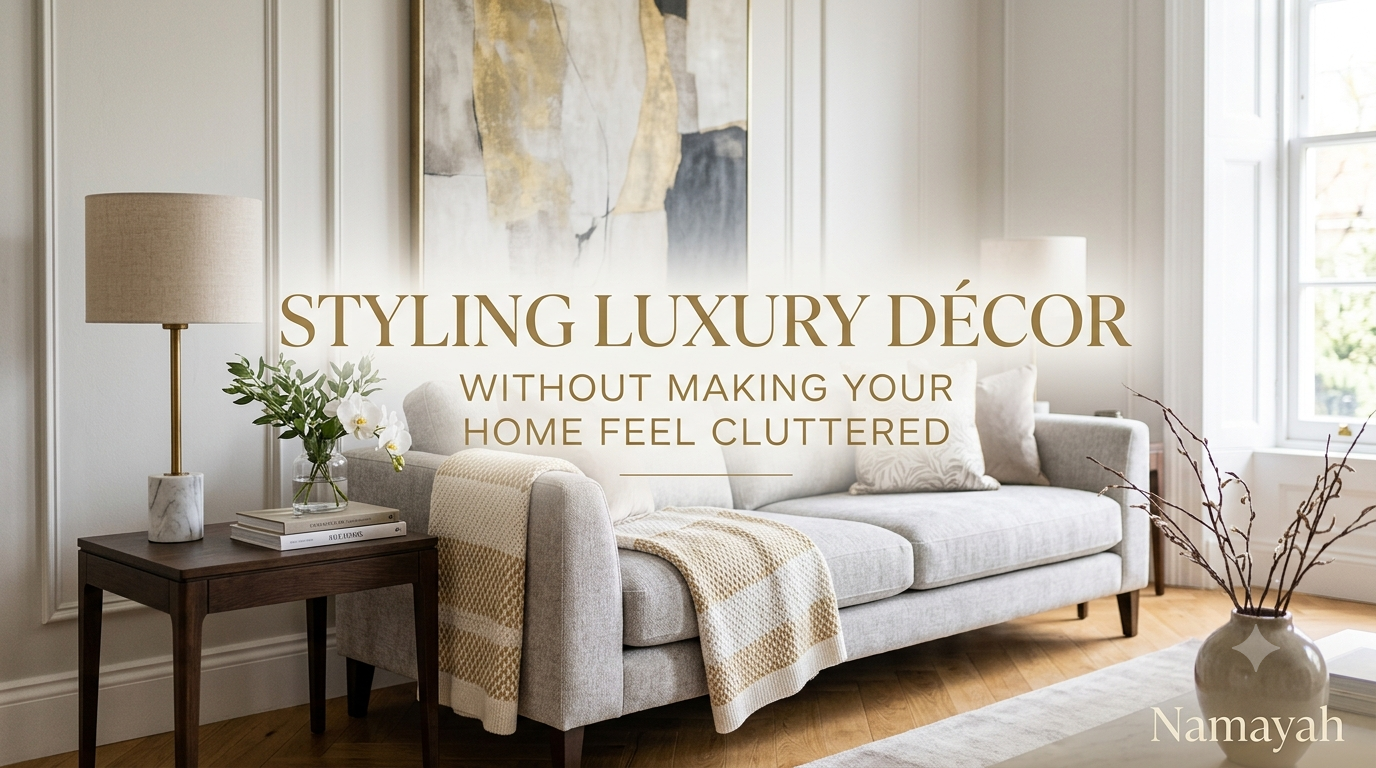
Luxury décor is not about filling every corner with expensive-looking furniture and accessories. A luxurious home usually feels intentional: each piece has enough space around it, materials work together, lighting creates atmosphere, and decorative objects are selected rather than accumulated.
The key is editing rather than adding. Choose fewer high-impact pieces, create visual breathing room, layer textures, and keep everyday clutter out of sight. With the right balance of scale, color, lighting, and materials, even a relatively simple room can feel refined and sophisticated.
What Makes a Home Look Luxurious?
A luxurious interior is defined more by cohesion and quality than quantity.
Several elements can contribute to a sophisticated appearance:
- Well-proportioned furniture
- A restrained color palette
- High-quality-looking materials
- Layered lighting
- Rich but controlled textures
- Thoughtful artwork
- Functional storage
- Open visual space
- Carefully selected accessories
This means you do not necessarily need more décor. In many cases, removing unnecessary objects makes the pieces you love feel more significant.
Luxury works best when the room has a clear visual hierarchy. Your eye should know where to look first, second, and third rather than competing with dozens of decorative details.
Start With a Clear Visual Foundation
Before introducing luxury décor, consider what is already in the room.
Remove objects that no longer serve a practical or aesthetic purpose. Clear unnecessary items from coffee tables, shelves, countertops, and floors. Then assess the furniture arrangement.
Ask yourself:
- Can people move comfortably through the room?
- Does each major furniture piece have enough surrounding space?
- Are there too many small decorative objects?
- Does the room have one or two obvious focal points?
- Are different colors and finishes competing for attention?
This editing process creates the foundation for luxury styling.
An uncluttered room does not have to be empty. It simply needs enough negative space for the important elements to stand out.
Choose Fewer, Better Pieces
One of the easiest ways to prevent luxury décor from feeling cluttered is to reduce the number of decorative items.
Instead of displaying ten small accessories, consider using two or three larger pieces with stronger visual impact. A substantial vase, sculptural object, framed artwork, or elegant lamp can often contribute more than a collection of unrelated decorations.
Think about visual weight as well as physical size.
For example, a large ceramic vessel in a neutral finish may create a stronger focal point than several small ornaments scattered across a console.
The goal is not minimalism for its own sake. The goal is intentionality.
Create a Cohesive Color Palette
Color is one of the fastest ways to make a room feel either sophisticated or visually chaotic.
For a refined luxury look, begin with a limited palette. Warm neutrals, soft whites, beige, taupe, gray, brown, charcoal, and muted earthy tones can provide a calm foundation.
You can then introduce contrast through:
- Dark wood
- Aged metal
- Stone
- Deep accent colors
- Artwork
- Decorative textiles
A restrained palette allows materials and shapes to become more noticeable.
If you prefer bold colors, you do not have to eliminate them. Instead, use a strong color strategically rather than repeating it excessively throughout the room.
Use Texture Instead of Excessive Accessories
A room can feel rich without being packed with decorative objects.
Texture is an excellent way to introduce depth while maintaining visual calm. Consider combining materials such as:
- Linen
- Wool
- Velvet
- Leather
- Wood
- Stone
- Glass
- Metal
- Ceramic
For example, a neutral sofa can feel considerably more luxurious when paired with textured cushions, a soft throw, a sculptural side table, and warm lighting.
This approach creates complexity through material contrast rather than accessory overload.
Make Lighting Part of the Décor
Lighting is fundamental to luxury interior styling.
A single ceiling fixture can leave a room feeling flat, while layered lighting creates depth and atmosphere.
Consider combining:
- Ambient lighting for general illumination
- Task lighting for practical activities
- Accent lighting for artwork, shelves, or architectural details
Table lamps and floor lamps can also become decorative elements in their own right.
Choose fixtures that complement the room’s overall style instead of treating lighting as an afterthought.
Warm, appropriately placed lighting can emphasize textures, highlight artwork, and make materials such as wood and stone appear more dimensional.
Give Statement Furniture Room to Breathe
A statement sofa, dining table, bed, or armchair needs enough surrounding space to have an impact.
One common mistake is trying to fit too much furniture into a room. Even beautiful pieces can make an interior feel cramped when their proportions are not appropriate.
Before buying a large item, consider:
- The room’s dimensions
- Ceiling height
- Existing furniture
- Walkways
- Door and window positions
- Visual weight
A beautiful piece can look more luxurious when it has room around it.
Style Surfaces With Intention
Coffee tables, consoles, shelves, and bedside tables often become clutter hotspots.
Rather than filling these surfaces, create small, deliberate compositions.
A coffee table might include:
- One coffee-table book
- A sculptural object
- A low decorative bowl or tray
A console could feature:
- A large piece of artwork or mirror above it
- One substantial lamp
- One carefully chosen decorative object
Grouping objects gives them structure. Leaving some of the surface visible creates visual breathing room.
Use Scale and Proportion Correctly
Luxury styling depends heavily on proportion.
A tiny artwork above a large sofa may look disconnected. Likewise, several small accessories can make a large console appear visually fragmented.
When choosing décor, consider the relationship between the object and its surroundings.
Large rooms can often accommodate larger-scale artwork, lighting, rugs, and furniture. Smaller rooms may benefit from fewer pieces with carefully controlled proportions.
The objective is balance rather than simply choosing the biggest available item.
Add Luxury Through Materials
You can create an elevated atmosphere through materials without adding more objects.
Look for combinations that provide contrast and depth, such as:
- Natural stone with wood
- Metal with glass
- Linen with velvet
- Leather with woven textiles
- Matte ceramic with polished surfaces
The same color can feel completely different depending on its material.
For example, a neutral palette made entirely from flat surfaces may feel ordinary. Introduce wood grain, woven fabric, stone veining, and subtle metallic details, and the same palette can become considerably richer.
Keep Storage Elegant and Practical
Luxury and clutter rarely work well together.
Everyday objects such as chargers, paperwork, remote controls, children’s items, and miscellaneous accessories can quickly disrupt an otherwise polished room.
Use storage solutions that fit naturally into the interior:
- Closed cabinets
- Decorative boxes
- Baskets
- Storage ottomans
- Built-in shelving
- Concealed drawers
Open shelving can still work, but it should be edited regularly. Display objects selectively rather than using every available shelf for storage.
Good storage is not just practical. It protects the visual calm that makes luxury décor effective.
Common Luxury Décor Mistakes to Avoid
1. Using Too Many Statement Pieces
Several dramatic pieces competing for attention can weaken each other. Choose a primary focal point and let supporting elements remain quieter.
2. Mixing Too Many Finishes
Combining every metal, wood tone, fabric, and color can make the room feel disconnected.
3. Filling Every Empty Surface
Empty space is not wasted space. It helps important décor stand out.
4. Ignoring Scale
Furniture and accessories that are too large or too small for a room can make an otherwise expensive-looking interior feel poorly planned.
5. Prioritizing Appearance Over Function
A room should still be comfortable and usable. Luxury is less convincing when people cannot move, sit, work, or relax comfortably.
6. Following Trends Too Literally
A sophisticated interior does not need to look like a showroom. Incorporate trends selectively and maintain a style that feels appropriate to the home.
Room-by-Room Luxury Styling Ideas
Living Room
Start with a comfortable sofa and establish one main focal point. Add a large rug, layered lighting, a few textured cushions, and restrained accessories.
Avoid filling the coffee table and every side surface.
Bedroom
Use quality-looking bedding, layered textiles, soft lighting, and symmetrical bedside styling. Keep decorative objects limited so the room retains a restful atmosphere.
Dining Room
Let the dining table remain visually open when it is not being used. A sculptural centerpiece or simple arrangement can be enough.
A statement light fixture above the table can provide a strong decorative focal point without requiring additional accessories.
Entryway
The entryway sets the tone for the rest of the home. A console, mirror or artwork, one decorative object, and practical concealed storage may be all you need.
Bathroom
Introduce luxury through materials and details rather than excessive decoration. Towels, lighting, hardware, stone, wood accents, and a restrained countertop arrangement can create an elevated feel.
A Simple Formula for a Clutter-Free Luxury Look
If you are unsure where to begin, use this five-step approach:
1. Edit: Remove anything unnecessary.
2. Anchor: Choose one or two major focal points.
3. Layer: Add texture through textiles, materials, and lighting.
4. Balance: Check scale, proportion, and visual weight.
5. Breathe: Leave intentional empty space around important pieces.
This formula works because luxury is often communicated through restraint. You do not need to make every part of the room compete for attention.
FAQs About Luxury Décor
How can I make my home look luxurious without buying expensive furniture?
Focus on presentation rather than price. Declutter surfaces, improve lighting, coordinate colors, use layered textures, and select a few strong decorative pieces. Good proportions and cohesive styling can make a room feel more refined without requiring a complete furniture replacement.
What colors make a home look luxurious?
Neutral shades such as cream, beige, taupe, warm gray, brown, and charcoal can create a sophisticated foundation. Deep or muted accent colors can then add contrast without overwhelming the room.
How many decorative items should I put on a coffee table?
There is no universal number. A useful approach is to create one small, cohesive composition rather than covering the entire surface. Leave enough empty space for the table to remain functional.
Does luxury interior design have to be minimalist?
No. Luxury interiors can be traditional, contemporary, maximalist, transitional, or eclectic. The important factor is control. Even a richly decorated room can feel sophisticated when color, scale, materials, and composition are coordinated.
How do I make a small room look luxurious?
Prioritize proportion and visual space. Avoid oversized furniture, reduce unnecessary accessories, use layered lighting, maintain a cohesive palette, and select multifunctional storage. A smaller number of well-chosen pieces can make the room feel more spacious.
What makes a living room look cluttered?
Common causes include too many small accessories, excessive furniture, mismatched colors, crowded shelves, visible everyday items, and insufficient negative space. Editing the room can often make a bigger difference than adding new décor.
How can I decorate shelves without making them look messy?
Group objects by color, material, or theme and vary their heights. Leave some shelves partially empty, and combine decorative objects with books or artwork. Regular editing helps prevent the display from gradually becoming overcrowded.
What is the most important rule for luxury home décor?
Prioritize quality, proportion, and restraint over quantity. Give important furniture and decorative pieces enough space to be appreciated, and use lighting and texture to add richness without excessive objects.
Conclusion
Styling luxury décor without making your home feel cluttered comes down to intentional choices. Instead of filling every room with accessories, focus on proportion, negative space, cohesive colors, layered textures, thoughtful lighting, and materials that add depth.
The most effective luxury interiors are not necessarily the ones with the most expensive or numerous objects. They are the spaces where every significant element feels purposeful and where the room remains comfortable, functional, and visually calm.
When in doubt, edit before you add. Remove what does not contribute, give your favorite pieces room to breathe, and let quality materials and thoughtful styling create the sense of luxury.