
Statement Décor vs Subtle Accents: What Works Best?
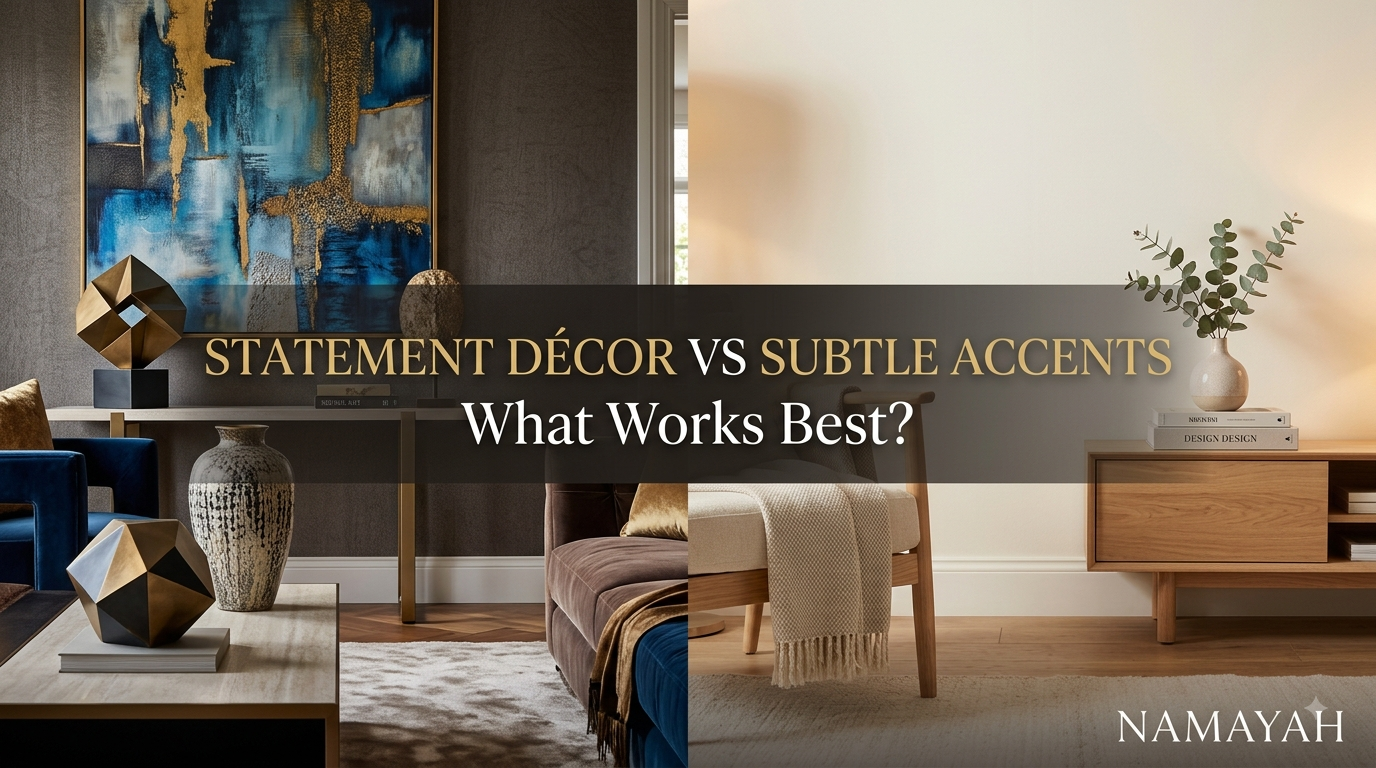
Choosing between statement décor and subtle accents can completely change the character of a room. Statement décor creates an immediate focal point through bold color, dramatic scale, unusual shapes, strong patterns, or distinctive materials. Subtle accents work more quietly, using texture, tone, repetition, and carefully selected details to create depth.
So, which works best? Neither approach is universally better. The strongest interiors usually depend on balance: choose one or two elements to attract attention, then use quieter pieces to support them. This creates visual hierarchy without making the room feel either boring or overcrowded. Recent interior-design guidance similarly emphasizes identifying a clear anchor and allowing supporting pieces and negative space to give it room to stand out.
What Is Statement Décor?
Statement décor is an element deliberately designed to attract attention. It can become the visual focal point of a room and influence the surrounding color palette, furniture arrangement, and overall mood.
Common examples include:
- An oversized piece of artwork
- A sculptural chandelier
- A brightly colored sofa
- A dramatic accent chair
- A patterned rug
- A feature wall or bold wallpaper
- An unusual coffee table
- An antique or handcrafted centerpiece
- A large decorative mirror
- A distinctive fireplace or architectural feature
A statement piece does not necessarily have to be colorful. A large neutral artwork, sculptural wooden table, or unusual stone object can also become the main attraction.
The key is visual impact, not simply brightness.
A statement piece works particularly well when the rest of the room gives it enough breathing space. Interior designers frequently recommend identifying one main focal point—or occasionally two—rather than allowing every object to compete for attention.
What Are Subtle Accents?
Subtle accents are smaller or quieter decorative elements that enhance a room without immediately becoming its dominant feature.
Examples include:
- Cushions in complementary tones
- Textured throws
- Ceramic vases
- Small sculptures
- Decorative books
- Soft curtains
- Natural wood accessories
- Neutral artwork
- Small plants
- Understated lighting
- Brushed-metal details
- Layered textiles
Subtle accents can be especially effective when you want a room to feel calm, sophisticated, or uncluttered.
Importantly, subtle does not mean uninteresting. Texture, material, shape, and tonal variation can create visual interest without relying on dramatic colors or oversized objects. Current design discussions around “soft contrast,” for example, emphasize closely related tones and layered materials as a way to create richness without visual overload.
Statement Décor vs Subtle Accents: What Is the Difference?
The simplest distinction is how strongly an element demands attention.
| Feature | Statement Décor | Subtle Accents |
|---|---|---|
| Visual impact | High | Low to moderate |
| Main purpose | Create a focal point | Add depth and cohesion |
| Typical scale | Medium to oversized | Small to medium |
| Color | Often bold, but not always | Usually restrained |
| Pattern | Strong or distinctive | Simple or tonal |
| Best for | Creating personality | Layering a finished look |
| Risk | Visual clutter | Can feel too plain |
| Flexibility | Can define an entire room | Easy to change or rearrange |
| Best approach | Use selectively | Layer thoughtfully |
The two approaches are not opposites. In fact, they often work best together.
Think of statement décor as the lead actor and subtle accents as the supporting cast. If everyone tries to be the lead, the room can become visually noisy. If nobody stands out, the room may lack a focal point.
When Statement Décor Works Best
Statement décor is a strong choice when a room needs personality or a clear visual anchor.
1. When the Room Feels Too Plain
A neutral room can sometimes benefit from one dramatic element. A large artwork, sculptural light fixture, or colorful chair can give the space direction without requiring a complete redesign.
2. When You Have a Strong Architectural Feature
If your room already has a fireplace, large windows, unusual ceiling, built-in shelving, or another architectural feature, décor can reinforce that natural focal point rather than competing with it.
3. When You Want to Express Personality
Statement pieces can make a home feel individual. A vintage mirror, handcrafted object, bold artwork, or unusual furniture piece may tell visitors more about your taste than a room filled with generic accessories.
Architectural Digest India has similarly highlighted how dramatic mirrors, heritage-inspired textiles, sculptural lamps, and other carefully selected accessories can contribute personality and depth to contemporary interiors.
4. When You Want Maximum Impact From a Few Pieces
If you prefer buying fewer decorative items, one strong piece can sometimes do more visual work than many small objects.
This can also make seasonal decorating easier. Instead of changing dozens of accessories, you can replace one artwork, centerpiece, rug, or accent chair.
When Subtle Accents Work Best
Subtle accents are often preferable when you want flexibility, calm, and visual continuity.
1. In Minimalist Interiors
Minimalist rooms generally benefit from restraint. Instead of filling the space with decorative objects, you can introduce interest through wood, linen, stone, ceramics, soft lighting, and tonal colors.
Architectural Digest India recently described minimalist interiors using natural textures, warm tones, wooden elements, handwoven rugs, and natural-fabric curtains to create character without visual clutter.
2. In Small Rooms
A large statement object can overwhelm a compact space if its scale is not carefully considered. Smaller accents allow you to introduce color and texture while preserving a sense of openness.
This does not mean small rooms must avoid bold design. A single statement element can still work—provided it has enough visual space around it.
3. When You Prefer a Timeless Look
Subtle décor can make it easier to evolve your interior over time. Neutral accessories, natural materials, and classic shapes can remain useful even when your preferences change.
4. When the Furniture Is Already Bold
If your sofa, bed, dining table, or cabinetry has a strong shape or color, quieter accessories can prevent the room from becoming overwhelming.
The goal is not to make everything equally noticeable. The goal is to establish a clear hierarchy.
How Room Size Changes the Choice
Room size matters, but it should not be treated as a strict rule.
A spacious living room may have enough visual room for an oversized artwork or dramatic chandelier. A compact bedroom might benefit from a smaller focal point paired with restrained accessories.
However, a small room can still support statement décor. For example, one dramatic wallpapered wall may create more impact than filling the room with numerous decorative objects.
Scale is the important consideration.
Ask:
- How large is the room?
- How tall are the ceilings?
- How much furniture is already present?
- Where does the eye naturally travel?
- How much empty wall or floor space remains?
- Is the statement piece competing with another focal point?
A large object is not automatically too much. It becomes problematic when its visual weight is disproportionate to the space.
The Role of Color and Pattern
Color is one of the fastest ways to turn an accent into a statement.
A deep blue chair in a neutral room, for example, will probably attract more attention than a beige chair with a similar silhouette. Likewise, an oversized geometric rug can become a focal point even if the rest of the room is restrained.
But statement décor does not require saturated color.
You can create impact through:
- Contrast
- Unusual shapes
- Scale
- Pattern
- Shine
- Material
- Placement
- Craftsmanship
Similarly, subtle accents do not have to be beige or white. Muted green cushions, warm wood accessories, terracotta ceramics, or tonal artwork can add personality without becoming the main focal point.
A useful strategy is to repeat a color or material in several quieter areas of the room. This creates cohesion and helps the statement piece feel connected to the wider design.
The Importance of Texture and Material
Texture is particularly valuable when you want subtle décor to feel rich rather than plain.
Consider combining materials such as:
- Linen
- Wool
- Wood
- Stone
- Ceramic
- Glass
- Metal
- Velvet
- Rattan
The contrast between materials creates depth even when the color palette remains restrained.
This is one reason understated rooms can still feel sophisticated. The eye discovers variation through touchable surfaces, subtle reflections, natural imperfections, and differences in scale.
Instead of adding five more decorative objects, you might get a stronger result by changing one smooth surface to a textured one or introducing a natural material.
How to Balance Statement Décor and Subtle Accents
For most homes, the best solution is not choosing one style exclusively. It is creating a hierarchy between the two.
Step 1: Choose the focal point
Decide what you want people to notice first.
It could be artwork, furniture, lighting, architecture, or even a beautiful view.
Step 2: Build supporting elements around it
Once the focal point is established, choose accessories that complement it rather than compete with it.
If you have dramatic artwork, for example, your cushions and side tables do not also need to be dramatic.
Step 3: Repeat important colors
Pick one or two colors from the statement piece and introduce them subtly elsewhere.
This makes the room feel intentional rather than disconnected.
Step 4: Add texture
Use textiles, wood, ceramics, stone, or metal to create depth without adding unnecessary visual noise.
Step 5: Protect negative space
Do not feel obligated to decorate every shelf, wall, or corner.
Negative space gives important objects room to breathe. Designers quoted by Homes & Gardens specifically emphasize that quieter supporting pieces and empty space can strengthen the impact of a focal point.
Step 6: Edit before adding more
Stand back and look at the room as a whole.
If your eye jumps between too many objects, remove or simplify one or two elements.
Good décor is not necessarily about adding more. Sometimes the most effective improvement is taking something away.
Room-by-Room Decorating Ideas
Living Room
A living room can usually support one major statement element, such as oversized artwork, a sculptural coffee table, a distinctive sofa, or a dramatic light fixture.
Keep smaller accessories quieter so the main element remains visually dominant.
Bedroom
The bed or headboard can serve as the statement feature. Alternatively, use a striking pendant light or artwork above the bed.
Keep bedding, bedside accessories, and window treatments relatively restrained if the focal point is strong.
Dining Room
Lighting is an effective statement opportunity. A distinctive chandelier or pendant can define the dining area.
Pair it with a simpler table centerpiece and understated table accessories.
Entryway
An entryway is a natural place for a memorable first impression. A large mirror, console, artwork, or sculptural light can become the focal point.
Because entryways are often smaller, choose carefully and avoid filling every available surface.
Bathroom
Bathrooms can benefit from subtle accents such as textured towels, natural materials, ceramics, and mirrors.
If you want something bolder, use a dramatic mirror, patterned tile, distinctive lighting, or a strong paint color as the main feature.
Common Decorating Mistakes to Avoid
Using Too Many Statement Pieces
If every item demands attention, nothing feels special.
A recent Homes & Gardens design discussion recommends limiting a room to one or two primary statement elements and allowing other pieces to support them.
Ignoring Scale
An attractive object can still look wrong if it is too small or too large for the room.
Consider the dimensions of nearby furniture and the amount of surrounding space.
Filling Every Empty Surface
Empty space is not necessarily unfinished space.
Leaving some walls, shelves, and tabletops clear can make the objects you do display feel more intentional.
Matching Everything Too Closely
A room can feel flat when every accessory has the same color, finish, shape, or material.
Introduce controlled variation instead.
Following Trends Without Considering Your Home
A popular décor trend may look appealing online but fail to suit your room’s architecture, lighting, scale, or existing furniture.
Choose pieces because they work within your space—not simply because they are currently popular.
How to Choose the Right Approach
If you are unsure whether statement décor or subtle accents are right for your home, use this simple decision guide:
Choose statement décor when:
- Your room lacks a focal point.
- You want stronger personality.
- Your existing furniture is relatively simple.
- You have an architectural feature worth emphasizing.
- You enjoy bold colors, patterns, or unusual objects.
Choose subtle accents when:
- Your furniture already makes a strong visual statement.
- You prefer minimalist or calm interiors.
- The room is compact or visually busy.
- You want flexibility.
- You prefer texture and layering over dramatic contrast.
Choose a combination when:
- You want personality without clutter.
- You have one obvious focal point.
- You enjoy mixing bold and understated elements.
- You want the room to feel both expressive and comfortable.
For most homes, the combination approach is the safest starting point: one clear statement, several supporting accents, and enough negative space for everything to breathe.
FAQs
Is statement décor better than subtle accents?
Neither is automatically better. Statement décor works best when a room needs a strong focal point, while subtle accents are useful for adding texture, cohesion, and personality without overwhelming the space. Combining the two often produces the most balanced result.
How many statement pieces should a room have?
As a practical starting point, choose one primary statement piece and add a second only if the room has enough space and visual hierarchy to support it. Too many competing focal points can make an interior feel busy.
Can subtle décor still make a room look luxurious?
Yes. Luxury does not require dramatic decoration. High-quality materials, thoughtful proportions, layered textures, natural finishes, and carefully selected accessories can create a sophisticated look with relatively restrained décor.
What is a good statement piece for a living room?
Oversized artwork, a sculptural coffee table, distinctive lighting, a bold sofa, or an unusual rug can all work. Choose based on the room’s existing furniture, scale, color palette, and natural focal points.
Are statement pieces suitable for small rooms?
Yes, but scale matters. Instead of adding several bold objects, consider choosing one focal point and keeping surrounding décor simple. This can create impact without making the room feel crowded.
How can I make neutral décor more interesting?
Use variations in texture, material, shape, and tone. Linen, wood, stone, ceramics, woven materials, and subtle metallic finishes can create depth even when the overall color palette is neutral.
Should every room have a statement piece?
No. Some rooms can rely on architecture, natural light, views, furniture proportions, or layered textures rather than a single dramatic object. The goal is visual interest, not necessarily a traditional statement piece.
How do I avoid making statement décor look cluttered?
Limit competing focal points, repeat selected colors or materials, maintain negative space, and remove accessories that do not contribute to the overall composition. If everything is trying to stand out, edit the room until the visual hierarchy becomes clear.
Conclusion
The debate between statement décor vs subtle accents is less about choosing a winner and more about understanding visual hierarchy.
Statement décor gives a room personality, drama, and a clear focal point. Subtle accents provide texture, continuity, warmth, and balance. Used together, they can create an interior that feels expressive without becoming overwhelming.
Start with the element you want people to notice first. Then let the rest of the room support it through quieter colors, complementary materials, useful textures, and intentional empty space.
In other words, make a statement—but give it room to speak.