
Modern Indian Kitchen Design: A Guide to Heritage Luxury
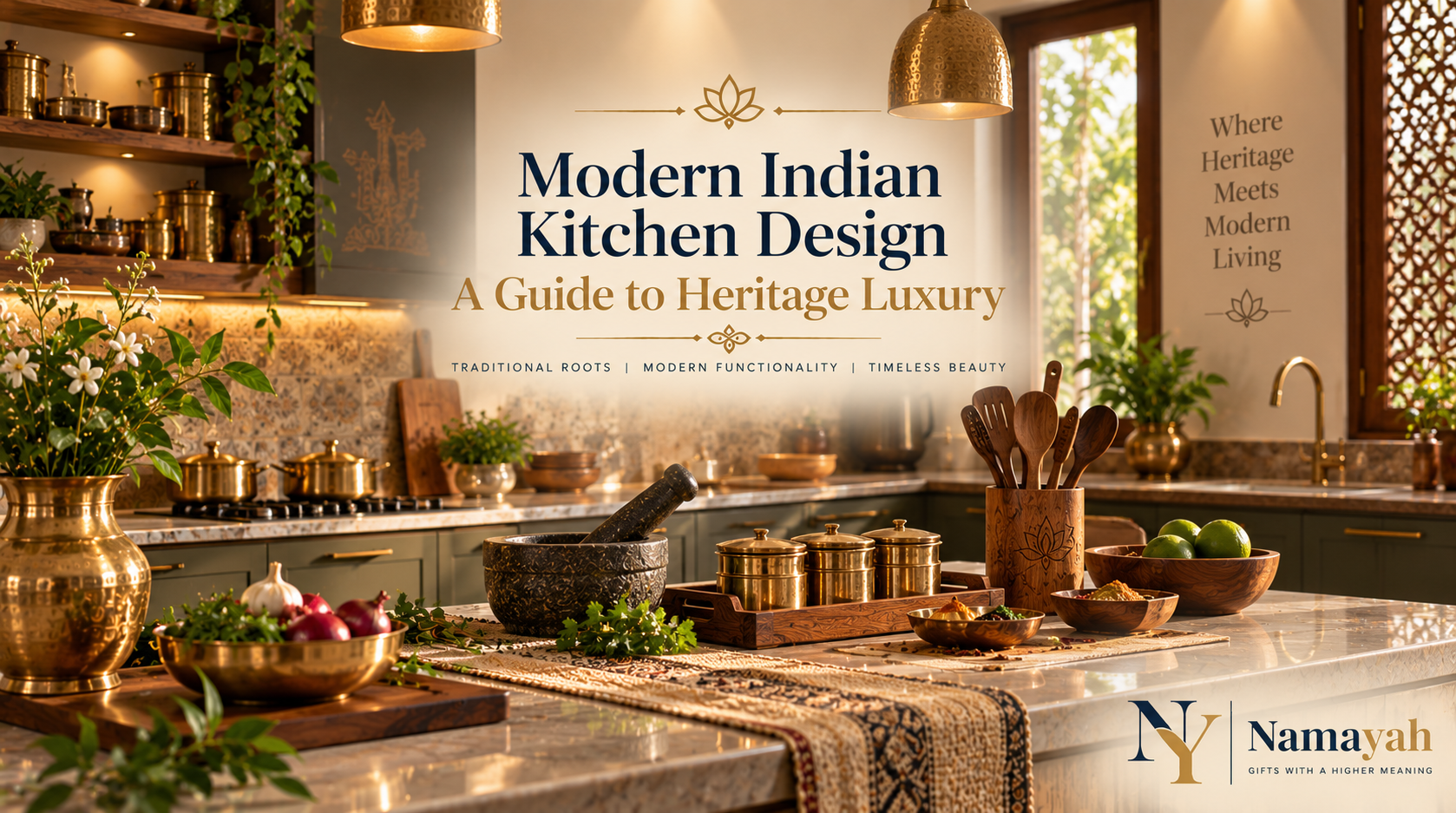
Achieving a modern Indian kitchen design requires more than just installing high-end appliances; it involves balancing the sleek efficiency of a modular layout with the soul of Indian heritage. In a contemporary setting, luxury is defined by the quality of materials and the stories they tell. By integrating artisan-crafted elements into a functional space, you can create a kitchen that serves as both a culinary workshop and a gallery of timeless craftsmanship.
Defining the Essence of Modern Indian Kitchen Design
The evolution of the Indian kitchen has shifted from a hidden, utility-focused room to the social heart of the home. Modern design emphasizes clean lines and ergonomic efficiency, yet a purely industrial look often feels cold. The "Heritage Luxury" approach bridges this gap by incorporating traditional materials—like hand-beaten copper and seasoned wood—into a streamlined environment.
At Namayah, we believe that luxury is found in the details that mass production cannot replicate. Our journey, which began in 2015, focuses on bringing the precision of ancient Indian artistry into the modern home. A modern Indian kitchen is not just about the cabinets; it is about the curation of objects that reflect a legacy of craftsmanship while supporting a fast-paced lifestyle.
Essential Principles of Minimalist Indian Home Styling
Minimalism in an Indian context does not mean emptiness; it means intentionality. To achieve minimalist indian home styling in the kitchen, focus on a "less is more" philosophy that prioritizes quality over quantity.
- Neutral Palettes: Use muted tones like charcoal, beige, or off-white for cabinetry. This provides a neutral stage where the textures of natural wood and metal can stand out.
- Natural Textures: Instead of glossy laminates, consider matte finishes or natural stone countertops like granite or quartz.
- Singular Focal Points: Rather than cluttering your counters with gadgets, choose one or two high-quality artisan pieces—such as a large hand-carved wooden platter or a vintage-inspired brass spice box—to serve as the room's visual anchor.
Elevating the Space with Luxury Indian Kitchen Accessories
The transition from a functional kitchen to a luxury one often lies in the tools you use daily. Luxury indian kitchen accessories offer a tactile experience that plastic or cheap stainless steel cannot match.
Replacing mass-produced items with hand-forged brass and copper tools instantly elevates the space. Consider an artisan-made mortar and pestle or a "Masala Dabba" (spice box) crafted from heavy-gauge brass. These are not just tools; they are heirloom-quality investments. Unlike disposable plastic containers, these materials age gracefully, developing a patina that tells the story of your home's culinary history.
Integrating Traditional Kitchenware in Modern Homes
One of the greatest challenges in modern design is honoring tradition without making a space feel like a museum. Successfully integrating traditional kitchenware in modern homes requires a strategic mix of old and new.
- Functional Decor: Use a brass 'Uruli' (traditional wide-mouthed bowl) as a fruit bowl on a sleek marble island.
- Material Contrast: Place hand-carved wooden platters against contemporary stone countertops. The warmth of the wood softens the hardness of the stone.
- Open Shelving: Instead of hiding everything behind cabinet doors, use open shelving to display heritage items like copper lotas or brass canisters. This keeps the items accessible while adding visual character to the room.
| Material | Aesthetic Appeal | Best Functional Use | Care Requirement |
|---|---|---|---|
| Brass | Warm, golden, regal | Serving ware, hardware | Occasional polishing with pitambari |
| Copper | Earthy, rustic, warm | Water storage, bowls | Acidic cleaning (lemon and salt) |
| Artisan Wood | Organic, rich grain | Platters, spice boxes | Regular oiling, avoid soaking |
Contemporary Brass Decor: Adding Warmth to Sleek Spaces
Contemporary brass decor is the perfect antidote to the “cold” feeling often associated with modern minimalist designs. Brass provides a sophisticated warmth that complements both dark and light color palettes.
In a kitchen with marble backsplashes or stainless steel appliances, brass hardware—such as handles, faucet accents, or pendant lights—creates a necessary visual contrast. To maintain the luster of brass in a high-humidity environment like a kitchen, it is essential to choose high-quality, solid brass rather than plated alternatives. Solid brass can be polished back to its original shine, ensuring it remains a permanent fixture of your home’s luxury.
Sustainable Materials: The Role of Artisan Wood and Copper
Sustainability is a cornerstone of modern luxury. Choosing handmade, sustainably sourced wood and metals reduces the environmental impact of your home while supporting local artisan communities.
- Artisan Wood: Handmade wooden products, like those curated by Namayah, bring natural beauty and character. Each piece has unique grain patterns that cannot be mimicked by machines.
- Copper Benefits: Beyond its aesthetic, copper is prized for its antimicrobial properties. Using copper vessels for water storage or serving is a traditional practice that aligns perfectly with modern wellness trends.
By choosing these materials, you are investing in products that are durable, biodegradable, and ethically produced.
Designing a Layout for Indian Culinary Traditions
Indian cooking often involves heavy preparation, high heat, and a vast array of spices. A modern indian kitchen design must accommodate these specific needs through a thoughtful layout.
The Work Triangle and Prep Zones
The classic “work triangle” (sink, stove, and refrigerator) remains essential. However, in an Indian kitchen, the prep zone needs more space. Ensure your countertops are deep enough to accommodate multiple prep bowls and heavy-duty appliances like mixers and grinders.
Specialized Storage
Modular kitchens should include specialized pull-out drawers for spices, pulses, and grains. Keeping these items in airtight brass or glass containers within easy reach of the stove streamlines the cooking process while maintaining a clutter-free aesthetic.
Caring for Your Handcrafted Heritage Kitchenware
To maintain the “Heritage Luxury” look, your artisan pieces require proper care. Unlike mass-produced items, handcrafted goods react to their environment.
- Wooden Products: Never soak handmade wooden platters or spice boxes in water. Wipe them with a damp cloth and occasionally rub them with food-grade mineral oil to maintain the wood’s natural moisture and prevent cracking.
- Copper and Brass: These metals naturally oxidize over time. If you prefer a bright shine, use a mixture of lemon and salt or a specialized polishing paste. If you prefer the vintage look, allow the patina to develop naturally, which adds a layer of “lived-in” luxury.
- Heat Management: Avoid placing extremely hot pans directly on artisan wooden surfaces to prevent scorching the grain.
Conclusion: Creating a Timeless Kitchen with Namayah
A modern Indian kitchen is a sanctuary where heritage craftsmanship meets contemporary life. By focusing on modern indian kitchen design principles—such as minimalist styling, luxury accessories, and sustainable materials—you create a space that is as functional as it is beautiful.
Investing in pieces with a story and a soul transforms your kitchen from a mere utility room into a reflection of your values. At Namayah, we invite you to explore our collection of bespoke kitchenware and decor, each piece designed to bring the timeless elegance of Indian artistry into your modern home. Build a kitchen that doesn’t just follow trends but stands as a testament to enduring luxury.
Sources
Reference links and citations for the facts above:
- About Us – Namayah | Timeless Indian Craftsmanship for Modern Luxury Living
- The Complete Guide to Caring for Handmade Wooden Products – Namayah | Timeless Indian Craftsmanship for Modern Luxury Living
- How Natural Wood Products Bring Biophilic Design Indoors – Namayah | Timeless Indian Craftsmanship for Modern Luxury Living
- First, plan the kitchen around daily movement. Next, choose durable surfaces. Then, balance warm wood with brass details. Also, measure storage before ordering pieces. In addition, place lighting near work zones. For example, a brass pendant adds a welcoming glow. Similarly, open shelves display useful objects. As a result, the room feels practical and personal. Finally, select finishes that age gracefully. Overall, thoughtful planning supports modern heritage living.
- Moreover, keep the work triangle clear. Consequently, cooking becomes easier. Meanwhile, natural textures soften modern lines. For that reason, handcrafted accents feel intentional. In contrast, excessive decoration can reduce function. Thus, each object should earn its place. Besides, local makers add authentic character. Afterward, review the layout in daylight. Above all, let comfort guide the final choice. In short, a considered kitchen serves beautifully.