
Modern Indian Heritage Decor: A Guide to Fusion Luxury
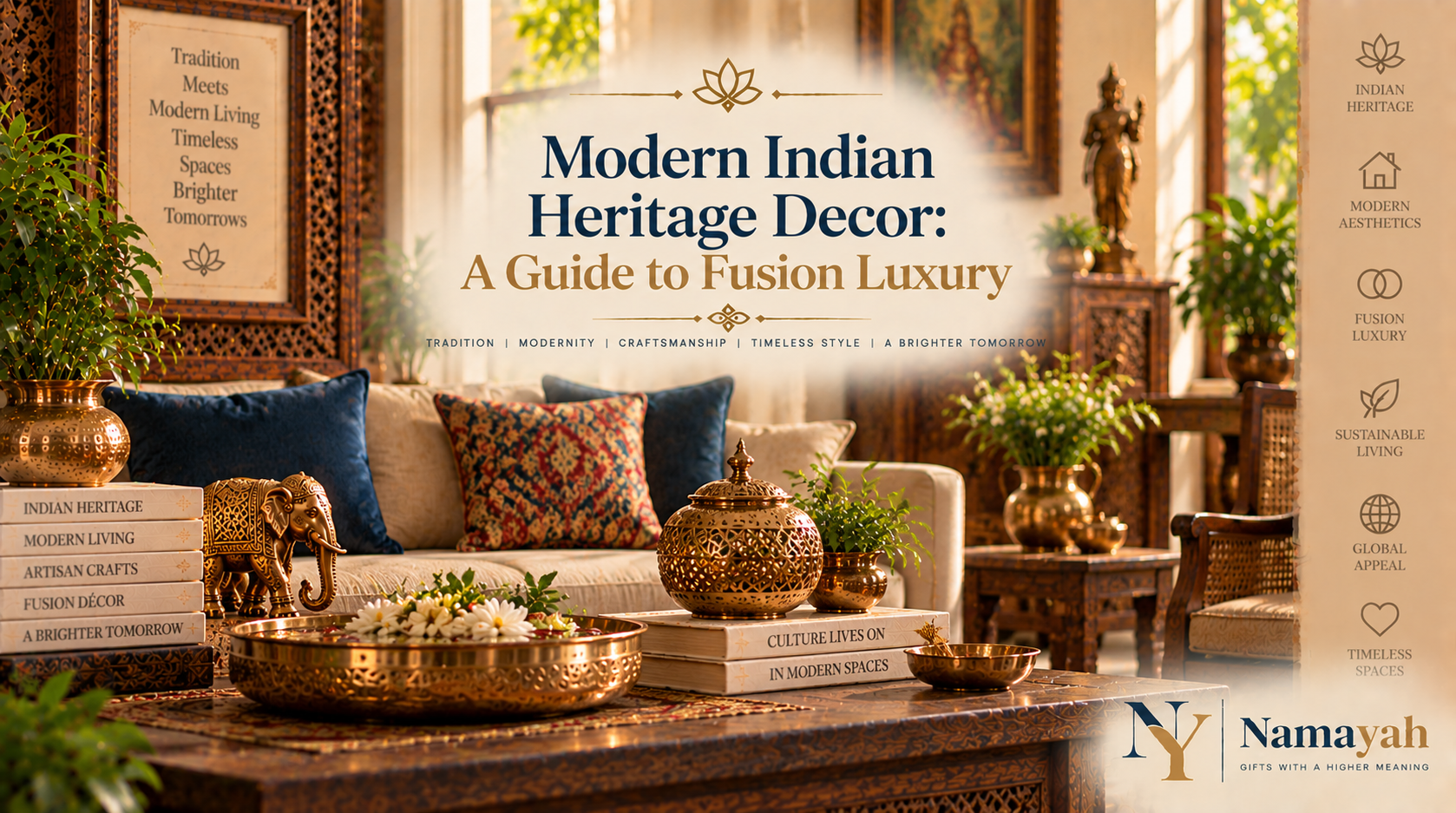
Modern Indian heritage decor is the artful integration of ancestral craftsmanship with the clean, functional sensibilities of 21st-century architecture. It moves away from the heavy, cluttered maximalism of the past, focusing instead on curated "hero" pieces that tell a cultural story within a minimalist or contemporary space. By balancing the warmth of hand-carved wood and beaten metals with neutral palettes and open layouts, homeowners can create a sanctuary that feels both globally sophisticated and deeply rooted in Indian soul.
Related: custom corporate gift boxes india
The Evolution of the Contemporary Traditional Indian Home
The contemporary traditional indian home has undergone a significant transformation. Historically, Indian interiors were characterized by a "more is more" approach—intricate carvings, heavy drapes, and a riot of colors in every corner. Today, the shift is toward curated luxury. Modern architecture, with its expansive glass walls and high ceilings, provides a neutral canvas that allows individual heritage pieces to breathe. This "New India" aesthetic is gaining global traction. It reflects a generation that values its roots but demands the functionality of modern living. In these homes, open spaces are used strategically to highlight the imperfections of a hand-made brass vessel or the grain of a reclaimed teak pillar. The goal is no longer to fill a room, but to anchor it with meaning.
Defining Modern Indian Heritage Decor for Today
To master modern indian heritage decor, one must understand the balance between the ornate and the understated. This style is built on three core pillars: intentionality, materiality, and contrast.
- Intentionality: Every piece of decor must serve a purpose or hold a narrative.
- Materiality: Prioritize natural materials—brass, copper, stone, and solid wood—over synthetic alternatives.
- Contrast: Pair the geometric precision of modern furniture with the organic, fluid lines of traditional Indian motifs.
A common mistake is treating heritage items as background fillers. In a luxury fusion setting, a single hand-carved Jharokha or a heavy brass Urli should act as a focal point. Surround these pieces with "breathing room" to ensure their intricate details are not lost in visual noise.
| Feature | Pure Traditional Decor | Modern Heritage Fusion |
|---|---|---|
| Color Palette | Saturated primary colors | Neutrals with jewel-tone accents |
| Furniture | Heavy, oversized, ornate | Sleek silhouettes with heritage details |
| Layout | Dense and compartmentalized | Open-plan and airy |
| Craftsmanship | Everywhere (Maximalist) | Strategic statement pieces |
Principles of Fusion Interior Design in India
Successful fusion interior design in india relies on a sophisticated color and texture strategy. Start with a neutral base—think shades of sand, charcoal, or off-white. Introduce the vibrant soul of the subcontinent through accents of ochre, deep indigo, or terracotta. Layering is the secret to warmth. Combine the tactile nature of raw silk or khadi upholstery with the polished sheen of brass and the matte finish of natural stone. Visual harmony is achieved when a mid-century modern sofa is paired with a hand-knotted rug and a Namayah heritage console. This juxtaposition creates a space that feels evolved over time rather than bought from a single showroom.
Heritage Inspired Luxury Living: Selecting Statement Pieces
Achieving heritage inspired luxury living requires a shift toward "slow decor." This means choosing investment-grade pieces that support sustainable artisan communities rather than mass-produced replicas. Brass and copper are essential materials in this aesthetic. Their natural ability to age gracefully, developing a unique patina over time, adds a sense of history to a new build. When selecting a statement piece, look for the marks of the maker—the slight irregularities in hand-beaten metal or the depth of hand-carved wood joinery. These details are the ultimate luxury status symbols in an increasingly digital and automated world.
Traditional Craftsmanship in Modern Homes
Integrating traditional craftsmanship in modern homes is about more than aesthetics; it is about preserving the "soul" of the living space. At Namayah, we focus on techniques that have survived centuries, adapted for the modern context.
- Metalwork: Hand-beaten copper and brass can be integrated into contemporary kitchens through hardware or statement serving ware.
- Woodwork: Traditional joinery, which avoids nails and screws, is used in sleek, functional furniture that lasts generations.
- Textiles: Hand-loomed fabrics provide a tactile quality that machine-made linens cannot replicate.
By choosing artisan-made decor, you bring a human touch into your home, creating a sanctuary that feels grounded and authentic.
Material Spotlight: Brass, Copper, and Reclaimed Wood
The materials used in modern heritage decor are chosen for their longevity and their relationship with the environment.
- Brass: Known for its golden warmth, it serves as a perfect accent in lighting and hardware.
- Copper: Beyond its antimicrobial properties, copper adds a rosy glow that complements modern industrial finishes.
- Reclaimed Wood: Using timber from old havelis or bridges adds instant history and character to a home while remaining eco-conscious.
Maintenance Tip: To keep heritage metals looking their best, use a simple mixture of lemon and salt for a natural polish, or allow the patina to develop for a more "antique" look that tells the story of the home’s age.
Room-by-Room: Applying the Heritage Fusion Aesthetic
- The Entryway: Make a powerful first impression with a singular heritage statement, such as a large brass Buddha or a reclaimed wooden console table. Keep the walls bare to let the piece lead the conversation.
- The Dining Room: Pair a minimalist glass or marble dining table with traditional brass serving ware and hand-crafted candle holders. This blend of "cold" and "warm" materials creates a balanced dining experience.
- The Bedroom: Use heritage-inspired textiles—like a block-printed duvet or a hand-embroidered throw—against a backdrop of modern, low-profile furniture.
- The Workspace: Soften the look of a tech-heavy office with handcrafted wooden organizers or a small brass desk lamp. These elements reduce the clinical feel of modern equipment.
The Future of Sustainable Luxury and Artisan Excellence
The future of luxury interior design lies at the intersection of eco-conscious living and traditional hand-making. As the world moves away from "fast furniture," the demand for limited-edition, artisan-led pieces continues to grow. At Namayah, our commitment is to preserve the legacy of Indian master-craftsmen by bringing their work into the world's most sophisticated modern homes. By choosing modern Indian heritage decor, you are doing more than decorating a room; you are honoring a lineage of artistry and building a home that stands the test of time, both in style and substance. Embracing the past is the most authentic way to design for the future.