
Minimalist Luxury Home Décor Ideas
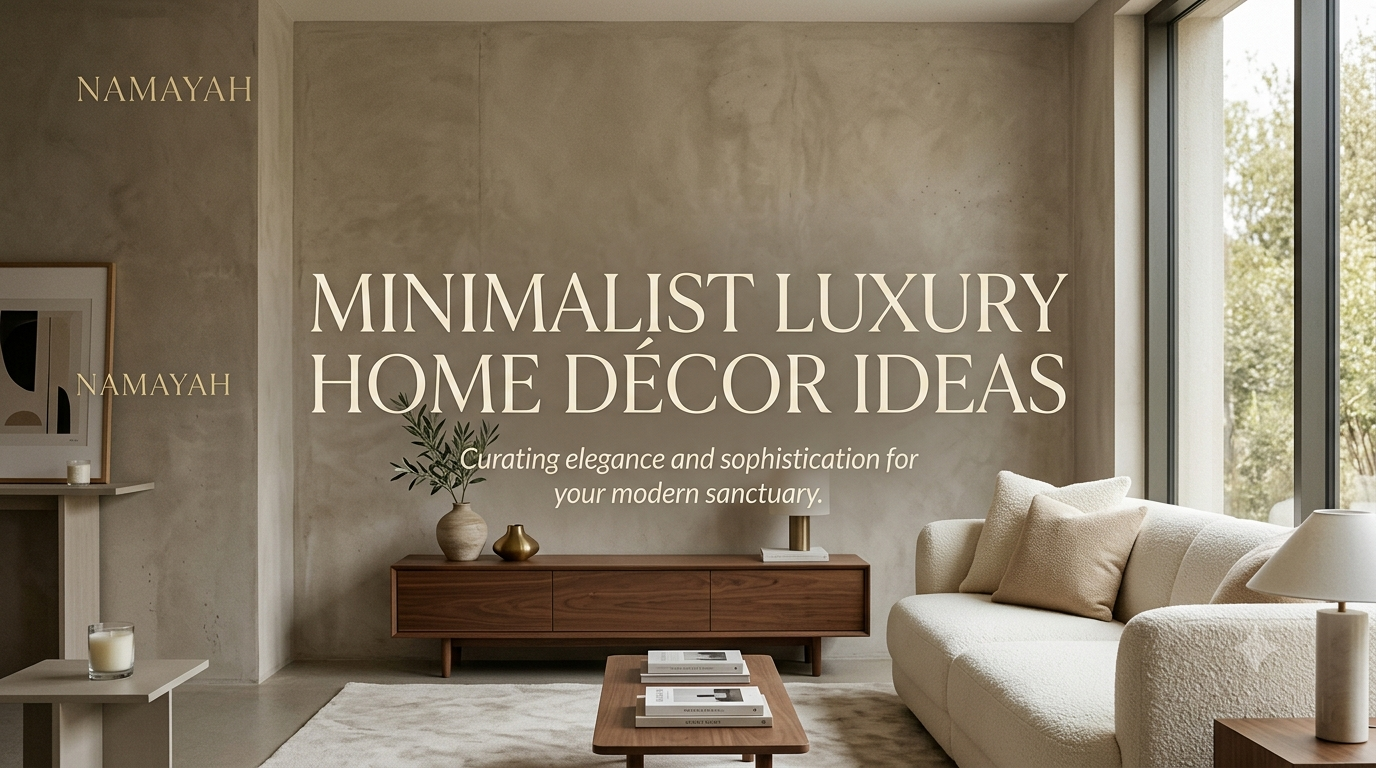
Minimalist luxury home décor is about intentional simplicity rather than emptiness. Instead of filling a room with decorative objects, it relies on proportion, craftsmanship, natural materials, texture, lighting, and a small number of carefully selected pieces.
Contemporary minimalist interiors are commonly associated with clean lines, limited ornamentation, neutral colors, and natural materials. Importantly, minimalism does not require creating an empty or impersonal home.
The secret to making minimalism feel luxurious is simple: give every object a reason to be there and make fewer elements work harder.
What Is Minimalist Luxury Home Décor?
Minimalist luxury combines the restrained philosophy of minimalism with the material quality and attention to detail associated with high-end interiors.
A minimalist luxury room might contain a simple linen sofa, a solid wood table, a hand-finished ceramic vase, a wool rug, and one sculptural lamp. There may be relatively few objects, but differences in texture, form, scale, and material create visual richness.
That distinction matters because minimalism isn’t simply about removing possessions. Architectural Digest describes contemporary minimalist interiors through characteristics such as clean lines, neutral schemes, limited ornamentation, and natural materials.
Think curated, not empty.
1. Start With a Warm Neutral Color Palette
White is closely associated with minimalism, but an all-white interior can easily become stark.
For a softer luxury aesthetic, build your palette around warm neutrals such as:
- Ivory and cream
- Warm white
- Sand and oatmeal
- Taupe and mushroom
- Camel and caramel
- Soft gray
- Chocolate or espresso as an accent
Rather than introducing many contrasting colors, create depth through subtle tonal variations.
For example, pair warm white walls with an oatmeal sofa, a cream wool rug, walnut furniture, and dark bronze lighting. The differences are understated, yet they prevent the room from looking flat.
Current minimalist design guidance similarly emphasizes soft hues, texture, wood, stone, and natural fabrics as ways to make pared-back spaces warmer and more dimensional.
2. Invest in Quality Over Quantity
One of the strongest minimalist luxury home décor ideas is also one of the simplest: buy fewer, better pieces.
Instead of decorating an entire living room with small accessories, direct attention toward several substantial elements.
Prioritize items such as a beautifully proportioned sofa, solid dining table, quality rug, comfortable bed, distinctive lounge chair, or well-made lighting fixture.
The goal is not necessarily to buy the most expensive item available. Look for craftsmanship, durability, pleasing proportions, tactile materials, and designs you will still appreciate after trends change.
This approach aligns naturally with minimalist design, where individual objects receive more visual attention because fewer things compete with them.
3. Layer Natural Materials and Rich Textures
Texture is essential when working with a limited color palette.
Natural wood, linen, wool, stone, jute, leather, plaster, and handcrafted ceramics can create contrast without introducing visual noise.
For example, a minimalist bedroom could combine:
Linen bedding + wool rug + oak nightstand + stone lamp + textured wall finish.
Almost everything can remain within the same neutral color family while still producing a layered interior.
Design sources consistently point to natural materials and varied textures as useful ways to make minimalist rooms feel welcoming rather than sterile. Homes & Gardens, for example, highlights wood, stone, natural fabrics, raw woods, linen, ceramics, and other tactile finishes in warm minimalist schemes.
Mix Smooth and Textured Finishes
Contrast makes neutral interiors interesting.
Pair smooth stone with textured linen, polished surfaces with raw timber, soft upholstery with metal, or crisp walls with a heavily woven rug.
You do not need more decoration when the materials themselves provide detail.
4. Make Lighting Part of the Décor
Luxury interiors rarely depend on a single ceiling light.
Instead, consider lighting in layers: ambient lighting provides overall illumination, task lighting serves activities such as reading, and accent lighting draws attention to architecture, art, or selected objects.
A minimalist room can use fewer fixtures while making those fixtures more intentional.
Consider a sculptural pendant over a dining table, understated wall sconces beside a bed, a beautiful floor lamp near an armchair, or concealed architectural lighting where appropriate.
Natural light is equally valuable. Simple window treatments and unobstructed sightlines can help maintain the open, airy quality associated with minimalist interiors. Current design coverage also points toward softer, refined lighting and sculptural fixtures as ways to bring warmth and personality to minimalist spaces.
5. Choose Sculptural Furniture
When there are fewer objects in a room, silhouette becomes more important.
A curved lounge chair, monolithic coffee table, rounded sofa, or architectural dining table can become decoration in its own right.
This lets you introduce personality without adding unnecessary accessories.
Minimalist designers frequently use sculptural forms for precisely this reason: interesting shapes create contrast and visual focus against simpler backgrounds.
Try combining straight architectural lines with one or two softer curves. A rectangular room, for example, may benefit from a rounded armchair or oval dining table.
6. Use Negative Space Intentionally
Luxury is partly about giving beautiful things room to be noticed.
You do not have to fill every wall, shelf, tabletop, and corner.
Leave breathing room around furniture. Keep portions of shelving deliberately empty. Allow one large artwork to command a wall instead of automatically building a gallery.
Negative space can also make a smaller room feel calmer because the eye has fewer competing elements to process.
This does not mean removing everything personal. A successful minimalist home can still contain books, photographs, travel objects, art, and meaningful possessions.
The difference is editing.
Choose what deserves attention rather than displaying everything simultaneously. Architectural Digest’s guidance on warm minimalism similarly recommends curating pieces with intent while using warmth, texture, and considered tones to maintain character.
7. Keep Storage Visually Quiet
Nothing disrupts minimalist luxury faster than uncontrolled everyday clutter.
Storage should therefore be considered part of the design.
Built-in cabinetry, handle-free cupboards, closed media units, storage beds, concealed cable management, matching containers, and furniture with hidden compartments can help everyday necessities disappear when they are not being used.
In kitchens, keeping countertops relatively clear allows beautiful materials—such as stone, timber, or metalwork—to become the visual focus.
The objective isn’t to create a home where nothing is ever visible. It is to give frequently used objects a logical home so the room can return to visual calm easily.
8. Add Art Without Overdecorating
Minimalist walls do not need to be completely bare.
Art can actually become more powerful when it is surrounded by less visual competition.
Consider one oversized painting, a large black-and-white photograph, a restrained diptych, sculptural wall art, or a carefully selected collection.
Scale is often more effective than quantity.
A large artwork above a sofa can feel more intentional than numerous small decorations scattered throughout the room.
The same principle applies to tabletop accessories. Instead of ten small objects, consider one sculptural bowl, substantial vase, or handmade ceramic piece.
9. Bring Minimalist Luxury Into Each Room
The principles remain consistent throughout the home, but their application changes by room.
Minimalist Luxury Living Room
Begin with comfortable seating in a restrained silhouette. Add a large textured rug, substantial coffee table, one sculptural light, and carefully selected art.
Keep accessories limited and prioritize materials.
A linen sofa, wool rug, stone table, and walnut sideboard can create considerable richness without relying on bright colors or decorative clutter.
Minimalist Luxury Bedroom
The bed should be the focal point.
Use high-quality bedding, layered neutral textiles, simple nightstands, warm bedside lighting, and perhaps one bench or chair if space permits.
Avoid filling every surface.
A bedroom usually feels more luxurious when it feels calm.
Minimalist Luxury Kitchen
Keep worktops clear and let cabinetry, hardware, lighting, and countertop materials carry the design.
Natural stone, warm timber, and restrained metal accents can introduce character.
If you have open shelving, treat it as a curated display rather than extra storage for miscellaneous items.
Minimalist Luxury Bathroom
Bathrooms are particularly suited to understated luxury.
Consider large-format surfaces, stone-inspired finishes, simple mirrors, quality towels, streamlined fixtures, concealed storage, and warm lighting.
A single tray containing everyday essentials is usually more visually coherent than numerous bottles scattered around the vanity.
Minimalist Luxury Dining Room
Allow the dining table and lighting to become the main features.
A solid wood or stone table paired with comfortable, simple chairs may require little additional decoration.
Finish with one centerpiece—a bowl, branch arrangement, ceramic vessel, or understated flowers.
10. Introduce Personality Through Meaningful Objects
Minimalist luxury should not make your home look like an anonymous showroom.
Keep objects that tell your story.
A handmade ceramic piece, family photograph, artwork, antique, favorite book, or object collected while traveling can introduce character precisely because it isn’t surrounded by dozens of unrelated accessories.
Recent design discussion has similarly emphasized balancing strong foundational pieces with meaningful personal objects and occasional statement elements rather than simply assembling beautiful things.
Personalization and minimalism are compatible. Curation is what connects them.
11. Avoid These Common Minimalist Décor Mistakes
One mistake is assuming minimalism means buying almost nothing. Too little furniture can make a home uncomfortable rather than sophisticated.
Another is using only white. Without variation in material, tone, and texture, monochromatic rooms can feel unfinished.
Also avoid purchasing many inexpensive decorative objects simply because they match the aesthetic. Minimalist luxury depends more on cohesion and quality than quantity.
Finally, don’t sacrifice function for appearance. Minimalist design has long been associated with functionality as well as form; a beautiful chair that nobody can comfortably sit in does little for a real home.
FAQs About Minimalist Luxury Home Décor
What is minimalist luxury interior design?
Minimalist luxury interior design combines uncluttered spaces and restrained decoration with high-quality materials, thoughtful craftsmanship, comfortable furniture, strong proportions, and sophisticated lighting. The result is simple but visually rich rather than empty.
How can I make a minimalist home look expensive?
Focus on fewer high-impact elements: quality textiles, substantial furniture, natural materials, good lighting, large-scale art, consistent finishes, and concealed storage. Avoid filling rooms with small accessories purely to make them look decorated.
What colors work best for minimalist luxury décor?
Warm white, ivory, beige, taupe, oatmeal, mushroom, soft gray, camel, brown, and muted earthy shades work particularly well. Dark wood, black, bronze, or charcoal can provide controlled contrast.
How do I make minimalism feel warm instead of cold?
Layer textures and natural materials. Wood, wool, linen, stone, ceramics, rugs, curtains, warm lighting, and personal objects can soften clean architectural lines without introducing clutter.
Can minimalist luxury décor work in a small home?
Yes. Small homes can particularly benefit from intentional furniture choices, hidden storage, restrained color palettes, multifunctional pieces, and less visual clutter. Scandinavian design, which shares several characteristics with minimalism, is frequently valued for its emphasis on space, light, functionality, and natural materials in homes of different sizes.
Is minimalist luxury décor expensive?
It does not have to be. Concentrate your budget on the elements you use most, such as seating, bedding, lighting, and durable furniture. Affordable rooms can still appear refined when proportions, materials, organization, and color choices are cohesive.
What décor should I use in a minimalist living room?
Consider a textured rug, one or two pieces of art, a sculptural lamp, a ceramic vessel, books, a plant, or another meaningful object. You do not need all of them. Choose items that contribute texture, function, scale, or personality.
Is minimalist interior design still in style in 2026?
Minimalist design remains prominent, although current interpretations often emphasize warmth, comfort, natural materials, texture, and personality rather than stark empty rooms. Architectural Digest’s 2026 coverage of minimalist designers continues to highlight simplicity, restraint, clean lines, neutral palettes, comfort, and functionality.
Conclusion
The best minimalist luxury home décor ideas are not about stripping a home of personality. They are about making more deliberate choices.
Start with a warm neutral foundation, invest in fewer quality pieces, layer natural materials, introduce sculptural forms, improve lighting, conceal unnecessary clutter, and leave enough negative space for important objects to stand out.
Most importantly, allow the home to remain personal. Minimalist luxury succeeds when simplicity supports comfort and character rather than replacing them.