
Luxury Home Décor Trends to Watch in 2026
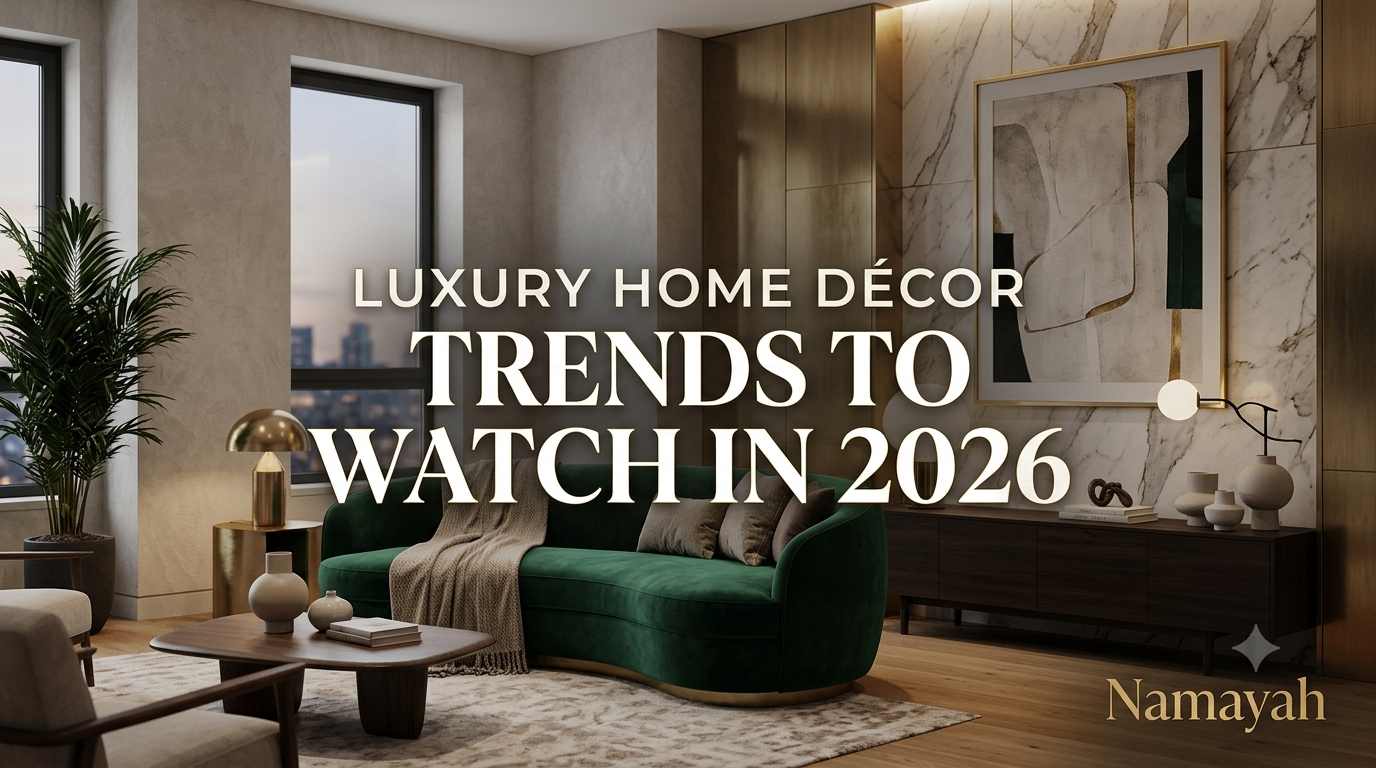
Luxury interior design in 2026 is becoming less about displaying wealth and more about creating a home with character, craftsmanship, comfort, and individuality. Rich materials, expressive color, curved forms, artisanal details, sculptural lighting, and wellness-oriented spaces are replacing the impersonal perfection that defined some minimalist interiors.
Current design coverage supports this broader shift. Architectural Digest’s 2026 forecast highlights maximalist touches, saturated colors, artisanal details, customized tilework, and highly personalized wellness amenities. Houzz similarly identifies rich materials, wellness features, warmth, longevity, and spaces designed around real life among the themes shaping homes this year.
For homeowners, the message is simple: luxury in 2026 feels personal rather than prescribed.
What Defines Luxury Home Décor in 2026?
The defining feature of luxury home décor in 2026 is intentional individuality.
Instead of filling a room with recognizable luxury products, designers are increasingly creating depth through materials, craftsmanship, architectural detailing, custom elements, and objects with personal meaning.
This does not necessarily mean abandoning minimalism. A restrained room can still feel luxurious. The difference is that even simple spaces are gaining warmth through stone, wood, textiles, artwork, handcrafted finishes, and subtle details.
Architectural Digest recently highlighted how understated decisions—from bespoke millwork to small upholstery details and carefully considered asymmetry—can give professionally designed spaces greater depth and personality.
Here are the luxury home décor trends making that philosophy visible in 2026.
1. Warm, Expressive Color Takes Over
All-white and relentlessly beige rooms are losing some of their dominance.
In their place, richer and more emotionally expressive colors are becoming part of luxury interiors.
Think:
- Deep burgundy and oxblood
- Chocolate and espresso brown
- Earthy terracotta
- Olive and moss green
- Muted ochre
- Jewel-inspired hues
- Warm creams and complex neutrals
Architectural Digest’s 2026 forecast specifically points toward saturated shades and more expressive interiors, while ELLE Decor reports growing interest in jewel-toned paint and layered materials.
The goal isn’t necessarily to make every room colorful.
A sophisticated approach is to establish a warm foundation and introduce deeper shades through upholstery, rugs, artwork, cabinetry, or a single dramatic wall.
How to make rich colors feel luxurious
Use fewer colors, but choose them deliberately.
For example, a warm cream living room can be layered with an olive velvet chair, walnut furniture, antique brass accents, and burgundy artwork.
The result feels collected rather than decorated according to a rigid palette.
2. Layered Textures Create Quiet Luxury
Texture remains central to luxury interiors, but 2026 is pushing beyond the simple bouclé-and-marble formula.
Designers are layering contrasting tactile materials such as:
| Material | Luxury Application |
|---|---|
| Natural stone | Tables, fireplaces, bathrooms, countertops |
| Velvet | Sofas, chairs and cushions |
| Wool | Rugs and upholstery |
| Linen | Curtains, bedding and wall treatments |
| Wood | Cabinetry, paneling and furniture |
| Plaster | Textured walls and architectural surfaces |
| Metal | Lighting, hardware and decorative details |
| Rattan/cane | Furniture and cabinetry accents |
ELLE Decor’s reporting on 2026 trends points to combinations of velvet, wool, rattan, and linen, as well as greater experimentation with multiple stones and materials in the same room.
The important word is contrast.
A smooth marble table becomes more inviting beside a textured wool rug. Polished metal feels warmer against natural timber. Crisp linen creates contrast with plush velvet.
This layering makes even a restrained color scheme visually interesting.
3. Curves and Soft Geometry Continue to Grow
Curved furniture is not disappearing in 2026. Instead, the idea is expanding into architecture.
Rounded sofas, sculptural chairs, arched openings, softened kitchen islands, curved cabinetry, and organic tables are bringing movement into luxury homes.
Houzz’s 2026 U.S. Emerging Summer Trends Report found increased interest in curved and wave-like elements, including substantial growth in searches related to arched kitchen features and rounded islands.
ELLE Decor has also identified curves as one of the defining themes of 2026 interiors.
Why do curves work in luxury interiors?
Curved forms soften rooms dominated by straight architectural lines.
A sculptural curved sofa can become the centerpiece of a living room without relying on bright colors or elaborate ornamentation.
For a timeless interpretation, avoid filling every room with rounded furniture. One strong curved element often creates more impact.
4. Bespoke Craftsmanship Becomes the Real Status Symbol
One of the clearest luxury home décor trends to watch in 2026 is the movement toward customization and craftsmanship.
Luxury homeowners increasingly want interiors that do not look as though they were purchased from a single showroom.
That opens the door to:
- Custom millwork
- Hand-painted tiles
- Artisan ceramics
- Bespoke furniture
- Hand-finished plaster
- Decorative hardware
- Custom upholstery
- Made-to-measure rugs
- Vintage and antique pieces
Architectural Digest’s 2026 forecast highlights custom hand-painted tile and artisanal details, while its recent coverage of bespoke millwork emphasizes designing built-ins around the homeowner’s actual daily rituals.
This is where luxury becomes difficult to imitate.
Expensive furniture can be purchased. A room shaped around its architecture, occupants, and personal history must be designed.
5. Sculptural Lighting Becomes Functional Art
Lighting is moving beyond its supporting role.
In 2026, an exceptional pendant, chandelier, floor lamp, or wall light can function almost like sculpture.
Recent reporting from the International Contemporary Furniture Fair identified stacked forms, exposed structural elements, geometric framing, and sculptural materials among notable lighting directions for 2026.
For luxury interiors, consider three layers of lighting:
- Ambient lighting establishes overall illumination.
- Task lighting supports activities such as reading, cooking, or working.
- Accent lighting highlights architecture, artwork, and decorative objects.
Then add one statement fixture where it can command attention.
An oversized chandelier above a dining table or sculptural pendant in a double-height entrance can establish the identity of an entire room.
6. Architectural Details Dress the Room
Luxury décor in 2026 isn’t limited to objects placed inside a room. The room itself becomes decoration.
Crown molding, picture-frame molding, decorative trim, paneling, detailed cabinetry, substantial baseboards, and carefully designed millwork are making interiors feel more finished.
ELLE Decor describes renewed interest in chair rails, picture-frame molding, layered crown molding, lined drapery, and other details that make rooms feel deliberately “dressed.”
The trend is particularly useful for newer properties with relatively plain architecture.
Instead of compensating with more furniture and accessories, architectural detailing can add depth directly to walls, ceilings, doors, and cabinetry.
The result can feel luxurious even when the furniture is relatively restrained.
7. Wellness Spaces Become More Sophisticated
Luxury increasingly means having a home that supports how you want to feel.
As a result, wellness is moving beyond the spa-style bathroom.
Houzz identifies indoor saunas, steam showers, hydrotherapy tubs, plunge pools, high-end home gyms, meditation areas, and related wellness features among the design trends shaping 2026 homes.
Luxury wellness spaces may include:
- Dedicated yoga or meditation rooms
- Home saunas
- Steam showers
- Cold-plunge areas
- Spa bathrooms
- High-performance home gyms
- Relaxation gardens
- Outdoor bathing areas
- Circadian-conscious lighting
- Quiet reading spaces
The most successful versions integrate wellness into the home’s overall aesthetic rather than making these spaces look clinical.
Natural stone, warm wood, soft lighting, greenery, and tactile fabrics can transform a functional wellness room into a private retreat.
8. Sustainable Luxury Moves Beyond a Buzzword
Sustainability and luxury are becoming increasingly compatible.
Rather than replacing furniture every time an aesthetic changes, a more enduring approach emphasizes quality, longevity, restoration, and responsible material choices.
That can mean selecting antique furniture, reupholstering a well-made chair, commissioning locally produced pieces, or choosing durable materials designed to age gracefully.
Houzz’s 2026 search data indicates growing interest in repurposed materials and environmentally conscious home products, including recycled-glass countertops and bamboo flooring.
For luxury design, sustainability can also mean buying less—but buying better.
A handcrafted dining table intended to last decades is fundamentally different from disposable, trend-led décor.
9. Personality Replaces Perfect Minimalism
Perhaps the biggest luxury home décor trend in 2026 isn’t a material or color.
It’s personality.
Architectural Digest’s forecast describes a move toward self-expression, maximalist touches, ornamentation, and eclecticism. Its more recent “Jewelry-Box Theory” feature similarly emphasizes layering foundational furnishings with meaningful objects and a few statement-making pieces.
This creates rooms that feel accumulated over time.
Books, artwork, heirlooms, ceramics, travel finds, antiques, contemporary pieces, and custom furniture can coexist.
The key is curation.
Luxury maximalism isn’t simply about having more things. It is about giving each object a reason to be there.
A beautifully edited room can communicate much more personality than a space built entirely around whichever aesthetic happens to dominate social media that month.
How to Use 2026 Trends Without Dating Your Home
The safest approach is to treat trends as inspiration rather than instructions.
Invest heavily in elements that should last: flooring, quality cabinetry, natural stone, architectural millwork, well-made furniture, and lighting.
Experiment more freely with elements that are easier to change, such as cushions, throws, decorative objects, smaller lamps, paint, and selected textiles.
A useful formula is:
Timeless foundation + personal pieces + selective trends = a more enduring luxury interior.
This approach matters because not every viral aesthetic has staying power. ELLE Decor’s 2026 coverage specifically warns against designing around rapidly changing micro-trends when the objective is a home that works in real life.
FAQs About Luxury Home Décor Trends in 2026
What are the biggest luxury home décor trends in 2026?
Major themes include expressive color, layered natural materials, curved forms, bespoke craftsmanship, sculptural lighting, architectural detailing, personalized interiors, and dedicated wellness spaces. Current forecasts also point toward a move away from generic minimalism toward homes with more character.
Is quiet luxury still in style in 2026?
Yes, but the aesthetic is evolving. Understated quality remains relevant, while interiors are becoming warmer and more individual. Rather than relying entirely on pale neutrals, designers are introducing richer colors, tactile materials, artwork, vintage pieces, and craftsmanship.
What colors are trending for luxury interiors in 2026?
Warm earth tones, complex neutrals, browns, greens, burgundy-like shades, and saturated jewel tones fit the broader movement toward richer, more expressive interiors.
Is beige going out of style in 2026?
Beige itself isn’t obsolete. Flat, one-dimensional neutral rooms are becoming less dominant. Warm neutrals remain useful foundations, especially when layered with wood, stone, texture, artwork, and stronger accent colors.
Is curved furniture still popular in 2026?
Yes. Curves remain prominent and are extending beyond sofas and chairs into kitchen islands, cabinetry, architectural openings, and decorative surfaces. Houzz’s 2026 search data shows growing interest in several curved and arched design features.
What makes a home look luxurious?
Material quality, proportion, craftsmanship, lighting, architectural detailing, and thoughtful personalization often create a stronger sense of luxury than simply adding expensive decorative objects. Custom millwork and carefully selected finishes can make a particularly significant difference.
What luxury décor should I invest in first?
Prioritize long-lasting pieces and finishes: quality flooring, lighting, a well-made sofa or dining table, natural materials, window treatments, and architectural improvements. Trend-driven accessories can then be changed more easily.
How can I make my home look luxurious without completely renovating it?
Upgrade lighting, improve curtains and window treatments, introduce a large quality rug, edit visual clutter, add artwork, layer textiles, replace generic hardware, and use paint strategically. A few well-considered changes usually look more refined than adding numerous decorative accessories.
Conclusion
The most important luxury home décor trends to watch in 2026 share one idea: luxury is becoming increasingly personal.
Rich color, tactile materials, curved forms, bespoke craftsmanship, sculptural lighting, architectural detailing, sustainable choices, and wellness spaces all contribute to homes that feel more layered and intentional.
Rather than copying every emerging trend, homeowners can focus on enduring materials and craftsmanship, then use 2026’s ideas selectively.
The goal isn’t simply to create a home that looks fashionable this year. It is to create one that feels distinctive now and continues to feel relevant long after the trend cycle moves on.