
Luxury Home Décor Buying Checklist
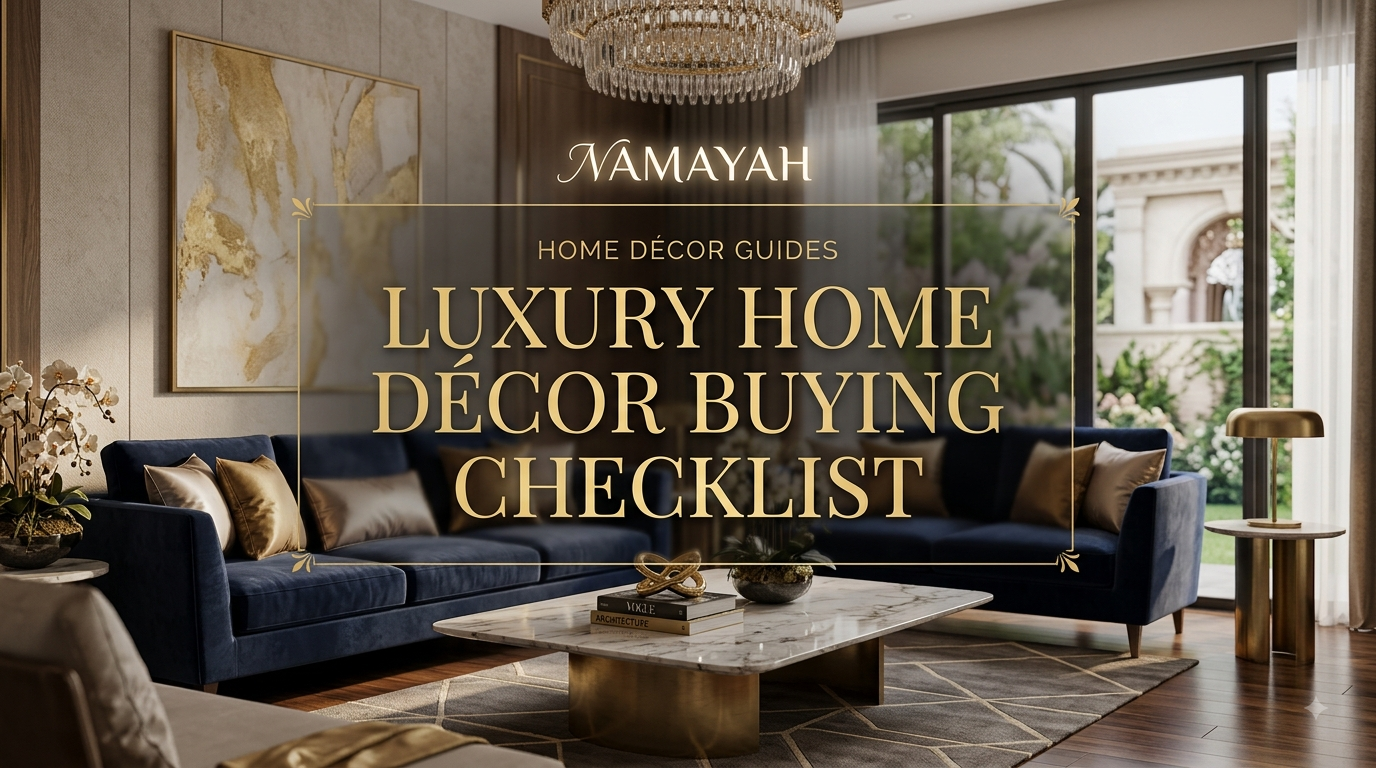
Buying luxury home décor is not simply about choosing the most expensive sofa, lamp, rug, or decorative object. The best choices combine quality, proportion, craftsmanship, comfort, functionality, and visual harmony.
A high price does not automatically make an item luxurious. Contemporary luxury interiors increasingly emphasize authentic materials, thoughtful proportions, layered lighting, refined details, and restraint rather than simply displaying expensive objects.
Use this luxury home décor buying checklist before purchasing major furniture, lighting, rugs, artwork, textiles, or accessories.
What Makes Home Décor Truly Luxurious?
Luxury home décor is best understood as a combination of material quality, craftsmanship, design coherence, comfort, and attention to detail.
An expensive item can look out of place if its scale is wrong or its materials clash with the rest of the room. Conversely, a carefully selected piece can create a luxurious impression because it fits the architecture, feels substantial, and contributes to a cohesive design.
Current luxury-interior guidance consistently emphasizes proportion, authentic materials, layered lighting, craftsmanship, and restraint.
Before buying, ask:
- Does the piece suit the architecture?
- Is the material genuinely high quality?
- Is the craftsmanship visible in the details?
- Does the size work for the room?
- Is it comfortable and functional?
- Will it still look appropriate several years from now?
- Does it complement the pieces you already own?
If the answer to several questions is no, the item may be expensive without being a good luxury purchase.
Set Your Budget Before You Shop
Start with a realistic budget instead of building your room around individual purchases.
Divide your budget into categories such as:
- Major furniture
- Lighting
- Rugs
- Window treatments
- Artwork
- Decorative accessories
- Custom or bespoke pieces
- Delivery and installation
- Professional design services, if applicable
- Maintenance and replacement costs
Keep some flexibility for pieces that genuinely deserve additional investment. At the same time, avoid spending most of your budget on one statement item while leaving essential elements unfinished.
A luxury room works as a complete composition. An exceptional sofa cannot compensate for poor lighting, an undersized rug, or mismatched accessories.
Define Your Interior Style
Before visiting showrooms or browsing online stores, decide what visual direction you want.
Possible directions include:
- Contemporary luxury
- Quiet luxury
- Modern classic
- Transitional
- Warm minimalism
- Art Deco-inspired
- Traditional luxury
- Modern Indian
- Organic luxury
- Eclectic luxury
You do not need to follow a trend perfectly. Instead, create a reference board containing colors, materials, furniture shapes, lighting styles, fabrics, and artwork that you genuinely like.
Quiet-luxury approaches, for example, tend to favor tonal palettes, authentic materials, bespoke elements, layered textures, and minimal visible branding.
Checklist
- Choose a primary design style.
- Select a core color palette.
- Identify preferred materials.
- Decide whether the room should feel warm, dramatic, calm, classic, or contemporary.
- Save reference images before shopping.
Measure Your Space First
One of the most common luxury décor mistakes is buying furniture that is too large or too small.
Measure:
- Room length and width
- Ceiling height
- Doorways
- Staircases
- Lift or elevator dimensions
- Window positions
- Existing furniture
- Electrical points
- Walkways
- Wall space for artwork
- Clearance around doors and cabinets
Then measure the product itself.
Luxury interiors depend heavily on scale and proportion. Even premium furniture can feel wrong when it overwhelms the room or leaves excessive empty space.
Buying rule: Never order a large piece based only on a product photograph.
Use masking tape on the floor to mark the approximate footprint of a sofa, dining table, bed, or cabinet before purchasing.
Check Material Quality
Material authenticity is one of the most important things to evaluate when buying luxury décor.
For furniture, investigate whether the product uses:
- Solid wood
- Quality wood veneer
- Natural stone
- Genuine leather
- High-quality natural fabrics
- Metal with an appropriate finish
- Hand-finished surfaces
- Durable upholstery materials
For decorative objects, ask about the composition, manufacturing process, finish, and origin.
Natural materials can offer visual depth and aging characteristics that lower-quality imitations may not reproduce. However, the best material depends on the intended use, maintenance requirements, climate, and budget.
Material checklist
- What is the exact material?
- Is it natural, engineered, or synthetic?
- Where was it manufactured?
- What finish has been applied?
- How should it be cleaned?
- How does it respond to sunlight and humidity?
- Can the material be repaired or refinished?
Evaluate Craftsmanship
Look closely at the details rather than relying only on the brand name.
Inspect:
- Seams
- Stitching
- Joinery
- Edges
- Surface finishing
- Drawer movement
- Hinges
- Hardware
- Upholstery tension
- Stone alignment
- Wood-grain continuity
- Welds and metal finishing
Fine craftsmanship is often found in details that are easy to overlook. Luxury-interior guidance emphasizes precise joinery, carefully executed finishes, and specialist craftsmanship as important contributors to perceived quality.
If possible, examine a showroom sample before placing a custom order.
Inspect Furniture Before Buying
Furniture usually represents one of the largest décor investments, so evaluate it carefully.
Sofa checklist
- Does the seat height feel comfortable?
- Is the seat depth appropriate?
- Is the frame sturdy?
- Are cushions supportive?
- Are seams straight?
- Does the upholstery suit your lifestyle?
- Can the covers be cleaned or replaced?
Dining table checklist
- Is the table proportionate to the room?
- Is there adequate seating space?
- Is the tabletop resistant to expected use?
- Is the base stable?
- Does the material require specialized maintenance?
Bed checklist
- Does the frame provide adequate support?
- Is the headboard proportionate to the room?
- Does the upholstery or finish suit your maintenance preferences?
- Does the overall height work with bedside furniture?
Do not sacrifice comfort for appearance. A luxury home should feel good to live in, not merely look impressive in photographs.
Choose Lighting Carefully
Lighting can change how furniture, artwork, stone, fabrics, and architectural details appear.
A layered approach generally combines:
- Ambient lighting for overall illumination
- Task lighting for activities such as reading or working
- Accent lighting for artwork, architectural details, or decorative objects
This layered approach is repeatedly highlighted in contemporary luxury-interior guidance because it creates flexibility and depth.
Before buying a luxury light fixture, check:
- Dimensions
- Light output
- Bulb compatibility
- Color temperature
- Dimming capability
- Installation requirements
- Ceiling height
- Maintenance access
- Replacement parts
- Electrical requirements
A beautiful chandelier that is oversized for the room can reduce the overall sense of balance.
Select Rugs and Textiles Carefully
Rugs, curtains, cushions, throws, and upholstery create much of a room’s tactile character.
When choosing a rug, check:
- Fiber composition
- Construction method
- Density
- Pile height
- Shedding
- Cleaning requirements
- Colorfastness
- Appropriate size
- Furniture placement
For textiles, consider how different textures interact. Linen, wool, silk, velvet, cotton, bouclé, leather, and other materials can create contrast without requiring a large number of colors.
A restrained palette with varied textures can often feel more sophisticated than a room filled with competing patterns.
Buy Art and Decorative Accessories With Restraint
Luxury décor does not require every surface to be filled.
Instead, choose fewer pieces that contribute something meaningful to the room.
Consider:
- Sculptures
- Vases
- Decorative boxes
- Mirrors
- Books
- Art objects
- Candlesticks
- Trays
- Plants
- Framed artwork
Before buying an accessory, ask:
What role does this object play?
If it adds scale, texture, color, history, function, or a focal point, it may deserve a place. If it simply fills an empty surface, reconsider it.
Restraint is a recurring principle in contemporary luxury interiors, where negative space and carefully selected focal points help prevent visual clutter.
Check Comfort and Functionality
Luxury should improve everyday living.
Before buying, consider:
- Who will use the item?
- How frequently will it be used?
- Is it suitable for children or pets?
- Is it comfortable?
- Is it easy to clean?
- Does it provide adequate storage?
- Does it obstruct movement?
- Is it suitable for entertaining?
- Can it be moved or reconfigured?
A beautiful chair that nobody wants to sit in is not a successful décor purchase.
Consider Maintenance and Longevity
Ask about maintenance before committing to premium materials.
For example, natural stone may require specific cleaning and sealing practices. Certain fabrics may require professional cleaning. Metal finishes can age differently depending on their treatment and environment.
Request written care instructions whenever possible.
Longevity checklist
- Expected service life
- Cleaning requirements
- Repair options
- Replacement parts
- Reupholstery options
- Warranty
- Exposure limitations
- Manufacturer maintenance guidance
Think beyond the first impression. A luxury purchase should make sense after years of ownership.
Verify Authenticity and Seller Information
When purchasing expensive décor, confirm exactly what you are buying.
Check:
- Manufacturer or designer name
- Product specifications
- Material description
- Dimensions
- Country of manufacture
- Finish
- Production method
- Certificate or documentation, when applicable
- Seller identity
- Return policy
- Warranty terms
For collectible, designer, antique, or artisan pieces, provenance and documentation may be especially important.
Do not assume that a high price, luxury-looking website, or impressive product photography proves authenticity.
Review Delivery, Installation, and Warranty
The buying process does not end at checkout.
Before placing an order, confirm:
- Delivery timeframe
- Delivery charges
- Installation charges
- Assembly requirements
- Access requirements
- Packaging removal
- Damage inspection procedure
- Return conditions
- Warranty coverage
- Repair process
For large furniture and fragile decorative pieces, confirm that the item can physically reach its final location.
A premium product can become a frustrating purchase if delivery and installation have not been properly planned.
The Ultimate Luxury Home Décor Buying Checklist
Use this condensed checklist before making a significant purchase:
- Does the item fit my overall design style?
- Have I measured the available space?
- Is the scale appropriate?
- Does the material match the quality I expect?
- Have I checked the construction and craftsmanship?
- Is the item comfortable or functional?
- Does the color work with my existing palette?
- Does the texture complement other materials?
- Will it work with my lighting?
- Is the maintenance realistic for my lifestyle?
- Is the product authentic and accurately described?
- Have I researched the seller?
- Have I compared specifications rather than just prices?
- Are warranty terms clear?
- Are delivery and installation included or separately charged?
- Can the item be repaired or serviced?
- Does it have lasting appeal beyond current trends?
- Does it add something meaningful to the room?
- Am I buying it because I love it or simply because it looks expensive?
- Does the purchase fit my overall budget?
If you cannot answer several of these questions, pause before purchasing.
7 Mistakes to Avoid When Buying Luxury Home Décor
1. Buying Based Only on Price
Expensive does not automatically mean better. Compare materials, construction, dimensions, craftsmanship, service, and warranty.
2. Ignoring Scale
A spectacular piece can become a visual problem when it is disproportionate to the room.
3. Following Every Trend
Trendy finishes can date more quickly than timeless materials and well-designed silhouettes.
4. Overdecorating
Too many statement objects compete for attention. Luxury is often strengthened by editing.
5. Ignoring Lighting
Furniture and accessories cannot reach their full visual potential if the lighting is poorly planned.
6. Choosing Appearance Over Comfort
Your home is a living environment. Test seating and consider how the space will actually be used.
7. Forgetting Maintenance
Before purchasing a delicate material, understand what it takes to keep it looking good.
How to Create a Luxury Look Without Buying Everything at Once
You do not need to furnish an entire home simultaneously.
Prioritize purchases in this order:
- Essential furniture
- Lighting
- Window treatments
- Rugs
- Artwork
- Accent furniture
- Decorative accessories
Start with the pieces that establish the room’s structure. Then layer smaller elements around them.
This approach also makes it easier to maintain a consistent material and color palette instead of purchasing unrelated items simply because they look attractive individually.
Frequently Asked Questions
What should I look for when buying luxury home décor?
Look for high-quality materials, strong craftsmanship, appropriate scale, comfort, functional design, reliable seller information, clear warranty terms, and a style that complements the rest of your home.
Does luxury home décor have to be expensive?
No. Luxury is not determined solely by price. Proportion, material quality, craftsmanship, lighting, comfort, and restraint can contribute substantially to a refined interior.
Which materials are best for luxury home décor?
There is no single best material. Natural stone, quality wood, leather, wool, linen, silk, and well-finished metals are common premium choices, but suitability depends on the room, climate, maintenance requirements, and intended use.
How do I choose the right size furniture?
Measure the room and the furniture, then consider circulation, doorways, windows, existing pieces, and visual balance. Marking the furniture footprint on the floor with tape can help you understand its real scale before ordering.
Is quiet luxury still relevant to home décor?
Quiet luxury remains a recognizable contemporary design direction, particularly through tonal palettes, authentic materials, understated detailing, bespoke pieces, and limited visible branding. Its usefulness depends on whether that aesthetic matches your personal preferences.
How many decorative accessories should a luxury room have?
There is no fixed number. Prioritize visual hierarchy and meaningful pieces rather than filling every available surface. A smaller number of well-selected objects can help preserve negative space and reduce visual clutter.
Should I buy matching furniture sets?
Not necessarily. A coordinated collection can provide consistency, but mixing complementary materials, shapes, and textures can create a more curated result. The key is maintaining a clear relationship between the pieces.
What should I check before buying luxury furniture online?
Check exact dimensions, materials, finishes, construction details, product photographs, delivery conditions, return policies, warranty coverage, installation requirements, and seller information. For expensive purchases, seeing a sample or showroom model can be valuable.
Conclusion
The smartest way to buy luxury home décor is to shop for quality and coherence rather than price alone.
Before purchasing, evaluate the item’s material, craftsmanship, proportions, comfort, maintenance requirements, authenticity, and relationship to the rest of the room. Contemporary luxury interiors increasingly favor thoughtful spatial planning, authentic materials, layered lighting, refined craftsmanship, and restraint over visual excess.
Use this luxury home décor buying checklist as a practical filter: measure first, define your style, inspect quality, prioritize comfort, verify the seller, and buy selectively.
The goal is not to make your home look expensive. It is to create a space where every important piece feels intentional, well made, appropriate, and genuinely worth living with.