
How Traditional Craftsmanship Creates One-of-a-Kind Décor
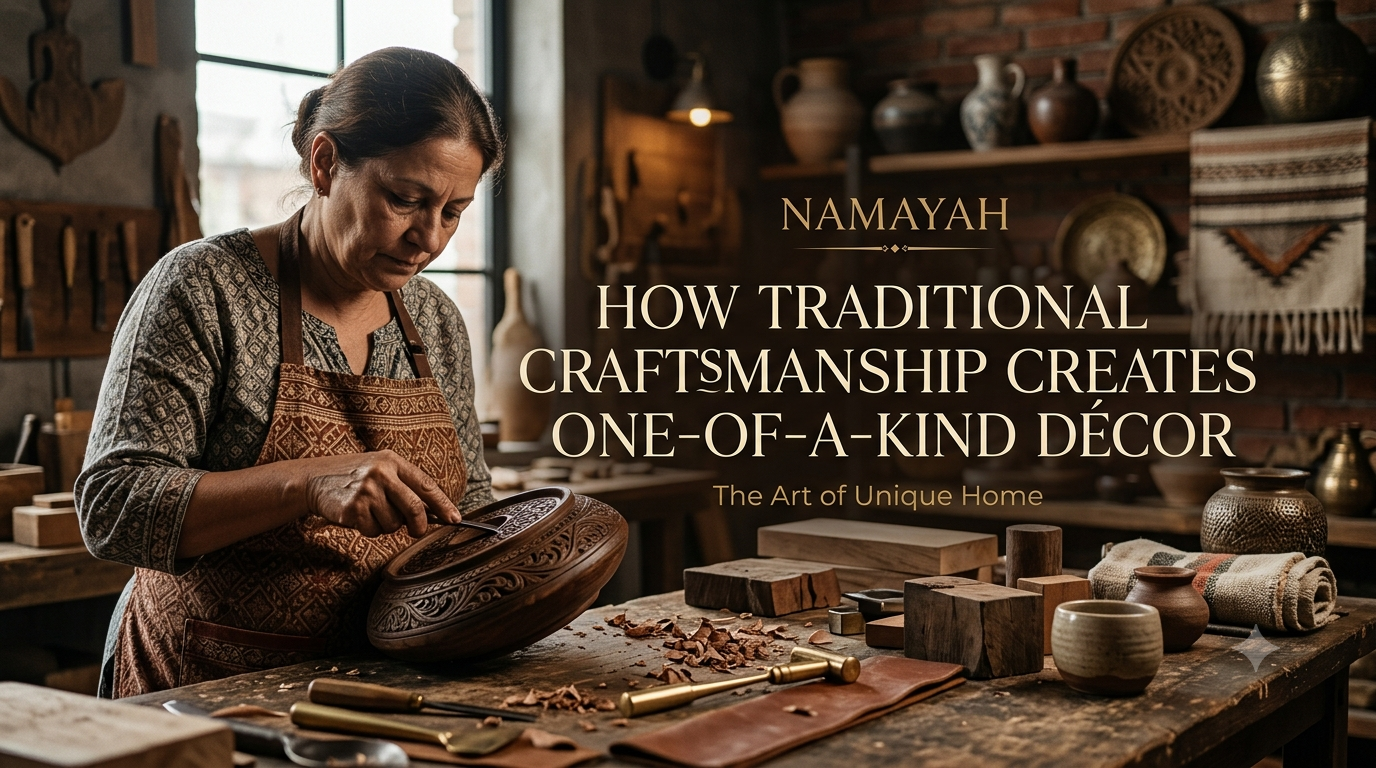
A beautiful home does not have to look like a showroom. For many homeowners, the most memorable interiors are built around objects that tell a story, reveal the hand of their maker, and carry a sense of history. Traditional craftsmanship brings these qualities into the home by transforming time-honored techniques, natural materials, and skilled handwork into décor with individual character.
Unlike identical factory-made products, handcrafted pieces can contain subtle differences in texture, shape, color, and finish. These variations are not necessarily flaws. They can be evidence of the process behind the object and part of what makes it special.
From hand-carved furniture and woven textiles to pottery, baskets, metalwork, and decorative objects, traditional craftsmanship gives homeowners an opportunity to create interiors that feel personal rather than predictable.
What Is Traditional Craftsmanship?
Traditional craftsmanship refers to skilled making practices that have been developed and passed down through generations or preserved within particular communities and cultures. These practices can involve woodworking, weaving, pottery, metalworking, carving, embroidery, basketry, painting, and many other forms of making.
The defining feature is not simply that an item is handmade. Traditional craftsmanship often combines technical knowledge, cultural heritage, specialized tools, local materials, and techniques refined over time.
An artisan may spend years learning how to select suitable wood, prepare fibers, shape clay, apply finishes, or reproduce a particular decorative pattern. The finished piece therefore reflects more than its appearance. It represents knowledge and workmanship.
Why Handmade Décor Feels Different
Mass-produced décor is designed to achieve consistency. Handmade décor can achieve something else: individuality.
When an artisan creates an object by hand, small variations can occur naturally. A wooden surface may reveal a slightly different grain pattern. A woven textile may have subtle differences in its texture. A ceramic vessel may display minor variations in shape or glaze.
These characteristics can give a piece visual depth.
Handcrafted décor can also create a stronger connection between an object and its maker. Instead of simply purchasing an item because it matches a particular trend, a homeowner may appreciate the technique, material, and cultural story behind it.
This makes artisan décor particularly useful for interiors where the goal is to create warmth, character, and individuality.
The Role of Time-Honored Techniques
Traditional techniques influence the final appearance of décor in ways that standardized manufacturing cannot always reproduce.
The process itself becomes part of the design.
Hand-Carving and Woodworking
Woodworking traditions can transform a functional material into furniture and decorative objects with distinctive details.
Hand-carved patterns, shaped edges, joinery, and carefully finished surfaces can make each wooden piece visually different. Natural grain also contributes to individuality because no two pieces of wood have exactly the same appearance.
A carved cabinet, table, stool, or wall panel can therefore become more than a practical furnishing. It can serve as a focal point within a room.
Hand-Weaving and Textile Arts
Textile traditions offer another way to introduce craftsmanship into interiors.
Handwoven rugs, blankets, cushions, wall hangings, and baskets can add texture and visual rhythm. Depending on the technique and materials used, the finished textile may have distinctive patterns, variations, or tactile qualities.
Textiles are particularly effective because they can soften hard architectural surfaces while introducing color, pattern, and cultural character.
Pottery and Ceramic Craft
Handmade pottery and ceramics demonstrate how a simple material can become highly expressive.
Clay can be shaped, textured, carved, painted, or glazed using different techniques. Even when artisans work from a shared design, handmade processes can produce subtle variations between individual pieces.
A handmade vase, bowl, planter, lamp base, or decorative vessel can therefore function as both a useful object and an artistic accent.
Natural Materials Add Character
Traditional craftsmanship frequently works with materials such as wood, clay, fibers, stone, leather, and metals.
Natural materials can contain variations that become part of the finished design. Wood has grain and tonal differences. Natural fibers can vary in texture. Clay can respond differently during shaping and firing.
These characteristics help prevent handcrafted décor from feeling overly uniform.
The material also contributes to the sensory experience of a room. A rough ceramic surface, woven fiber, carved wooden texture, or aged metal finish can add tactile interest that is difficult to communicate through color alone.
Imperfections That Make Pieces Special
One of the most important differences between handmade and mass-produced décor is the way imperfections are perceived.
In industrial production, consistency is usually a central objective. In traditional craft, minor variations may be accepted as part of the handmade process.
A slightly uneven rim on a ceramic vessel, variations in a woven pattern, or subtle differences in carved details can make an object feel authentic and individual.
Of course, craftsmanship still involves quality and skill. Handmade does not automatically mean well made. Buyers should look for thoughtful construction, appropriate materials, careful finishing, and evidence of genuine workmanship.
The goal is not imperfection for its own sake. It is character created through skilled human making.
Cultural Heritage in Home Décor
Traditional craftsmanship can also bring cultural heritage into interior spaces.
Decorative techniques often reflect the history, environment, beliefs, and resources of the communities where they developed. Patterns, materials, construction methods, and decorative motifs can carry meanings that extend beyond aesthetics.
Using culturally significant décor thoughtfully can therefore add depth to an interior.
However, appreciation should be accompanied by respect. Homeowners should learn about the origin and significance of distinctive craft traditions rather than treating cultural objects simply as decorative trends.
Supporting legitimate artisans and responsible craft businesses can also help sustain traditional skills.
How Artisans Create Truly Unique Pieces
Creating a handcrafted object often involves multiple stages.
First, the artisan selects and prepares the material. Next comes shaping, construction, weaving, carving, firing, joining, painting, or another specialized process. Finishing techniques may then be used to enhance durability and appearance.
At each stage, decisions can influence the final result.
This human involvement is one reason artisan pieces can feel so distinctive. The maker responds to the material rather than simply following an automated production sequence.
For buyers, understanding this process can make décor more meaningful. A handmade object becomes easier to appreciate when you understand the time, skill, and decisions involved in producing it.
Traditional Craftsmanship vs. Mass Production
Both handmade and mass-produced décor have a place in modern homes. The difference lies largely in their production methods and the qualities they prioritize.
| Feature | Traditional Craftsmanship | Mass Production |
|---|---|---|
| Production | Often made individually or in small batches | Usually produced at larger scale |
| Appearance | Natural variations are common | Designed for consistency |
| Materials | May emphasize natural or locally available materials | Often selected for scalability and consistency |
| Character | Each item can have distinctive details | Items are generally highly uniform |
| Process | Relies heavily on artisan skill | Relies heavily on standardized processes |
| Cultural connection | May preserve traditional techniques | Usually focused on contemporary production efficiency |
Choosing one approach does not mean rejecting the other. A well-designed home can combine practical mass-produced pieces with carefully selected handcrafted accents.
How to Incorporate Artisan Décor Into Your Home
You do not need to redesign an entire room to introduce traditional craftsmanship.
Start with one or two meaningful pieces.
A handwoven rug can anchor a living room. A carved wooden cabinet can become a statement piece. Handmade ceramics can add interest to open shelving, while woven baskets can provide both storage and texture.
Another effective approach is to create contrast.
Pair a handcrafted wooden table with contemporary seating. Place traditional ceramics in a minimalist room. Combine a textured woven textile with clean architectural lines.
The contrast allows the craftsmanship to stand out without making the interior feel visually crowded.
Choosing Authentic Handcrafted Décor
When shopping for artisan décor, look beyond the label.
Ask where the piece was made, what materials were used, and how it was produced. If the seller provides information about the artisan, workshop, technique, or cultural tradition, take time to understand it.
Quality is equally important.
Look closely at construction, joins, stitching, surface treatment, glaze, finish, and structural stability. Natural variation can be appealing, but obvious damage or poor construction is different from intentional handmade character.
It is also worth considering whether the item fits your home and lifestyle. A beautiful handcrafted object is most valuable when it can be enjoyed and used appropriately.
Caring for Handcrafted Décor
Handcrafted objects may require care appropriate to their materials and finishes.
Wood may benefit from protection against excessive moisture and harsh cleaning products. Textiles may need gentle cleaning and protection from prolonged exposure to damaging environmental conditions. Ceramics can require careful handling, particularly when they contain delicate decorative details.
Always follow care guidance provided by the maker or seller when available.
Proper maintenance can preserve both the appearance and functional qualities of handcrafted décor for years.
Why Traditional Craftsmanship Still Matters
Traditional craftsmanship gives modern interiors something that trends alone cannot provide: a connection to people, materials, techniques, and history.
A handcrafted object can make a room feel more personal because it carries evidence of its making. Its texture, construction, natural variations, and decorative details can create visual interest while its story can add emotional meaning.
In a world where many products are designed for uniformity, traditional craftsmanship offers another possibility. It shows that décor can be functional, beautiful, culturally meaningful, and individual at the same time.
The best handcrafted pieces do not simply fill an empty space. They give the space a sense of identity.
FAQs About Traditional Craftsmanship and Décor
What makes traditional craftsmanship different from mass production?
Traditional craftsmanship relies heavily on skilled human labor and established making techniques, while mass production generally emphasizes standardized processes and consistency at scale. Handmade processes can create natural variations that make individual pieces distinctive.
Why is handmade décor considered unique?
Handmade décor can contain variations in shape, texture, color, material, and finish created during the making process. These differences mean individual pieces may have characteristics that are not perfectly replicated across a large production run.
Is traditional craftsmanship only about making products by hand?
No. Traditional craftsmanship encompasses specialized knowledge, techniques, materials, cultural practices, and methods of making. The handmade process is important, but the broader tradition and expertise behind the work are also significant.
How can handcrafted décor improve an interior?
Handcrafted décor can introduce texture, visual variation, warmth, and individuality. A carefully selected artisan piece can also become a focal point or add contrast to a contemporary interior.
What types of traditional crafts work well in home décor?
Woodworking, pottery, weaving, basketry, metalwork, carving, embroidery, and other textile arts can all contribute to home décor. The best choice depends on the room, design style, materials, and intended function.
Are variations in handmade products a sign of poor quality?
Not necessarily. Minor variations can be a natural result of skilled handmade production and may contribute to an item’s character. However, intentional variation should be distinguished from structural defects or poor workmanship.
How should I choose handcrafted décor?
Consider the item’s craftsmanship, materials, origin, construction, function, and relationship to your existing interior. Learning about the artisan or craft tradition can also help you make a more informed choice.
Can traditional and modern décor work together?
Yes. Traditional handcrafted pieces can create attractive contrast within contemporary spaces. A minimalist room, for example, can gain warmth from a textured textile, carved wooden object, or handmade ceramic.
Conclusion
Traditional craftsmanship creates one-of-a-kind décor by combining skilled human work with distinctive materials, established techniques, and individual creative decisions. The resulting variations can give each piece character that adds depth to an interior.
Whether it is a handwoven textile, carved wooden furnishing, handmade ceramic, or another artisan object, traditional décor can make a home feel more personal and connected to the story behind the things we live with.