
How to Use Artisan Décor to Add Personality to Your Interiors
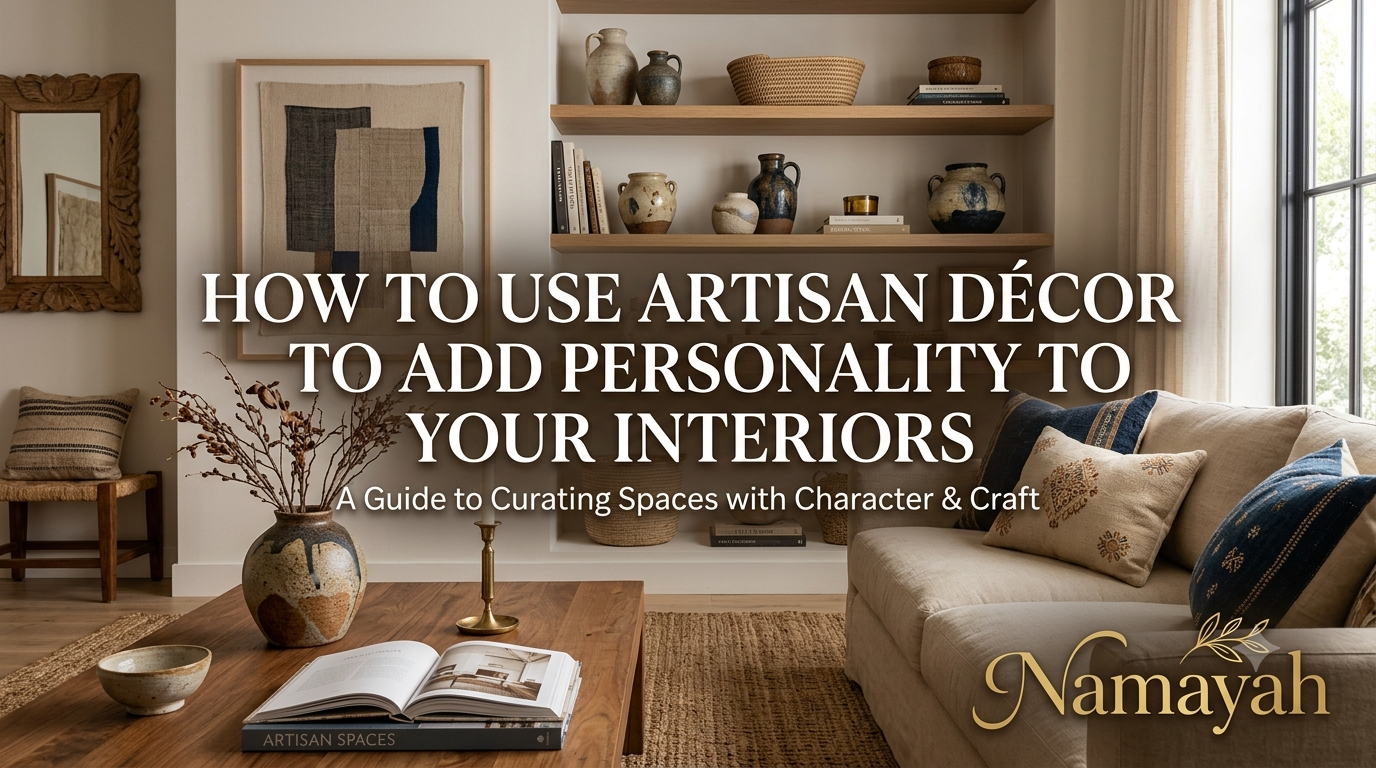
A home can be beautifully furnished and still feel impersonal. Artisan décor offers a simple way to change that by introducing handmade objects, natural materials, distinctive textures, and pieces with a sense of history.
The key is not to fill every surface with handcrafted accessories. Instead, choose a few pieces that complement your furniture and reflect your taste. A hand-thrown ceramic vase, woven textile, carved wooden object, handcrafted lamp, or piece of traditional artwork can become a visual reminder of what makes your home—and you—different.
Recent interior design coverage also points toward a growing preference for interiors that feel layered, individual, and lived-in rather than perfectly coordinated. Architectural Digest India, for example, highlights the renewed appeal of collectible objects, craftsmanship, provenance, and pieces that make a home feel assembled over time.
What Is Artisan Décor?
Artisan décor generally refers to decorative or functional objects made by skilled craftspeople using hands-on techniques, traditional processes, or individually controlled production methods.
Examples include:
- Hand-thrown ceramic vessels
- Woven rugs and baskets
- Hand-block-printed textiles
- Carved wooden accessories
- Metalwork and handcrafted sculptures
- Handmade pottery
- Artisan lamps and lighting
- Embroidered cushions
- Traditional or contemporary craft artwork
- Handmade furniture
Artisan décor does not have to belong to one particular interior style. It can work with contemporary, minimalist, rustic, traditional, eclectic, Scandinavian, Japandi, or transitional interiors.
Housing.com similarly describes artisan-style interiors through handmade objects, natural materials, traditional crafts, and organic textures, while noting that handcrafted elements can be incorporated into modern interiors.
Why Artisan Décor Makes Interiors Feel More Personal
Mass-produced accessories can be attractive, but repeating the same widely available objects can make different homes look remarkably similar.
Handcrafted pieces introduce variation. Small differences in texture, shape, finish, or color can make an object feel individual.
More importantly, artisan décor can connect your interior with a place, craft tradition, maker, memory, or personal interest.
For example, a traveler might display a handwoven textile collected during a trip. Someone interested in ceramics might build a shelf around handmade vessels. Another homeowner might choose locally crafted woodwork because it connects the interior with regional craftsmanship.
This approach turns decorating into storytelling.
The goal is not to create a showroom. It is to create a space where the objects have a reason to be there.
Start With One Meaningful Statement Piece
If your interior currently feels generic, resist the temptation to replace everything.
Start with one distinctive artisan piece.
It could be:
- A large woven wall hanging
- A sculptural ceramic vase
- A handcrafted coffee table
- A carved wooden stool
- A statement pendant
- A distinctive piece of craft-based artwork
Place it where it can breathe.
A large handcrafted object can work particularly well as a focal point because it gives the eye somewhere to land. From there, you can introduce smaller pieces that support—not compete with—the main feature.
This is also a practical way to experiment with artisan décor without committing to an entirely new design style.
Layer Handmade Textures
Texture is one of the easiest ways to make a room feel warmer and more visually interesting.
Consider combining smooth surfaces with tactile materials such as:
- Rough ceramic
- Woven cotton
- Linen
- Jute
- Cane
- Carved wood
- Hammered metal
- Wool
- Terracotta
For example, a contemporary sofa can be softened with a handwoven throw and textured cushions. A sleek console can become more interesting with a ceramic vessel and carved wooden object.
The contrast matters.
You do not need every object to have the same finish. In fact, too much uniformity can make the room feel flat.
Mix Artisan Pieces With Modern Furniture
One of the most effective ways to use artisan décor is to place handcrafted pieces against a simpler contemporary backdrop.
Think of a clean-lined sofa paired with a woven rug. Or a minimalist dining table surrounded by sculptural handmade chairs. A modern bedroom can gain warmth from a handwoven throw, ceramic bedside lamp, or handcrafted wall piece.
This balance prevents the room from feeling like a themed space.
It also makes artisan objects stand out.
Current design coverage has highlighted the appeal of combining raw and polished materials and using personalized details instead of overly sterile interiors.
The principle is simple: let handmade elements create contrast rather than asking everything to match.
Use Color to Connect Different Pieces
Artisan décor often features distinctive colors, patterns, or finishes. That does not mean you need a colorful room.
Instead, choose one or two colors from your artisan piece and repeat them subtly elsewhere.
For example:
- A rust-colored ceramic vessel can connect with a cushion or artwork.
- A blue-and-white textile can echo a nearby vase.
- Natural wood can be repeated through furniture and accessories.
- A terracotta object can complement warm neutral walls.
This creates visual cohesion without making the room look coordinated down to the last accessory.
A useful rule is to repeat a color rather than repeat an object.
Bring Artisan Décor Into Every Room
Living Room
The living room offers plenty of opportunities for artisan décor.
Try a combination such as:
- Handwoven rug
- Artisan cushions
- Ceramic coffee-table objects
- Handmade side table
- Sculptural lamp
- Framed craft artwork
Avoid placing too many small objects together. Give your strongest pieces enough empty space around them to remain visually important.
Bedroom
Bedrooms benefit from the softer side of artisan décor.
Consider:
- Handwoven blankets
- Embroidered cushions
- Linen bedding
- Ceramic lamps
- Woven baskets
- Carved bedside accessories
- Handmade artwork
Natural textures can make a bedroom feel more relaxed without requiring dramatic changes to the furniture.
Dining Room and Kitchen
The dining area is ideal for functional artisan pieces.
Look for:
- Handmade serving bowls
- Ceramic plates
- Wooden trays
- Woven placemats
- Artisan table runners
- Handcrafted candleholders
- Sculptural centerpieces
Because many of these pieces can be used rather than simply displayed, they can make everyday routines feel more personal.
Entryway and Hallways
You do not need a large room to use artisan décor effectively.
A small entryway might need only:
- A handcrafted mirror or artwork
- A distinctive console object
- A woven basket
- One sculptural accent
The entryway is particularly important because it establishes the visual character of the home before someone enters the main living spaces.
Embrace Imperfection Instead of Matching Everything
Handmade objects often have subtle variations.
A ceramic glaze may differ slightly from another. A woven textile may have irregularities. Wood grain may vary from one piece to another.
These differences are not necessarily flaws. They can be part of what gives artisan décor its character.
The current interest in “designed imperfection” reflects a broader move toward interiors that feel more personal and lived-in.
Rather than searching for identical accessories, allow a little variation.
Your room will usually feel more collected and less manufactured as a result.
Choose Pieces That Tell a Story
The most effective artisan décor is not necessarily the most expensive.
A meaningful object can have more impact than a luxury accessory chosen simply because it is fashionable.
Ask yourself:
- Does this piece remind me of somewhere?
- Do I like how it was made?
- Does it represent a craft or material I appreciate?
- Does it work with my existing interior?
- Would I still want it if it were not trending?
- Can I imagine keeping it for years?
These questions help shift decorating from impulse buying toward intentional collecting.
Handcrafted interiors are increasingly discussed in terms of identity and emotional connection, rather than appearance alone.
How to Avoid Making Artisan Décor Look Cluttered
More handmade objects do not automatically create more personality.
Too many competing pieces can make a room feel visually noisy.
Try the following approach:
Choose, group, and edit.
Choose a few pieces that genuinely appeal to you. Group objects according to color, height, material, or function. Then remove anything that does not contribute to the composition.
A useful styling principle is to leave some surfaces partially empty.
For example, instead of filling an entire shelf with ten decorative objects, try three carefully selected pieces at different heights.
The empty space around them becomes part of the design.
How to Choose Quality Artisan Décor
The word “artisan” can be used broadly, so look beyond the label.
When shopping, consider:
- Who made the piece?
- What material was used?
- Where was it produced?
- What technique was involved?
- Is the maker or source transparent?
- Does the item show genuine material or craft variation?
- Is it durable enough for its intended use?
- Can the seller explain its production process?
A recent guide to Indian artisan décor similarly recommends asking about where and how a piece was made rather than relying on the “artisan” label alone.
If craftsmanship and provenance matter to you, transparency is a useful buying signal.
Build a Personal Collection Over Time
You do not need to complete your interior in one shopping trip.
In fact, collecting gradually can produce a more authentic result.
Start with a few objects you genuinely love. Over time, add pieces from independent makers, craft markets, galleries, travels, family collections, or other sources that have personal meaning.
This creates an interior that evolves with you.
It also gives you opportunities to mix old and new. A contemporary sofa can sit comfortably beside a vintage wooden stool. A modern dining room can accommodate traditional ceramics. A minimalist bedroom can feature one expressive textile.
The resulting room does not need to follow one strict style.
It simply needs to feel connected.
Frequently Asked Questions
What is artisan décor?
Artisan décor consists of decorative or functional objects made by skilled craftspeople using handmade, traditional, or individually controlled techniques. Common examples include pottery, woven textiles, carved wood, metalwork, handmade furniture, and craft-based artwork.
How does artisan décor add personality to a home?
Artisan décor adds personality through distinctive materials, textures, shapes, craftsmanship, and stories. Instead of relying entirely on standardized accessories, it gives a room objects that can reflect the homeowner’s interests, memories, culture, and aesthetic preferences.
Can artisan décor work in a modern interior?
Yes. Artisan pieces can work particularly well in modern interiors because their texture and irregularity create contrast against clean lines and simple furniture. A few carefully selected handmade pieces can warm up a minimalist or contemporary space without changing its overall style.
How much artisan décor should I use?
There is no fixed amount. Start with one or two focal pieces and add supporting accents gradually. If every surface contains a statement object, individual pieces can lose their impact and the room may feel cluttered.
What are the best materials for artisan home décor?
Popular materials include wood, clay, ceramic, natural fibers, wool, linen, jute, cane, stone, and metal. The best choice depends on the room, your existing materials, maintenance needs, and the look you want to create.
Should handmade décor match?
No. Handmade pieces do not need to match exactly. Instead, create relationships through repeated colors, complementary materials, similar shapes, or a consistent visual mood. Some variation can make an interior feel more collected and personal.
Is artisan décor suitable for small spaces?
Yes. Small spaces can benefit from carefully chosen artisan accents. A single wall hanging, ceramic lamp, woven basket, or sculptural object can provide personality without taking up much floor space.
How can I make artisan décor look expensive?
Focus on editing rather than quantity. Choose pieces with strong materials, interesting craftsmanship, good proportions, and appropriate scale. Give distinctive objects enough space and combine them with simple furniture and finishes.
Conclusion
Artisan décor is most effective when it feels like part of your life rather than a decorating theme.
Start with pieces that genuinely interest you. Use handmade textures to soften modern furniture, repeat colors to create cohesion, and leave enough negative space for distinctive objects to stand out. Most importantly, choose décor that tells a story or reflects something about the people who live in the home.
The goal is not perfect coordination. It is a space that feels collected, comfortable, and unmistakably personal.