
How to Style Handmade Wooden Accessories in a Modern Kitchen
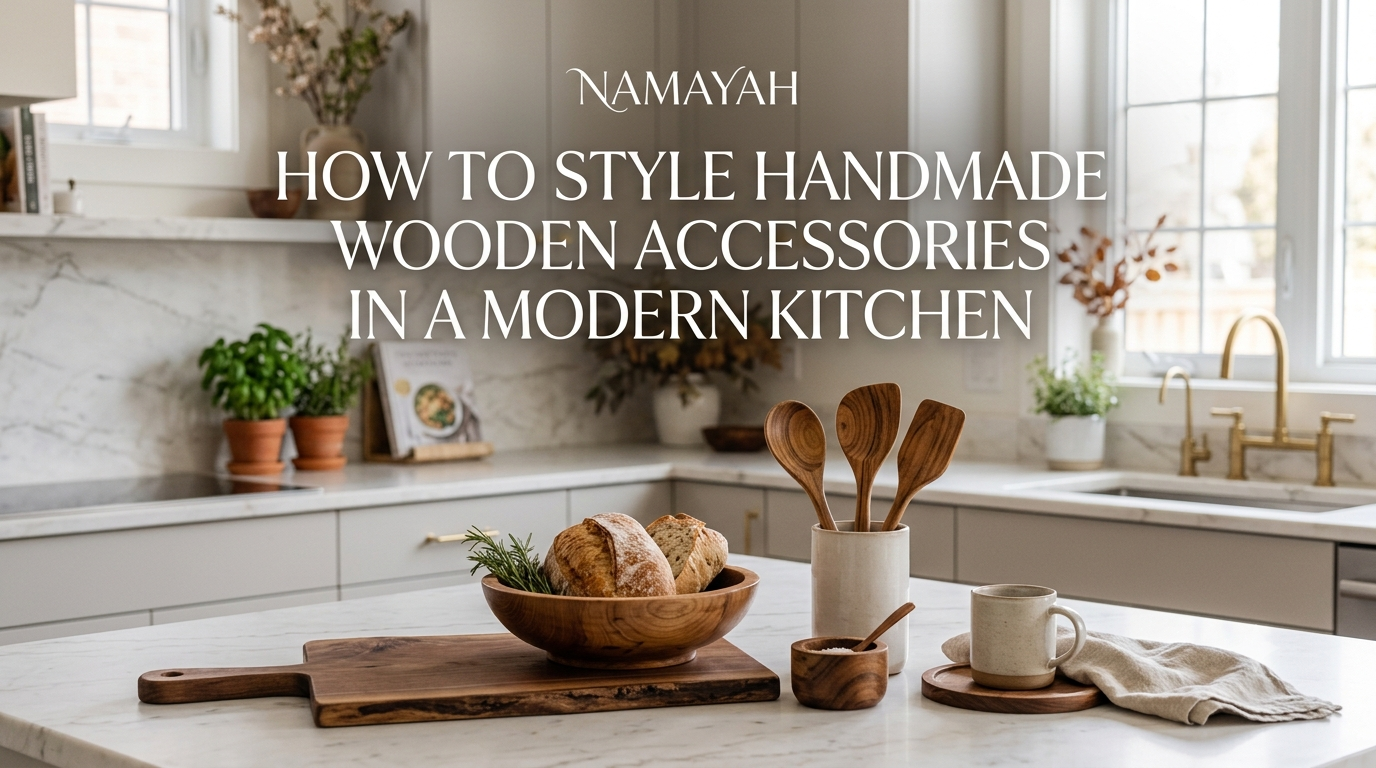
A modern kitchen does not have to feel cold or overly polished. Handmade wooden accessories can add warmth, texture, and character while preserving a clean contemporary look. The key is to use wood selectively, combine it with modern materials, and choose pieces whose shapes and finishes complement the existing kitchen rather than compete with it.
From sculptural serving boards to simple wooden bowls and utensil holders, natural wood can become both functional kitchenware and understated decor.
Why Wood Works in Modern Kitchen Design
Modern kitchens often feature smooth cabinetry, stone surfaces, metal hardware, glass, and streamlined appliances. These materials create a crisp visual foundation, but too many hard or reflective surfaces can make a room feel less inviting.
Wood introduces a natural element that can soften that appearance.
Handmade wooden accessories are particularly useful because they can bring subtle variations in grain, shape, and finish. Instead of making every item look perfectly uniform, these variations can give the kitchen a more personal appearance.
The goal is not to turn a modern kitchen into a rustic one. Instead, think of wooden accessories as warm accents within a contemporary setting.
Choose Wooden Pieces That Fit Your Style
Before buying or displaying wooden accessories, consider the overall design of your kitchen.
A minimalist kitchen may benefit from a few large, simple pieces. A warmer contemporary kitchen might accommodate several smaller wooden accessories arranged together.
Useful options include:
- Cutting and serving boards
- Wooden bowls
- Salad servers
- Utensil holders
- Trays
- Spoons and cooking utensils
- Small decorative objects
- Wooden storage containers
Choose pieces based on both appearance and function. Accessories that you actually use are easier to incorporate naturally into the room.
Match the Wood to Your Existing Palette
Wood does not need to match every other wooden element in the kitchen perfectly.
Instead, look at the relationship between the wood and the room’s dominant colors.
Light or pale wood can work particularly well with bright cabinetry and neutral surfaces. Medium or deeper wood tones can create contrast against lighter kitchens.
If your kitchen already contains several wood finishes, introducing another dramatically different tone may make the space feel visually fragmented. In that situation, choose accessories with a similar undertone or use one contrasting wooden piece as a deliberate focal point.
Mix Shapes and Textures
A collection made entirely of identical rectangular boards can look repetitive.
Try combining different forms instead:
- A long serving board
- A rounded bowl
- A small utensil holder
- A sculptural spoon
- A compact tray
The combination of straight lines and curves can complement the geometric architecture of a modern kitchen.
Texture matters, too. Visible grain can provide visual interest without requiring bold colors or elaborate decoration.
Create a Functional Wooden Display
One of the easiest ways to style handmade wooden accessories is to let useful objects become part of the decor.
Instead of hiding every beautiful piece inside a cabinet, display a small selection where it can be reached easily.
For example, place two or three cutting boards vertically against a backsplash or inside an open shelf. Add a bowl or small wooden utensil nearby to create a simple composition.
The important word is selection. Displaying every wooden item you own can quickly make the countertop look crowded.
Style a Cutting Board Collection
Cutting boards are among the most versatile wooden kitchen accessories.
For a modern look, stand boards vertically rather than laying several across the countertop. Vary their sizes slightly while keeping the overall arrangement restrained.
You can place them:
- Against a backsplash
- In a large tray
- Beside a cooktop, where appropriate
- On an open shelf
- Near a food-preparation area
If the boards have distinctive grain or handmade edges, they can act as functional focal points.
Use Wooden Bowls as Decor
A wooden bowl can work as both a practical container and a decorative object.
Place one on a kitchen island, breakfast table, or open shelf. Depending on its design, it can hold fruit, packaged foods, kitchen linens, or other everyday items.
For a minimalist arrangement, allow the bowl to stand alone. For a layered display, pair it with one or two complementary objects rather than filling the entire surface.
Add Wooden Utensils to Open Storage
Wooden cooking utensils are naturally suited to open storage.
A simple container filled with spoons, spatulas, and other frequently used tools can make a kitchen feel more lived-in while keeping essentials accessible.
For a contemporary appearance, choose a container and utensil collection with a relatively consistent visual language. Too many colors, shapes, or materials can make the arrangement look chaotic.
Balance Wood With Modern Materials
The most effective modern kitchen styling usually comes from contrast.
Pair handmade wood with materials such as:
- Stone
- Stainless steel
- Glass
- Ceramic
- Concrete-look surfaces
- Matte cabinetry
- Metal hardware
For example, a warm wooden serving board can stand out beautifully against a smooth stone countertop. A wooden bowl can soften the appearance of metal or glass shelving.
This contrast is what keeps the design contemporary.
Rather than filling a kitchen with wood, use wooden accessories to create small moments of warmth throughout the room.
Style Different Areas of the Kitchen
Where you place wooden accessories can be just as important as which pieces you choose.
Countertops
Keep countertop styling simple.
Choose one focal wooden object, such as a large serving board or bowl, and surround it with only a few useful items.
A small cluster might include a wooden board, ceramic container, and plant. The combination creates contrast without overwhelming the work surface.
Leave sufficient open countertop space for food preparation. A modern kitchen generally benefits from visual breathing room.
Open Shelving
Open shelves provide an excellent opportunity to combine wooden accessories with ceramics and glassware.
Try arranging objects by height. Place a larger wooden bowl or board toward the back, then layer smaller objects in front or beside it.
Avoid making every shelf symmetrical. A slightly varied arrangement can feel more natural while still looking intentional.
Dining and Breakfast Areas
You can extend the kitchen’s wooden accents into nearby eating areas.
A handmade serving board can sit on a dining table, while a wooden bowl or tray can be used on a breakfast counter.
Repeating the same wood tone in a few locations helps connect separate areas of an open-plan space.
Avoid Common Styling Mistakes
Even attractive wooden accessories can look out of place if they are used without a clear visual plan.
Overloading the Countertops
Too many decorative objects can make a modern kitchen look cluttered.
Start with fewer pieces and add only what improves the composition or serves a practical purpose.
Mixing Too Many Wood Tones
Different wood types can work together, but uncontrolled variation may make the space feel disconnected.
If you want a coordinated look, repeat one or two dominant wood tones.
Making Everything Rustic
Handmade does not automatically mean rustic.
Avoid combining every wooden accessory with farmhouse-style decor if your goal is a modern aesthetic. Pair natural wood with clean-lined furniture, contemporary ceramics, and restrained accessories.
Ignoring Function
Kitchen accessories should still work as kitchen accessories.
Choose pieces that are appropriate for their intended use, and follow the maker’s care instructions, particularly for items that contact food.
How to Care for Handmade Wooden Accessories
Proper care can help wooden kitchen accessories maintain their appearance and usefulness.
Care requirements vary according to the type of wood, finish, construction, and intended use, so follow the manufacturer’s instructions whenever available.
As a general approach:
- Clean food-contact pieces according to the maker’s guidance.
- Avoid prolonged exposure to moisture unless the product is designed for it.
- Allow wooden items to dry properly.
- Do not assume every wooden accessory is dishwasher-safe.
- Use an appropriate food-safe maintenance product when the manufacturer recommends one.
- Store pieces where they can remain dry and well ventilated.
Because handmade pieces can differ considerably, specific care instructions should take priority over generic advice.
A Simple Formula for Modern Wooden Kitchen Styling
If you are unsure where to begin, use this simple formula:
Choose one focal wooden piece + add one or two functional accents + balance them with modern materials + leave some empty space.
For example, a large handmade serving board could become the focal point on a kitchen counter. A small wooden utensil container can provide a second accent, while ceramic and metal elements keep the overall look contemporary.
The result should feel intentional rather than decorated for decoration’s sake.
Frequently Asked Questions
Are wooden accessories suitable for modern kitchens?
Yes. Wooden accessories can complement modern kitchens by introducing natural texture and warmth. Their success depends largely on choosing simple shapes, suitable finishes, and a restrained number of pieces.
What wooden accessories look best in a modern kitchen?
Serving boards, cutting boards, bowls, trays, and simple wooden utensils are versatile choices. Select pieces that complement your kitchen’s colors, materials, and overall proportions.
How do I make wooden accessories look modern?
Combine natural wood with clean-lined cabinetry and contemporary materials such as stone, metal, ceramic, and glass. Avoid overcrowding surfaces and choose accessories with simple or sculptural forms.
Can I mix different wood tones in one kitchen?
Yes, but use variation intentionally. Repeating a dominant wood tone can create cohesion, while one contrasting piece can provide a focal point.
Where should I display wooden cutting boards?
You can display them vertically against a backsplash, on an open shelf, or inside a suitable tray. Choose a location that keeps them accessible while maintaining a tidy countertop.
How many decorative wooden accessories should I use?
There is no universal number. Start with a few meaningful pieces and assess the visual balance of the room. In a modern kitchen, leaving open space is often as important as adding accessories.
Can handmade wooden accessories be used for food?
Some are specifically designed for food contact, while others are decorative. Check the product description and manufacturer’s care instructions before using a wooden accessory with food.
How do I keep wooden kitchen accessories looking good?
Follow the maker’s cleaning and maintenance instructions. Protect food-contact pieces from inappropriate cleaning methods, prolonged moisture, and other conditions that may damage the material.
Conclusion
Handmade wooden accessories can make a modern kitchen feel warmer without sacrificing its contemporary character. The best approach is to treat wood as an accent rather than covering the room in it.
Choose pieces that are beautiful and useful, vary shapes carefully, combine wood with modern materials, and leave enough open space for the kitchen to breathe. A few thoughtfully placed handmade accessories can add texture, personality, and a natural sense of warmth to an otherwise streamlined space.