
How to Shop for Authentic Indian Handicrafts
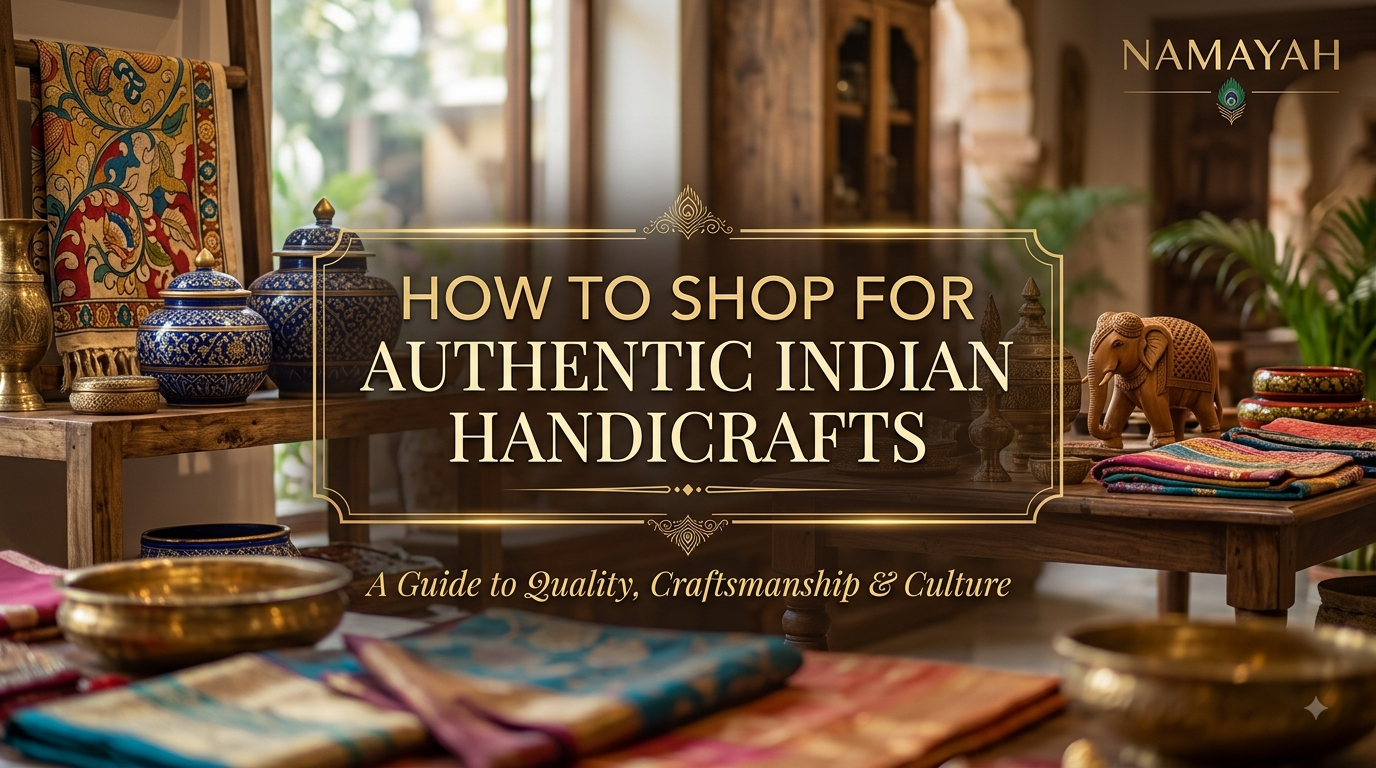
Indian handicrafts are valued for their regional identity, traditional techniques, skilled workmanship, and cultural history. From handwoven textiles and embroidered fabrics to carved wood, metalwork, pottery, and traditional decorative arts, each craft can reflect the community and place where it developed.
However, not every product marketed as an “Indian handicraft” is necessarily handmade or traditionally produced. Mass-produced goods can sometimes resemble handmade products, while terms such as “traditional,” “artisan-made,” and “handcrafted” may be used loosely.
The good news is that buyers can take several practical steps to make more informed choices. Research the craft, understand its materials and production method, check relevant certification or identification marks, learn about the seller, and ask questions before purchasing.
What Makes an Indian Handicraft Authentic?
Authenticity can mean different things depending on the product. A genuinely handmade item may show evidence of human craftsmanship, while a geographically specific craft may have characteristics associated with a particular region or traditional production method.
One useful verification tool is a Geographical Indication (GI). In India, a GI identifies goods associated with a definite geographical territory and particular qualities, reputation, or characteristics connected to that origin. Indian GI examples include Kanchipuram silk saree and Kolhapuri chappal.
A GI is not simply a general “made in India” label. It connects a product to a defined geographical origin and the characteristics associated with it.
For textiles, buyers can also encounter the Handloom Mark, which is designed to provide authenticity information for handwoven products. The official Handloom Mark system uses labels with unique QR codes that can help buyers identify verified weaver information.
Research the Craft Before You Buy
A little research can make shopping much easier.
Before visiting a market or ordering online, learn:
- The traditional name of the craft
- The region traditionally associated with it
- Common materials
- Typical production techniques
- Recognizable design characteristics
- Whether the craft has GI registration
- Whether a relevant authenticity or quality mark exists
- How the product is normally made
For example, if you are interested in a regional textile, research whether it is handwoven, hand-printed, embroidered, or produced using another technique. This gives you better questions to ask the seller.
Research also helps you avoid assuming that every product from a particular region is identical. Traditional crafts can evolve, and contemporary artisans may combine traditional techniques with modern designs.
Check for a GI Tag
A GI can be an important part of your research when buying a craft associated with a specific Indian region.
India’s official GI system maintains a register of registered geographical indications and authorised users. The official IP India website provides access to registered GI information, including state-wise listings.
A GI indicates that a product has a recognized geographical connection. IP India explains that registered GIs receive legal protection against unauthorized use, while the system can also support the economic interests of producers in the relevant geographical territory.
When shopping, don’t rely solely on a seller saying that an item is “GI certified.” If GI status matters to your purchase, verify the craft through the official GI resources and ask the seller what documentation or authorized-user information applies.
Look for the Handloom Mark
If you are purchasing an Indian handwoven textile, saree, shawl, scarf, or other handloom product, learn about the Handloom Mark.
The official Handloom Mark website says the label provides a collective identity for handwoven products and includes a QR code that can be scanned to verify information about the weaver.
This is particularly useful because “handloom” and “handmade” are not interchangeable terms. A textile can be handmade in one sense while not necessarily being handwoven on a loom.
If a seller claims that a textile is handloom, ask about the weaving process and look for the appropriate label where applicable.
Buy Directly From Artisans When Possible
One of the most useful ways to understand a craft is to purchase from an artisan, cooperative, producer group, or platform that provides clear information about its makers.
The Government of India’s IndiaHandmade initiative is designed to showcase the work of rural artisans and weavers and provide a platform for artisans and weavers to sell products online.
The Indian Handicrafts Portal also provides artisan-related information and has an official artisan search facility that can be filtered by region, state, district, and craft.
Buying directly does not automatically guarantee that every product is authentic. However, transparent information about the maker, location, materials, and production process gives you more information to evaluate the purchase.
Learn the Difference Between Handmade and Handloom
These terms describe different aspects of production.
Handmade generally refers to an item made by hand rather than being entirely manufactured by automated industrial processes.
Handloom specifically refers to textiles woven using a loom rather than produced on a power loom or another industrial weaving system.
A product may therefore be handmade without being handloom, and a handloom textile involves a specific weaving process.
Understanding this distinction is important when comparing products and prices. If a seller uses “handmade” as a broad marketing term, ask exactly which parts of the production process were done by hand.
Examine Materials and Craftsmanship
Before buying an expensive handicraft, inspect the product carefully.
Look at:
- Stitching and embroidery
- Weave consistency
- Carving details
- Paint or dye application
- Metal finishing
- Natural variations
- Seams and joins
- Surface texture
- Weight and construction
- Overall durability
Small variations do not necessarily indicate poor quality. In many handmade products, minor differences can be a natural result of individual craftsmanship.
Instead of looking for machine-like perfection, consider whether the construction is consistent with the technique the seller describes.
For textiles, inspect the front and back of the fabric, edges, motifs, and finishing. For carved or painted products, examine details closely and ask how the material was prepared and finished.
Ask the Seller the Right Questions
A knowledgeable seller should be able to provide basic information about the product.
Consider asking:
- Who made this item?
- Where was it made?
- What material is it made from?
- Which technique was used?
- How long does it typically take to make?
- Is it handmade, handloom, machine-made, or a combination?
- Does it have a GI registration or other relevant mark?
- Is there documentation or a product label?
- How should it be cleaned or maintained?
- Is the design traditional, contemporary, or both?
You do not need to interrogate every seller. The goal is to establish whether the description of the product matches the item itself.
Be Careful With Extremely Low Prices
Price alone cannot prove authenticity, but an unusually low price can be a reason to ask more questions.
Traditional craftsmanship requires materials, time, skill, and labor. A product that appears highly intricate but costs dramatically less than comparable artisan-made products deserves closer inspection.
At the same time, avoid assuming that an expensive item is automatically authentic. High prices can reflect branding, retail overhead, location, or design rather than craftsmanship alone.
The better approach is to compare:
materials + technique + labor + provenance + documentation + seller transparency.
Shop Online More Carefully
Online shopping makes Indian handicrafts accessible worldwide, but photographs can hide important details.
Before ordering, check:
- Seller identity
- Business or artisan information
- Product dimensions
- Material specifications
- Production technique
- Country and region of origin
- Return policy
- Care instructions
- Customer-service information
- Photos showing close-up details
- Certification or label information where relevant
Be cautious about descriptions that rely heavily on vague words such as “authentic,” “heritage,” or “traditional” without explaining what makes the item so.
If a listing claims a product has GI status, verify the relevant craft through India’s official GI resources rather than relying only on the marketplace description.
Consider Regional Craft Traditions
India has a wide range of craft traditions associated with different communities and regions.
Depending on your interests, you might explore:
- Handloom textiles
- Embroidery
- Block printing
- Pottery
- Wood carving
- Metalwork
- Basketry
- Leather craft
- Folk painting
- Traditional jewelry
- Decorative objects
Rather than choosing an item simply because it looks “Indian,” learn about the tradition behind it. Understanding its origin can make the purchase more meaningful and helps you recognize whether the seller’s description is specific and credible.
Check Packaging, Labels, and Documentation
Labels and supporting information can help establish provenance, but they should not be treated as proof by themselves.
For a higher-value purchase, retain:
- Receipt or invoice
- Product description
- Certification details
- GI-related information, if applicable
- Artisan or cooperative information
- Care instructions
- Seller contact details
For handloom products, look for the official Handloom Mark information where relevant. The Handloom Mark system explains that its labels include unique QR codes intended to help buyers verify the associated weaver information.
For GI products, consult the official IP India register when verification is important.
How to Buy Indian Handicrafts Responsibly
Authenticity is only one part of responsible craft shopping.
Consider buying from sellers who clearly identify:
- The craft
- The maker or producer group
- The place of production
- Materials
- Techniques
- Product limitations
- Care requirements
Avoid pressuring artisans to accept unrealistic prices simply because bargaining is common in some markets. If a product requires substantial time and specialist skill, its price may reflect that labor.
Responsible shopping also means respecting cultural context. Some traditional designs, symbols, or objects can have particular meanings. When in doubt, ask the seller about the history and intended use of the product.
Indian Handicrafts Shopping Checklist
Before paying, use this quick checklist:
- I know what craft I am buying.
- I know where the product was made.
- I understand the materials used.
- I know whether it is handmade, handloom, machine-made, or a combination.
- I have inspected the workmanship.
- I have asked who made it or who produced it.
- I checked relevant GI information when applicable.
- I looked for the Handloom Mark when buying a handloom product.
- The seller’s description is specific rather than vague.
- I understand the price and what it includes.
- I have a receipt or order record.
- I understand care and return requirements.
FAQs About Buying Authentic Indian Handicrafts
How can I tell if an Indian handicraft is authentic?
Start by checking the craft’s origin, materials, technique, seller information, and workmanship. For applicable products, verify official identifiers such as GI information or the Handloom Mark. No single visual clue can establish authenticity for every type of handicraft.
What is a GI tag in Indian handicrafts?
A Geographical Indication identifies goods associated with a specific geographical territory and particular qualities, reputation, or characteristics connected to that origin. Indian handicrafts can qualify for GI protection.
Does a GI tag mean the product is handmade?
Not necessarily. A GI identifies a geographical origin and characteristics associated with the registered goods. It should not automatically be interpreted as a universal guarantee that every production step was performed by hand.
What is the Handloom Mark?
The Handloom Mark is an official identification system for handwoven products. Its labels can include unique QR codes that help buyers access verified weaver information.
Is handmade the same as handloom?
No. Handmade describes how an item is produced more generally, while handloom specifically concerns the weaving of textiles using a loom. Ask the seller which production method applies to the product.
Where can I find information about Indian artisans?
The Indian Handicrafts Portal includes an official artisan search facility that allows searches using parameters such as region, state, district, and craft.
Are expensive Indian handicrafts always authentic?
No. Price is not proof of authenticity. Evaluate the product’s materials, technique, provenance, documentation, seller transparency, and workmanship rather than relying on price alone.
How can I safely buy Indian handicrafts online?
Choose sellers that provide clear information about the maker, origin, materials, technique, dimensions, and return policies. For products making specific GI or handloom claims, verify those claims using appropriate official resources.
Conclusion
Learning how to shop for authentic Indian handicrafts is less about finding one magic sign and more about becoming an informed buyer. Research the craft, understand its traditional production methods, inspect the workmanship, ask questions, and evaluate the seller’s transparency.
For relevant products, official systems can provide additional verification. India’s GI Registry can help buyers investigate registered geographical indications, while the Handloom Mark can provide authenticity information for applicable handwoven products.
Most importantly, look beyond the appearance of the product. A meaningful handicraft purchase connects you with a material, technique, place, and maker. Taking the time to understand those connections can help you choose products with greater confidence while appreciating the craftsmanship behind them.