
How to Make Your Living Room Look Luxurious
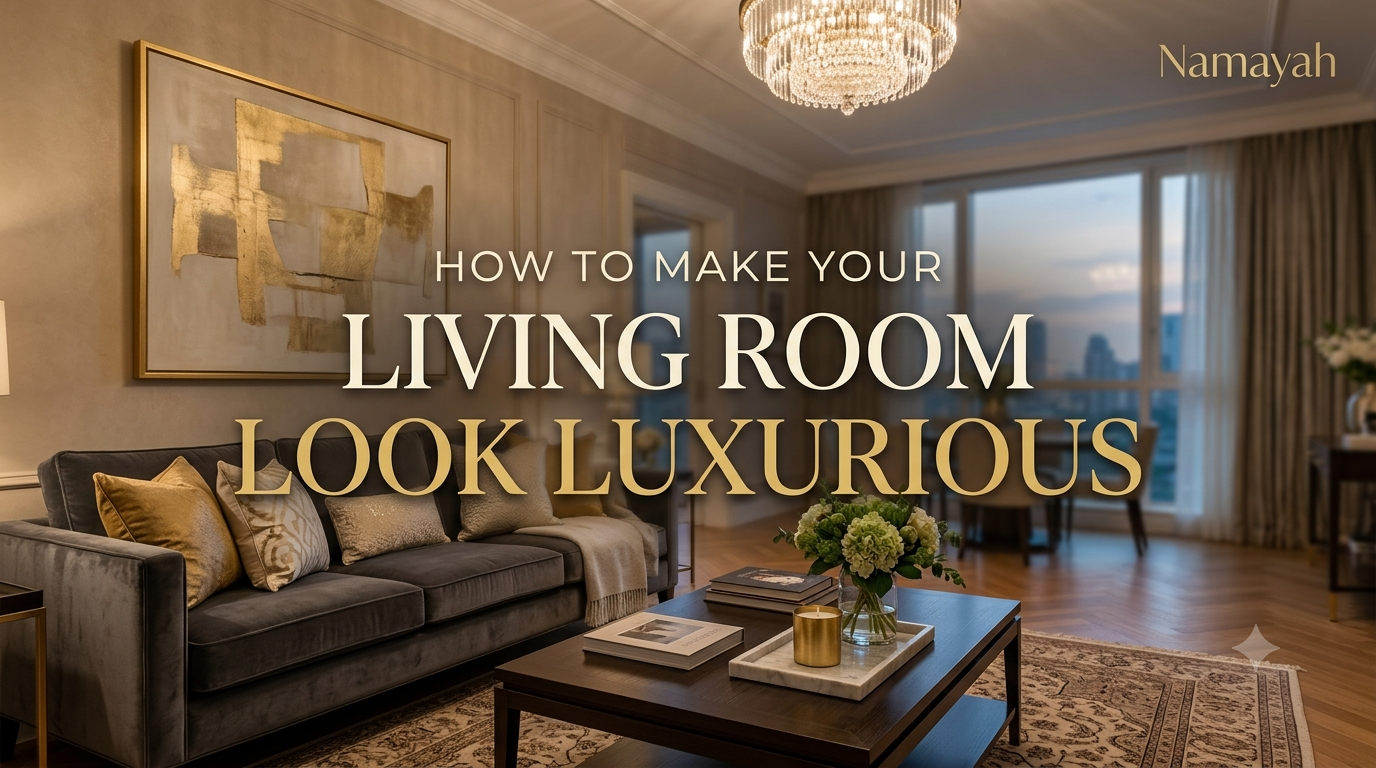
You do not need an unlimited decorating budget to make your living room look luxurious. A high-end room usually feels intentional, balanced, comfortable, and cohesive rather than simply filled with expensive objects.
The biggest improvements often come from getting scale right, reducing visual clutter, improving lighting, choosing a consistent color palette, and using a few substantial pieces instead of many small decorations.
Here are 15 practical ways to create that effect.
What Makes a Living Room Look Luxurious?
Luxury interior design is less about displaying wealth and more about creating a space that feels considered.
A luxurious living room typically combines:
- Balanced furniture proportions
- A controlled color palette
- Layered lighting
- Quality-looking fabrics
- Appropriate furniture scale
- Interesting textures
- Well-designed window treatments
- Carefully selected art
- Uncluttered surfaces
- Personal details
Recent designer advice also emphasizes individuality rather than buying completely matching furniture collections. Meaningful art, patterns, greenery, and distinctive pieces can make a home feel more elevated and personal.
The goal should therefore be curated, not crowded.
1. Start With a Cohesive Color Palette
One of the easiest ways to make your living room look luxurious is to simplify its color scheme.
Choose two or three primary colors and repeat them throughout the space. Warm whites, cream, taupe, beige, chocolate brown, muted green, charcoal, navy, and other sophisticated tones can all work.
You do not have to make everything neutral. Deep colors can create an especially dramatic effect when balanced with quieter furnishings.
For example, you might combine:
Warm white walls + walnut furniture + olive accents + antique brass details.
The consistency is more important than choosing any particular “luxury” color.
Avoid introducing a new color with every cushion, vase, rug, or accessory. Too many disconnected colors can make the room visually busy.
2. Invest in the Right Statement Pieces
If your budget is limited, avoid spreading it equally across dozens of objects.
Choose one or two pieces that visually anchor the room.
Depending on your space, that might be a:
- Well-proportioned sofa
- Large area rug
- Statement pendant
- Sculptural coffee table
- Oversized artwork
- Quality accent chair
Solid wood, stone, linen, wool, metal, glass, and other tactile materials can help create a more substantial appearance. Existing design advice on luxury living rooms similarly highlights selective use of high-end-looking materials such as stone rather than assuming every object needs to be expensive.
Spend where the eye naturally goes first.
3. Choose a Large, Well-Proportioned Rug
An undersized rug is one of the quickest ways to make a seating arrangement feel disconnected.
The rug should visually anchor the main furniture rather than float like a small island underneath the coffee table.
In many layouts, choosing a rug large enough for at least the front legs of the main seating to rest on it creates a more unified arrangement. Larger rooms may accommodate all furniture legs on the rug.
Recent designer commentary continues to flag undersized rugs as a common problem because they can disrupt the balance and cohesiveness of a living space.
Before purchasing, mark the proposed rug dimensions on your floor with painter’s tape. You will immediately get a better sense of its scale.
4. Layer Your Lighting
Lighting can dramatically change how luxurious a living room feels.
Instead of depending on one bright ceiling fixture, combine several sources of light at different heights.
Think in three layers:
| Lighting Type | Examples | Purpose |
|---|---|---|
| Ambient | Ceiling light, chandelier | Overall illumination |
| Task | Reading lamp, floor lamp | Functional lighting |
| Accent | Table lamp, picture light | Atmosphere and emphasis |
This gives you more control over the mood after sunset.
Lamps can also function as decorative objects, adding height, shape, and material variation to the room.
Contemporary designer guidance repeatedly identifies thoughtful, layered lighting as an important part of making interiors feel more sophisticated.
Whenever possible, maximize natural light during the daytime as well.
5. Hang Curtains High and Wide
Window treatments can transform the perceived proportions of a room.
Where the architecture allows, positioning the curtain rod above the window and extending it beyond the frame can visually emphasize height and make the window treatment feel more substantial.
Choose curtains with enough fabric to look full rather than stretched flat across the window.
Materials such as linen-look fabrics, velvet, cotton blends, or quality textured fabrics can work beautifully. Floor-length curtains generally create a more finished appearance than panels that stop awkwardly above the floor.
This is also an area where precision matters. Measure before buying rather than guessing.
6. Add Texture With Quality-Looking Fabrics
Luxury rooms rarely depend on a single texture.
Layer contrasting surfaces to create depth.
For example:
Linen curtains + wool-look rug + velvet cushion + wooden table + metal lamp.
Even when everything is neutral, those differences keep the room interesting.
Cushions and throws are particularly useful because they allow you to introduce richer materials without replacing major furniture.
Avoid overloading the sofa, however. Five inexpensive cushions are not automatically more luxurious than two or three well-chosen ones.
7. Use Large-Scale Art
Bare walls can make an otherwise beautiful living room feel unfinished.
Instead of filling the wall with numerous unrelated decorations, consider one substantial artwork or a deliberately arranged gallery wall.
Large artwork creates a clear focal point and can introduce personality without adding physical clutter.
The art does not have to be expensive.
Original work from emerging artists, vintage prints, photography, textile art, or even your own framed photographs can feel sophisticated when appropriately scaled and professionally presented.
Recent designer recommendations also emphasize meaningful art and individual choices as ways to make interiors feel elevated without major renovations.
8. Upgrade Small Details
If a renovation is not possible, concentrate on details people see and touch.
Potential upgrades include:
- Cabinet handles
- Curtain rods
- Lamp shades
- Cushion covers
- Switch plates
- Picture frames
- Trays
- Decorative boxes
- Furniture hardware
Try repeating finishes rather than introducing a different metal everywhere.
For instance, antique brass on a lamp, curtain rod, and small decorative object can create a subtle visual thread.
The key is consistency rather than simply choosing shiny materials.
9. Keep Clutter Under Control
Visual calm often reads as luxury.
That does not mean your living room should look empty. It means everyday objects should have intentional places.
Use closed storage for items you do not want displayed and reserve open shelving for objects worth seeing.
A coffee table covered with remotes, chargers, receipts, cables, magazines, and miscellaneous accessories will distract from even expensive furniture.
Before buying more decor, try removing unnecessary objects.
You may discover the room needs less rather than more.
10. Mix Materials Carefully
A room containing only one material can feel flat.
Introduce a controlled mix, such as:
- Warm wood
- Glass
- Stone
- Ceramic
- Linen
- Wool
- Brushed metal
The contrast between hard and soft surfaces creates richness.
You can achieve this on almost any budget. A stone coffee table may be expensive, but a small stone tray or ceramic accessory can introduce similar visual contrast for much less.
Avoid adding every fashionable finish at once. Repetition creates cohesion.
11. Add Architectural Character
Plain walls provide an opportunity to make a major visual improvement.
Depending on your home’s architecture and budget, consider:
- Wall molding
- Paneling
- Built-in shelving
- A fireplace surround
- Ceiling detailing
- Textured paint
- Wallpaper
Wall paneling, in particular, has long been used to introduce architectural depth and emphasize room proportions.
If permanent construction is not practical, paint can still create definition. Painting walls, trim, and selected architectural elements thoughtfully can give the room a more intentional identity.
12. Style the Coffee Table With Restraint
A luxurious coffee table should look styled without becoming unusable.
Try grouping a small number of objects with different heights and forms.
For example:
- Two attractive books
- A small sculptural object
- A tray
- A vase or plant
Leave negative space around the arrangement.
You should still have somewhere to put a cup of coffee.
The same principle applies to consoles, mantels, and shelving: not every available surface needs decoration.
13. Bring in Greenery
Plants and branches can introduce organic shapes into rooms dominated by straight furniture lines.
A substantial plant can also fill an awkward empty corner more effectively than several tiny accessories.
Choose plants according to the actual light conditions in your living room, or use convincing artificial greenery when maintenance is impractical.
Greenery has also appeared among recent designer recommendations for giving interiors a more elevated appearance without undertaking major renovations.
14. Use Symmetry—But Don’t Overdo It
Symmetry can create a sense of order.
Matching lamps on a console, two chairs facing a sofa, or balanced objects around a fireplace can make a room feel calmer and more deliberate.
However, perfect symmetry everywhere can feel like a showroom.
Use symmetry to establish structure, then add personality with different books, artwork, plants, or decorative objects. Luxury living-room guidance frequently highlights both visual balance and personality rather than treating them as opposites.
15. Avoid Decorating Mistakes That Make the Room Feel Cheap
Sometimes making a living room look luxurious is more about what you remove than what you add.
Common problems include:
- Rugs that are too small for the furniture
- Curtains that are too short
- Excessive matching furniture
- Too many tiny decorations
- Harsh lighting from one source
- Visible cable clutter
- Furniture that is wrong for the room’s scale
- Artwork hung without considering furniture proportions
- Too many competing colors or finishes
- Choosing appearance while ignoring comfort
Scale deserves particular attention. Recent expert guidance on furniture buying stresses checking dimensions, function, comfort, and material suitability rather than purchasing based on appearance alone.
A beautiful chair that is uncomfortable or blocks circulation is not a successful luxury upgrade.
FAQs About Making a Living Room Look Luxurious
How can I make my living room look luxurious on a budget?
Start with free or inexpensive changes: declutter, rearrange furniture, simplify the color palette, improve furniture placement, and remove unnecessary accessories. Then prioritize affordable upgrades such as cushion covers, lamps, curtains, artwork, hardware, and a correctly sized rug.
What colors make a living room look expensive?
Warm neutrals, cream, taupe, brown, charcoal, muted green, navy, and other controlled palettes can create a sophisticated appearance. However, no individual color automatically looks expensive. Cohesion, lighting, texture, and material choices matter more.
How do I make a small living room look luxurious?
Choose furniture appropriate to the room’s scale, reduce clutter, use layered lighting, maximize natural light, hang curtains to emphasize height, and select fewer but more substantial decorative objects. Avoid filling every wall and surface.
What makes a living room look cheap?
Poor proportions, undersized rugs, short curtains, clutter, mismatched finishes, excessive accessories, harsh lighting, and low-quality-looking fabrics can make a room feel less polished. Too many trendy objects can also create visual noise.
What should I buy first to make my living room look expensive?
Start with the element creating the biggest visual problem. That could be a correctly sized rug, better lighting, curtains, or one strong focal piece. Do not automatically replace your sofa if smaller changes can improve the entire room.
Can you create a luxury living room without expensive furniture?
Yes. A sophisticated room depends heavily on scale, layout, color, texture, lighting, and restraint. Mixing affordable furniture with a few stronger statement pieces can create a cohesive high-end appearance without furnishing the entire room with luxury brands.
Do curtains make a living room look more luxurious?
Well-proportioned curtains can make windows feel larger and the room more finished. Full-length panels with adequate fabric generally look more intentional than curtains that are too short or narrow.
How can I make my sofa look more luxurious?
Use a limited selection of well-filled cushions in complementary sizes and textures, add a quality throw, and keep the sofa from becoming overcrowded. The surrounding rug, lighting, side tables, and artwork also influence how sophisticated the sofa appears.
Conclusion
Learning how to make your living room look luxurious is less about spending more and more about making deliberate design decisions.
Start with proportion and layout. Choose a cohesive palette, use an appropriately sized rug, layer your lighting, improve your curtains, introduce varied textures, and create one or two strong focal points. Then remove clutter and unnecessary accessories.
The most convincing luxury living rooms do not look as though everything was purchased at once. They feel collected, comfortable, personal, and carefully considered.