
How to Layer Textures for a Rich and Elegant Interior
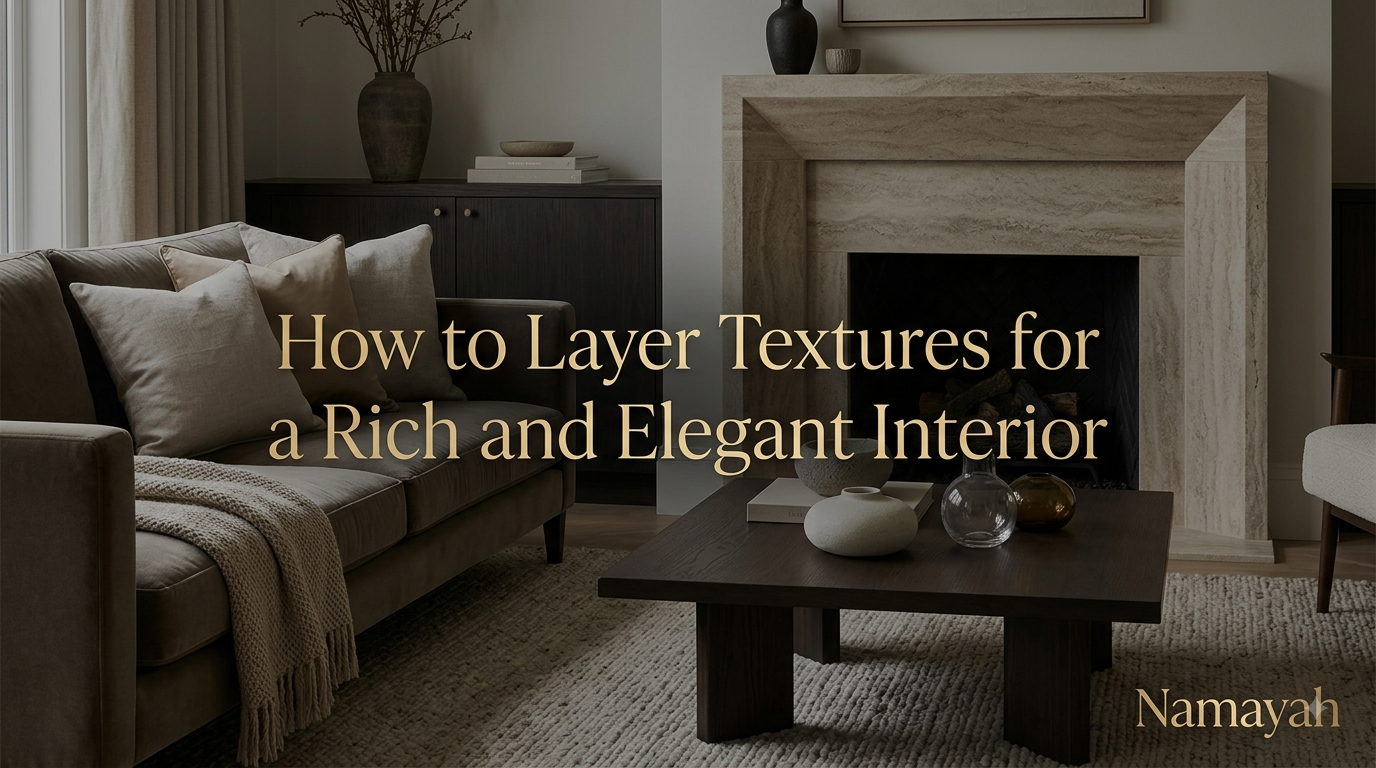
A beautiful interior is not created by color alone. Texture gives a room depth, warmth, contrast, and character. The right combination of linen, wool, velvet, wood, stone, metal, glass, and woven materials can make even a simple space feel sophisticated.
The key to learning how to layer textures for a rich and elegant interior is not to add as many materials as possible. Instead, combine different surfaces deliberately so that each one has a clear role. Soft fabrics can balance hard architectural materials, while matte and reflective finishes can create subtle visual contrast.
Current interior design guidance increasingly emphasizes texture as a way to make neutral and restrained rooms feel dimensional rather than flat.
Why Texture Matters in Interior Design
Texture describes how a material looks and feels. In an interior, it can be visual, tactile, or both.
A smooth marble surface, for example, has a very different character from a chunky wool throw. A polished metal lamp reflects light, while unfinished wood absorbs it and introduces visible grain.
When these differences are thoughtfully combined, the eye moves naturally around the room.
Texture can help:
- Add depth to simple color schemes
- Make rooms feel warmer and more inviting
- Balance hard architectural surfaces
- Create visual contrast without relying on strong colors
- Give furniture and accessories greater presence
- Make neutral interiors feel sophisticated rather than bland
Textiles are particularly effective because they soften harder surfaces such as wood, stone, glass, and plaster. Designers commonly recommend combining fabrics with different weights, weaves, and structures rather than using one fabric throughout a room.
Start With a Strong Foundation
Before adding cushions, throws, and decorative accessories, look at the room’s largest surfaces.
Your foundation may include:
- Flooring
- Walls
- Ceiling
- Large furniture
- Built-in cabinetry
- Window treatments
These elements establish the visual character of the space.
For example, a room with natural wood flooring already has grain and tonal variation. A smooth painted wall beside it provides contrast. Adding a textured rug and upholstered sofa can then introduce another layer without making the room feel excessive.
Start with what is already present rather than trying to cover every surface with texture.
Build a Balanced Material Palette
A sophisticated room usually contains several materials, but they should feel connected.
Choose a dominant material family first. This might be:
- Natural wood
- Stone
- Linen
- Wool
- Leather
- Woven fibers
- Plaster
Then introduce complementary materials.
For example, a warm neutral living room could combine:
| Layer | Material | Design Role |
|---|---|---|
| Foundation | Oak or similar wood | Natural warmth |
| Large textile | Wool rug | Softness and grounding |
| Upholstery | Linen or cotton | Relaxed texture |
| Accent | Velvet | Richness |
| Structure | Metal | Definition |
| Accessories | Ceramic or stone | Organic variation |
The objective is contrast with cohesion. Materials should not all look identical, but they should relate through color, scale, finish, or visual weight.
Mix Soft and Hard Textures
One of the simplest ways to create an elegant interior is to contrast soft materials with harder ones.
Think about combinations such as:
- Linen sofa + wood coffee table
- Velvet cushion + stone side table
- Wool rug + metal furniture
- Leather chair + woven basket
- Cotton curtains + aged metal hardware
- Bouclé upholstery + smooth marble
This works because the materials give the eye different experiences.
A room containing only hard surfaces can feel cold. A room filled exclusively with plush fabrics can feel visually heavy. Combining the two creates balance.
The relationship between soft and structured materials is a recurring principle in professional texture layering.
Layer Rugs for Depth
A rug is one of the largest opportunities to introduce texture.
A single large rug can anchor furniture and visually define a seating area. In suitable spaces, you can also layer rugs by combining different materials or patterns.
For example, a relatively simple base rug can sit beneath a smaller, more decorative rug. Natural-fiber rugs can also provide a contrasting foundation for softer textiles.
When choosing rugs, consider:
- Pile height
- Weave
- Pattern scale
- Color
- Material
- Furniture placement
Avoid choosing a rug based only on appearance. Its texture should support the other surfaces in the room.
A large rug can also help unify furniture into a cohesive seating arrangement rather than allowing each piece to appear visually isolated.
Use Curtains and Upholstery to Add Softness
Window treatments and upholstery provide some of the most noticeable textile layers in a room.
Linen can introduce an airy, relaxed quality. Velvet adds density and visual richness. Wool brings warmth. Cotton can provide a lighter, versatile layer.
You do not need every fabric to match.
Instead, look for relationships between them.
For example, you might pair:
Linen curtains + wool rug + velvet cushions
or
Cotton upholstery + woven shades + textured wool throw.
Layered window treatments can be particularly effective because a lightweight sheer and a heavier curtain create both softness and structure.
Create Interest With Cushions and Throws
Smaller textiles are where you can experiment more freely.
Rather than buying a matching set of cushions, combine different textures while keeping some connection between their colors.
Try:
- One smooth fabric
- One woven fabric
- One patterned textile
- One tactile accent such as velvet, boucle, or a raised weave
Then add a throw in a contrasting weight.
For example, a smooth upholstered sofa could become more interesting with linen cushions, a woven cushion, and a chunky knitted throw.
The important principle is variation. Using the same fabric repeatedly may technically add texture, but it can still produce a one-note effect.
Introduce Wood, Stone, Glass, and Metal
Texture does not have to come from fabric.
Hard materials can provide the structure that keeps an interior from becoming too soft.
Wood
Wood introduces natural grain and warmth. It works particularly well against smooth surfaces.
Stone
Stone can provide visual weight and an organic character. Depending on the finish, it may appear polished, honed, rough, or naturally irregular.
Metal
Metal adds definition and, depending on its finish, either subtle or strong contrast. Brushed, aged, polished, and matte finishes each behave differently under light.
Glass
Glass creates a smoother, lighter layer. It can be useful when a room already contains many dense or tactile materials.
The goal is not to use every material in one room. Select a few that create meaningful contrast.
Use Texture in Neutral Interiors
Texture becomes especially important when working with neutral colors.
A room built around beige, cream, taupe, gray, or off-white can easily become visually flat if every surface has the same finish.
Instead, create variation through materials.
For example:
Cream wall + linen sofa + wool rug + oak table + stone accessory + velvet cushion
The colors may be closely related, but the surfaces are distinctly different.
This is why texture can be particularly powerful in restrained interiors. Current design coverage highlights the growing emphasis on “texture schemes” as a way to give neutral rooms depth and dimension.
Let Lighting Highlight Texture
Texture is not experienced independently from light.
A surface can look completely different under direct, diffuse, warm, or cool illumination.
Use lighting to reveal the differences between materials.
For example:
- Side lighting can emphasize wall relief.
- A table lamp can highlight a textured ceramic object.
- Natural daylight can reveal fabric weave.
- A floor lamp can create shadows across a woven surface.
- Multiple light sources can prevent a room from looking visually flat after dark.
Layered lighting also contributes to atmosphere. Recent interior guidance recommends combining multiple light sources rather than relying entirely on one overhead fixture.
Layer Textures Room by Room
Living Room
Begin with the flooring and sofa. Add an area rug, curtains, cushions, and a throw. Then introduce harder materials through coffee tables, lamps, shelving, or accessories.
A useful combination might be:
Wood + wool + linen + velvet + metal.
Bedroom
The bed provides an excellent opportunity for textile layering.
Combine:
- Upholstered or wooden headboard
- Cotton or linen bedding
- Quilted layer
- Decorative cushions
- Wool or knitted throw
- Soft rug
Keep the palette cohesive so the room remains restful.
Dining Room
Dining spaces often contain substantial hard surfaces, including wood, stone, glass, and metal.
Introduce softness through:
- Upholstered dining chairs
- Curtains
- Table linens
- A textured rug
- Woven or fabric lighting
Entryway
An entryway benefits from a small number of strong textural contrasts.
Consider wood furniture, a woven basket, a textured runner, ceramic accessories, and a mirror or metal detail.
Because the entryway is usually compact, restraint is especially important.
Common Texture-Layering Mistakes
Using Too Many Textures
More is not automatically better. Too many competing materials can make a room feel chaotic.
Choose a small group of textures and repeat them strategically.
Matching Everything
A perfectly coordinated set of identical fabrics can make an interior feel flat.
Instead, coordinate colors while varying materials and finishes.
Ignoring Scale
Texture also has scale.
A tiny woven pattern and a large chunky weave create very different visual effects. Combine fine and substantial textures to create rhythm.
Forgetting Hard Materials
If everything is soft, the room can lose definition.
Introduce wood, stone, glass, ceramic, or metal to create structure.
Adding Texture Without a Color Connection
Materials can be different while still belonging to the same palette.
If every textured item introduces a completely unrelated color, the room may lose cohesion.
Treating Accessories as an Afterthought
Accessories are part of the overall material story. A ceramic vase, wooden bowl, woven basket, or stone object can reinforce the textures already present.
A Simple Formula for an Elegant Layered Interior
If you are unsure where to begin, use this five-layer approach:
1. Foundation: Choose the main wall, floor, and furniture finishes.
2. Grounding texture: Add a rug or another substantial material.
3. Soft layer: Introduce curtains, upholstery, or bedding.
4. Contrast layer: Add a noticeably different material such as velvet, leather, stone, wood, or metal.
5. Finishing layer: Complete the room with cushions, throws, ceramics, baskets, artwork, and other tactile accessories.
Before adding another item, ask one question:
What does this texture contribute that the room does not already have?
If the answer is nothing, you probably do not need it.
FAQs About Layering Textures
What does layering textures mean in interior design?
Layering textures means combining different surface qualities, materials, fabrics, and finishes to create visual and tactile depth. It can include textiles such as linen and wool alongside materials such as wood, stone, metal, glass, and ceramic.
How many textures should you use in a room?
There is no universal required number. A better approach is to combine enough textures to create contrast while maintaining a cohesive palette. Start with a few major materials and add smaller variations gradually.
How do you make a room look luxurious with texture?
Use a combination of contrasting but complementary materials. Rich fabrics, natural wood, stone, carefully selected metals, layered rugs, and varied finishes can create a sophisticated appearance without requiring excessive decoration.
Can you layer textures in a neutral room?
Yes. Neutral interiors are particularly suited to texture layering. Use differences in weave, sheen, softness, grain, and finish to create visual interest when colors remain relatively restrained.
What fabrics work well together?
Linen, cotton, wool, velvet, leather, and woven fabrics can work well together when their colors and visual weights are balanced. Combining lightweight and heavier fabrics often creates more dimension than using one material repeatedly.
How do you mix textures without making a room look cluttered?
Keep the color palette relatively controlled and give each material a purpose. Repeat selected textures in different locations rather than introducing a completely new material for every object.
Should curtains match the sofa?
They do not have to match. Coordinating them through color, undertone, pattern, or material relationship can create a more sophisticated result than using identical fabric.
Does lighting affect how texture looks?
Yes. Direction, intensity, and quality of light can change how texture is perceived. Side lighting, natural daylight, and multiple light sources can make material differences more noticeable.
Conclusion
Learning how to layer textures for a rich and elegant interior is less about buying more décor and more about creating intentional relationships between materials.
Start with the room’s foundation, then gradually introduce soft textiles, natural materials, contrasting finishes, and tactile accessories. Balance soft and hard surfaces, vary the scale of textures, and keep the overall color palette connected.
The most successful layered interiors do not feel overloaded. They feel considered. Each surface adds something different while contributing to the same visual story.
Whether you are refreshing a living room, bedroom, dining space, or entire home, thoughtful texture layering can add the depth and warmth that color alone cannot provide.