
How to Incorporate Wooden Accents into Contemporary Kitchens
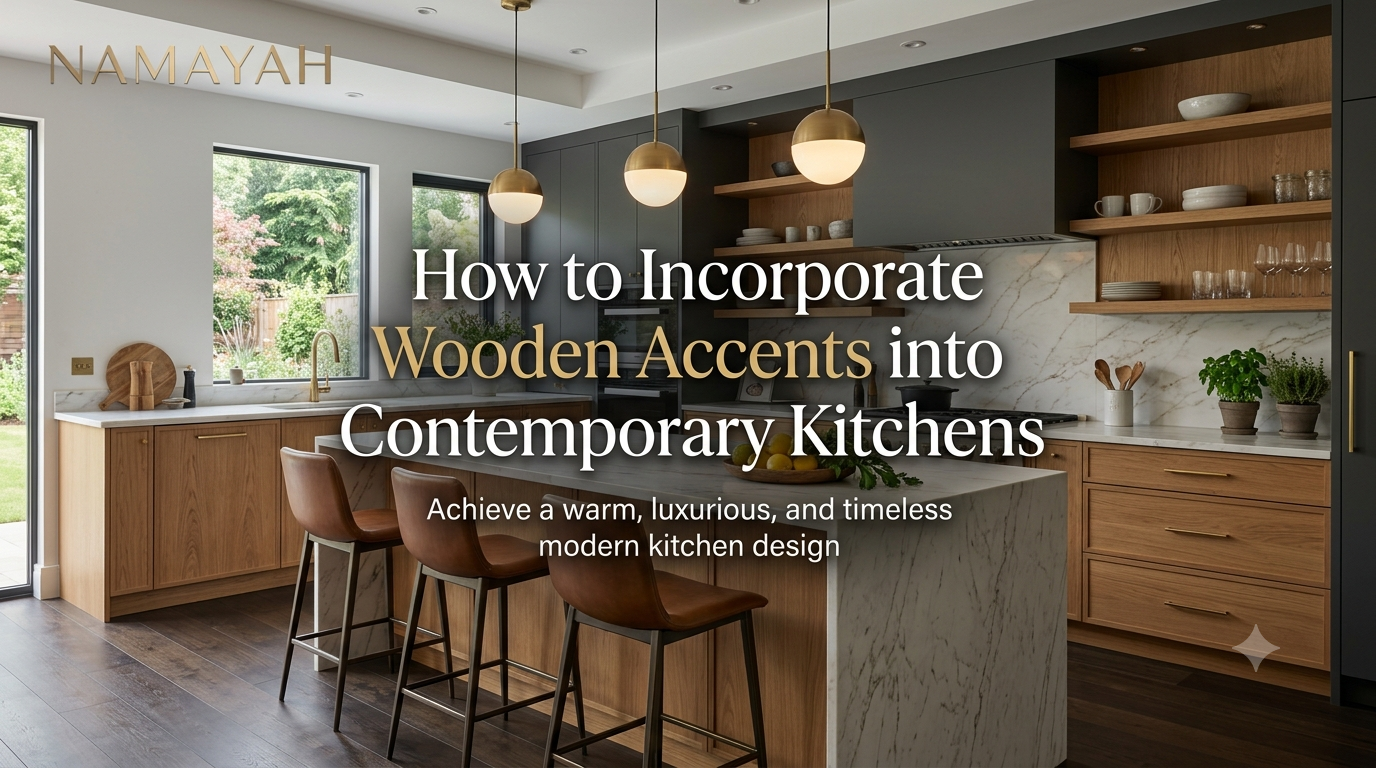
Contemporary kitchens can sometimes feel dominated by hard surfaces such as stone, glass, metal, and lacquered cabinetry. Wooden accents introduce warmth, texture, and natural character while still allowing the kitchen to maintain its clean, contemporary appearance. The key is to use wood selectively and pair it with simple cabinetry, restrained colors, modern lighting, and streamlined hardware.
Wood is also particularly relevant to current kitchen design. The National Kitchen & Bath Association’s 2026 trends report identifies wood grain as growing in popularity, with white oak reported as the most popular wood type among surveyed designers. The report also identifies contemporary/modern/minimalist and organic/natural styles as significant design directions.
Whether you are planning a complete renovation or simply want to refresh an existing kitchen, there are several ways to introduce wooden details without turning the room into a traditional or rustic space.
Why Wood Works in Contemporary Kitchens
Wood creates contrast.
A kitchen dominated by white cabinetry and stone can appear crisp and sophisticated, but adding a warm timber surface can make the space feel more inviting. Likewise, dark contemporary cabinetry can benefit from a lighter wood accent that breaks up a large block of color.
The most effective contemporary kitchens generally treat wood as part of a broader material palette rather than covering every surface with it.
For example, you could combine:
- White or beige cabinetry
- Natural oak shelving
- A stone countertop
- Matte black hardware
- Glass pendant lights
- A restrained wood island
This combination keeps the architecture clean while giving the room visual warmth.
Recent kitchen-design guidance also points toward natural materials, tactile finishes, and warmer palettes as important influences in contemporary interiors.
Start With a Wooden Kitchen Island
A kitchen island is one of the easiest places to make wood a feature.
Instead of using wood throughout the kitchen, consider a wood-faced island surrounded by painted or laminate cabinetry. This creates a focal point without overwhelming the room.
You could choose:
- Light oak for an airy kitchen
- Walnut for a richer, sophisticated appearance
- Medium-toned timber for warmth
- Wood-look laminate when easier maintenance or budget control is important
Another option is to use wood only on the island’s seating side. This creates a subtle accent that becomes visible from adjoining living or dining areas.
Contemporary kitchen examples increasingly combine warm wood with contrasting cabinetry and stone surfaces, demonstrating how a relatively limited amount of timber can establish visual balance.
Use Wood on Lower Cabinets
If a full wood kitchen feels too heavy, concentrate the material on the lower cabinets.
For example, pair natural oak base units with warm-white upper cabinets. The result gives you the character of wood while preserving visual openness at eye level.
This approach works particularly well in:
- Small kitchens
- Open-plan kitchens
- Kitchens with limited natural light
- Minimalist interiors
- Two-tone kitchen designs
Keep the cabinet fronts simple. Flat-panel or slab doors, minimal handles, and consistent wood grain can make timber cabinetry feel distinctly contemporary.
Add Floating Wooden Shelves
Floating shelves are a simple way to incorporate wood without committing to major cabinetry changes.
A single or two-tier wooden shelf can break up a wall of cabinetry and provide space for everyday dishes, glassware, cookbooks, or carefully selected decorative objects.
However, open shelving should be used selectively. Too many exposed items can make a contemporary kitchen look cluttered.
For a cleaner appearance:
- Limit the number of shelves.
- Choose a consistent wood finish.
- Group similar objects together.
- Leave some empty space.
- Repeat the wood tone elsewhere in the room.
Design guidance from Asian Paints similarly recommends floating wooden shelves as visual breaks between cabinets while cautioning that excessive open storage can make a kitchen appear cluttered.
Create a Wood Backsplash Accent
Wood does not have to cover an entire backsplash to make an impact.
Consider using timber as a narrow vertical panel, a decorative section behind open shelving, or an accent area beside the cooking zone.
For areas exposed to moisture, heat, and frequent cleaning, choose a suitable kitchen-rated material and finish rather than assuming any untreated wood will perform well.
If you prefer a wood appearance without using natural timber directly behind a cooking area, consider a durable wood-look surface designed for that environment.
Introduce Wooden Wall or Ceiling Panels
Wood can also become an architectural detail.
Vertical slats, ceiling panels, timber-framed niches, or a small wood-lined section can soften a kitchen filled with stone and metal.
A wood ceiling detail can be especially effective in an open-plan kitchen because it visually connects the kitchen to the adjoining living space.
The goal is not to cover every wall. A focused application often has greater impact.
Choose the Right Wood Tone
The wood tone you select can dramatically change the atmosphere of a contemporary kitchen.
Light wood
Light oak and similar pale finishes can create an airy, Scandinavian-inspired appearance. They work particularly well with:
- White
- Cream
- Soft beige
- Pale gray
- Light stone
- Matte black accents
Medium wood
Medium-toned timber provides more visual warmth while remaining versatile. It works well with neutral cabinetry, natural stone, muted greens, and warm metals.
Dark wood
Walnut and other dark finishes can create a luxurious, dramatic effect. Balance them with lighter countertops, walls, flooring, or cabinetry so the room does not become visually dense.
Rather than selecting a wood color in isolation, consider the flooring, countertops, wall color, natural light, and adjacent rooms.
Combine Wood With Stone
Wood and stone are natural partners for contemporary kitchens.
The contrast between organic grain and mineral texture creates visual depth without requiring excessive decoration.
Try combinations such as:
- White oak + white quartz
- Walnut + light marble
- Natural wood + beige quartzite
- Warm timber + dark stone
- Pale wood + concrete-look surfaces
Current kitchen design guidance highlights the combination of natural materials such as timber and stone as a way to create layered, tactile interiors.
Pair Wood With Metal and Glass
Wood becomes even more contemporary when combined with sleek materials.
Matte black hardware can give pale timber a sharper architectural edge. Brushed metal can add subtle sophistication, while glass can prevent the kitchen from feeling visually enclosed.
For example, a contemporary kitchen could combine:
Natural oak + black-framed glass + pale stone + minimalist hardware.
This approach keeps the warmth of wood while reinforcing the clean lines associated with contemporary design.
Use Wood Through Furniture and Accessories
You do not need to remodel the kitchen to introduce wooden accents.
Smaller changes can include:
- Wooden bar stools
- Cutting boards displayed as decor
- Timber dining chairs
- Wood-framed artwork
- A wooden serving tray
- Small timber storage boxes
- A wood-toned pendant detail
- A freestanding wooden console near an open kitchen
These accents are particularly useful if you are renting or working with a limited renovation budget.
The key is repetition. If you introduce one wooden element, consider echoing its tone elsewhere so it looks intentional rather than random.
Balance Wood With Neutral Colors
Neutral colors give wood room to stand out.
White remains a classic pairing, but contemporary kitchens can also use:
- Warm beige
- Taupe
- Greige
- Soft gray
- Muted green
- Deep blue
- Charcoal
Current kitchen trends show continued interest in warm neutrals and nature-inspired colors alongside natural materials.
A useful principle is one dominant wood tone plus a restrained supporting palette.
Using several unrelated wood colors can make the kitchen feel disconnected.
Consider Maintenance and Practicality
Wood can be beautiful, but kitchen surfaces experience moisture, heat, spills, cleaning products, and daily wear.
The maintenance requirements depend on the specific material, finish, and application.
Wooden worktops, for example, can require more maintenance than many engineered surfaces. Livingetc notes that wood offers warmth and repairability but requires regular maintenance and sealing when used as a countertop material.
Before choosing natural wood, ask:
- Is the surface near the sink?
- Will it receive direct heat?
- How often will it need cleaning?
- Does the manufacturer recommend sealing?
- Can damaged areas be repaired or refinished?
- Would a wood-look alternative be more practical?
For high-use surfaces, product specifications and professional installation advice matter more than appearance alone.
Common Mistakes to Avoid
1. Using too many wood tones
Multiple unrelated timber finishes can make the room feel chaotic. Select one primary wood tone and, if necessary, one closely related secondary tone.
2. Covering every surface
A contemporary kitchen does not need wood cabinetry, wood countertops, wood walls, and wood floors simultaneously. Choose one or two focal applications.
3. Ignoring the existing flooring
Your floor already contributes a major wood tone if it is timber or wood-look flooring. Consider it when selecting cabinets and accents.
4. Making everything match perfectly
Wood does not have to be identical throughout the room. A controlled variation in grain and tone can create depth, provided the overall palette remains cohesive.
5. Sacrificing function for appearance
Beautiful wood is not a substitute for suitable materials in areas exposed to excessive moisture or heat. Choose finishes according to how the surface will actually be used.
Contemporary Wooden Kitchen Ideas by Style
Minimalist
Use pale wood on a single island or a run of lower cabinets. Pair it with slab doors, a simple countertop, and minimal hardware.
Scandinavian-inspired
Combine light timber with white or cream surfaces, soft lighting, and simple furniture.
Industrial contemporary
Pair medium or dark wood with black metal, concrete-look surfaces, exposed architectural details, and streamlined lighting.
Luxury contemporary
Choose walnut or another rich timber and combine it with stone, integrated appliances, sophisticated lighting, and understated hardware.
Organic contemporary
Layer natural wood with stone, warm neutrals, plants, textured surfaces, and soft lighting for a relaxed appearance.
FAQs About Wooden Accents in Contemporary Kitchens
Is wood suitable for a contemporary kitchen?
Yes. Wood can work extremely well in contemporary kitchens when paired with clean cabinet profiles, restrained colors, modern hardware, and contrasting materials such as stone, metal, or glass.
What is the best wood color for a modern kitchen?
There is no single best color. Light oak creates an airy look, medium wood adds warmth, and dark walnut can create a more dramatic appearance. Choose according to your lighting, flooring, cabinetry, and overall color palette.
How can I add wood to a white contemporary kitchen?
Start with one focal element, such as a wooden island, lower cabinets, floating shelves, bar stools, or a small architectural panel. White cabinetry provides a clean background that allows natural wood grain to stand out.
Can I mix wood and marble in a contemporary kitchen?
Yes. Wood and marble can create an effective combination because the warmth of timber contrasts with the cool, patterned character of stone. Keep the rest of the palette relatively restrained.
Is a wooden kitchen island a good idea?
A wooden island can be an excellent focal point. It introduces warmth while allowing the surrounding cabinetry to remain neutral. For a practical result, select a finish appropriate for the amount of use and maintenance you expect.
Does wood make a modern kitchen look outdated?
Not necessarily. Contemporary cabinet profiles, simple hardware, controlled wood tones, and modern materials can make wood feel current. The overall design matters more than the presence of timber itself.
How much wood should I use in a contemporary kitchen?
There is no fixed percentage. A useful starting point is to choose one major wooden feature and repeat the same or a related tone in one or two smaller details.
What colors pair well with wooden kitchen accents?
White, cream, beige, taupe, muted green, charcoal, and deep blue can all work with wood. The best choice depends on the specific timber tone and the amount of natural light in the kitchen.