
How to Decorate Small Spaces with Premium Décor
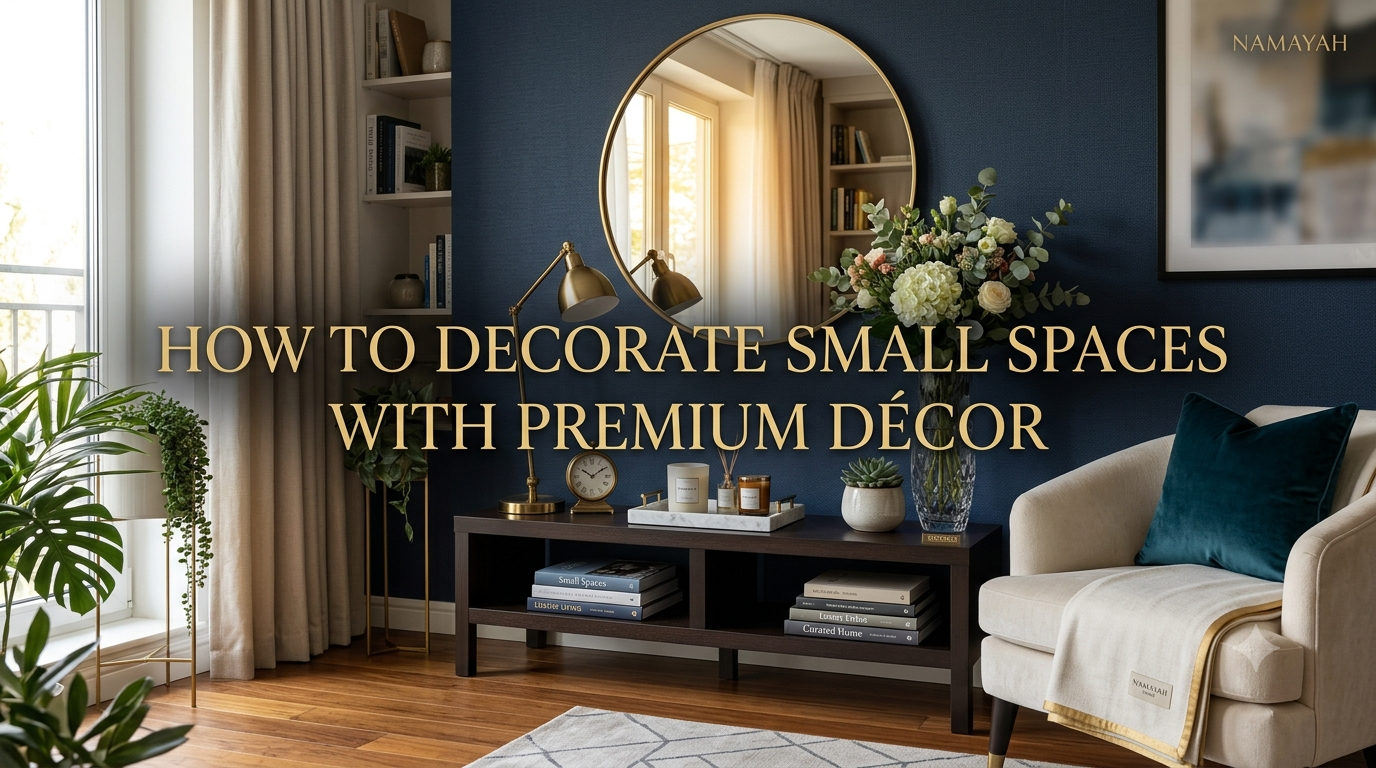
Decorating a small home does not mean compromising on elegance. In fact, limited square footage can encourage a more thoughtful approach to interior design. When every piece has a purpose, carefully selected premium décor can make a compact room feel sophisticated, comfortable, and highly personal.
The secret is not filling a small space with expensive objects. It is creating a sense of quality through proportion, materials, lighting, texture, storage, and intentional styling. A beautiful mirror, statement light, well-proportioned sofa, or textured rug can have more impact than dozens of smaller accessories.
Here is how to decorate small spaces with premium décor while keeping them functional and visually balanced.
What Makes a Small Space Look Premium?
A premium interior usually feels considered rather than crowded.
Quality materials, cohesive colors, comfortable furniture, layered lighting, tactile fabrics, thoughtful artwork, and carefully edited accessories can create a sophisticated atmosphere regardless of room size.
This distinction is particularly important in compact interiors. Too many decorative objects compete for attention and reduce usable space. A smaller collection of distinctive pieces gives each object room to make an impact.
Current small-space design advice also challenges the idea that every object in a compact room must be tiny. A few appropriately scaled statement pieces can create greater visual confidence than numerous undersized furnishings.
Think curated rather than crowded.
Start With a Cohesive Color Palette
Color establishes the visual foundation of your space.
For a calm, sophisticated interior, consider a restrained base palette using shades such as warm white, cream, beige, taupe, soft gray, or muted earth tones. These can then be complemented by richer accent colors.
For example, a warm ivory living room could feature walnut furniture, brass accents, an olive-green chair, and textured neutral cushions.
Lighter colors can help reflect light and make compact rooms feel more open, particularly where natural light is limited.
However, premium small-space design does not require an all-white room. Dark and dramatic colors can work beautifully when used intentionally. Designers increasingly treat compact rooms as opportunities for bold, jewel-box interiors featuring rich paint, wallpaper, statement mirrors, and distinctive lighting.
The important principle is cohesion. Repeating a controlled selection of colors and finishes creates continuity and reduces visual noise.
Choose Fewer, Better Furniture Pieces
One of the easiest ways to overwhelm a small room is to fill it with many pieces of undersized furniture.
Instead, establish the room around a few well-proportioned essentials.
A compact living room, for example, might need only a comfortable sofa, one occasional chair, a coffee or side table, and a storage unit. If these pieces are well designed and appropriately scaled, the result can feel more substantial and luxurious than a collection of small chairs and tables.
Furniture with visible legs or open bases can also reveal more flooring and create a visually lighter composition. Recent designer guidance specifically highlights elevated furniture as a useful way to make compact rooms feel more expansive.
Before buying anything, measure the room, doorways, circulation routes, and existing furniture. Premium design begins with proportion.
Use Multifunctional Furniture
Every square metre or square foot matters in a compact home.
Look for premium furniture that can perform more than one role, such as:
- An upholstered ottoman with concealed storage
- A console that doubles as a desk
- A bench with drawers
- Nesting side tables
- A storage bed
- A coffee table with hidden compartments
- A dining table that can function as a workspace
- A daybed that provides seating and occasional sleeping space
Multifunctional furniture reduces the number of objects required in a room while helping control clutter. Designers frequently recommend this strategy for compact interiors.
Choose multifunctional pieces because they perform both roles well—not simply because they contain extra compartments.
Use Mirrors to Enhance Light and Space
Mirrors are particularly useful premium décor pieces because they combine ornament with function.
A generously sized mirror can become a focal point while reflecting available light. Architectural Digest notes that mirrors can make interiors feel brighter, airier, and larger.
Consider placing a mirror:
- Opposite or near a window
- Above a console
- Behind a decorative lamp
- Above a fireplace
- At the end of a narrow hallway
- Against an otherwise empty wall
The frame can reinforce your design style. Thin metal frames suit contemporary interiors, while carved timber, antique-inspired, or sculptural frames can introduce a more traditional or expressive luxury aesthetic.
In a small room, one beautiful oversized mirror may be more effective than several unrelated decorative pieces.
Layer Your Lighting
Lighting has an enormous influence on how premium décor is perceived.
Depending solely on one ceiling fixture can make a compact room appear flat. Instead, combine different levels of illumination.
Start with ambient lighting, such as a pendant, chandelier, or elegant flush-mount fixture. Add task lighting where you read, cook, work, or prepare for the day. Complete the arrangement with accent lighting, such as sconces or table lamps.
Wall-mounted lighting is particularly valuable when floor and surface space are limited. Architectural Digest recommends sconces and wall lights as a way to preserve valuable floor area in compact interiors.
Choose fixtures for their appearance as well as their illumination. A sculptural pendant or refined pair of sconces can function almost like artwork.
Where appropriate, warm, adjustable lighting can also help create different moods without requiring additional décor.
Add Luxury Through Materials and Texture
Premium interiors engage more than the eye. Texture gives a room depth and prevents a restrained palette from becoming sterile.
Consider combining materials such as:
- Linen
- Velvet
- Wool
- Bouclé
- Natural wood
- Marble or stone
- Ceramic
- Glass
- Brushed or aged metal
You do not need every material in one room.
For example, a simple neutral sofa can feel significantly richer when paired with a wool rug, linen curtains, a velvet cushion, timber furniture, and a small stone-topped table.
Wallpaper is another option for introducing texture, pattern, and personality. Designers interviewed by House Beautiful describe wallpaper as a way to bring warmth, luxury, and character into interiors, with options ranging from understated textures to expressive patterns.
The objective is layering—not excess.
Take Premium Décor Up the Walls
When floor space is limited, think vertically.
Tall bookcases, floating shelves, wall-mounted lights, artwork, decorative molding, and thoughtfully positioned storage can draw the eye upward while freeing valuable floor area.
Vertical storage is especially useful because it increases functionality without requiring a larger footprint. Recent small-space guidance recommends wall-mounted shelving and other vertical solutions to make better use of compact rooms.
You could install slim floating shelves above a desk, use a tall display cabinet instead of a wide console, or introduce floor-to-ceiling curtains.
Architectural details can also add understated luxury. In one narrow Georgetown home, decorative wall moldings and narrow panels were used to emphasize ceiling height while organizing lighting and artwork.
This demonstrates an important principle: premium décor can come from the treatment of the room itself, not just the objects placed inside it.
Select Statement Décor Carefully
Small spaces benefit from strong focal points—but not too many of them.
Instead of decorating every surface, choose one or two memorable elements.
That might be:
- A sculptural pendant light
- An oversized framed artwork
- A handmade ceramic vessel
- A designer-inspired accent chair
- A distinctive mirror
- A beautiful table lamp
- A vintage object
- A sculptural coffee table
Large-scale artwork can work surprisingly well in a compact interior. The key is allowing it enough negative space rather than surrounding it with competing objects. Designers have similarly recommended mixing furniture scales and using selected larger pieces rather than assuming everything in a small room needs to be miniature.
Premium styling often depends as much on what you leave out as what you include.
Use Rugs and Curtains to Create Scale
Textiles can visually transform a small room.
A rug that is too small can break the floor into disconnected sections and make the furniture arrangement feel restricted. Architectural Digest recommends choosing a rug large enough to accommodate much of the furniture rather than automatically selecting a tiny rug for a tiny room.
Curtains can have a similar effect vertically.
Where the architecture permits, hanging curtains higher can emphasize room height. Full-length fabric also creates a more finished appearance than short window treatments.
Choose materials with an elegant drape, such as linen blends or other quality fabrics suited to the room’s practical needs.
Hide Clutter With Elegant Storage
Luxury and clutter rarely work well together.
That does not mean your home needs to look empty. It means everyday belongings should have logical places.
Incorporate storage into the design through attractive baskets, closed cabinetry, decorative boxes, storage benches, drawers beneath beds, or built-in shelving.
Even accessories can serve dual purposes. Decorative boxes can conceal remote controls, cables, or small objects, while attractive baskets can store throws and cushions. This combination of aesthetics and functionality is especially valuable in smaller homes.
Give frequently used objects easy-to-access storage. If putting something away is inconvenient, clutter is more likely to return.
Avoid Common Small-Space Décor Mistakes
Even beautiful premium décor can work against a room when it is poorly planned.
One common mistake is assuming every furniture item must be small. Too many tiny pieces can create visual fragmentation rather than spaciousness. At the opposite extreme, several bulky pieces can obstruct circulation and overwhelm the floor plan.
Another frequent problem is excessive accessorizing. Covering every tabletop, shelf, and wall leaves little negative space and makes individual objects harder to appreciate. Recent designer advice emphasizes editing accessories and maximizing functionality rather than simply adding more décor.
Also avoid purchasing furniture before measuring. A premium sofa that blocks a doorway or leaves no comfortable walking route is not a successful investment.
Finally, do not neglect lighting. Even an expensive interior can feel uninspiring if the room is poorly illuminated.
Premium Décor Ideas for Different Small Rooms
Small Living Room
Choose one well-proportioned sofa as the anchor. Add an elegant rug, slim side table, statement lighting, and a large mirror or artwork.
If extra seating is occasionally required, consider an ottoman or stool that can be moved easily and provide another function.
Small Bedroom
Make the bed the focal point rather than trying to introduce several competing pieces.
Layer quality bedding, tactile cushions, and an elegant throw. Use wall-mounted sconces if bedside surfaces are limited, and consider a bed with integrated storage.
A carefully edited layout with fewer pieces is one of the simplest ways to make a compact bedroom feel larger.
Small Dining Area
A round table can be useful where circulation is tight, depending on the layout.
Add comfortable chairs and one strong decorative feature, such as a pendant light or artwork. If storage is necessary, choose a slim cabinet that provides concealed space without dominating the room.
Small Entryway
Even a tiny entrance can establish a premium first impression.
Consider a narrow console or floating shelf, a mirror, a small wall light, and one decorative tray for keys. Keep the floor as clear as possible to maintain an open arrival zone.
Small Bathroom
Use wall-mounted storage, a beautiful mirror, coordinated hardware, and high-quality towels to create a polished appearance.
Because the room is small, details become especially visible. Consistency among metal finishes, dispensers, storage containers, and textiles can therefore have a strong effect.
FAQs About Decorating Small Spaces With Premium Décor
How do I make a small room look luxurious?
Focus on a cohesive palette, quality materials, layered lighting, correctly scaled furniture, elegant textiles, and a few distinctive decorative pieces. Avoid overcrowding surfaces simply to make the room look decorated.
What colors make a small room look bigger?
Light neutrals can reflect available light and help create an open feeling. However, dark or saturated colors can also work in small rooms when the goal is a dramatic, enveloping look. The best choice depends on natural light, architecture, and the atmosphere you want to create.
Should you put large furniture in a small room?
Sometimes. A small room does not automatically require miniature furniture. One well-proportioned sofa or statement piece may create a calmer composition than several tiny pieces. Measure carefully and protect comfortable circulation routes.
How can I make my décor look expensive without spending too much?
Prioritize visible, high-impact elements. Quality lighting, a generously sized rug, good curtains, an attractive mirror, carefully chosen hardware, and textured fabrics can elevate a room. Editing unnecessary accessories costs nothing and can immediately create a more refined appearance.
Are mirrors good for small spaces?
Yes. Mirrors reflect light and can create a greater sense of visual depth. Positioning one near natural or artificial light can be particularly effective. The mirror itself can also serve as a statement decorative object.
How many decorative items should a small room have?
There is no universal number. The right amount depends on the room, scale of the objects, available surfaces, and desired aesthetic. Leave negative space around important objects rather than filling every available area.
What is the best furniture for a small luxury apartment?
Look for appropriately scaled pieces that combine good materials, comfort, and functionality. Storage beds, elegant ottomans, nesting tables, slim consoles, wall-mounted desks, and other multifunctional furniture can be particularly useful.
Can dark colors work in a small room?
Yes. Although lighter palettes can help rooms feel bright and airy, contemporary designers also use dark colors and bold patterns to turn compact rooms into intentional, dramatic spaces. Balance visual weight and provide adequate lighting.
Conclusion
Learning how to decorate small spaces with premium décor is ultimately an exercise in editing and proportion.
You do not need a large home—or a room full of expensive accessories—to create a sophisticated interior. Start with a cohesive palette, select fewer but better furniture pieces, maximize vertical space, incorporate concealed storage, and layer lighting and texture.
Most importantly, give your best pieces room to be noticed.
When quality, functionality, proportion, and personality work together, limited square footage can become an advantage: it encourages you to make every design decision count.