
How to Create an Elevated Look with Simple Décor Changes
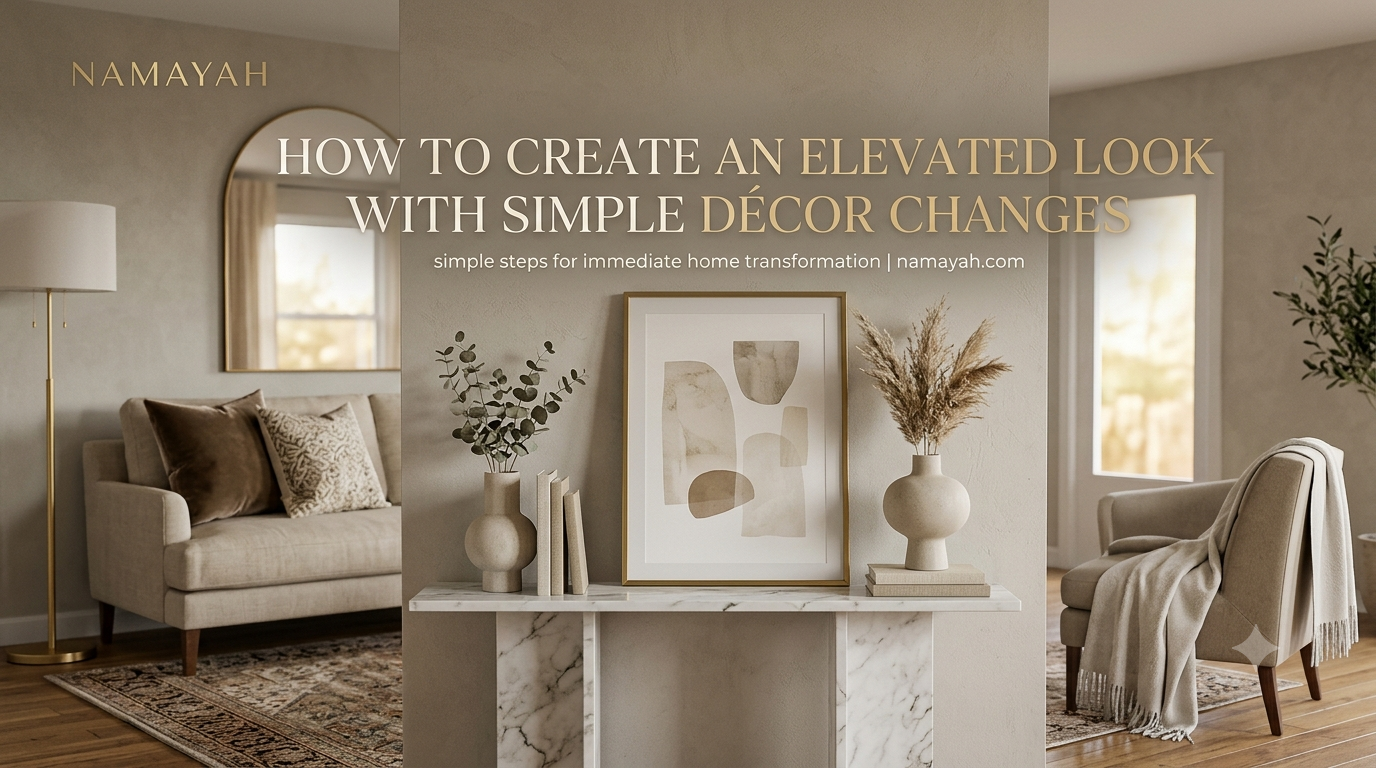
An elevated home does not necessarily require expensive furniture, a complete renovation, or designer accessories. In many cases, the difference comes from small décor decisions: improving lighting, editing clutter, adding texture, choosing a consistent color palette, and displaying fewer but more meaningful pieces.
The goal is not to make your home look overly formal or staged. Instead, an elevated look should feel intentional, balanced, comfortable, and personal. Current interior-design advice increasingly emphasizes thoughtful styling, layered textures, meaningful objects, and lighting rather than simply filling a room with expensive-looking décor.
Here are simple décor changes that can make an ordinary room feel considerably more polished.
What Makes a Home Look Elevated?
An elevated interior usually has a sense of visual consistency. Furniture, colors, lighting, artwork, and accessories work together instead of competing for attention.
This does not mean everything needs to match. In fact, mixing materials and styles can create more character. The key is to establish a visual relationship between the elements.
Think about five fundamentals:
- Balance: Furniture and accessories feel appropriately distributed.
- Scale: Objects are sized appropriately for the room and each other.
- Texture: Different materials create depth and interest.
- Lighting: Multiple light sources create atmosphere.
- Editing: The room has enough décor to feel personal without appearing cluttered.
A polished space often looks less like it contains more things and more like every visible thing has a reason for being there.
Start by Decluttering and Editing
Before buying anything new, remove what is unnecessary.
Crowded countertops, overloaded shelves, tangled cables, and collections of small decorative objects can make even attractive rooms feel visually noisy. A simpler arrangement allows the pieces you genuinely like to receive more attention.
Start with visible surfaces:
- Clear the coffee table.
- Remove unnecessary objects from shelves.
- Group similar items together.
- Put everyday clutter into concealed storage.
- Return only the pieces that contribute to the room.
You do not need to create a minimalist home. Instead, think of décor as an editing exercise.
A useful rule is to leave some empty space around important objects. That visual breathing room can make individual pieces feel more intentional.
Create a Cohesive Color Palette
Color is one of the easiest ways to make different décor elements feel connected.
You do not have to repaint every wall. Instead, identify two or three colors already present in your room and repeat them through smaller elements such as cushions, artwork, throws, ceramics, or rugs.
For a calm, sophisticated look, consider combinations such as:
- Warm white + beige + natural wood
- Cream + olive + walnut
- Soft gray + charcoal + ivory
- Sand + terracotta + muted green
- Navy + cream + warm brown
The objective is not to eliminate color. It is to make your color choices feel deliberate.
If your room already contains several colors, use accessories to repeat one or two of the strongest tones. Repetition creates cohesion without requiring everything to match.
Layer Different Textures
Texture can make a simple room feel richer without adding visual clutter.
Consider combining materials such as:
- Linen
- Cotton
- Wool
- Wood
- Ceramic
- Glass
- Stone
- Metal
- Velvet
For example, a plain sofa can feel more considered with a textured throw, a couple of contrasting cushions, and a woven rug. A wooden console can gain depth when paired with a ceramic vase, framed artwork, and a small plant.
Recent design guidance also emphasizes layering tactile materials instead of relying on heavily themed décor.
The important part is variation. If every surface has the same smooth or glossy finish, the room can feel flat. Combining soft, rough, matte, and reflective materials creates visual depth.
Upgrade Your Lighting
Lighting is one of the most powerful décor changes because it affects both how a room looks and how it feels.
Instead of relying exclusively on an overhead fixture, create layers with different sources:
- Table lamps
- Floor lamps
- Wall lights
- Pendant lights
- Accent lighting
- Candles where appropriate
Layered lighting is frequently recommended as a way to create more atmosphere and highlight specific areas of an interior.
You can also use lighting to draw attention to artwork, architectural features, reading corners, or decorative objects.
If you are working with a small budget, simply adding a well-positioned table or floor lamp can make a noticeable difference.
Use Art as a Focal Point
Artwork gives a room personality, but presentation matters.
Instead of covering every wall with small pieces, consider giving one larger artwork or a carefully arranged gallery wall enough space to become a focal point.
When selecting art, look for a connection with your existing palette or choose something that provides deliberate contrast.
You can also display:
- Photography
- Vintage prints
- Abstract artwork
- Drawings
- Textiles
- Personal photographs
- Collected or handmade pieces
The goal is not to make the home look like a showroom. Meaningful pieces can make a space feel more individual and considered.
Oversized artwork can also create a stronger visual anchor than many tiny decorative pieces.
Pay Attention to Scale and Proportion
A room can contain beautiful objects and still feel awkward if the scale is wrong.
For example, a tiny artwork above a large sofa may look disconnected, while several tiny accessories scattered across a large coffee table can create visual clutter.
Before buying décor, consider the size of the furniture and the surrounding space.
Ask:
- Is the artwork large enough for the wall?
- Does the rug relate appropriately to the furniture?
- Is the table centerpiece proportional to the table?
- Are decorative objects too small to have visual impact?
- Is there enough space to move comfortably?
Good proportion makes a room feel naturally balanced.
Refresh Soft Furnishings
Soft furnishings are among the easiest elements to change because they can transform a room without permanent work.
Consider updating:
- Cushion covers
- Throws
- Curtains
- Bedding
- Area rugs
- Table linens
- Bath towels
Instead of replacing everything, choose one or two pieces that introduce a new texture or complementary color.
For example, changing inexpensive cushion covers and adding a textured throw can refresh a sofa without replacing the sofa itself.
The same approach works in bedrooms. A coordinated duvet, layered pillows, and a simple throw can make the bed feel more finished.
Add Greenery and Natural Elements
Plants and natural materials can soften rooms dominated by hard surfaces.
A single substantial plant may have more visual impact than several small artificial decorations. If live plants are not practical, branches, dried grasses, flowers, or other natural materials can provide a similar decorative role.
Wood, stone, rattan, linen, and ceramics can also introduce organic variation.
The key is restraint. One carefully positioned plant can act as a focal point; filling every corner with greenery can have the opposite effect.
Style Surfaces With Intention
Coffee tables, consoles, bookshelves, nightstands, and kitchen counters often determine whether a room feels polished or cluttered.
Rather than scattering objects randomly, create small groupings.
For example, a coffee table might contain:
- One tray
- A stack of books
- A decorative bowl
- A small vase or plant
On a console, try combining an artwork or mirror with a lamp and one or two accessories.
Vary the height of objects so that the arrangement does not appear flat. At the same time, leave enough empty surface to keep the composition visually calm.
Current decorating advice also favors intentional displays and fewer meaningful objects over collections of small items competing for attention.
Upgrade Small Details
Small functional details can have an outsized effect.
Consider replacing generic items that remain permanently visible with more attractive alternatives:
- Cabinet hardware
- Drawer pulls
- Switch plates
- Storage baskets
- Soap dispensers
- Tissue boxes
- Coat hooks
- Curtain hardware
You do not need to change everything at once. Choose one room and focus on the details that are most visible.
A small hardware upgrade can be particularly effective in kitchens, bathrooms, entryways, and built-in storage.
Make the Entryway Feel More Intentional
The entryway creates an immediate impression of the home.
Even a small entrance can feel more polished with a few carefully chosen elements:
- A mirror
- A slim console
- A small lamp
- A tray for keys
- A plant or branch arrangement
- A textured runner
- Attractive hooks or storage
The goal is to make the space functional without allowing everyday items to dominate it.
A mirror can also help reflect light and create a greater sense of openness, particularly in compact areas.
Simple Décor Changes by Room
Living Room
Start with the sofa and lighting. Refresh cushions, add a textured throw, reposition the rug if necessary, and introduce one strong focal point such as artwork or a large plant.
Bedroom
Focus on the bed because it typically occupies the largest visual area. Coordinate bedding, add texture through pillows and throws, and use bedside lighting to create a softer atmosphere.
Kitchen
Clear unnecessary countertop items and group the essentials. A wooden cutting board, ceramic vessel, bowl of produce, or simple floral arrangement can provide warmth without creating clutter.
Bathroom
Replace worn towels, use coordinated containers, and remove excessive products from view. A small plant, framed print, or attractive tray can add character.
Dining Room
Keep the centerpiece simple. A vase, sculptural object, candleholders, or a low arrangement can make the table feel finished while preserving usable space.
Common Decorating Mistakes to Avoid
Creating an elevated look is often about knowing what not to add.
Avoid:
- Buying décor before editing the room
- Filling every empty surface
- Using too many unrelated colors
- Choosing furniture that is too small for the space
- Relying entirely on overhead lighting
- Displaying too many tiny accessories
- Copying a trend without considering your home’s existing style
- Matching every material and finish too precisely
- Prioritizing appearance over comfort
An elevated room should still feel like somewhere people actually live.
A Simple Weekend Décor Refresh
You can approach the transformation in stages rather than attempting everything at once.
Saturday morning: Declutter visible surfaces and remove items you no longer want.
Saturday afternoon: Rearrange furniture and décor. Test different layouts before buying anything.
Saturday evening: Improve the lighting by adding or repositioning lamps.
Sunday morning: Refresh cushions, throws, bedding, or another major textile.
Sunday afternoon: Style one focal area, such as a coffee table, console, bookshelf, or entryway.
Sunday evening: Add greenery or one meaningful decorative object and remove anything that now feels unnecessary.
This approach keeps the process affordable and gives you a chance to evaluate what the room actually needs.
FAQs
How can I make my home look more expensive without renovating?
Focus on visual order, lighting, texture, proportion, and cohesive colors. Decluttering visible surfaces, upgrading soft furnishings, adding layered lighting, and displaying larger focal pieces can create a more polished appearance without structural changes.
What décor makes a room look more elegant?
Well-proportioned artwork, textured fabrics, thoughtful lighting, natural materials, coordinated colors, and carefully edited accessories can contribute to an elegant look. The combination is usually more important than the price of any individual item.
Does decluttering really make a room look more elevated?
Yes. Removing unnecessary objects gives important furniture and décor more visual space. Intentional editing can make a room feel calmer and more organized without requiring new purchases.
What is the easiest décor change to make?
Start with lighting or soft furnishings. Changing lamps, cushions, throws, or curtains can alter the atmosphere and appearance of a room relatively quickly.
How many decorative items should I put on a coffee table?
There is no universal number. Instead, create one intentional grouping with enough empty space to keep the table functional. A tray can help visually organize several smaller pieces.
How can I make a small room look more sophisticated?
Prioritize scale, clear walkways, uncluttered surfaces, cohesive colors, and effective lighting. Mirrors and appropriately sized artwork can also help create stronger visual focal points.
Do I need neutral colors for an elevated look?
No. Neutral palettes can create a calm backdrop, but an elevated interior can also use rich or bold colors. What matters most is that the palette feels intentional and works with the room’s furniture, materials, and lighting.
Can inexpensive décor look high-end?
Yes. A higher-end appearance is not dependent on price alone. Careful editing, good proportions, cohesive styling, attractive materials, and thoughtful placement can make affordable pieces feel more intentional.
Conclusion
Creating an elevated look with simple décor changes is less about buying more and more about choosing better, editing carefully, and styling intentionally.
Start by clearing visual clutter, then establish a cohesive color palette. Add layers of texture, improve the lighting, introduce meaningful artwork, and pay attention to scale. Small changes to cushions, throws, greenery, hardware, and surface styling can then complete the room.
Most importantly, do not try to make your home look like someone else’s. The most successful interiors balance polish with personality. Use these principles as a framework, then choose pieces that make your own space feel comfortable, functional, and distinctly yours.