
How to Combine Traditional and Contemporary Home Décor
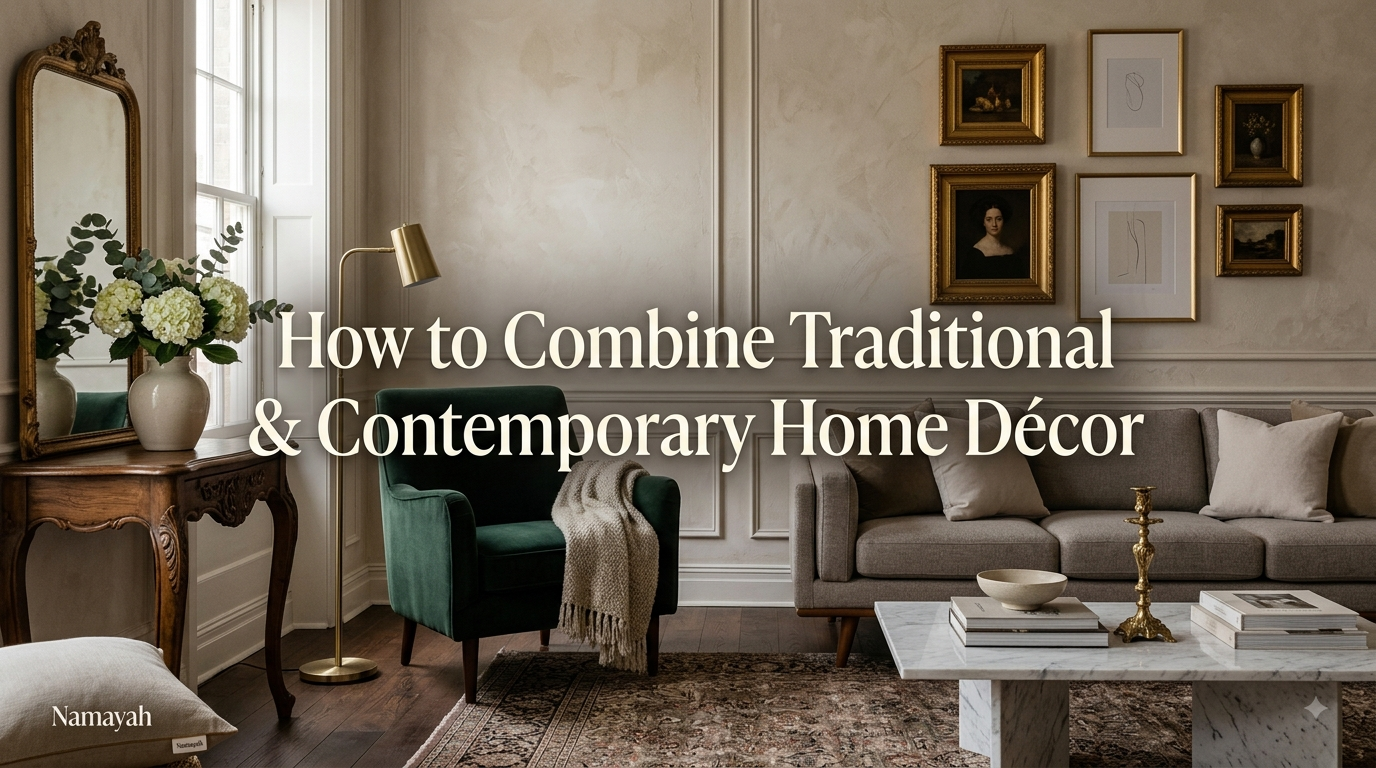
Traditional and contemporary home décor can work beautifully together when each style has a clear role. The key is not to make every piece match, but to create connections through color, scale, materials, furniture shapes, lighting, and repetition. Start with one dominant style, introduce a few contrasting pieces, and use shared colors and textures to make the room feel intentional.
This approach is often associated with transitional interior design, which combines classic details with more current, streamlined elements. Architectural Digest describes transitional design as a blend of traditional and modern aesthetics, typically creating a warmer and softer result than a strictly contemporary interior.
What Is Traditional and Contemporary Home Décor?
Traditional décor often emphasizes craftsmanship, symmetry, classic furniture silhouettes, decorative details, rich materials, and timeless patterns. Examples include upholstered armchairs, carved wood furniture, antique tables, patterned rugs, traditional artwork, and classic architectural details.
Contemporary décor, by contrast, is generally associated with cleaner lines, simpler forms, restrained decoration, and materials or finishes that feel current.
Combining the two creates a more layered interior. A contemporary sofa can sit beside an antique side table. A classic patterned rug can anchor streamlined furniture. Modern artwork can provide contrast against traditional molding.
The goal is contrast with cohesion.
Why Mix Traditional and Contemporary Styles?
Combining styles can make a home feel more personal than decorating entirely within one design category. Traditional pieces can introduce warmth, history, craftsmanship, and character, while contemporary elements can make the room feel lighter, cleaner, and more functional.
Designers frequently use this old-meets-new approach. Studio Shamshiri, for example, emphasizes antiques, heirlooms, patina, and imperfections alongside contemporary finds to create interiors that feel individual and livable.
The combination can also be practical. Instead of replacing meaningful furniture or inherited pieces, you can update the surrounding décor to make those items work within a contemporary home.
Start With One Dominant Style
One of the easiest ways to combine traditional and contemporary home décor is to choose a dominant style before adding accents from the other.
For example:
- 70% contemporary + 30% traditional: Clean-lined furniture, simple walls, modern lighting, and a few antique or classic pieces.
- 70% traditional + 30% contemporary: Traditional furniture, architectural details, and patterns balanced by modern art, lighting, or streamlined accessories.
These percentages are not strict rules. They simply help prevent a room from becoming visually chaotic.
If you already own several traditional pieces, let them establish the foundation and add contemporary elements gradually. If your home has a minimalist architectural shell, use traditional furniture, textiles, and accessories to add warmth.
Create a Consistent Color Palette
Color is one of the strongest tools for connecting different decorating styles.
You do not need every item to be the same color. Instead, choose a small palette and repeat it throughout the room.
A flexible palette might include:
- Warm white or cream
- Beige or taupe
- Charcoal or soft black
- Natural wood tones
- Muted green or blue
- One deeper accent color
For example, a contemporary cream sofa can work with a traditional patterned rug if both share warm neutral tones. Similarly, a dark antique cabinet can feel more contemporary when paired with black lighting, neutral walls, and streamlined furniture.
A consistent color relationship helps different periods and styles feel like part of the same design.
Mix Furniture Styles Carefully
Furniture is where the contrast between traditional and contemporary décor becomes most obvious.
Instead of putting several highly ornate traditional pieces together, create visual balance with simpler shapes.
Try combinations such as:
- Contemporary sofa + traditional coffee table
- Antique console + modern mirror
- Traditional dining chairs + streamlined dining table
- Modern bed + vintage bedside tables
- Classic armchair + contemporary floor lamp
Pay attention to scale as much as style. A small traditional chair may look lost beside an oversized contemporary sectional. Similarly, a delicate antique table can become overwhelmed by very heavy modern furniture.
Good proportions can make seemingly different pieces feel naturally connected.
Combine Old and New Materials
Materials provide another way to create harmony.
Traditional interiors often feature wood, brass, marble, woven textiles, ceramics, leather, and patterned fabrics. Contemporary rooms may use glass, metal, polished surfaces, concrete, and simpler textiles.
Rather than separating these materials, combine them.
For instance, place a contemporary glass coffee table on a traditional rug. Pair a classic wooden cabinet with a modern ceramic lamp. Use brass hardware against a clean contemporary kitchen.
The contrast becomes more effective when one or two materials are repeated elsewhere in the room.
Use Lighting to Bridge the Styles
Lighting should not be treated as an afterthought. It can act as a visual bridge between traditional and contemporary elements.
A classic chandelier can add character to an otherwise modern dining room. Conversely, a simple sculptural pendant can refresh a room filled with traditional furniture.
Layer the lighting where possible:
- Ambient lighting for general illumination
- Task lighting for reading, cooking, or working
- Accent lighting to highlight art, architectural features, or decorative objects
Mixing fixture styles can work particularly well when the finishes are related. For example, repeating brass or aged metal in several fixtures and hardware pieces can help different designs feel connected.
Layer Traditional Patterns With Contemporary Textures
Patterns can bring traditional character into a contemporary room, but using too many competing patterns can make the space feel busy.
Choose one main traditional pattern—such as a floral, geometric, stripe, or heritage-inspired motif—and balance it with simpler contemporary textiles.
For example:
- Patterned rug + plain sofa
- Traditional cushions + modern armchair
- Classic curtains + minimalist furniture
- Decorative wallpaper + simple lighting
Texture is equally important. Linen, wool, leather, wood, stone, and woven materials can add depth without requiring strong patterns.
The result should feel layered rather than crowded.
Update Traditional Architectural Details
Traditional architectural features do not have to make a home feel old-fashioned.
Moldings, paneling, fireplaces, built-in cabinetry, arches, hardwood floors, and decorative doors can become strong foundations for contemporary décor.
One effective approach is to keep the architectural feature but simplify everything around it.
For example, original wall paneling can be paired with a modern sofa and minimal artwork. A traditional fireplace can become a focal point surrounded by contemporary seating. Classic wood floors can provide warmth beneath clean-lined furniture.
This creates contrast without removing the character of the home.
Use Art and Accessories as Connecting Elements
Accessories are an easy place to experiment because they can be changed without replacing major furniture.
Try pairing:
- Contemporary artwork with an antique frame
- A vintage mirror with modern furniture
- Traditional pottery with minimalist shelving
- Modern sculpture on a classic wooden console
- Family heirlooms with contemporary decorative objects
Meaningful pieces can be especially effective. Rather than filling shelves with objects chosen only because they match, include items that reflect your interests, travels, family, or personal history.
This supports a more collected look. Recent design commentary has also emphasized combining old and new and choosing meaningful objects instead of creating interiors that feel overly generic.
How to Combine Styles Room by Room
Living Room
Start with a comfortable contemporary sofa as the main anchor. Add a traditional coffee table, vintage rug, classic side table, or antique cabinet.
Keep the larger furniture relatively restrained and allow one or two traditional pieces to provide character.
Dining Room
A contemporary dining table can look striking with traditional chairs. Alternatively, use a classic wooden table with modern chairs and contemporary lighting.
A large piece of modern artwork can also prevent a traditional dining room from feeling overly formal.
Bedroom
Bedrooms benefit from the softness of traditional décor and the simplicity of contemporary design.
Consider a classic upholstered headboard with streamlined bedside tables. Add traditional bedding patterns through cushions or a throw rather than covering the entire room in elaborate prints.
Kitchen
The kitchen is an excellent place to mix styles through materials and hardware.
Consider contemporary cabinetry with traditional hardware, classic pendant lighting over a modern island, or natural wood accents against clean cabinetry.
The objective is to introduce warmth without compromising the kitchen’s practical layout.
Bathroom
A contemporary bathroom can gain character from traditional mirrors, brass fixtures, patterned floor tiles, or vintage-inspired lighting.
Keep the main surfaces relatively simple so the traditional details have room to stand out.
Entryway
The entryway offers a small space for experimenting. Try a contemporary console with a vintage mirror, or a traditional wooden cabinet with modern artwork.
Because the area is compact, even one distinctive traditional piece can establish the character of the entire home.
Common Mistakes to Avoid
1. Mixing Too Many Styles
Combining traditional and contemporary décor does not mean every design period needs representation. Too many unrelated pieces can make the room look accidental.
2. Ignoring Scale
A beautiful piece can still look wrong if its proportions do not suit the surrounding furniture.
3. Matching Everything Too Closely
A room can feel flat when every wood tone, finish, fabric, and furniture shape is identical. Controlled variation creates interest.
4. Using Too Many Statement Pieces
If every item demands attention, nothing becomes the focal point. Choose a few important pieces and allow supporting elements to remain quieter.
5. Treating Traditional Pieces as Untouchable
An antique or heirloom does not necessarily need to dictate the entire room. Surrounding it with contemporary pieces can make it feel fresh.
6. Following Trends Too Literally
A successful mix should reflect the home and the people living in it rather than simply copying a current trend. The broader “old with new” approach is often used to create interiors that feel personal and less dependent on short-lived trends.
A Simple Formula for Mixing Traditional and Contemporary Décor
If you are unsure where to begin, use this five-step process:
1. Choose your anchor.
Select the main sofa, dining table, bed, rug, or architectural feature that establishes the room.
2. Decide which style leads.
Make either traditional or contemporary décor the dominant language.
3. Introduce contrast.
Add two or three pieces from the opposite style.
4. Connect the pieces.
Repeat a color, material, finish, shape, or texture so the contrasting elements feel intentional.
5. Edit the room.
Remove anything that does not contribute to the overall composition.
This last step is important. Good mixed-style decorating is not about adding as many contrasting objects as possible. It is about choosing pieces that have a reason to coexist.
FAQs
Can traditional and contemporary décor really work together?
Yes. Traditional and contemporary décor can create a cohesive interior when they are connected through color, scale, materials, texture, and repetition. The result is often described as transitional design.
What is the easiest way to mix traditional and modern furniture?
Start with one dominant furniture style and add a few pieces from the other. For example, combine a contemporary sofa with a traditional coffee table or antique cabinet.
What colors work with traditional and contemporary décor?
Warm neutrals such as cream, beige, taupe, and soft gray are flexible starting points. Add muted colors such as blue, green, or earthy tones according to the room and existing furniture.
Can I use antiques in a contemporary home?
Absolutely. An antique table, mirror, cabinet, chair, or artwork can provide contrast and character in a contemporary setting. Keeping the surrounding décor relatively simple can make the antique piece feel intentional.
How do I make traditional furniture look contemporary?
Place traditional furniture in a simpler setting. Contemporary artwork, streamlined lighting, neutral textiles, and uncluttered surroundings can make classic furniture feel fresher.
Is transitional design the same as contemporary design?
No. Contemporary design generally focuses on current aesthetics and forms, while transitional design specifically combines traditional and modern influences. Architectural Digest describes transitional interiors as warmer and more layered than strictly contemporary spaces.
Should my entire house use the same mix of styles?
Not necessarily. Different rooms can emphasize different elements while maintaining a common color palette, material language, or overall level of formality. Consistency matters more than making every room identical.
How can I mix traditional and contemporary décor on a budget?
Start with what you already own. Move existing furniture between rooms, update lampshades or hardware, introduce contemporary artwork, add cushions or throws, and use secondhand or vintage pieces for character. You do not need to replace an entire room to change its style.
Conclusion
Learning how to combine traditional and contemporary home décor is less about following strict rules and more about creating relationships between contrasting pieces.
Start with one dominant style, establish a cohesive color palette, pay attention to scale, and introduce traditional or contemporary elements deliberately. Use lighting, textiles, materials, artwork, and accessories to connect the two sides.
Most importantly, give meaningful pieces room to contribute to the story of your home. A classic piece does not have to compete with contemporary design; when carefully balanced, the two can make a room feel warm, sophisticated, current, and personal.