
How to Choose Food-Safe Wooden Kitchen Accessories
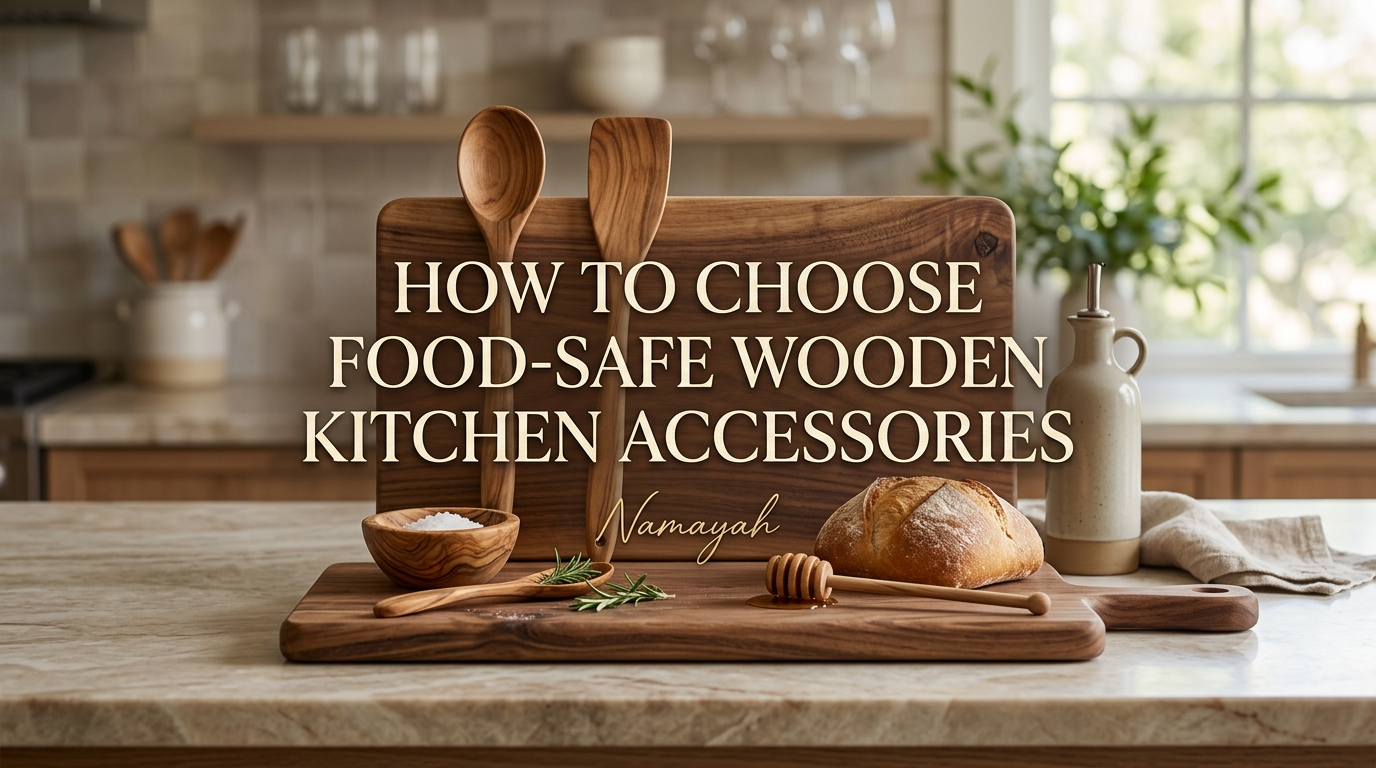
Wooden kitchen accessories can be practical, durable, and attractive, but not every wooden product is automatically suitable for food contact. To choose food-safe wooden kitchen accessories, look for appropriate wood, a suitable food-contact finish, sound construction, a smooth surface, and clear care instructions. Avoid products made from unknown treated wood or those with peeling coatings, deep cracks, or splinters.
Food safety also depends on how the accessory is used and maintained. Even a suitable wooden cutting board or spoon can become difficult to clean when it is badly damaged. The FDA Food Code permits certain hard, close-grained woods, such as hard maple or equivalent wood, for specific food-contact uses including cutting boards and utensils.
What Makes a Wooden Kitchen Accessory Food-Safe?
A food-safe wooden kitchen accessory should be designed and manufactured for food contact. That means you should consider more than the appearance of the wood.
Before buying, check:
- Wood type: Prefer a suitable hard, close-grained wood intended for kitchen use.
- Finish: Look for a finish specifically identified as appropriate for food-contact use.
- Surface: Choose a smooth surface without splinters, deep cracks, or rough areas.
- Construction: Avoid loose joints, broken sections, or areas that can trap food.
- Intended use: Make sure the product is designed for the task you plan to perform.
- Care instructions: Choose products you can realistically clean and maintain properly.
Food-contact materials can include preparation surfaces, cookware, utensils, and other items that come into contact with food. The FDA treats these as food-contact substances or materials requiring consideration of their interaction with food.
Choose the Right Type of Wood
The type and condition of wood matter when selecting kitchen accessories.
The FDA Food Code specifically identifies hard maple or an equivalently hard, close-grained wood as acceptable for certain uses, including cutting boards, cutting blocks, rolling pins, salad bowls, and chopsticks.
For shoppers, the practical lesson is simple: don’t choose a wooden kitchen accessory based only on color, grain pattern, or price. Look for a product clearly intended for food preparation and made from a suitable wood.
Hard, Close-Grained Wood
Hard, close-grained wood is useful for kitchen applications because the material can provide a durable working surface when properly manufactured and maintained.
When comparing products, consider:
- Is the wood species clearly identified?
- Is the product specifically made for food preparation?
- Does the surface feel smooth?
- Are there visible cracks, chips, or splinters?
- Does the manufacturer provide care instructions?
A reputable product description should give you enough information to understand what you are buying.
Avoid Unknown or Treated Wood
Do not assume that any piece of wood is appropriate for contact with food.
Wood that has been treated with inappropriate preservatives or chemicals may create food-safety concerns. Health Canada specifically advises consumers not to use treated wood where it can come into direct contact with food, including cutting boards and countertops.
For this reason, avoid repurposing construction lumber, outdoor treated wood, reclaimed wood of unknown history, or decorative wooden items that were not designed for food contact.
Check the Finish and Coating
The finish is another important consideration.
A wooden spoon, board, tray, or bowl may have a coating that changes how the surface interacts with food. Before purchasing, look for manufacturer information stating that the finish is suitable for the intended food-contact application.
Be cautious about products with:
- Peeling or flaking coatings
- Strong unexplained odors
- Unknown varnishes or paints
- Decorative finishes not intended for food contact
- Damaged or heavily worn surfaces
If you cannot determine what coating has been used on a product that will directly contact food, choosing a clearly food-contact-designed alternative is the safer approach.
Inspect Construction and Surface Quality
A food-safe material can still become unsuitable for practical kitchen use when it is damaged.
Examine the accessory before buying it. Run your fingers carefully over the surface and look for obvious roughness, splinters, open cracks, deep knife grooves, or separated joints.
For cutting boards especially, surface condition matters. USDA guidance recommends replacing cutting boards once they become excessively worn or develop grooves that are difficult to clean.
A simple rule is:
Smooth and intact is preferable to cracked, splintered, or heavily grooved.
Choose Accessories for Their Intended Use
Different wooden kitchen accessories perform different jobs.
Wooden spoons:
Choose smooth, sturdy spoons with no cracks around the handle or bowl. They are useful for stirring and serving but should be cleaned promptly after use.
Wooden spatulas:
Look for a smooth edge and sturdy construction. Avoid damaged edges that can splinter.
Cutting boards:
Choose a board specifically manufactured for food preparation. Consider keeping separate boards for different food categories.
Wooden bowls:
Look for products clearly designed for food use and check their care requirements, especially if you plan to use them with moist foods.
Rolling pins:
A smooth, food-contact-designed rolling pin is preferable to an unfinished or repurposed piece of wood.
How to Choose a Food-Safe Wooden Cutting Board
Cutting boards deserve extra attention because they receive repeated contact with food and knife marks.
When choosing one, consider:
- Suitable hard, close-grained wood
- A stable, smooth surface
- No deep cracks or splinters
- Sufficient thickness and stability for your cooking style
- Clear manufacturer care instructions
- A size that gives you enough working space
You should also consider buying more than one board. Health Canada recommends using one cutting board for produce and another for raw meat, poultry, fish, and seafood.
This approach helps reduce the risk of cross-contamination.
How to Choose Wooden Spoons and Utensils
For everyday utensils, durability and cleanability are important.
Choose wooden spoons and spatulas with:
- Smooth surfaces
- No cracks
- No loose pieces
- No splinters
- A comfortable, sturdy handle
- A finish intended for food contact
Avoid decorative wooden utensils that are primarily designed for display unless the manufacturer clearly states they are suitable for food preparation.
Also consider the cooking environment. A wooden utensil used frequently with wet foods may require more careful drying and maintenance than one used occasionally for dry ingredients.
How to Clean Wooden Kitchen Accessories
Proper cleaning is just as important as choosing the right product.
After use, wash wooden kitchen accessories according to the manufacturer’s instructions. USDA recommends washing food-preparation surfaces such as cutting boards with hot, soapy water before sanitizing when appropriate.
A practical care routine is:
- Remove food particles promptly.
- Wash the item thoroughly.
- Rinse as appropriate.
- Allow it to dry completely.
- Store it somewhere clean and dry.
- Inspect it regularly for damage.
Do not assume that a wooden product can be treated exactly like every plastic or metal kitchen item. Always follow the manufacturer’s cleaning and care instructions.
How to Prevent Cross-Contamination
Choosing a food-safe wooden accessory does not eliminate the need for safe food handling.
Cross-contamination can occur when bacteria from raw meat, poultry, seafood, or other foods transfer to ready-to-eat food.
USDA recommends using a clean cutting board and washing boards, dishes, countertops, and other surfaces with hot, soapy water after preparing food. It also recommends separate boards for fresh produce and raw meat, poultry, and seafood when possible.
Health Canada similarly recommends separate cutting boards for produce and raw meat, poultry, fish, and seafood.
So, even if you own a high-quality wooden board, use it as part of a broader food-safety routine.
When Should You Replace Wooden Kitchenware?
Wooden kitchenware does not have an unlimited lifespan.
Consider replacing an accessory when you notice:
- Deep cracks
- Persistent splinters
- Severe warping
- Deep grooves that are difficult to clean
- Broken or loose sections
- Peeling or damaged coatings
- Damage that prevents thorough cleaning
USDA specifically recommends replacing cutting boards that become excessively worn or develop hard-to-clean grooves.
The goal is not to replace wooden kitchenware on a fixed schedule. Instead, assess its condition and whether you can continue to clean and use it safely.
Common Buying Mistakes to Avoid
1. Choosing by appearance alone
Beautiful grain does not tell you whether a product is appropriate for food contact.
2. Buying unidentified wood
If you cannot determine what the product is made from or how it was finished, consider another option.
3. Repurposing treated lumber
Construction or outdoor treated wood is not an appropriate substitute for food-contact kitchenware.
4. Ignoring damage
Small imperfections can become larger cracks or splinters with repeated use.
5. Using one cutting board for everything
Separate boards can help reduce cross-contamination between raw foods and ready-to-eat foods.
6. Ignoring care instructions
A product’s longevity and cleanability depend partly on how it is maintained.
Quick Buying Checklist
Before buying food-safe wooden kitchen accessories, ask:
- Is the product specifically intended for food contact?
- Is the wood clearly identified?
- Is the wood appropriate for the intended use?
- Is the finish suitable for food contact?
- Is the surface smooth and intact?
- Are there any cracks or splinters?
- Are the joints secure?
- Does the manufacturer provide cleaning instructions?
- Can the accessory be maintained properly in your kitchen?
- For cutting boards, should you buy separate boards for raw and ready-to-eat foods?
If the answer to several of these questions is unclear, choose a different product with clearer specifications.
FAQs
Are wooden kitchen accessories safe for food?
Yes, wooden kitchen accessories can be suitable for food contact when they are made from appropriate materials, manufactured for kitchen use, properly maintained, and kept in good condition. The FDA Food Code permits certain hard, close-grained woods for specified food-contact uses.
What is the best wood for kitchen accessories?
There is no single wood that is universally “best” for every accessory. For certain food-contact applications, the FDA Food Code identifies hard maple or an equivalently hard, close-grained wood.
Can treated wood be used for cutting boards?
Treated wood of the type used for construction or outdoor applications should not be used for direct food contact. Health Canada specifically advises against using treated wood for cutting boards and other surfaces that directly contact food.
How often should wooden cutting boards be replaced?
There is no universal replacement schedule. Inspect the board regularly and replace it when it becomes excessively worn, deeply grooved, cracked, splintered, or difficult to clean. USDA specifically recommends replacement when grooves become difficult to clean.
Can I use the same wooden cutting board for meat and vegetables?
It is better to use separate cutting boards for raw meat, poultry, fish, and seafood and for produce or ready-to-eat foods. This helps reduce cross-contamination.
How should wooden kitchen utensils be cleaned?
Clean wooden utensils according to the manufacturer’s instructions. Food-preparation surfaces should be thoroughly washed, and appropriate sanitizing procedures may be used when needed. USDA recommends washing cutting boards with hot, soapy water before sanitizing.
Is a wooden spoon better than a plastic spoon?
Neither material is automatically better for every cooking task. The important factors include whether the product is suitable for food contact, its condition, how easily it can be cleaned, and whether it is appropriate for the intended use.
Should wooden kitchen accessories be completely smooth?
They should be free from obvious splinters, dangerous roughness, deep cracks, and other damage that could make them difficult to clean or use safely. Smooth, intact surfaces are preferable.
Conclusion
Choosing food-safe wooden kitchen accessories is less about finding the most attractive piece of wood and more about evaluating the entire product. Look for kitchenware specifically made for food contact, use appropriate hard and close-grained wood where applicable, verify the finish, inspect the surface, and follow the manufacturer’s care instructions.
For cutting boards, pay particular attention to cross-contamination and consider separate boards for raw animal foods and produce or ready-to-eat foods. Keep wooden accessories clean and dry, inspect them regularly, and replace pieces that become deeply grooved, cracked, splintered, or otherwise difficult to clean.
A well-chosen wooden accessory can be a useful part of a kitchen—but material, manufacturing, maintenance, and safe food-handling practices all matter.