
How Indian Craftsmanship Adds Cultural Depth to Interior Design
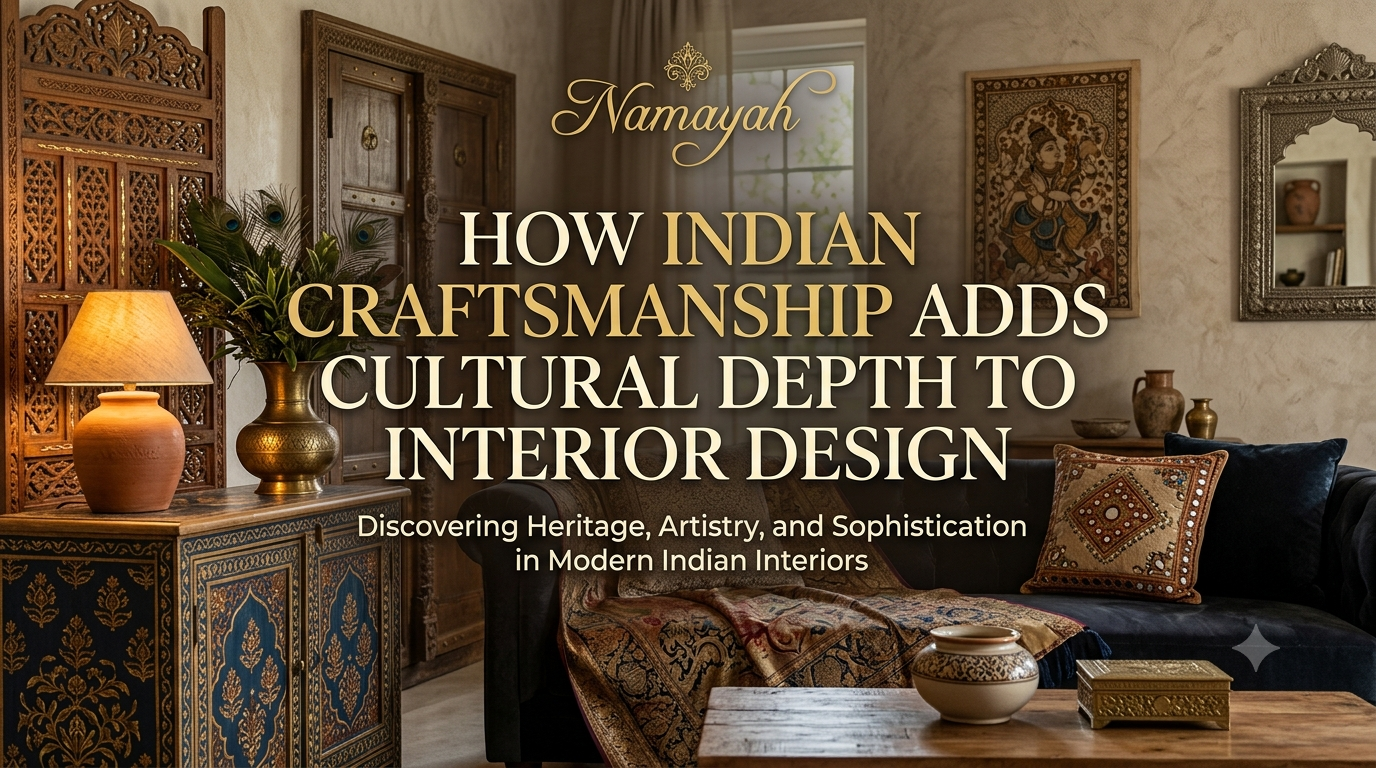
Interior design is more than choosing attractive furniture, colours, and finishes. The materials and objects within a space can communicate where they come from, how they were made, and the traditions behind them. Indian craftsmanship adds cultural depth to interior design by bringing regional materials, artisan techniques, patterns, textures, and stories into contemporary spaces.
From handwoven textiles and carved wood to metalwork, pottery, and decorative arts, Indian crafts offer designers ways to create interiors that feel personal rather than mass-produced. The strongest approach is not to fill a room with traditional objects, but to thoughtfully combine handcrafted elements with the architecture and lifestyle of the space.
UNESCO describes traditional craftsmanship as a particularly tangible expression of intangible cultural heritage, emphasizing that the knowledge and skills involved in making crafts are themselves important to safeguard and transmit.
What Makes Indian Craftsmanship Culturally Significant?
India has a diverse range of regional craft traditions shaped by local materials, communities, techniques, histories, and cultural practices.
This diversity means that “Indian design” is not one fixed visual style. A carved wooden element from one region can communicate something very different from a handwoven textile, painted surface, or traditional metal object from another.
This distinction matters in interior design. Using craftsmanship thoughtfully allows a room to express cultural identity without reducing Indian aesthetics to a single collection of colours or motifs.
India’s intangible cultural heritage includes traditions associated with craftsmanship, performance, rituals, festivals, and community knowledge. UNESCO’s India listing includes the traditional brass and copper craft of the Thatheras of Jandiala Guru, Punjab, inscribed in 2014.
Craft as a Connection to Place and Community
One of the greatest strengths of Indian craftsmanship is its connection to place.
A handmade object can reflect local resources, inherited techniques, and community knowledge. In this way, a craft piece can function as more than decoration. It can become a visual connection between the interior and a broader cultural landscape.
For example, a designer might use a regional textile as upholstery, a handcrafted metal object as a focal point, or a carved architectural panel as a feature wall. Each application introduces material variation and a sense of provenance.
UNESCO’s documentation of the Thateras of Jandiala Guru is a useful example. It describes the traditional brass and copper craft as more than a means of subsistence, noting its role as a social and cultural identity symbol for the Thathera community.
Textiles Bring Heritage Into the Home
Indian textiles are particularly versatile in interior design because they can be introduced at many scales.
A handwoven or traditionally patterned textile can become:
- Curtains
- Cushions
- Upholstery
- Bedcovers
- Throws
- Area rugs
- Wall hangings
- Decorative panels
Textiles also add softness to spaces dominated by hard architectural materials. A stone, wood, or plaster interior can feel warmer when complemented by tactile fabrics.
The key is restraint. A single distinctive textile can sometimes have more visual impact than several competing patterns.
For a contemporary interior, designers can pair traditional textile craftsmanship with simple furniture, neutral walls, and clean architectural lines. The contrast allows the handmade element to remain visible without making the room feel visually crowded.
Wood Carving Adds Architectural Character
Hand-carved wood can introduce depth that flat manufactured surfaces often cannot replicate.
Carved doors, screens, furniture, panels, ceiling details, and decorative objects can bring shadow, rhythm, and texture into a room. The irregularities associated with handmade work can also give an interior a sense of individuality.
Wood craftsmanship is especially effective when used as an architectural feature rather than scattered throughout every room.
For example, a carved timber screen can separate a living and dining area while maintaining visual continuity. A detailed wooden door can act as a transition between spaces. Smaller carved objects can reinforce the same material language without overwhelming the architecture.
Metalwork Creates Texture and Patina
Indian metal craftsmanship can add warmth, reflection, and visual weight.
Brass and copper are particularly useful in interiors because their surfaces can interact with natural and artificial light. Depending on the finish, they may appear polished, muted, aged, or richly patinated.
Metal craftsmanship can be incorporated through:
- Lighting fixtures
- Decorative vessels
- Hardware
- Trays
- Sculptural objects
- Tables and furniture details
- Wall-mounted pieces
The cultural value of metal craftsmanship is not merely aesthetic. UNESCO’s recognition of the Thateras of Jandiala Guru demonstrates how a traditional metalworking technique can embody community knowledge and identity.
Ceramics and Pottery Add Handmade Character
Ceramics introduce another layer of tactile variation.
Handmade pots, vessels, tiles, lamps, planters, and sculptural pieces can soften the uniformity of highly polished interiors. Small differences in shape, glaze, texture, and finish can make a space feel more collected and personal.
Ceramics are also useful for introducing craft without making a major architectural change.
A contemporary kitchen, for example, might remain visually simple while incorporating handmade vessels on open shelving. Similarly, a modern living room can use a small collection of crafted ceramic objects as a focal point.
Traditional Patterns Tell Visual Stories
Patterns are among the most recognizable ways culture enters an interior.
Indian decorative traditions include a wide variety of geometric, floral, figurative, and symbolic forms. But designers should avoid treating every motif as interchangeable.
Instead, consider:
- Origin: Where does the pattern or technique come from?
- Meaning: Does the motif have a particular cultural context?
- Scale: Will it work on a cushion, wall, rug, or large textile?
- Colour: How does it interact with the existing palette?
- Balance: Is it supporting the design or competing with everything else?
This approach turns pattern selection into a design decision rather than simply a decorative choice.
Regional Craft Traditions Offer Different Design Languages
India’s craft heritage is broad enough to support many different interior directions.
| Craft influence | Possible interior application | Design quality |
| Textile traditions | Upholstery, cushions, curtains, rugs | Softness and pattern |
| Wood craftsmanship | Doors, screens, furniture, panels | Texture and architectural detail |
| Metalwork | Lighting, vessels, accessories | Warmth and reflection |
| Pottery and ceramics | Vessels, tiles, objects | Tactility and individuality |
| Decorative painting | Panels, artwork, accent surfaces | Narrative and colour |
| Basketry and natural fibres | Lighting, storage, furniture | Organic texture |
The important principle is specificity. Rather than trying to represent “all of India” in one room, designers can select a smaller number of craft influences and give them enough space to be appreciated.
Balancing Traditional Crafts With Modern Design
One of the most effective ways to use Indian craftsmanship is to place it within a contemporary framework.
Imagine a room with:
- Simple architectural lines
- A restrained neutral base
- Modern seating
- Natural wood
- One statement textile
- A handcrafted metal light
- A small selection of artisan objects
The traditional elements become focal points instead of visual clutter.
This approach also demonstrates that cultural design does not require an entire room to look historically traditional. Craft can coexist with contemporary architecture, minimalist furniture, and modern lighting.
Use Contrast to Create Balance
Contrast can make craftsmanship more visible.
A highly detailed carved panel may stand out against a plain wall. A colourful textile can become a focal point against neutral upholstery. A textured metal object can add interest to a clean-lined console.
The goal is not uniformity. It is visual conversation.
Choosing Authentic Craftsmanship for Your Space
When selecting Indian craft pieces, consider more than appearance.
Understand the Craft
Learn what technique was used, where it originates, and what materials are involved. This provides context and can help prevent inappropriate combinations.
Prioritize Quality
Look closely at construction, finishing, material consistency, and durability. Handmade does not automatically mean suitable for every application.
Consider Proportion
A beautiful craft object can still look out of place if its scale is wrong. Large architectural pieces need sufficient surrounding space, while smaller objects work better in carefully edited groups.
Ask About Provenance
Where appropriate, ask sellers, studios, or artisans about the origin of the piece and the process used to create it.
This can make the design experience more meaningful and help distinguish genuinely craft-led work from generic products marketed with traditional styling.
Sustainable and Responsible Craft-Led Design
Craft-focused interiors can also encourage more thoughtful consumption, but sustainability should not be assumed simply because something is handmade.
Responsible design requires attention to materials, production practices, durability, transportation, and sourcing.
UNESCO emphasizes that safeguarding traditional craftsmanship focuses on maintaining the knowledge and skills of craft communities and encouraging their transmission to future generations.
For designers and homeowners, this reinforces an important principle: the cultural value of a craft is connected not only to the finished object but also to the knowledge and people behind it.
Buying fewer, better-considered pieces can therefore be more meaningful than filling a room with decorative objects.
Common Mistakes to Avoid
1. Treating Indian Design as One Style
India contains many regional traditions. Avoid combining unrelated motifs simply because they appear “Indian.”
2. Overdecorating
Too many patterns, colours, textures, and objects can make craftsmanship difficult to appreciate.
3. Using Cultural Motifs Without Context
A motif can have meaning beyond its visual appearance. Designers should research unfamiliar cultural references before using them prominently.
4. Mixing Too Many Craft Traditions
Several beautiful pieces may compete with one another. Select a clear visual hierarchy.
5. Choosing Appearance Over Function
Interior design still needs to serve everyday life. Consider maintenance, durability, comfort, and usability alongside aesthetics.
How to Build a Cohesive Craft-Led Interior
A practical approach is to build the room in layers.
Step 1: Start with the architecture.
Identify the room’s proportions, natural light, materials, and existing features.
Step 2: Establish a base palette.
Use walls, floors, and major furniture to create a calm foundation.
Step 3: Select one primary craft influence.
Choose a textile, wood technique, metal tradition, ceramic style, or other craft as the central element.
Step 4: Add complementary materials.
Introduce two or three supporting textures rather than numerous unrelated ones.
Step 5: Create a focal point.
Give an important handcrafted piece enough visual space.
Step 6: Edit the room.
Remove pieces that compete with the main story.
This layered approach makes the craftsmanship feel intentional rather than decorative.
Why Cultural Depth Matters in Contemporary Interiors
A culturally rich interior does not have to look old-fashioned.
In fact, traditional craftsmanship can provide exactly the kind of individuality that contemporary interiors sometimes lack. Handmade surfaces introduce variation. Regional techniques add provenance. Traditional materials bring tactile qualities. Artisan-made objects can create focal points that feel more personal than standardized décor.
India’s UNESCO-recognized heritage illustrates the broader principle that cultural traditions can remain living practices rather than merely historical artifacts. India’s current UNESCO listing includes 16 elements, with Deepavali added to the Representative List in 2025.
For interior design, the lesson is simple: cultural depth comes from understanding and using craft thoughtfully, not from adding more decoration.
Frequently Asked Questions
What is Indian craftsmanship in interior design?
Indian craftsmanship in interior design refers to the use of traditional or contemporary artisan-made techniques, materials, patterns, and objects within residential, commercial, or hospitality spaces. Examples include textiles, woodwork, metalwork, ceramics, decorative arts, and handcrafted furniture.
How does Indian craftsmanship add cultural depth to a home?
It connects the interior with regional traditions, materials, techniques, and artisan knowledge. Instead of relying only on visual decoration, craftsmanship can introduce cultural context through how an object is made and where its technique comes from.
Which Indian crafts work well in modern interiors?
Textiles, carved wood, brass and copper objects, ceramics, natural-fibre products, decorative panels, and handcrafted furniture can work well in contemporary spaces. The best choice depends on the architecture, colour palette, scale, and intended atmosphere.
Can Indian craftsmanship work with minimalist interior design?
Yes. Minimalist interiors can provide a strong backdrop for handcrafted pieces. One carved panel, textile, ceramic collection, or metal light can become a focal point without changing the entire room’s aesthetic.
How can I avoid making an interior look overly traditional?
Use craftsmanship selectively. Combine one or two distinctive traditional elements with contemporary furniture, restrained colours, simple architectural lines, and modern lighting. The objective is balance rather than recreating a historical interior.
Why is artisan provenance important?
Provenance can provide information about where a piece originated, how it was made, and the community or tradition associated with it. Understanding provenance can make purchasing and design decisions more informed.
Is handmade automatically sustainable?
No. Handmade production can have advantages, but sustainability depends on factors such as material sourcing, production methods, durability, transportation, and product lifespan. Sustainability claims should be evaluated individually.
How can interior designers use traditional Indian patterns responsibly?
Designers should research the origin and context of patterns before using them. They should also avoid treating culturally significant motifs as interchangeable decoration and should consider working with knowledgeable artisans or specialists when appropriate.
Conclusion
How Indian craftsmanship adds cultural depth to interior design ultimately comes down to more than colour, pattern, or decoration. Craft introduces stories, skills, materials, regional identity, and human touch into the built environment.
The most successful craft-led interiors are usually selective. They allow a textile to breathe, give a carved surface room to become a focal point, or use a handcrafted metal object to add warmth to an otherwise contemporary setting.
By combining traditional craftsmanship with thoughtful modern design, homeowners and designers can create spaces that feel distinctive, tactile, and connected to culture without becoming visually overwhelming.