
How Indian Artisans Transform Traditional Materials into Modern Décor
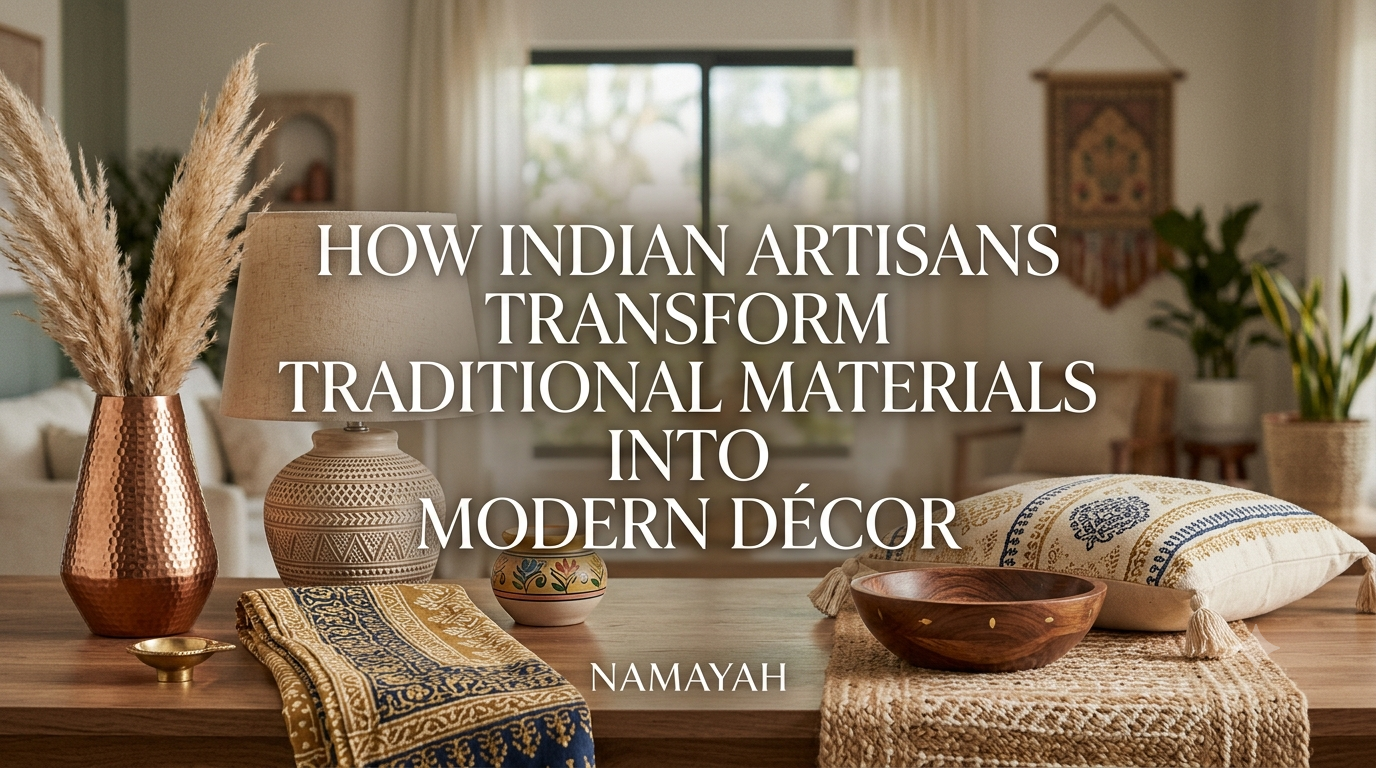
Indian artisans are finding new ways to bring traditional materials, techniques, and cultural knowledge into contemporary homes. Instead of treating heritage crafts as objects of the past, designers and craftspeople are adapting wood, metal, clay, textiles, cane, bamboo, stone, and other materials into furniture, lighting, wall décor, tableware, and accessories suited to modern interiors.
The result is a distinctive form of décor that can combine traditional craftsmanship with contemporary proportions, colors, functions, and aesthetics. A hand-carved wooden panel may become a minimalist headboard, traditional weaving may appear on a modern accent chair, and terracotta may be shaped into simple lighting or sculptural objects.
This transformation does more than create attractive interiors. It can help keep craft skills relevant, give handmade materials a place in changing lifestyles, and create a bridge between India’s artistic heritage and contemporary design.
Why Traditional Indian Materials Still Matter
Traditional materials have qualities that manufactured alternatives often struggle to replicate. Natural wood has visible grain, hand-worked metal can carry subtle variations, terracotta has an earthy surface, and woven fibers introduce texture and warmth.
Indian craft traditions also reflect regional knowledge. Artisans have developed techniques around locally available materials, climate, cultural practices, and generations of accumulated skill.
Modern décor does not necessarily require these traditions to remain unchanged. Instead, contemporary design can reinterpret them.
This is where the artisan’s role becomes particularly important.
From Heritage Craft to Contemporary Design
Modernizing a traditional craft does not simply mean changing its appearance. It can involve changing the object’s scale, function, construction, color, finish, or setting while retaining elements of the original craft.
For example, a traditional technique may historically have been used to create ceremonial or decorative objects. A contemporary designer might work with artisans to apply the same technique to a lamp, side table, room divider, or wall installation.
Three elements often make this transition successful:
- Traditional technique — The handmade process remains an important part of the object.
- Contemporary function — The finished piece serves a modern lifestyle.
- Modern visual language — Proportions, finishes, or colors make the object easier to integrate into current interiors.
The craft therefore evolves without necessarily losing its identity.
Wood: From Carved Heritage to Minimalist Furniture
Wood has long been an important material in Indian architecture, furniture, carving, and decorative arts.
Traditional wooden craftsmanship can include carving, joinery, inlay, turning, painting, and other forms of surface decoration. Contemporary artisans can adapt these techniques to simpler furniture silhouettes.
A heavily decorated traditional object, for instance, may inspire a modern console with restrained carving. A carved architectural motif may be incorporated into a headboard or partition. Traditional joinery can also influence furniture designed around clean lines and natural finishes.
The appeal lies in the contrast: modern geometry provides simplicity, while handmade woodwork provides character.
For contemporary interiors, natural or lightly finished wood can work particularly well because it complements neutral palettes, modern architecture, and other natural materials.
Metal: Giving Age-Old Techniques a Modern Form
Indian metalworking traditions encompass a wide range of techniques and regional practices. Brass, copper, iron, and other metals have been used for household objects, religious artifacts, vessels, decorative pieces, and architectural details.
Contemporary décor can reinterpret metalwork through modern lighting, sculptures, trays, furniture accents, mirrors, and hardware.
The material itself can become the design statement. A simple brass pendant light, for example, may draw attention to the warmth and changing surface of the metal rather than relying on elaborate ornamentation.
Hand-finished metal can also introduce subtle variations that give contemporary interiors a more tactile quality.
Clay and Terracotta: Earthy Materials for Modern Homes
Clay and terracotta have a natural connection with architecture and everyday life across India.
Today, artisans can use these materials in forms that suit modern interiors, including planters, vessels, lamps, tiles, sculptures, and decorative objects.
Their appeal is partly tactile. The irregularities, earthy colors, and matte surfaces of handmade clay can soften interiors dominated by polished surfaces, glass, or synthetic materials.
Terracotta also works naturally with contemporary approaches that emphasize organic textures and material honesty.
Rather than filling a room with numerous decorative pieces, a homeowner might use one large handmade terracotta vessel as a focal point.
Cane, Bamboo, and Natural Fibers
Cane, bamboo, jute, and other natural fibers can bring lightness and texture to interiors.
Traditional weaving and basket-making knowledge can be adapted into contemporary chairs, pendant lights, baskets, screens, storage pieces, and decorative panels.
Their visual versatility makes them suitable for several interior styles. A finely woven pendant can complement a minimalist room, while a larger woven chair can add warmth to an otherwise structured space.
These materials also demonstrate how traditional craft can respond to practical modern needs. Storage, seating, lighting, and room division can all incorporate handmade techniques.
Textiles: Turning Traditional Patterns into Contemporary Statements
Indian textiles are especially rich in regional techniques, motifs, colors, and weaving traditions.
Contemporary design does not always reproduce traditional patterns exactly. Instead, designers may simplify motifs, change the scale, adjust the color palette, or place traditional textiles within modern furniture.
A traditional textile can become upholstery, a cushion, a wall hanging, a bedcover, a runner, or an accent piece.
The key is balance.
One strongly patterned textile can become a focal point in a room with otherwise restrained furnishings. This allows the craft to remain visually important without making the entire interior feel overly traditional.
Stone and Marble: Craftsmanship Meets Modern Architecture
Stone has played an important role in Indian architecture and decorative arts for centuries.
Contemporary artisans can apply stoneworking skills to tables, trays, lighting, wall features, sculptures, flooring details, and architectural installations.
Marble and other stones can be particularly effective when paired with simple forms. A contemporary table with a carefully finished stone surface, for example, allows the material’s natural character to take center stage.
Traditional carving or inlay can also be used selectively, creating a relationship between architectural heritage and modern design.
The Role of Color, Texture, and Form
Traditional materials do not automatically look old-fashioned. Their presentation has a major influence on how they are perceived.
A traditional material can feel contemporary when combined with:
- Clean geometric forms
- Restrained decoration
- Neutral backgrounds
- Contemporary furniture
- Simple lighting
- Carefully selected accent colors
- Natural textures
- Appropriate scale
Texture is particularly valuable. Handmade surfaces can add visual depth without requiring elaborate decoration.
Modern interiors often benefit from contrast: smooth surfaces beside rough ones, hard materials beside soft textiles, and simple forms beside detailed craftsmanship.
Sustainability and the Value of Handmade Décor
Traditional materials can align with some principles of responsible design, particularly when they are locally sourced, responsibly managed, durable, repairable, or made with relatively low levels of industrial processing.
However, not every handmade or natural-material product is automatically sustainable. Environmental impact depends on factors such as material sourcing, production methods, transportation, durability, finishing, and waste.
For buyers, useful questions include:
- Where was the material sourced?
- Who made the product?
- What production process was used?
- Is the material responsibly sourced?
- How durable is the object?
- Can it be repaired?
- Is the product designed for long-term use?
The strongest sustainability story is often connected to longevity: buying fewer, better-made objects and keeping them in use for longer.
How Artisans Balance Tradition and Innovation
Craft traditions survive by adapting.
Artisans may collaborate with architects, interior designers, product designers, and brands to develop objects for contemporary spaces. These collaborations can introduce new dimensions, functions, materials, finishes, and production requirements.
But innovation must be handled carefully.
If every traditional feature is removed, the result may become disconnected from its craft heritage. If every traditional feature is preserved without adaptation, the object may have limited relevance to contemporary lifestyles.
Successful craft-led design often occupies the middle ground.
The material and making process remain recognizable, while the final product responds to modern needs.
Bringing Indian Craftsmanship into Contemporary Interiors
You do not need to redesign an entire room around traditional Indian décor. A few carefully selected pieces can create a strong visual connection.
Start with one statement piece
A carved wooden console, woven chair, metal light, textile wall hanging, or handmade ceramic vessel can serve as a focal point.
Mix old and new
Pair handmade décor with contemporary furniture rather than creating an entirely traditional room. This contrast can make both styles more noticeable.
Use texture strategically
Natural fibers, unfinished wood, terracotta, and hand-finished metal can introduce tactile variety to minimalist interiors.
Pay attention to scale
Large handcrafted pieces can become architectural features, while smaller objects can provide subtle accents.
Let the material speak
Avoid overcrowding a room with decorative objects. A well-made handmade piece can have more impact when it has enough visual space around it.
What to Look for When Buying Artisan-Made Décor
When purchasing Indian artisan-made décor, look beyond appearance.
Consider craftsmanship, material quality, provenance, functionality, durability, and care requirements.
Ask sellers about the material and making process when that information is available. If a product is described as handmade, look for clear information about what part of the production is actually done by hand.
It is also worth considering whether the product genuinely suits your home. Traditional craftsmanship does not mean an object must look traditional. Choose pieces whose form, scale, and material work with your existing interior.
Most importantly, value the maker’s skill rather than treating handmade variation as a defect. Small differences in texture, color, or form can be part of the character of a handcrafted object.
FAQs About Indian Artisan-Made Décor
What materials are commonly used in Indian artisan décor?
Common materials include wood, metal, clay, terracotta, stone, marble, cane, bamboo, natural fibers, and textiles. The materials and techniques vary considerably by region and craft tradition.
How do Indian artisans make traditional décor look modern?
Artisans and designers can modernize traditional crafts by changing proportions, simplifying forms, introducing contemporary colors, adapting objects for modern functions, or combining traditional techniques with current design approaches.
Is Indian handmade décor suitable for minimalist interiors?
Yes. A minimalist interior can provide a strong setting for one or two handcrafted pieces. Natural materials and subtle handmade textures can add warmth without overwhelming a simple design.
Is traditional Indian décor sustainable?
It can be, but sustainability depends on the specific material, sourcing, production process, transportation, durability, and end-of-life considerations. Handmade does not automatically mean environmentally sustainable.
How can I add Indian craftsmanship without making my home look overly traditional?
Use individual pieces as accents. For example, combine a contemporary sofa with a handwoven textile, a modern dining area with artisan-made lighting, or minimalist furniture with a carved wooden or stone statement piece.
Why is handmade variation valuable?
Handmade variation can show the human process behind an object. Slight differences in texture, finish, or form can make individual pieces distinctive.
What makes Indian artisan décor different from mass-produced décor?
Artisan-made objects can reflect specific techniques, materials, regional traditions, and individual making processes. Mass-produced products are generally designed for standardized, repeatable manufacturing.
How can I support artisans when buying décor?
Look for transparent information about makers, materials, production methods, and sourcing. Buying directly from credible artisan businesses, cooperatives, or organizations that clearly identify their makers can help buyers understand the craft behind a product.
Conclusion
Indian artisans are demonstrating that traditional materials do not belong only to historical settings. Wood, metal, clay, textiles, cane, bamboo, stone, and other materials can be reshaped into contemporary furniture and décor while retaining connections to established craft knowledge.
The most compelling modern pieces often succeed because they balance heritage and innovation. They respect the material and the maker while responding to today’s spaces, functions, and aesthetic preferences.
For homeowners and designers, this creates an opportunity to build interiors that feel contemporary without becoming impersonal. For artisans, thoughtful innovation can help traditional skills remain relevant in changing markets and lifestyles.
Ultimately, modern Indian décor is not simply about bringing the past into the present. It is about allowing traditional craftsmanship to continue evolving.