
How Handmade Products Preserve Cultural Heritage
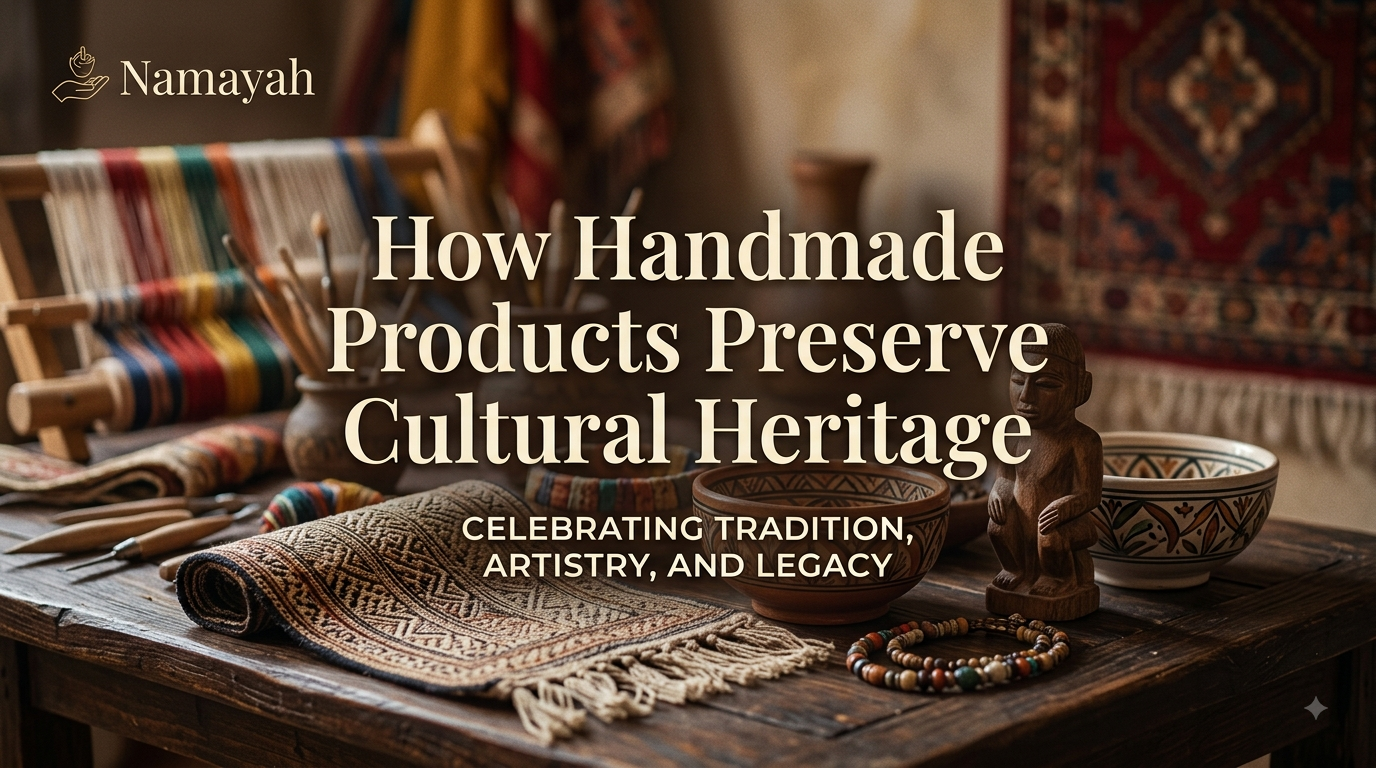
Handmade products do more than provide useful or decorative objects. They can preserve traditional knowledge, artistic techniques, cultural symbols, materials, stories, and community identity. When artisans continue practices learned from previous generations, they help keep cultural traditions active rather than allowing them to disappear.
UNESCO recognizes traditional craftsmanship as one of the domains of intangible cultural heritage. Importantly, UNESCO emphasizes that safeguarding craftsmanship is not simply about keeping old objects in museums. It is about supporting the skills and knowledge involved in making them and transmitting those skills to future generations.
What Is Cultural Heritage?
Cultural heritage includes the traditions, knowledge, practices, expressions, and objects that communities recognize as part of their identity.
Some heritage is tangible, such as historic buildings, artworks, clothing, tools, and handmade objects. Other forms are intangible, including stories, rituals, skills, knowledge, and traditional production techniques.
UNESCO describes traditional craftsmanship as part of intangible cultural heritage because the most important element is often the knowledge behind the finished product. A woven textile, carved object, piece of pottery, or handmade piece of jewelry represents not only an object but also the techniques and cultural knowledge used to create it.
This distinction helps explain why handmade products can play such an important role in cultural preservation.
How Handmade Products Preserve Culture
Passing Skills From One Generation to Another
Traditional crafts are often learned through observation, practice, family teaching, apprenticeships, or community-based instruction.
An experienced craftsperson may teach a younger person how to prepare materials, use particular tools, follow a traditional pattern, or perform a technique that is difficult to learn from written instructions alone.
This process preserves living knowledge.
UNESCO notes that traditional craftsmanship can be threatened when younger generations choose other occupations or when lengthy apprenticeships become difficult to sustain. Supporting opportunities for apprentices and teachers can therefore help strengthen the transmission of traditional skills.
A handmade product can consequently represent the continuation of a learning relationship between generations.
Preserving Stories and Cultural Symbols
Many handmade products contain symbols that reflect a community’s history, beliefs, environment, or social traditions.
Patterns on textiles may communicate regional identity. Decorative motifs may reference plants, animals, religious traditions, landscapes, or historical events. Objects created for festivals or ceremonies may have meanings that go beyond their practical function.
The product becomes a physical way to communicate cultural knowledge.
For example, UNESCO’s documentation of traditional Turkish çini-making describes handmade glazed tiles featuring plant, animal, and geometric motifs associated with local customs and beliefs. The practice is regarded by practitioners as an important part of Turkish cultural identity and a link between past and present.
Protecting Traditional Materials and Techniques
Cultural heritage is also connected to how something is made.
Traditional crafts may depend on locally available clay, fibers, wood, dyes, metals, natural materials, or other resources. Artisans may possess specialized knowledge about preparing and working with those materials.
When handmade production continues, some of this environmental and technical knowledge can remain active within a community.
However, UNESCO also highlights challenges such as deforestation, land-use changes, and other environmental pressures that can reduce access to materials needed by traditional craftspeople. Safeguarding a craft may therefore require attention not only to artisans but also to the resources and environments on which their work depends.
Supporting Artisan Livelihoods
Cultural preservation becomes more difficult when artisans cannot earn a sustainable living from their skills.
If traditional craft provides income, there can be a practical reason for artisans and younger community members to continue learning and practicing it. UNESCO notes that economic activities connected with living heritage can generate income, support livelihoods and decent work, and contribute to the continuation and transmission of cultural practices.
This creates an important connection:
Consumer demand → artisan income → continued practice → knowledge transmission → cultural preservation.
The relationship is not automatic, however. Commercialization needs to be approached carefully so that economic demand does not distort or exploit the cultural practice itself.
Strengthening Community Identity
Handmade traditions can also reinforce a community’s sense of identity.
Creating an object according to a shared tradition can connect people with their families, ancestors, region, language, history, and community.
UNESCO describes intangible cultural heritage as something that can provide people with a sense of identity and continuity. It is also community-based: a tradition is recognized as heritage by the people and communities who create, maintain, and transmit it.
That means cultural preservation is not simply about outsiders deciding which objects are valuable. The communities associated with the tradition should have an important role in defining, maintaining, adapting, and representing it.
Examples of Handmade Cultural Heritage Around the World
Traditional craftsmanship appears in many different forms around the world.
Textiles and Weaving
Weaving traditions can preserve distinctive patterns, techniques, fibers, colors, and knowledge of local materials.
UNESCO’s intangible heritage lists include examples such as Aklan piña handloom weaving in the Philippines, traditional Naga motif weaving in Lao communities, and traditional skills associated with loincloth weaving in Côte d’Ivoire. UNESCO also lists handmade weaving in Upper Egypt among traditions identified as needing urgent safeguarding.
These examples demonstrate that textiles can carry both technical knowledge and cultural meaning.
Pottery and Ceramics
Ceramic traditions often involve specialized knowledge of clay preparation, shaping, decoration, glazing, firing, and design.
The traditional craftsmanship of çini-making in Türkiye is one example. The practice combines technical processes with distinctive motifs and systems of learning involving craftspeople, supervisors, and apprentices.
Woodcraft
Woodworking traditions can preserve knowledge about local trees, tools, carving techniques, construction methods, and traditional designs.
UNESCO identifies woodcrafting knowledge among the many forms of traditional craftsmanship and notes that craft objects can range from household utensils to decorative and ritual objects.
Festival and Ceremonial Objects
Some handmade products are created specifically for ceremonies, festivals, or performances.
Although such objects may sometimes be used only temporarily, their creation can preserve skills that are closely connected to community rituals and social practices.
This shows why the cultural value of an object cannot always be judged by its durability or monetary value. A temporary handmade item may still carry significant cultural knowledge.
Why Traditional Crafts Are At Risk
Handmade traditions face several challenges in a rapidly changing economy.
Mass Production
Factory-made goods can often be produced faster and sold at lower prices than handmade alternatives. UNESCO identifies mass production as one of the pressures facing traditional craftsmanship.
When consumers consistently prioritize the lowest price, artisans may find it difficult to compete.
Declining Apprenticeships
Some traditional techniques require years of practice.
If younger people do not see a viable future in craft work, fewer may become apprentices. When experienced artisans retire without passing their knowledge to others, important techniques can disappear.
Changing Consumer Preferences
Cultural traditions evolve, but rapid changes in fashion and consumer demand can make some traditional products less commercially viable.
The challenge is finding ways for traditions to remain relevant without removing the cultural knowledge that makes them distinctive.
Loss of Raw Materials
Environmental changes can also threaten craft traditions.
When artisans lose access to traditional materials, they may have to replace them with alternatives. In some circumstances, this can change the character of the craft itself. UNESCO highlights environmental pressures as a concern for traditional craftsmanship and notes that safeguarding may sometimes require environmental protection and resource management.
How Consumers Can Support Cultural Heritage
People who purchase handmade products can contribute to cultural preservation when they make informed choices.
1. Buy From Authentic Artisans
Whenever possible, purchase directly from artisans, cooperatives, or organizations that clearly identify the makers and their communities.
2. Learn the Story Behind the Product
Ask where the product was made, what technique was used, and what cultural tradition it represents.
Understanding the background can turn a purchase into an opportunity for cultural education.
3. Value Skill, Not Just Appearance
A handmade product may cost more than a mass-produced imitation because the price can reflect time, expertise, materials, and labor.
Comparing handmade goods solely on price can overlook the knowledge embedded in the production process.
4. Avoid Treating Cultural Designs as Mere Trends
Cultural motifs can have meanings that are important to the communities that created them.
Consumers and businesses should approach cultural designs respectfully rather than assuming that every traditional symbol is simply decorative or freely available for commercial use.
5. Support Long-Term Craftsmanship
Purchasing from responsible artisan businesses, craft cooperatives, and cultural initiatives can help create continuing demand for traditional skills.
The goal should not simply be to preserve an object. As UNESCO emphasizes, safeguarding traditional craftsmanship focuses on keeping the knowledge and skills alive.
Can Traditional Crafts Adapt to Modern Markets?
Yes. Cultural preservation does not necessarily mean freezing a tradition exactly as it existed centuries ago.
UNESCO describes intangible cultural heritage as living heritage that can evolve as communities respond to their environments and circumstances.
Artisans can sometimes introduce new colors, shapes, products, or applications while retaining core techniques and knowledge.
For example, traditional weaving might be used to create contemporary home décor, accessories, or clothing. Traditional pottery techniques might be adapted to modern household products.
The important question is whether adaptation is being led respectfully by the communities connected to the tradition and whether the underlying knowledge continues to be transmitted.
UNESCO’s safeguarding work in West Bengal illustrates this approach. Its Rural Craft and Cultural Hubs initiative has worked to strengthen rural intangible cultural heritage while developing sustainable livelihoods and market opportunities for craft communities.
Similarly, UNESCO has documented safeguarding approaches that connect master craftspeople with apprentices through practical, intergenerational learning.
Why Handmade Products Matter Beyond Decoration
A handmade product can contain several layers of value at once:
| Layer | What It Preserves |
|---|---|
| Material | Traditional resources and material knowledge |
| Technical | Crafting methods and production skills |
| Artistic | Patterns, colors, shapes, and design traditions |
| Historical | Stories and connections to the past |
| Social | Community relationships and shared practices |
| Economic | Opportunities for artisan livelihoods |
| Educational | Knowledge transferred to younger generations |
| Identity | A sense of belonging and cultural continuity |
This is why handmade products should not always be viewed simply as consumer goods.
They can be carriers of living knowledge.
Frequently Asked Questions
1. How do handmade products preserve cultural heritage?
Handmade products preserve cultural heritage by keeping traditional techniques, materials, designs, stories, and knowledge in active use. When artisans teach these skills to younger generations, cultural practices can continue rather than becoming only historical records.
2. Why are traditional crafts considered cultural heritage?
Traditional crafts are considered cultural heritage because they can contain knowledge and skills that communities recognize as part of their cultural identity. UNESCO includes traditional craftsmanship among the domains of intangible cultural heritage.
3. Can buying handmade products help preserve culture?
Yes, responsible purchases can support artisans and create demand for traditional skills. Economic activity associated with living heritage can contribute to livelihoods and the continued transmission of cultural practices.
4. What happens when traditional crafts disappear?
When a craft tradition disappears, communities may lose specialized techniques, knowledge, vocabulary, designs, and connections to cultural practices. The loss can affect both cultural identity and opportunities for intergenerational learning.
5. Are handmade products always traditional?
No. Something being handmade does not automatically make it culturally traditional. A handmade product may be completely contemporary. Cultural heritage is more specifically connected to knowledge, practices, and expressions that communities recognize and transmit as part of their heritage.
6. Can traditional crafts change over time?
Yes. Living cultural heritage can evolve as communities respond to changing environments, needs, and circumstances. Adaptation can help traditions remain relevant while their important knowledge and cultural meaning continue to be transmitted.
7. Why is it important to support young artisans?
Young artisans can become the next generation of knowledge holders. Supporting apprenticeships and viable craft livelihoods can make it more practical for traditional skills to continue within communities. UNESCO specifically highlights intergenerational transmission as an important part of safeguarding traditional craftsmanship.
8. How can consumers buy handmade products responsibly?
Consumers can research the maker, learn about the cultural background of the product, purchase through transparent artisan businesses or cooperatives, and avoid treating culturally significant designs as generic decorations or trends.
Conclusion
Handmade products can preserve cultural heritage because they keep knowledge, skills, stories, materials, symbols, and community traditions in active use.
The most valuable part of a handmade object may not be the object itself. It can be the knowledge required to create it and the relationship through which that knowledge is passed from one generation to another.
From textiles and ceramics to woodcraft and ceremonial objects, traditional craftsmanship demonstrates how culture can survive through practice. At the same time, artisans need sustainable livelihoods, access to materials, opportunities to teach younger generations, and respectful markets.
Supporting handmade products, therefore, can be more than a purchasing decision. When done responsibly, it can help support the people and practices that keep cultural heritage alive.