
How Brass and Copper Became Symbols of Indian Craftsmanship
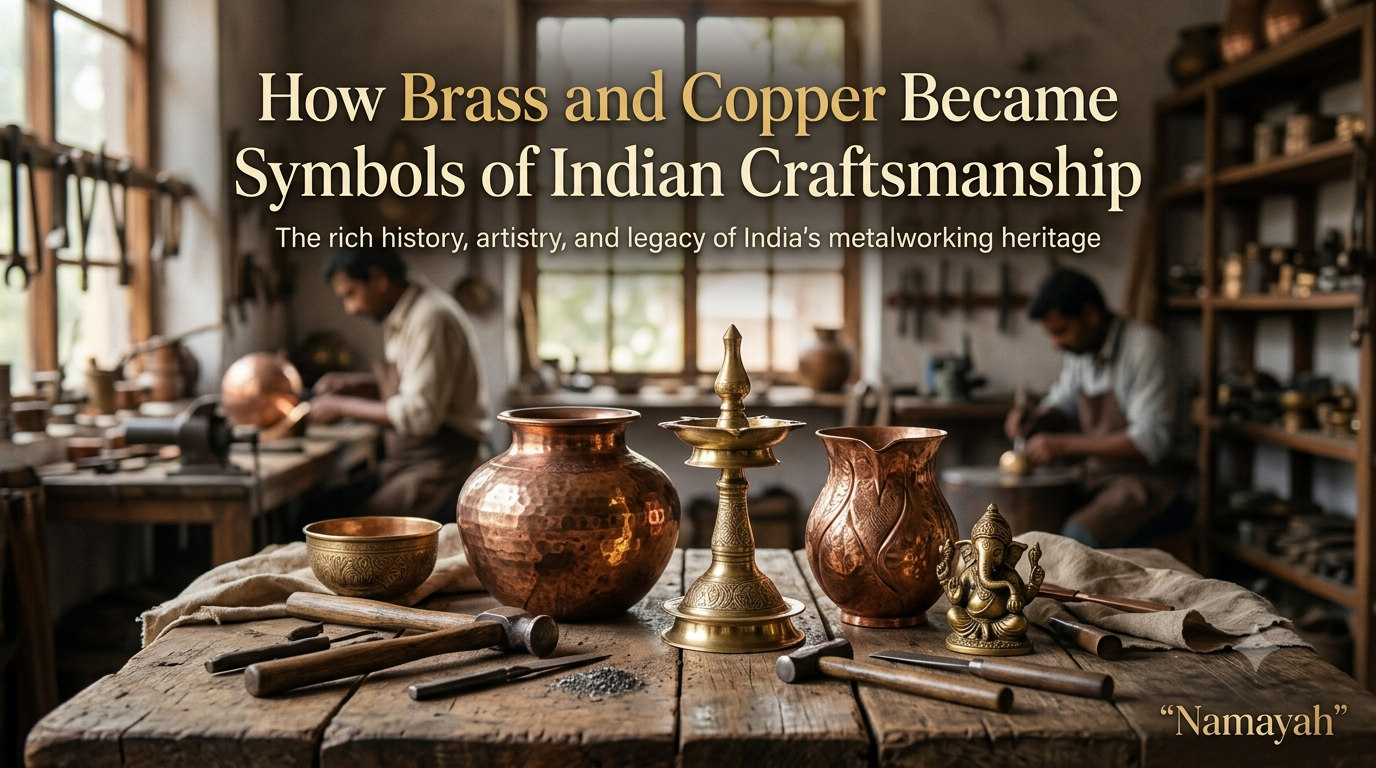
Brass and copper have played an important role in Indian craftsmanship for centuries. Their warm appearance, durability, workability, and connection with everyday and ceremonial objects helped make them more than useful materials. Across different parts of India, artisans have transformed these metals into lamps, vessels, utensils, sculptures, decorative objects, and ritual items. Over time, the objects created from brass and copper came to represent a combination of technical skill, cultural memory, and artistic expression.
The story of brass and copper in India is therefore not simply a story about metal. It is also a story about artisans, communities, traditions, religious practices, household life, and the preservation of handmade skills.
The Long History of Metal Craft in India
India has a long history of working with metals. Archaeological discoveries from the Indian subcontinent demonstrate that metalworking was practiced thousands of years ago, with copper and copper alloys among the materials used by early societies.
As metalworking techniques developed, craftsmen learned to cast, hammer, shape, engrave, emboss, polish, and decorate different metals. These skills were passed through generations, often within artisan communities.
Copper was especially useful because it could be shaped and worked relatively easily. Brass, an alloy primarily made from copper and zinc, offered different properties and a distinctive golden appearance. These characteristics gave craftsmen additional opportunities to create both practical and decorative objects.
Over generations, metalworking became deeply connected with regional craft traditions rather than developing as a single uniform Indian style.
Why Brass and Copper Became Important Materials
Several qualities helped copper and brass become valuable materials for Indian artisans.
Copper is malleable and workable. This makes it suitable for forming vessels and other objects through traditional metalworking processes.
Brass has a distinctive appearance. Its yellow-gold tone can resemble precious metals while remaining more accessible for everyday decorative and ritual objects.
Both materials are durable. Properly made metal objects can remain in use for many years and can be repaired, polished, or passed between generations.
They can be decorated in many ways. Depending on the regional tradition, artisans can engrave, emboss, cast, hammer, polish, or otherwise finish the surface.
These qualities allowed brass and copper to occupy a space between utility and art. A vessel could be an everyday household object while also carrying decorative or cultural significance.
Copper in Indian Tradition and Daily Life
Copper has a particularly strong association with traditional Indian household and cultural practices.
Copper vessels, containers, plates, ritual objects, and decorative pieces have been made in different regions and communities. In some traditional practices, copper objects are valued not only for their appearance but also for their association with purity and ritual use.
Copper also develops a distinctive surface over time. A newly polished object can appear bright and reflective, while an older piece may develop a darker patina. For many collectors and families, this changing appearance contributes to the character of an heirloom.
The importance of copper therefore extends beyond its physical properties. Objects made from it can become part of family traditions, ceremonies, and memories.
Brass and the Art of Decorative Craft
Brass became especially prominent in decorative and ritual craftsmanship because of its attractive golden color and versatility.
Indian artisans have used brass to make lamps, bells, vessels, figurines, trays, architectural details, and numerous household objects. Traditional forms vary considerably between regions.
A brass object may be relatively simple, emphasizing proportion and surface finish, or it may feature detailed engraving, casting, ornamentation, or sculptural work.
This versatility helped brass become one of the recognizable materials associated with Indian decorative craftsmanship.
The appeal of brass also comes from the relationship between the material and the artisan. A plain sheet, rod, or casting can be transformed into an object with a completely different visual and cultural identity through skilled human work.
The Role of Metalware in Rituals and Festivals
Brass and copper have long appeared in religious and ceremonial settings in India.
Brass lamps, for example, are widely associated with Hindu religious and cultural practices. Traditional lamps can be used during prayers, festivals, ceremonies, and other occasions.
Metal bells, vessels, plates, containers, and other objects can also have ceremonial functions. Their presence demonstrates how craftsmanship can become intertwined with ritual.
In this context, the value of an object is not determined solely by its material or workmanship. Its meaning can come from how it is used and the traditions surrounding it.
A handcrafted lamp, for instance, can function simultaneously as an artistic object, a household possession, and a ceremonial item.
Regional Traditions Across India
One of the most fascinating features of Indian metal craftsmanship is its regional diversity.
Different areas developed distinctive approaches based on local materials, communities, historical influences, and cultural needs. The same basic material could therefore produce very different forms of craft.
In some regions, artisans became known for detailed casting. Elsewhere, hammered surfaces, engraving, repoussé work, decorative inlay, or distinctive vessel shapes became important.
Traditional metal craft can be found within wider handicraft cultures across states and regions including Rajasthan, Uttar Pradesh, West Bengal, Odisha, Kerala, Tamil Nadu, and others.
These traditions should not be treated as a single style. Indian craftsmanship is better understood as a collection of interconnected regional practices.
How Artisans Transform Metal Into Craft
Traditional metalworking involves much more than simply shaping a piece of metal.
Depending on the craft, an artisan may begin by preparing metal sheets, wires, rods, or material for casting. The metal can then be shaped using heat, hammers, moulds, or other tools.
Surface decoration may involve engraving, punching, embossing, polishing, or other techniques.
In casting traditions, the process can be particularly intricate. The artisan must create a suitable form, prepare a mould, work with molten metal, and finish the resulting object.
The exact techniques vary by craft and region. What they share is the importance of accumulated knowledge.
An experienced artisan understands not only the tools but also the behavior of the material. This practical knowledge is one reason handmade metal objects can differ significantly from mass-produced alternatives.
From Household Objects to Works of Art
Traditional Indian metalware demonstrates that utility and beauty do not have to be separate.
A cooking or serving vessel can have carefully considered proportions. A lamp can be designed to be both functional and ornamental. A storage container can feature detailed surface decoration.
This combination of usefulness and aesthetics is one of the defining strengths of Indian handicrafts.
Many traditional objects also communicate something about the people who made and used them. Their forms can reflect local customs, available resources, religious practices, and ideas about hospitality and domestic life.
Consequently, a brass or copper object can become a small record of cultural history.
Why Handmade Metalware Carries Cultural Meaning
Mass-produced objects can reproduce a shape, but traditional handmade crafts often carry a deeper connection to process and place.
A handcrafted metal object may reflect the techniques of a particular artisan community. Its decoration may draw on regional motifs. Its form may have developed through generations of use.
The object can therefore represent both physical craftsmanship and intangible cultural knowledge.
This is especially important when considering traditional crafts as living heritage. Heritage is not preserved simply by keeping old objects in museums. It can also survive when artisans continue practicing, adapting, and teaching their skills.
Brass and Copper in Modern Indian Homes
Brass and copper have not disappeared with modernization. Instead, their roles have changed.
Traditional metalware continues to appear in homes, places of worship, restaurants, hotels, cultural spaces, and interior design. Contemporary consumers may purchase handmade lamps, planters, serving pieces, sculptures, and decorative objects alongside traditional vessels.
Designers have also incorporated traditional metalworking into modern interiors. A centuries-old material can therefore be used in a contemporary setting without losing its connection to craftsmanship.
This adaptability is important for the survival of traditional crafts. When an artisan tradition can respond to modern preferences while maintaining its core techniques, it has more opportunities to remain economically viable.
Challenges Facing Traditional Metal Artisans
Despite their cultural importance, traditional crafts face practical challenges.
Mass-produced products can be cheaper and faster to manufacture. Younger generations may also have fewer incentives to enter labor-intensive craft occupations if alternative employment offers more predictable income.
Access to raw materials, changing consumer preferences, limited market access, and inconsistent demand can create additional pressures.
Another challenge is preserving craftsmanship without freezing it in the past. A tradition needs continuity, but artisans also need the freedom to create products that meet contemporary needs.
Supporting traditional craft therefore involves more than purchasing old-style objects. It means creating conditions in which skilled artisans can continue earning a sustainable livelihood from their work.
Supporting the Future of Indian Metal Craft
Consumers can contribute to the continuation of traditional craftsmanship by learning about the origins of the objects they purchase.
Buying directly from artisans or reputable craft organizations can help strengthen connections between makers and customers. Choosing handmade products for meaningful occasions can also keep traditional techniques relevant.
Documentation and education matter as well. Museums, cultural institutions, craft organizations, designers, and educators can help record techniques and introduce new audiences to the people behind the objects.
Perhaps most importantly, traditional craftsmanship needs to be viewed as skilled work rather than simply as decoration.
When consumers recognize the time, knowledge, and experience involved in creating handmade brass and copper objects, they can better understand why these pieces may have a different value from factory-made alternatives.
Frequently Asked Questions
Why are brass and copper important in Indian craftsmanship?
Brass and copper are important because they have been used for generations to create functional, decorative, religious, and ceremonial objects. Their durability, workability, and distinctive appearance have made them valuable materials for Indian artisans.
What traditional objects are made from brass and copper?
Traditional objects include lamps, vessels, utensils, trays, bells, containers, sculptures, ritual objects, and decorative pieces. The specific forms and techniques vary considerably by region.
Why is brass commonly used for Indian lamps?
Brass is durable, workable, and visually distinctive. Its warm golden appearance also suits decorative and ceremonial objects, making it a popular material for traditional lamps.
Is copper part of Indian religious traditions?
Copper objects have been used in various Indian religious and ceremonial practices. Their use differs by tradition and community, so it is important not to treat all practices as universal.
Which parts of India are known for metal handicrafts?
Metalworking traditions exist across many parts of India, including regions of Rajasthan, Uttar Pradesh, West Bengal, Odisha, Kerala, and Tamil Nadu. Each region can have its own techniques, forms, and artisan communities.
Why are handmade brass and copper objects valuable?
Their value can come from several factors: the quality of the material, the artisan’s skill, the time involved, regional techniques, decorative detail, cultural significance, and the uniqueness of handmade production.
How can traditional Indian metal crafts be preserved?
Traditional crafts can be supported through fair opportunities for artisans, responsible purchasing, craft education, documentation, cultural institutions, and markets that value handmade work.
Are brass and copper still relevant in modern design?
Yes. Contemporary designers and consumers continue to use brass and copper in lighting, interiors, tableware, decorative objects, and architectural applications. These materials can connect modern design with traditional craftsmanship.
Conclusion
Brass and copper became symbols of Indian craftsmanship because they offered artisans something more valuable than practical materials alone. They provided a medium through which technical skill, regional identity, religious practice, household traditions, and artistic creativity could be expressed.
From traditional vessels and ritual lamps to contemporary interiors, these metals continue to connect India’s past with its present. Their significance ultimately lies not only in the objects themselves but in the knowledge and human effort behind them.
As long as artisans continue to practice and adapt their skills, brass and copper can remain living symbols of India’s remarkable craft heritage.