
Ethical Shopping Guide for Luxury Products
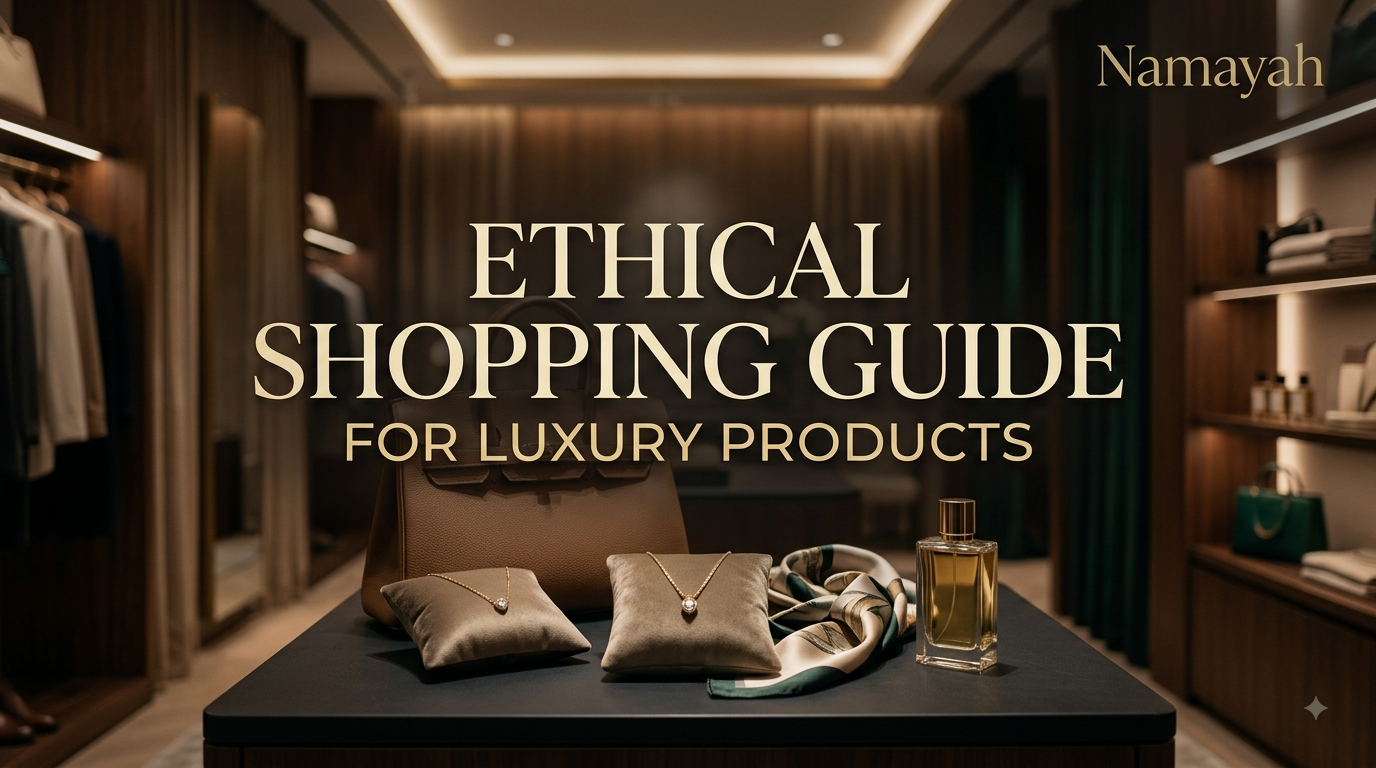
Luxury shopping is often associated with craftsmanship, quality, exclusivity, and long product life. But a high price tag does not automatically prove that a product was made under fair working conditions, sourced responsibly, or produced with a lower environmental impact.
An ethical shopping guide for luxury products should therefore look beyond branding and price. Before purchasing, consider the product’s supply chain, labor practices, materials, environmental impact, durability, repair options, and the quality of the company’s transparency.
The goal is not to find a completely impact-free product. Instead, ethical luxury shopping means making better-informed decisions and rewarding brands that can provide credible information about how their products are made.
What Is Ethical Luxury Shopping?
Ethical luxury shopping means considering the social, environmental, and business practices behind a premium product before buying it.
Depending on the product, this can include:
- Fair treatment and compensation of workers
- Responsible sourcing of raw materials
- Traceable supply chains
- Animal-welfare considerations
- Lower environmental impact
- Durable product design
- Repair and maintenance services
- Responsible packaging
- Resale and circularity options
- Transparent sustainability reporting
The exact priorities depend on what you are purchasing. A leather handbag, diamond ring, mechanical watch, and luxury skincare product have very different supply chains and potential impacts.
This is why shoppers should avoid judging ethical performance from one feature alone.
Why Luxury Prices Do Not Guarantee Ethical Practices
One of the biggest misconceptions about luxury shopping is that expensive products must automatically be more ethical.
Price can reflect craftsmanship, brand reputation, scarcity, design, marketing, retail costs, and many other factors. It does not by itself establish that workers received fair compensation or that raw materials were responsibly sourced.
Recent scrutiny of luxury supply chains has also demonstrated why consumers should look beyond the prestige of a brand name. In 2026, investigations into parts of Italy’s fashion supply chain highlighted alleged labor exploitation involving subcontractors connected to luxury production. The cases reinforced a broader point: supply chains can be complex, and brand reputation alone cannot provide complete visibility.
The OECD describes garment and footwear supply chains as highly fragmented and spread across multiple tiers, creating challenges around labor rights, human rights, environmental risks, and other issues.
The better question is not “Is this luxury?” but “What can the brand demonstrate about how this product was made?”
What to Check Before Buying a Luxury Product
Before purchasing an expensive item, use a simple five-part evaluation:
- Who made it?
- Where did the materials come from?
- Can the brand explain its supply chain?
- What evidence supports its ethical claims?
- Will the product remain useful for many years?
A brand does not need to claim perfection. In fact, detailed disclosure of risks, limitations, and improvement plans can be more useful than broad statements about being “green” or “responsible.”
Supply Chain Transparency
Transparency is one of the most useful indicators to investigate.
Look for information about:
- Manufacturing countries
- Major supplier locations
- Material origins
- Processing facilities
- Subcontractors
- Supplier standards
- Auditing or assessment processes
- Corrective-action procedures
The OECD recommends risk-based due diligence that helps companies identify, address, and account for negative impacts in their operations and supply chains.
For shoppers, this translates into a practical rule: prefer brands that explain their sourcing and production processes with specific information rather than relying only on marketing language.
Labor and Worker Rights
Ethical luxury should include the people who produce the item.
When researching a brand, look for evidence relating to:
- Worker health and safety
- Forced labor prevention
- Child labor prevention
- Freedom of association
- Working hours
- Wages
- Supplier monitoring
- Grievance mechanisms
The OECD identifies labor and human-rights concerns, including child labor, forced labor, and barriers to freedom of association, as relevant risks within garment and footwear supply chains.
A certification or audit can provide useful evidence, but it should not automatically be treated as proof that every ethical risk has been eliminated.
Materials and Sourcing
The material can significantly affect the ethical profile of a luxury product.
Depending on the category, investigate:
- Where raw materials originate
- Whether recycled materials are used
- Whether organic or regenerative materials are involved
- How leather is sourced
- Whether exotic animal materials are used
- How gemstones are sourced
- Whether metals contain recycled content
- Whether ingredients can be traced
Avoid assuming that one material is universally “ethical.” Every material involves trade-offs.
For example, natural materials may have agricultural or land-use impacts, while synthetic alternatives can involve fossil-based inputs and other environmental considerations.
The most useful question is therefore whether the brand understands and manages the relevant risks in its particular supply chain.
Environmental Impact
Ethical shopping is broader than choosing products labeled sustainable.
Consider:
- Material sourcing
- Manufacturing processes
- Energy use
- Water use
- Chemicals
- Waste
- Packaging
- Transportation
- Product durability
- Repairability
- End-of-life options
A durable product that can be repaired and used for many years may be a more sensible purchase than an item that is marketed as sustainable but has a short usable life.
Certifications and Standards: What Should You Look For?
Certifications can make sustainability claims easier to evaluate, but they should be understood in context.
The OECD notes that sustainability certifications can support corporate due diligence, while also emphasizing the importance of examining how certification schemes function and how well they align with responsible-business expectations.
When you see a certification, ask:
- What exactly does it certify?
- Does it cover the whole product or only one material?
- Who operates the standard?
- Is independent verification involved?
- Is the certification current?
- What requirements must suppliers meet?
- Does it address the issue you actually care about?
A certification should be treated as evidence about a defined criterion, not as a universal guarantee that an entire company is ethical.
How to Spot Greenwashing in Luxury Marketing
Greenwashing occurs when environmental or ethical messaging creates a more responsible impression than the available evidence supports.
Be cautious with vague phrases such as:
- “Eco-friendly”
- “Conscious”
- “Responsible”
- “Green”
- “Sustainable luxury”
- “Planet positive”
These phrases may have meaning, but they need supporting information.
A stronger claim usually explains what changed, where the change applies, and how it is measured or verified.
For example, “made with recycled material” tells you more than simply “sustainable product.” Even then, you should investigate what proportion of the product is recycled and whether the claim applies to the entire item or only one component.
A Quick Greenwashing Test
Before trusting an ethical claim, ask:
What is the specific claim?
What evidence supports it?
Who verified it?
What part of the supply chain does it cover?
What limitations does the brand disclose?
If you cannot find meaningful answers, treat the claim cautiously.
Should You Buy New, Vintage, or Pre-Owned Luxury?
Buying pre-owned luxury can be an alternative to purchasing newly manufactured goods, particularly when the item is durable and retains usefulness over time.
Options include:
- Vintage boutiques
- Established resale platforms
- Brand-operated resale or restoration programs
- Auction houses
- Trusted specialist dealers
However, ethical considerations do not disappear when purchasing second-hand. Buyers should still consider authenticity, condition, repairability, seller reputation, shipping, packaging, and the likelihood that the item will actually be used for years.
The most responsible purchase is often the one that satisfies a genuine need and remains useful for a long time.
How to Shop Ethically for Different Luxury Products
Luxury Fashion and Accessories
For clothing, handbags, shoes, and accessories, investigate:
- Fiber and material sourcing
- Manufacturing locations
- Supplier transparency
- Worker protections
- Leather and animal-material policies
- Repair services
- Product longevity
- Resale potential
A beautifully made item that can be repaired and worn repeatedly may offer more long-term value than a trend-driven purchase.
Luxury Jewelry and Watches
For jewelry, consider the origins of:
- Gold
- Silver
- Platinum
- Diamonds
- Colored gemstones
Ask whether the brand provides information about responsible sourcing and chain-of-custody practices.
For watches, durability and repairability are particularly relevant. Mechanical products that can be serviced and maintained may remain useful across generations.
Do not assume that a “conflict-free” or “responsibly sourced” statement covers every social and environmental issue. Find out exactly what the claim means.
Luxury Beauty Products
For skincare, fragrance, and cosmetics, look beyond premium packaging.
Consider:
- Ingredient sourcing
- Animal-testing policies where relevant
- Packaging materials
- Refillable formats
- Manufacturing transparency
- Product shelf life
- Overpackaging
A refill system may be worth considering when it genuinely reduces unnecessary packaging and the consumer will continue purchasing and using the product.
A Simple Ethical Luxury Shopping Checklist
Save this checklist before making your next luxury purchase:
Product
- Do I genuinely need or want this item?
- Is it durable enough for long-term use?
- Can it be repaired or maintained?
- Can I buy it pre-owned?
Brand
- Does the brand disclose meaningful supply-chain information?
- Does it discuss worker rights?
- Does it explain material sourcing?
- Are environmental claims specific?
- Does it acknowledge limitations or risks?
Evidence
- Are relevant certifications clearly identified?
- Can claims be independently verified?
- Does the evidence apply to this specific product?
After purchase
- Will I care for the product properly?
- Can I repair rather than replace it?
- Could I resell, donate, or otherwise extend its useful life?
You do not need every box checked to make a purchase. The checklist is designed to help you make a more informed decision.
How to Make Luxury Purchases More Responsible
Ethical shopping is not only about choosing the “right” brand. Consumer behavior also matters.
Buy Less, Buy Better
Avoid purchasing luxury items simply because they are discounted, limited, or trending.
Instead, prioritize products that fit your actual lifestyle.
Choose Longevity
Consider whether the product can remain attractive and functional beyond the current season.
Classic design, durable construction, replaceable components, and repair services can all support longer use.
Maintain What You Own
Cleaning, storage, servicing, repairs, and careful handling can extend a product’s useful life.
Consider Pre-Owned Options
A pre-owned item can give an existing product another period of use instead of creating immediate demand for a new replacement.
Research Before Paying
For expensive purchases, spending 15–30 minutes researching sourcing and company policies can be worthwhile.
The OECD’s approach to responsible supply chains emphasizes due diligence rather than assuming that a single feature can eliminate every risk.
FAQs About Ethical Shopping for Luxury Products
Is luxury shopping automatically ethical?
No. Luxury pricing and brand prestige do not automatically establish ethical labor practices, responsible sourcing, or environmental responsibility. Shoppers should evaluate evidence about the specific company and product.
What makes a luxury product ethical?
An ethical luxury product should be evaluated across factors such as worker treatment, sourcing, environmental impact, supply-chain transparency, durability, and responsible business practices.
Are sustainable luxury products always better?
Not necessarily. Sustainability claims need context. Compare materials, sourcing, manufacturing, durability, repairability, and evidence rather than relying on a single label.
How can I tell if a luxury brand is transparent?
Look for specific information about suppliers, manufacturing locations, materials, policies, due-diligence processes, goals, progress, and limitations. Vague marketing claims provide less useful evidence.
Are ethical luxury products more expensive?
They can be, but price alone does not demonstrate ethical performance. Costs can reflect craftsmanship, materials, labor, scarcity, branding, and many other factors.
Is buying second-hand luxury more ethical?
Buying pre-owned can extend the useful life of an existing product and avoid purchasing a newly manufactured item. However, buyers should still consider authenticity, condition, shipping, repairs, and how long they expect to use it.
Which certifications should luxury shoppers trust?
No single certification answers every ethical question. Evaluate what a certification covers, its criteria, verification process, and relevance to the product you are buying. The OECD specifically recommends considering how certification schemes support broader due-diligence processes.
What is the most important question to ask before buying luxury?
Ask: “Can this brand provide credible evidence about how this product was made?” Then investigate labor, materials, sourcing, environmental impact, and product longevity according to the category.
Conclusion
Ethical shopping for luxury products does not require finding a supposedly perfect brand or product. It requires looking beyond price, prestige, and attractive sustainability language.
Start with transparency. Investigate who makes the product, where its materials come from, what risks exist in the supply chain, and what evidence supports the company’s claims. Then consider durability, repairability, resale, and whether the purchase is something you will genuinely use for years.
The strongest approach is informed rather than absolute: buy thoughtfully, ask specific questions, value longevity, and give greater weight to credible evidence than to marketing language.