
Creating a Sophisticated Home with Statement Accessories
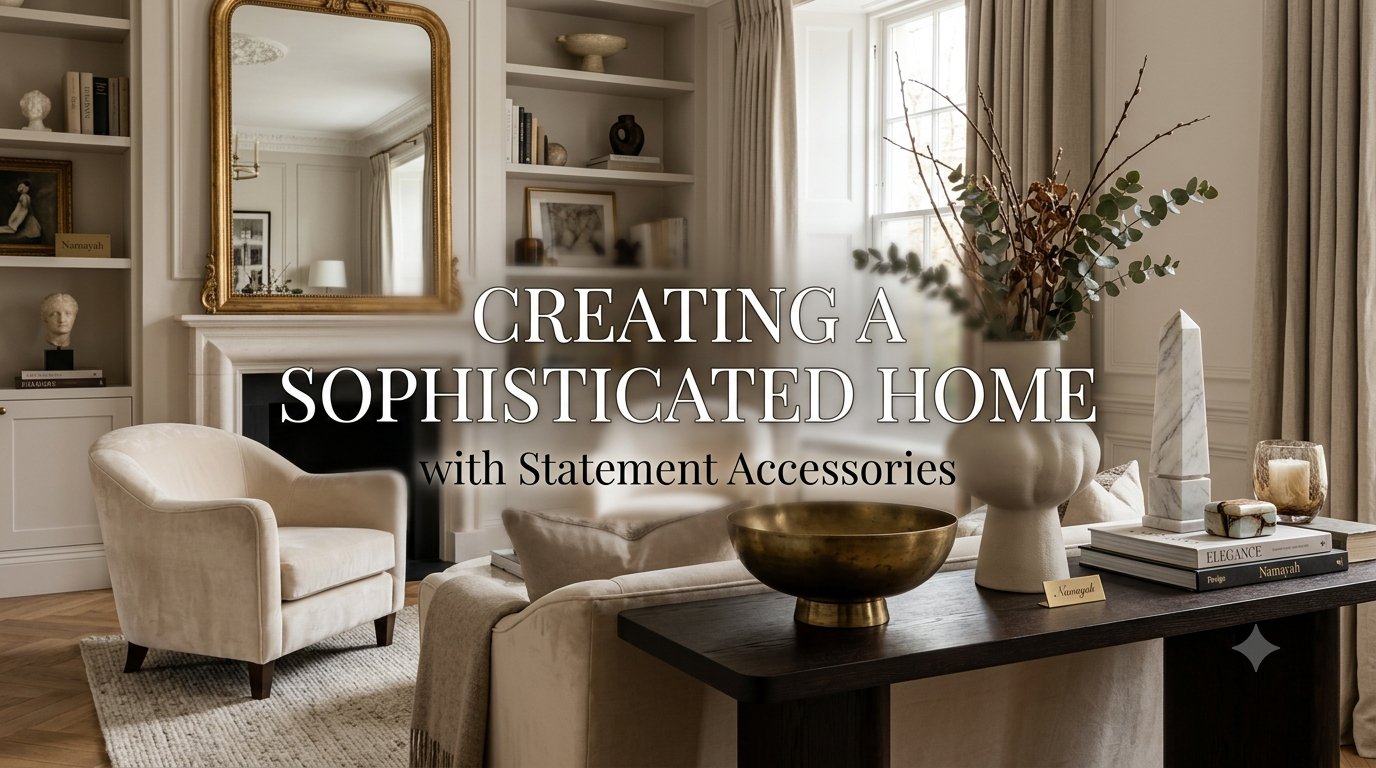
A sophisticated home does not need to be filled with expensive furniture or elaborate decoration. Often, the difference comes from a carefully selected collection of statement accessories that introduce personality, texture, scale, and visual interest.
The key is intentionality. Rather than filling every available surface, choose accessories that complement the architecture, colour palette, furniture, and atmosphere of the room. Sculptural objects, distinctive lighting, artwork, mirrors, decorative trays, textiles, and carefully selected ornaments can all become focal points when they are given enough space to stand out.
Current interior-design guidance consistently emphasises thoughtful selection, visual balance, scale, and restraint rather than simply accumulating decorative objects.
What Are Statement Accessories?
Statement accessories are decorative or functional pieces designed to attract attention and contribute strongly to a room’s visual identity.
They can include:
- Oversized vases
- Sculptures and artistic objects
- Decorative mirrors
- Statement lamps and chandeliers
- Bold cushions and throws
- Large-scale artwork
- Decorative trays and bowls
- Distinctive rugs
- Architectural candle holders
- Sculptural bookends
- Decorative objects made from stone, glass, metal, ceramic, or wood
A statement piece does not necessarily have to be large. An unusual shape, distinctive material, dramatic finish, or strong colour can make a relatively small accessory visually important.
The goal is not to make every item compete for attention. Instead, statement accessories should establish a hierarchy in which a few carefully chosen pieces lead the eye through the room.
Why Statement Accessories Transform a Room
Furniture establishes the basic structure of an interior, but accessories help give that structure personality.
A neutral sofa, for example, can feel completely different when styled with a sculptural coffee-table object, textured cushions, an interesting floor lamp, and carefully selected artwork. Accessories can also introduce elements that are difficult to achieve through furniture alone, such as small touches of colour, metallic contrast, tactile surfaces, and personal memories.
Interior-design sources commonly describe accessories as a finishing layer that can add character, warmth, texture, and visual focus.
The most sophisticated interiors tend to balance impact with restraint. One exceptional object can have more influence than a collection of unrelated decorations.
Start with a Clear Interior Style
Before buying statement accessories, establish the overall mood of your home.
You might want a:
- Contemporary and minimalist look
- Warm modern interior
- Classic and timeless atmosphere
- Eclectic, collected style
- Modern luxury aesthetic
- Traditional interior with contemporary accents
- Soft and understated neutral palette
Once the direction is clear, accessories become easier to select.
For example, a contemporary room might benefit from clean-lined sculptures, smoked glass, brushed metal, and abstract artwork. A classic room may work better with traditional ceramics, framed artwork, rich textiles, and decorative objects with heritage-inspired forms.
The objective is not to make everything identical. Cohesion can come from repeating a colour, material, finish, shape, or visual theme.
Choose One Strong Focal Point
One of the simplest ways to create sophistication is to decide what should command attention.
Your focal point might be:
- A large artwork
- An impressive chandelier
- An oversized mirror
- A sculptural vase
- A dramatic fireplace arrangement
- A distinctive console
- A large decorative object
Once you have chosen the focal point, allow the surrounding accessories to support it rather than compete with it.
This principle is particularly useful on consoles, coffee tables, sideboards, and open shelving. Design guidance on focal points similarly stresses deliberate placement and consideration of sightlines.
Use Sculptural Objects for Visual Interest
Sculptural accessories are especially effective when you want a room to feel sophisticated without relying heavily on colour.
Look for objects with:
- Interesting silhouettes
- Organic curves
- Strong geometric forms
- Handcrafted textures
- Matte or polished finishes
- Contrasting proportions
A sculptural object can sit alone on a console or be combined with books, a tray, or a smaller decorative item.
Avoid filling the space around it simply because there is room. Negative space gives an important object visual breathing room and helps prevent the arrangement from appearing cluttered.
Make Lighting Part of the Décor
Lighting should not be treated only as a practical necessity. A distinctive lamp can become an important decorative feature in its own right.
Consider:
- Sculptural table lamps
- Oversized floor lamps
- Decorative wall sconces
- Statement pendant lights
- Elegant chandeliers
- Portable accent lamps
Think about both the appearance of the fixture and the quality of light it produces. A beautiful object can lose its effect if the lighting around it creates harsh shadows or makes the room uncomfortable.
Layering different sources of light can help create a more welcoming atmosphere, while a distinctive fixture can provide an additional visual focal point.
Add Mirrors and Artwork with Intention
Artwork gives a sophisticated home a sense of identity. Instead of choosing pieces simply because they match the sofa, consider what you want them to contribute to the room.
A large artwork can establish colour and mood. A collection of smaller works can create rhythm. A sculptural wall piece can provide texture and dimension.
Mirrors offer another opportunity. A decorative mirror can act as both an accessory and an architectural feature. Consider its frame, shape, finish, and position rather than treating it simply as a reflective surface.
Place important pieces where they can be appreciated naturally rather than covering every wall.
Layer Textures for a Richer Look
Sophistication is not only visual. Texture plays an important role in making an interior feel considered and comfortable.
Combine materials such as:
- Linen
- Velvet
- Wool
- Ceramic
- Glass
- Marble
- Wood
- Metal
- Natural stone
- Woven fibres
For example, a smooth marble surface can be softened with linen textiles, while a polished metal accessory can be balanced with natural wood.
The contrast between surfaces creates depth without requiring excessive decoration.
Work with Colour and Contrast
Statement accessories can introduce colour without forcing you to repaint an entire room.
If your interior is primarily neutral, consider adding one or two accent colours through cushions, artwork, ceramics, flowers, or decorative objects.
For a more restrained effect, repeat the same accent colour in different materials. A deep green vase, green artwork detail, and green cushion can create visual continuity without making the room feel overly coordinated.
Metallic finishes can also add contrast. Gold, silver, bronze, and other metal finishes can contribute a decorative layer, but they should be selected in relation to the existing finishes in the room.
Style Each Room Differently
Living Room
The living room offers the most opportunities for statement accessories.
Consider combining:
- A large coffee-table book stack
- A sculptural object
- A distinctive vase
- Textured cushions
- An unusual floor lamp
- A statement rug
- Artwork or a decorative mirror
Keep the coffee table edited. A small group of carefully arranged objects usually looks more intentional than numerous unrelated pieces.
Bedroom
The bedroom should feel calmer than social spaces.
Use statement accessories selectively through:
- Bedside lamps
- Decorative cushions
- A textured throw
- Artwork
- A distinctive mirror
- A sculptural vase
Soft materials and warm lighting can help maintain a relaxing atmosphere.
Dining Room
The dining table is an obvious focal point.
Try a sculptural centrepiece, decorative bowl, candle holders, or a restrained floral arrangement. Choose objects that are visually interesting but do not interfere with conversation or everyday use.
Entryway
The entrance establishes the first impression of the home.
A console table can become a natural display area for a mirror, lamp, decorative tray, artwork, or sculptural object. Keep the arrangement relatively simple so the entry remains practical.
Home Office
A sophisticated office can combine function with personality.
Use attractive desk accessories, artwork, a distinctive lamp, books, and one or two objects that reflect your interests. Avoid excessive decoration around the working area.
Mix Materials for a Collected Feel
Using the same material throughout a room can make the interior feel flat. Mixing materials creates contrast and makes the space appear more layered.
For example:
Wood + ceramic + linen creates a warm, relaxed combination.
Marble + metal + glass can create a sharper contemporary effect.
Stone + wood + woven textiles produces a more organic atmosphere.
The goal is not to use every material available. Choose a small group that complements the furniture and architectural finishes already present.
Use Scale and Proportion Correctly
Scale is one of the most important factors when choosing statement accessories.
A tiny vase may disappear on a large sideboard, while an oversized object may overwhelm a narrow shelf.
Before purchasing an accessory, consider:
- The size of the furniture.
- The height of nearby objects.
- The available negative space.
- The viewing distance.
- The visual weight of surrounding pieces.
Try varying heights within a group rather than arranging everything at the same level. This creates movement and makes displays feel more natural.
Avoid the Problem of Overdecorating
Sophisticated styling requires editing.
One useful approach is to begin with your strongest accessory and then add supporting pieces gradually. If the arrangement starts feeling crowded, remove something rather than adding another object.
Design professionals quoted by The Spruce recommend editing decorative collections and making purchases intentionally to prevent overdecorating.
Ask yourself:
- Does this piece contribute something different?
- Does it complement the room’s colour palette?
- Is its scale appropriate?
- Does it have enough space around it?
- Would the room look better without it?
If you cannot answer why an object belongs in the room, it may not need to be there.
Create Sophistication on Different Budgets
A sophisticated home does not require every accessory to be expensive.
Focus your budget on pieces that have the greatest visual impact. One distinctive lamp or artwork can sometimes transform a room more effectively than many inexpensive decorations.
You can also create interest by:
- Reframing existing artwork
- Rearranging books
- Restyling shelves
- Changing cushion covers
- Adding plants or fresh flowers
- Repositioning mirrors
- Grouping existing objects differently
- Introducing one new focal accessory
The principle is selection rather than accumulation. Recent design guidance also emphasises choosing fewer, higher-impact pieces and giving them enough space to be appreciated.
A Simple Styling Process to Follow
Use this five-step process when refreshing a room.
Step 1: Remove unnecessary décor
Clear the main surfaces so you can see the room objectively.
Step 2: Identify the focal point
Choose the feature or accessory that should attract the most attention.
Step 3: Establish your palette
Select two or three supporting colours or finishes that connect the accessories to the existing interior.
Step 4: Add texture and contrast
Introduce materials and shapes that create depth without overwhelming the room.
Step 5: Edit the final arrangement
Stand back and assess the room from different viewpoints. Remove anything that feels repetitive, crowded, or disconnected.
This process helps create an interior that feels curated rather than simply decorated.
FAQs
What are the best statement accessories for a sophisticated home?
Sculptural vases, distinctive lighting, large artwork, decorative mirrors, elegant trays, textured cushions, statement rugs, and carefully selected sculptures are strong choices. The best option depends on the room’s existing style, scale, colours, and furniture.
How many statement accessories should a room have?
There is no universal number. Start with one main focal piece and add a limited number of supporting accessories. The objective is visual hierarchy rather than filling every surface.
How do I make my home look sophisticated without spending a lot?
Prioritise a few high-impact changes. Rearranging existing décor, improving lighting, adding textiles, editing clutter, and introducing one distinctive accessory can make a noticeable difference without replacing major furniture.
Should statement accessories match my furniture?
They do not need to match exactly. Complementary colours, materials, shapes, and finishes can create cohesion while subtle contrast keeps the interior interesting.
Can neutral interiors use statement accessories?
Yes. Neutral rooms can provide an excellent backdrop for sculptural objects, artwork, textured textiles, distinctive lighting, and carefully chosen colour accents.
What materials work well for sophisticated home accessories?
Wood, stone, marble, ceramic, glass, metal, linen, velvet, and wool can all contribute to a refined interior. Combining different textures usually creates more depth than relying on one material throughout.
How can I avoid making my home look cluttered?
Give important pieces enough negative space, limit competing focal points, and edit accessories regularly. A deliberate arrangement of fewer objects can create more impact than a crowded display.
Are statement accessories suitable for small homes?
Yes. In smaller rooms, focus on scale and function. A single distinctive mirror, lamp, artwork, or sculptural object can provide personality without consuming much floor space.
Where should statement accessories be placed?
Good locations include coffee tables, consoles, sideboards, shelves, entryways, bedside tables, dining tables, and empty wall areas. Choose positions where the object can be seen clearly without obstructing everyday activities.
Can traditional and modern accessories be mixed?
Yes. Mixing traditional and contemporary elements can create a collected and personal interior. Repeating a colour, material, or finish can help connect pieces from different styles.
Conclusion
Creating a sophisticated home with statement accessories is ultimately about intentional selection, balance, and personality. The most successful interiors do not depend on having the largest collection of décor. They use a few distinctive pieces to establish focal points, introduce texture, create contrast, and express the homeowner’s taste.
Start with your existing furniture and architectural features. Define the atmosphere you want, choose one or two strong focal points, and build around them with complementary accessories. Pay particular attention to scale, proportion, lighting, colour, and negative space.
Most importantly, give each meaningful piece room to be appreciated. When accessories are chosen with purpose rather than accumulated without direction, even a simple home can feel polished, distinctive, and sophisticated.