
Copper vs Brass Utensils: Choosing the Best for Your Kitchen
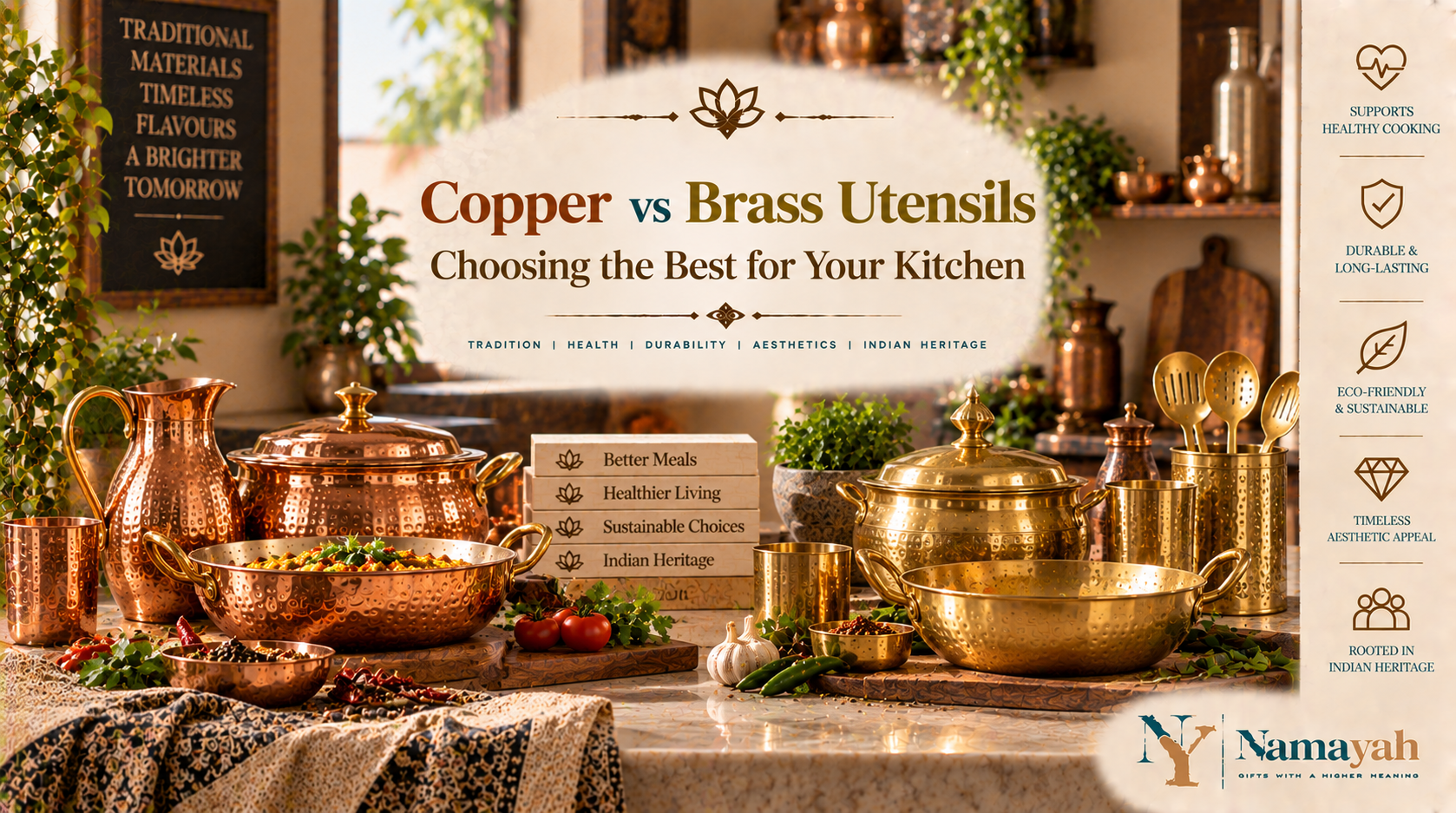
Understanding the Distinctive Appeal of Artisan Metals
When you begin curating a luxury kitchen, the choice between materials often defines both the aesthetic and the functional character of your culinary space. If you are comparing copper vs brass utensils, you are essentially choosing between two distinct legacies of craftsmanship. While both metals offer a warm, golden-hued elegance that elevates any countertop, they possess unique chemical properties, maintenance requirements, and historical uses that impact how they perform in your home. At Namayah, we believe in blending heritage with modern luxury, and understanding these metals is the first step toward a more intentional home.
Related: handcrafted copper home decor
The Fundamental Difference Between Copper and Brass
To understand the difference between copper and brass, one must look at their composition. Copper is a pure chemical element, renowned for its incredible thermal conductivity and its naturally antimicrobial surface. It is a soft, malleable metal that develops a deep patina over time, which many collectors prize for its rustic, authentic look. Brass, on the other hand, is an alloy—a marriage of copper and zinc. This combination makes brass significantly harder and more durable than pure copper. While copper is the quintessential material for high-performance cookware, brass is frequently favored for decorative hardware, handles, and accessories where structural rigidity is paramount.
The Performance of Copper in the Culinary World
When discussing the best metal for kitchenware, copper stands in a class of its own. Its ability to conduct heat is unparalleled, making it the preferred choice for professional chefs who require precise temperature control. Because copper responds almost instantly to changes in heat, it prevents hot spots and ensures even cooking, which is vital for delicate sauces and sugar work. Beyond its thermal properties, the health benefits of copper utensils have been documented for centuries. Ayurvedic traditions have long advocated for storing water and food in copper vessels, noting its natural ability to neutralize bacteria and provide trace minerals that support human wellness. For more insights on maintaining these pieces, you can explore our guide on copper maintenance.
Why Chefs Prefer Copper Cookware
Copper cookware is an investment in culinary excellence. Unlike stainless steel or aluminum, which can be slow to heat up or cool down, copper provides a dynamic cooking experience. However, because pure copper can react with acidic foods, high-quality copper cookware is almost always lined with a thin layer of tin or stainless steel. This lining protects the integrity of the food while allowing the chef to harness the incredible heat-transfer capabilities of the copper core. When selecting pieces for your kitchen, look for heavy-gauge copper that provides the weight and thickness necessary for consistent performance over a lifetime of use.
Brass: The Elegance of an Alloy
While copper dominates the stovetop, brass shines in the pantry and on the dining table. Brass is an incredibly versatile alloy that offers a bright, golden shimmer that is often more stable than the reddish-orange tone of copper. Because it is harder, brass is ideal for items that require intricate detailing or structural strength, such as serving spoons, decorative trays, and storage canisters. When considering copper vs brass home decor, keep in mind that brass tends to hold its polish slightly longer than copper, making it a lower-maintenance choice for decorative elements that are not used for active cooking.
Incorporating Brass into Your Luxury Decor
Brass brings a sense of timeless sophistication to home interiors. Its gold-like luster complements both modern minimalist designs and traditional, ornate settings. We often recommend using brass for kitchen hardware, such as cabinet pulls or decorative wall-mounted racks, where its durability ensures that it will remain beautiful despite frequent handling. To keep your brass pieces looking their best, it is important to follow specific care routines to prevent oxidation, which is detailed in our article on preventing tarnishing on metals.
Navigating the Health and Safety Considerations
It is essential to distinguish between the roles of these metals. Copper is biologically active; it interacts with its environment and the food it touches. This is why the health benefits of copper utensils are so frequently discussed. According to the International Copper Association, copper is an essential nutrient for the human body, playing a key role in iron absorption and immune system support. However, this reactivity means that unlined copper should never be used for highly acidic ingredients, as it can impart a metallic taste or, in extreme cases, reach levels of intake that are not recommended. Brass, being an alloy of zinc and copper, is generally not used for direct contact with food at high heat for the same reasons.
Selecting the Right Metal for Your Needs
When you are deciding between copper and brass, consider the intended use. If your priority is thermal performance and culinary precision, copper is the clear winner. If your priority is decorative beauty, structural endurance, or an item that will stay out on display without constant maintenance, brass is often the more practical choice. Many homeowners choose to create a balance, utilizing copper pots for their active cooking and incorporating brass accents throughout their kitchen architecture to create a cohesive, artisanal look.
Maintenance and Long-Term Care
Both copper and brass are living materials, meaning they will react to oxygen and humidity by developing a patina. While some enthusiasts love the darkened, aged look of a well-worn copper pan, others prefer the brilliant shine of a newly polished surface. Regardless of which you choose, the key to longevity is consistent care. Avoid harsh chemical cleaners that can strip the metal of its natural character. Instead, opt for gentle, artisanal methods that respect the history of the piece. As noted by the Smithsonian Institution regarding the care of metal artifacts, simple cleaning with non-abrasive materials is often the best way to prevent damage and preserve the surface finish for future generations.
Conclusion: A Timeless Addition to Your Home
Choosing between copper vs brass utensils is not about finding which one is superior, but rather understanding which one serves your lifestyle. Copper offers the unmatched thermal precision and historical health benefits that make it a cornerstone of the professional kitchen, while brass provides the durable, golden aesthetic that defines luxury home decor. By understanding the unique qualities of these artisan metals, you can make an informed decision that enhances both the function and the beauty of your living space. We invite you to reach out to our team if you have further questions about selecting the perfect pieces for your heritage-inspired home.