
Buying Guide for Handmade Wooden Décor
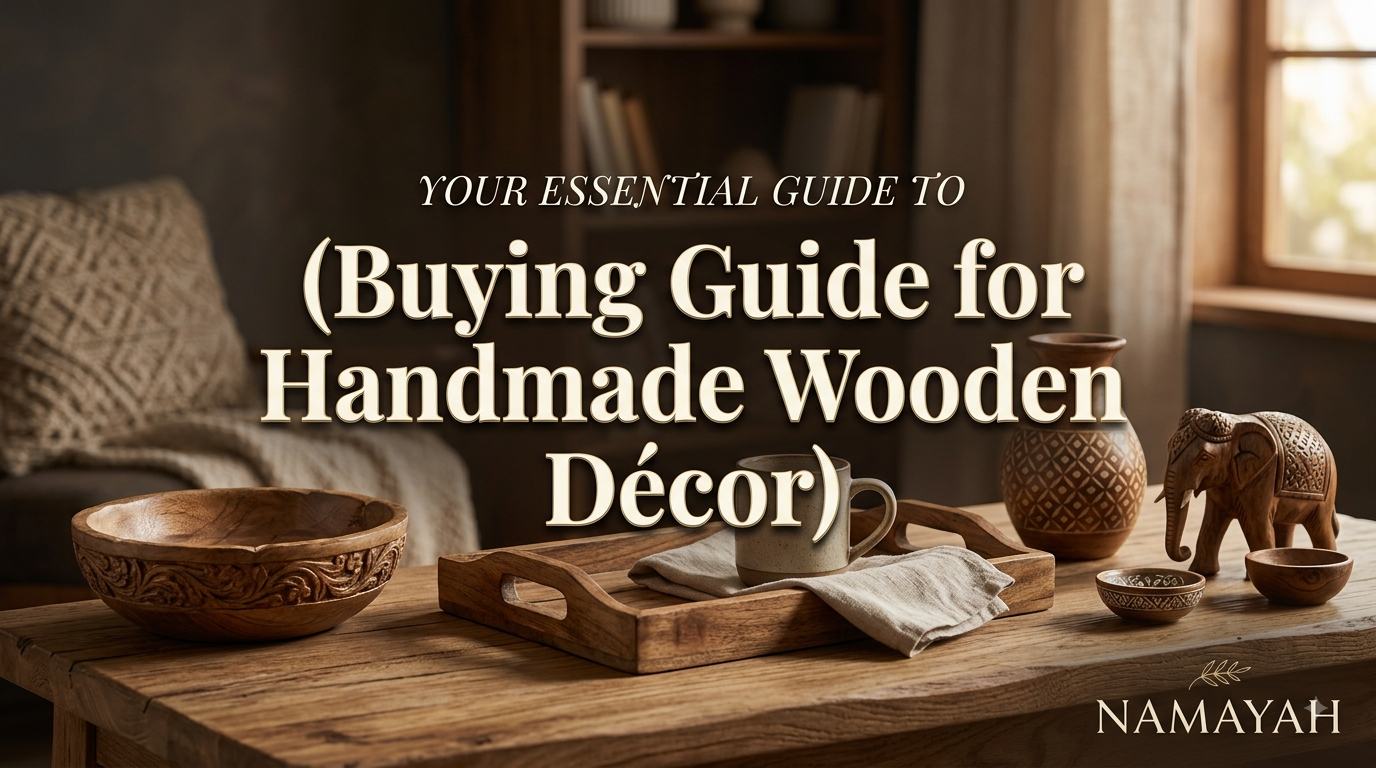
Handmade wooden décor includes decorative objects, wall art, shelves, signs, sculptures, trays, frames, organizers, and other home accessories made primarily from wood through individual or small-scale craftsmanship.
Unlike standardized factory-made products, handmade pieces can show variations in grain, color, texture, dimensions, and finish. These differences are not automatically defects. In many cases, they are part of the character that makes a handmade item distinctive.
When shopping, however, “handmade” should not be your only quality criterion. The type of wood, construction, finish, dimensions, intended use, and reputation of the seller all matter.
Why Choose Handmade Wooden Décor?
Handmade wooden décor can bring warmth and natural texture to an interior. Wood can work with many design approaches, from rustic and traditional rooms to minimalist, contemporary, and Scandinavian-inspired spaces.
Other potential advantages include:
- Individual character: Natural grain and handcrafted details can make pieces visually distinctive.
- Material variety: Different woods provide different colors, textures, grain patterns, and levels of hardness.
- Design flexibility: Handmade sellers may offer unusual shapes, personalized designs, or custom dimensions.
- Craftsmanship: Well-made pieces can have carefully finished edges, joints, surfaces, and decorative details.
- Timeless appeal: Natural wood can complement changing interiors when the design is relatively versatile.
The important distinction is between handmade appearance and genuine quality. A handcrafted item can still have poor construction, while a well-designed manufactured product can be durable and attractive.
Types of Handmade Wooden Décor
Before buying, identify what role the piece needs to play in your space.
Wall Décor
Wooden wall panels, signs, carved artwork, geometric designs, and decorative plaques can create a focal point without taking up floor or table space.
Check the mounting system, dimensions, weight, and whether the product is designed for the wall type where you intend to install it.
Wooden Sculptures and Figurines
These pieces are primarily decorative and can add visual interest to shelves, consoles, sideboards, or display cabinets.
Look closely at carving details, stability, surface finishing, and the overall proportions of the piece.
Decorative Trays and Bowls
Wooden trays and bowls can combine decoration with practical use. If the product will come into contact with food, verify that the seller specifically states that the finish and construction are appropriate for food use.
Shelves and Display Pieces
Wooden shelves can provide both storage and decoration. For functional pieces, construction and load capacity become more important than appearance alone.
Frames and Mirrors
Wooden frames can introduce natural texture around artwork or mirrors. Consider the frame width, wood tone, mounting hardware, and relationship to nearby furniture.
How to Choose the Right Wood
The wood species can significantly influence appearance, durability, weight, and price.
Common options include hardwoods such as oak, maple, walnut, and teak, as well as softwoods such as pine and cedar. Engineered wood products may also be used in some decorative items.
Rather than choosing a wood solely because it sounds premium, consider:
- Appearance: Does the grain and color suit your room?
- Durability: Will the item experience frequent handling?
- Weight: Is the wall, shelf, or furniture surface suitable for it?
- Moisture exposure: Will it be placed in a kitchen, bathroom, or other humid area?
- Maintenance: Does the finish require particular care?
- Budget: Does the material justify the item’s intended use?
Ask the seller what wood was used if the listing does not clearly identify it.
Check the Quality of Craftsmanship
Good craftsmanship should be visible in the details.
Look for:
- Smooth or intentionally textured surfaces
- Cleanly finished edges
- Secure joints
- Stable construction
- Consistent finishing where consistency is expected
- Appropriate mounting hardware
- No unexplained cracks, loose components, or structural damage
- Product photos that show multiple angles
Natural imperfections such as variations in grain and small differences between handmade pieces may be normal. Structural problems are different and should not be dismissed simply because an item is handmade.
If buying online, read the product description carefully and look for clear photographs rather than relying only on styled room images.
Consider Your Home’s Interior Style
The best handmade wooden décor should complement the surrounding space rather than compete with everything else in the room.
Rustic Interiors
Consider visibly natural grain, distressed finishes, carved details, and warmer wood tones.
Minimalist Interiors
Look for simple silhouettes, restrained decoration, and clean finishes.
Traditional Interiors
Decorative carving, framed artwork, classic shapes, and darker wood tones may work well.
Modern Interiors
Geometric forms, unusual silhouettes, contrasting finishes, and sculptural pieces can provide visual interest.
If you are uncertain, choose a piece that repeats an existing element in the room, such as the tone of a coffee table, flooring, cabinet, or picture frame.
Choose the Right Size and Proportion
A beautiful piece can look out of place if its dimensions are wrong.
Before purchasing, measure the intended location. Record:
- Available width
- Available height
- Available depth
- Distance from surrounding objects
- Mounting space
- Clearance around doors, windows, and walkways
For wall décor, consider the size of the wall and the furniture beneath it. A small decorative item may disappear on a large empty wall, while an oversized piece can overwhelm a compact room.
Look at the Finish and Details
The finish affects both appearance and maintenance.
Common finishes may include oils, waxes, stains, paints, varnishes, and other protective coatings. Each creates a different appearance and may have different care requirements.
Ask:
- Is the finish matte, satin, or glossy?
- Does it change the natural color of the wood?
- Is the surface sealed?
- How should it be cleaned?
- Is it suitable for the intended environment?
- Will the finish need periodic maintenance?
For handmade products, color variation can occur because wood absorbs finishes differently. If exact color matching is important, request additional product photos or ask the seller about natural variation.
Handmade vs. Mass-Produced Wooden Décor
| Factor | Handmade Décor | Mass-Produced Décor |
| Design | Often distinctive or customizable | Usually standardized |
| Variation | Natural and handcrafted variations are common | Generally more uniform |
| Production | Often small-batch or individual | Usually large-scale |
| Customization | May be available | Often limited |
| Price | Can vary considerably | Often easier to compare |
| Craftsmanship | Depends heavily on maker | Depends on manufacturer and product line |
| Availability | May be limited | Usually more consistent |
Handmade does not automatically mean better. The right choice depends on your priorities, budget, design preferences, and intended use.
How Much Should Handmade Wooden Décor Cost?
There is no single correct price for handmade wooden décor.
Cost can depend on:
- Type and quantity of wood
- Size and weight
- Design complexity
- Carving or other decorative work
- Construction method
- Finish
- Customization
- Maker’s labor
- Packaging and shipping
- Seller or marketplace fees
Instead of judging value from price alone, compare the materials, dimensions, craftsmanship, finish, customization, and seller information.
A very low price may be attractive, but make sure the product description accurately explains what you are receiving.
Where to Buy Handmade Wooden Décor
You can find handmade wooden décor through independent makers, craft marketplaces, local artisan shops, furniture and décor stores, exhibitions, and online retailers.
Before ordering, evaluate the seller rather than focusing only on the product photograph.
Check whether the listing provides:
- Exact dimensions
- Material information
- Finish details
- Care instructions
- Clear product photographs
- Production or processing information
- Shipping details
- Return or exchange terms
- Contact information
Customer reviews can provide useful context, but focus on reviews that discuss the product’s actual quality, dimensions, finish, packaging, and durability rather than relying only on star ratings.
How to Care for Wooden Décor
Proper care depends on the type of wood and finish, so follow the maker’s instructions whenever available.
General practices include:
- Dust surfaces regularly with a soft, dry cloth.
- Avoid excessive moisture unless the item is specifically designed for it.
- Keep decorative wood away from unsuitable heat sources.
- Protect pieces from prolonged environmental conditions that may damage the material or finish.
- Use only cleaning products recommended for the particular finish.
- Inspect functional or mounted pieces periodically for loose hardware or other problems.
Avoid treating every wooden item in exactly the same way. A finished decorative object may have very different care requirements from an unfinished carved piece.
Common Buying Mistakes to Avoid
Ignoring Dimensions
Always measure the intended space before ordering.
Choosing Based Only on Photos
Lifestyle photographs can make products appear larger or smaller than they really are. Check the listed dimensions.
Assuming All Wood Is the Same
Species, construction, moisture content, grain, and finish can all affect the final product.
Overlooking Mounting Requirements
A wall decoration is only useful if it can be securely installed in the intended location.
Focusing Only on Price
A cheaper item is not necessarily better value. Compare materials, craftsmanship, construction, and expected use.
Ignoring Care Requirements
Make sure you understand how the piece should be cleaned and maintained before purchasing.
Treating Every Natural Imperfection as a Defect
Small variations in grain and color can be inherent to natural wood and handmade production. Distinguish those characteristics from genuine structural or finishing problems.
FAQs About Handmade Wooden Décor
Is handmade wooden décor worth buying?
It can be worthwhile if you value distinctive design, craftsmanship, natural materials, or customization. Evaluate the specific item’s construction, material, finish, dimensions, and price rather than assuming every handmade product offers the same quality.
How can I tell if wooden décor is good quality?
Look for clear material information, solid construction, carefully finished surfaces, secure joints, appropriate hardware, and detailed product photographs. Ask the maker questions if important information is missing.
What type of wood is best for decorative items?
There is no universal best wood. The right choice depends on appearance, intended use, durability, environment, maintenance requirements, and budget.
How do I choose wooden décor for a small room?
Choose pieces that fit the available space without blocking movement or visually overwhelming the room. Wall-mounted or compact decorative pieces can be useful when floor and surface space are limited.
Can handmade wooden décor be customized?
Some makers offer customization such as dimensions, finishes, colors, engravings, or designs. Confirm customization options, additional costs, production time, and return conditions before ordering.
How should I clean handmade wooden décor?
Follow the maker’s care instructions first. In general, gentle dusting with a soft cloth is appropriate for many finished wooden decorative pieces, while excessive moisture and unsuitable cleaning chemicals can damage some finishes.
Is natural variation normal in handmade wood products?
Yes. Natural wood can vary in grain, color, knots, and texture, and handmade production can introduce additional small differences. Check the seller’s description to understand which variations are expected.
What should I ask a seller before buying?
Ask about the wood species, dimensions, finish, care instructions, mounting requirements, customization, production time, and return policy. For an expensive item, you can also request additional photographs or material details.
Conclusion
Buying handmade wooden décor is about balancing design, craftsmanship, materials, size, function, maintenance, and value. Start by deciding what you want the piece to accomplish in your space, then evaluate the wood, construction, finish, dimensions, and seller information.
Most importantly, do not rely on the word “handmade” alone. A thoughtful comparison of the product’s actual characteristics will help you choose a piece that fits your home and your expectations.