
Brass Accessories That Can Transform a Dining Table
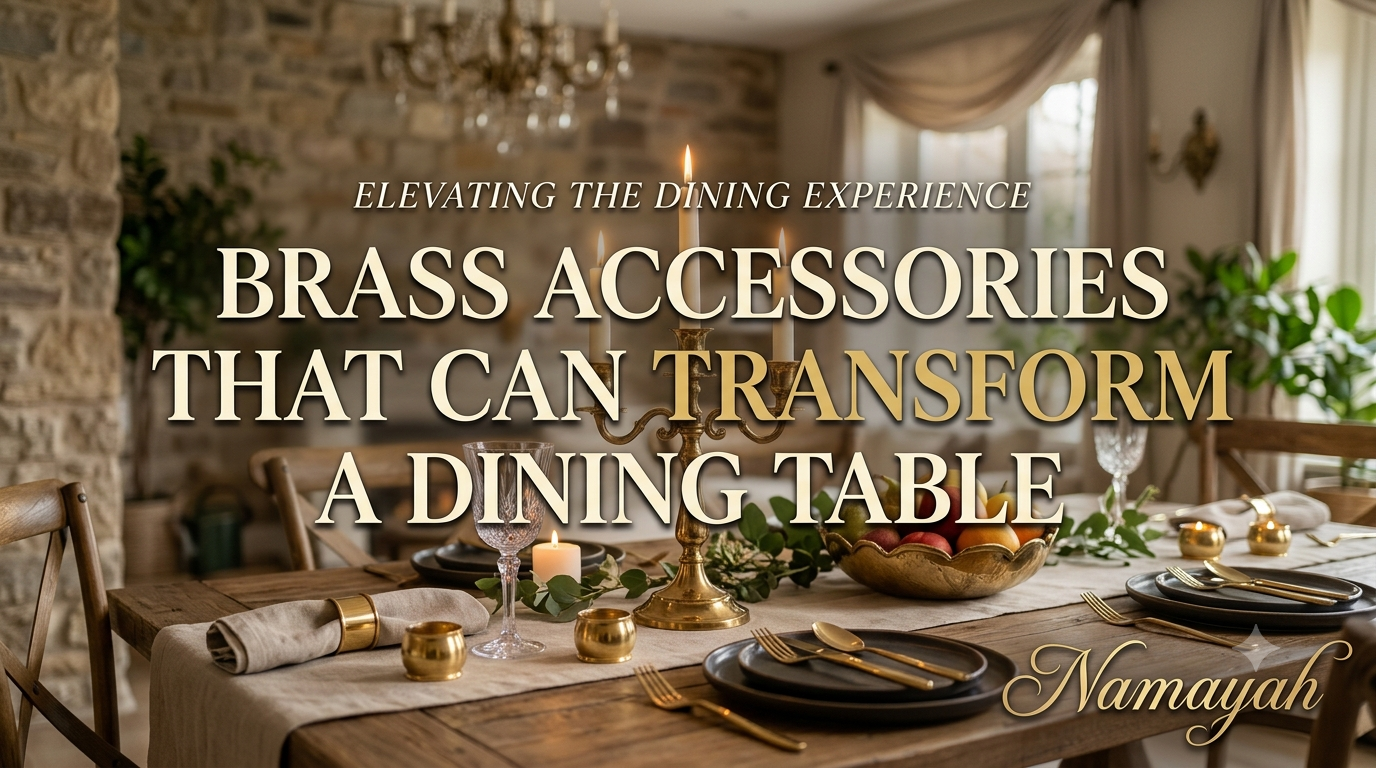
A dining table does not need an elaborate makeover to look more elegant. Sometimes, a few carefully chosen brass accessories are enough to introduce warmth, texture, and a refined focal point. Brass candle holders, trays, bowls, vases, and decorative objects can work with both traditional and contemporary dining spaces.
The key is balance. Rather than covering the entire table with metallic décor, use brass selectively and combine it with materials such as wood, linen, glass, ceramic, stone, or fresh greenery. Current interior design coverage also points toward warmer metals, tactile materials, and more curated dining spaces rather than overly matched or cluttered arrangements.
Why Brass Works So Well on a Dining Table
Brass has a warm metallic appearance that can make a dining setting feel more polished without requiring a complete change to the room.
It can also bridge different décor styles. A simple brass object can suit a contemporary table, while an engraved or antique-finish piece can complement a more traditional interior. In Indian homes, brass also has a strong connection with traditional craftsmanship and decorative objects, making it particularly versatile for heritage-inspired and modern interiors alike.
Another advantage is that brass can be both decorative and functional. A brass tray can organize a centerpiece, a bowl can hold flowers or fruit, and candle holders can contribute both visual interest and evening ambience.
Brass Candle Holders for Warm Ambience
Brass candle holders are one of the easiest ways to introduce metallic detail to a dining table.
A pair of simple taper holders can create symmetry at a formal dinner, while a group of holders in different heights can produce a more relaxed centerpiece. Candle holders are also useful because their appearance changes when candles are lit, adding movement and warmth to the table.
For a modern look, choose clean-lined holders with a simple finish. For a traditional setting, consider more detailed or antique-style designs.
Styling tip: Keep candle holders low enough that guests can comfortably see across the table. For everyday meals, two or three well-spaced pieces can be more effective than a large collection.
Brass Trays for an Organized Centerpiece
A brass tray can act as the foundation of your dining-table arrangement.
Instead of placing several objects directly on the table, group them on a single tray. This creates a visual boundary and makes the arrangement easier to move when the table is needed for serving.
Try combining:
- A brass or neutral-toned candle holder
- A small ceramic vase
- A bowl of seasonal fruit
- A few decorative objects
- Fresh greenery
A tray can also transition between everyday and entertaining use. Some décor specialists emphasize this kind of multifunctionality, where one decorative piece can serve different purposes around the home.
Brass Bowls and Urli Bowls
A brass bowl can become a simple centerpiece without making the dining table feel overly decorated.
For an Indian-inspired dining room, a brass urli bowl filled with water and floating flowers can create a traditional focal point. Flowers, petals, or floating candles can be changed according to the season or occasion.
For a contemporary table, choose a simpler bowl with a clean silhouette and use it to hold fruit, decorative stones, or greenery.
The advantage of a bowl is flexibility. It can remain empty as a sculptural object or become part of a more elaborate centerpiece when guests arrive.
Brass Vases for Flowers and Greenery
Flowers soften the reflective quality of brass and create a pleasing contrast between natural and metallic textures.
A brass vase can hold:
- Fresh seasonal flowers
- Dried grasses
- Eucalyptus or leafy branches
- Artificial stems
- A simple green arrangement
If the table already contains several metallic objects, use a restrained floral arrangement rather than adding another highly decorative piece.
For a rustic or contemporary dining room, brass paired with natural greenery and wood can create an organic appearance. Brass and natural materials are also frequently used together in contemporary table styling.
Brass Serving Accessories
Brass does not have to be limited to objects that simply sit on the table.
Depending on the design and intended use of the product, brass serving accessories can bring decorative character to the dining experience. Consider brass trays, bowls, platters, or smaller serving pieces that complement the rest of the setting.
The important distinction is between decorative brass and products specifically designed for food contact. Always follow the manufacturer’s care and food-use instructions rather than assuming that every brass decorative item is suitable for serving food.
A well-designed serving piece can remain visible on the table after the meal, giving it a dual decorative and practical role.
Brass Sculptures and Decorative Objects
If you prefer a minimalist table, one sculptural brass object may be all you need.
Look for pieces with an interesting silhouette rather than simply choosing the largest available accessory. A small abstract sculpture, traditional handcrafted object, or geometric accent can become a visual focal point.
This approach works particularly well when the dining table itself has a strong material character, such as solid wood or stone.
The current movement toward more personalized interiors also favors objects that look collected and meaningful rather than rooms filled with identical decorative sets.
How to Mix Brass With Other Materials
The most attractive brass dining tables rarely rely on brass alone.
Mixing materials prevents the metallic finish from becoming visually overwhelming.
Brass and Wood
Wood adds warmth and natural texture. A brass tray or candle holder can stand out beautifully against a wooden dining table.
Brass and Linen
Linen napkins, tablecloths, or placemats soften the shine of brass and introduce a relaxed quality.
Brass and Glass
Glass creates a lighter, more reflective arrangement. Try a brass candle holder beside a transparent vase.
Brass and Ceramic
Matte ceramics provide contrast against the metallic surface. Neutral white, cream, earthy, or muted ceramic pieces are particularly easy to combine.
Brass and Stone
Marble and other stone surfaces can give brass a more luxurious appearance, while natural stone introduces variation in texture.
The broader design trend toward combining contrasting materials is useful here: reflective finishes can be balanced by tactile and organic surfaces.
How to Style a Brass Dining Table Without Overdoing It
The easiest way to make brass décor look intentional is to give every piece a purpose.
Start with one hero accessory. This could be a brass tray, large bowl, vase, or centerpiece.
Then add one or two supporting pieces at different heights.
For example:
- Place a brass tray in the center.
- Add a low bowl or vase.
- Introduce one taller candle holder or floral arrangement.
- Add a natural element such as greenery.
- Leave enough empty table surface for plates, glasses, and serving dishes.
Avoid making every object metallic. A dining table should remain practical, particularly if it is used every day.
Brass Styling Ideas for Different Dining Styles
Modern Dining Room
Choose smooth brass finishes, geometric candle holders, and simple glass or ceramic pieces.
Keep the arrangement restrained and allow the shape of each object to do the visual work.
Traditional Dining Room
Consider engraved brass bowls, classic candle holders, decorative trays, or handcrafted pieces.
Pair them with wood, rich textiles, and traditional tableware for a layered look.
Minimalist Dining Room
Use one or two brass accessories instead of a full centerpiece. A single sculptural vase or understated candle holder can introduce warmth without compromising the clean aesthetic.
Indian-Inspired Dining Room
Brass works naturally with traditional elements such as an urli bowl, diyas, handcrafted trays, flowers, and earthy textiles. Contemporary Indian décor increasingly combines traditional craft materials with simpler modern styling.
Rustic Dining Room
Combine aged or muted brass with natural wood, linen, ceramics, and greenery. Avoid highly polished pieces if you want a relaxed, lived-in appearance.
Everyday vs. Festive Brass Table Styling
Your dining table does not need to look the same every day.
For everyday use, keep the arrangement simple. A tray with a small vase and one candle holder may be enough.
For a dinner party, introduce additional layers such as:
- Brass candle holders
- Fresh flowers
- Decorative napkin rings
- A larger serving tray
- Seasonal greenery
- Coordinated tableware
For festive occasions, brass can also connect the table to traditional decorative elements. In Indian-inspired settings, brass bowls, diyas, flowers, and warm candlelight can create a celebratory atmosphere.
How to Choose the Right Brass Finish
Not every brass accessory has the same appearance.
Polished Brass
Bright and reflective, polished brass works well when you want a more glamorous appearance.
Antique Brass
Aged finishes can introduce depth and character, particularly in traditional, vintage, or eclectic interiors.
Brushed or Satin Brass
These finishes tend to appear more understated and can work well in contemporary dining rooms.
Mixed Finishes
You do not necessarily need every brass accessory to have an identical finish. However, combining too many different metallic treatments can make the table look unplanned.
Choose one dominant finish and let other materials provide the contrast.
How to Care for Brass Accessories
Brass can change in appearance over time, depending on the finish, environment, handling, and care method.
Always check the manufacturer’s cleaning instructions first. Some decorative pieces are deliberately sold with an aged or patinated finish, so aggressive polishing may alter the intended appearance.
For general maintenance, keep pieces free from dust and moisture and use only cleaning methods appropriate for the specific product.
If an accessory is lacquered, plated, coated, or combined with another material, its care requirements may differ from untreated brass.
Common Brass Table Styling Mistakes
Using Too Many Brass Pieces
A table covered in brass can lose visual contrast. Start with one focal piece and build around it.
Choosing Accessories That Are Too Tall
Very tall centerpieces can interfere with conversation. Consider the sightline between people seated opposite one another.
Ignoring Function
A beautiful arrangement is not useful if there is no room for plates, serving dishes, or glasses.
Mixing Too Many Styles
An ornate traditional bowl beside several futuristic geometric objects may look disconnected. Choose a coherent visual direction.
Matching Everything
A coordinated dining room does not require every accessory to come from the same collection. Mixing textures and materials can make the room feel more personal.
Forgetting the Rest of the Room
The dining table should relate to nearby lighting, chairs, artwork, flooring, and storage. Repeat brass subtly elsewhere if you want a stronger visual connection.
Frequently Asked Questions
What are the best brass accessories for a dining table?
Brass candle holders, trays, bowls, vases, serving accessories, and small sculptural objects are versatile choices. Start with one focal accessory and add complementary pieces rather than decorating the entire table.
How do I make a brass dining table look modern?
Choose simple silhouettes, restrained finishes, and fewer objects. Combine brass with glass, matte ceramics, natural wood, or neutral linen to create contrast.
Can brass accessories work with a wooden dining table?
Yes. Brass and wood are a particularly effective combination because the warm metallic finish contrasts with the natural texture of wood. A brass tray, bowl, vase, or candle holder can create a simple focal point.
How can I decorate a dining table with brass for an Indian home?
Try a brass urli bowl with flowers, a handcrafted tray, small diyas, or traditional candle holders. Balance these pieces with natural textiles, wood, ceramics, or greenery for a contemporary interpretation of Indian décor.
Is brass suitable for everyday dining-table décor?
Yes, provided the pieces are appropriate for everyday use and do not interfere with dining. Functional pieces such as trays and bowls can be especially practical, while smaller decorative objects can be moved when the table is needed for meals.
Should all brass accessories have the same finish?
Not necessarily. However, keeping one finish dominant usually creates a more cohesive look. If you mix finishes, make the difference intentional and repeat the combination elsewhere in the room.
What colors look good with brass?
Brass can work with neutrals, wood tones, deep greens, terracotta, charcoal, cream, and many other colors. The best choice depends on the room’s existing palette. Warm neutrals and earthy colors are particularly natural partners for warm metals.
How many accessories should I put on a dining table?
There is no universal number. The right amount depends on the table’s size and how frequently it is used. A practical starting point is one main centerpiece supported by one or two smaller objects, while keeping enough clear space for dining.
Conclusion
Brass accessories can transform a dining table without requiring a complete room makeover. The secret is not to use as much brass as possible, but to use it thoughtfully.
Start with a piece that establishes the mood—a candle holder, tray, bowl, vase, or sculpture. Then introduce contrasting materials such as wood, linen, glass, ceramic, or greenery. Keep the arrangement functional, vary the heights, and leave enough negative space for the table to remain comfortable to use.
Whether your home is traditional, modern, minimalist, rustic, or inspired by Indian craftsmanship, brass can add a warm and distinctive finishing touch when it is styled with restraint.