
Benefits of Choosing Handmade Over Mass Production
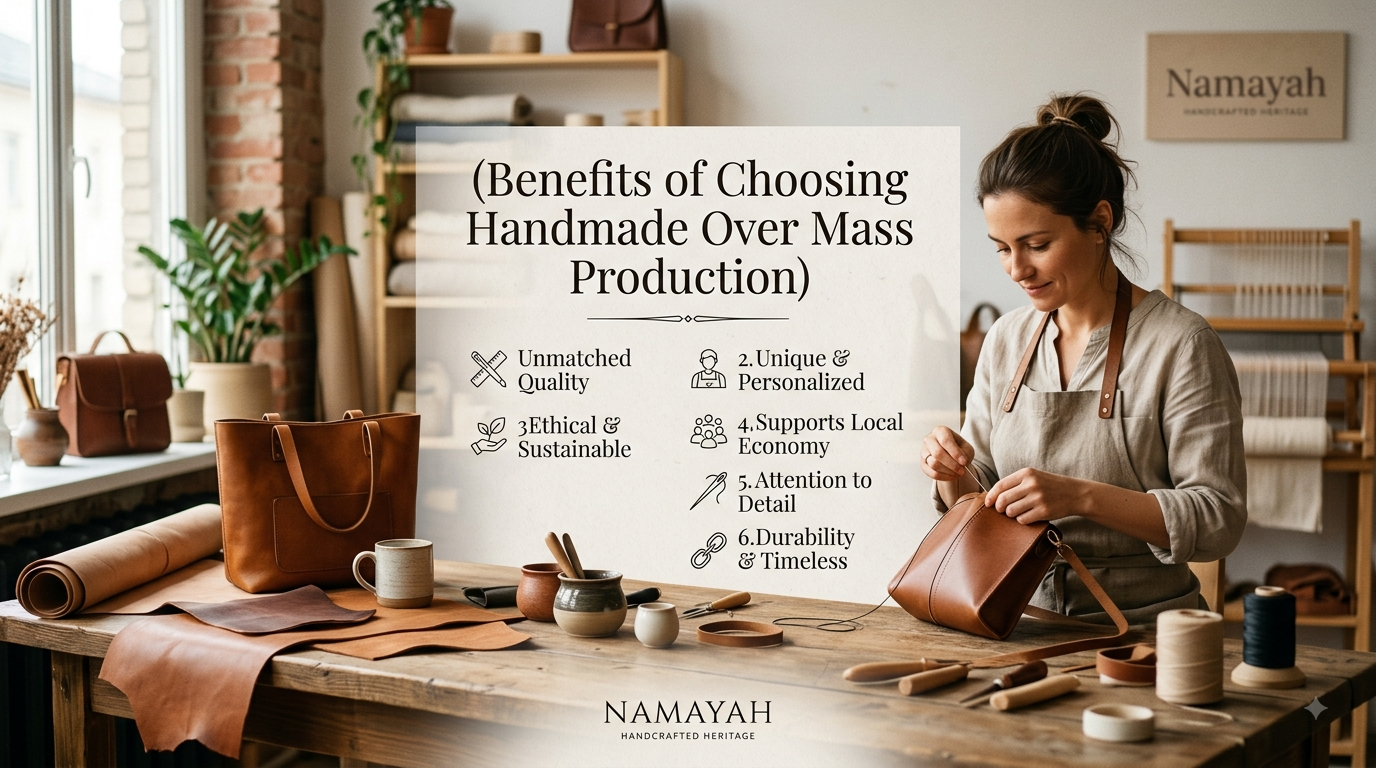
In a marketplace filled with fast production and standardized products, handmade goods offer a different way to shop. The benefits of choosing handmade over mass production include greater individuality, closer attention to craftsmanship, customization opportunities, support for artisans, and the preservation of traditional skills. Handmade products can also encourage more thoughtful consumption, although their sustainability depends on materials, production methods, transportation, and product lifespan.
Choosing handmade is not simply about buying something that looks different. It can mean choosing a product with a visible maker, a distinct process, and a closer connection to the person or community that created it.
What Is the Difference Between Handmade and Mass-Produced Products?
The main difference is the way products are designed and manufactured.
Handmade products are generally created individually or in small batches, with substantial human involvement in their production. Depending on the product, an artisan may cut, shape, sew, carve, paint, weave, assemble, or finish an item by hand.
Mass-produced products, by contrast, are manufactured at scale using standardized processes, machinery, automation, or large production facilities. This approach allows companies to make large quantities of similar products efficiently.
Neither method is automatically better in every situation. Mass production can make everyday goods affordable and widely available, while handmade production can offer individuality, craftsmanship, and a closer connection to the maker.
1. Handmade Products Offer Greater Uniqueness
One of the clearest advantages of handmade products is individuality.
When an artisan creates an item by hand, small differences in texture, shape, color, stitching, grain, or finish can occur. These characteristics can give the final product a distinctive appearance.
For consumers who want something beyond standardized designs, this can be especially appealing.
A handmade ceramic mug, for example, may have subtle variations that make it different from another mug created by the same artisan. A handwoven textile may contain variations in pattern or texture that reflect the production process.
This does not necessarily mean every handmade product is completely one-of-a-kind. Some artisans intentionally reproduce the same design. However, the human production process can give handmade goods a character that standardized manufacturing may not provide.
2. You Can Often Expect More Attention to Detail
Handmade production is closely associated with craftsmanship because the maker is directly involved in creating the product.
An artisan may spend considerable time selecting materials, refining a design, inspecting individual components, and completing finishing work. In small-scale production, the person making the item may also be the person checking its quality.
The Handcrafted Soap & Cosmetic Guild, for example, highlights direct maker involvement in small-batch handcrafted production as one potential benefit for quality control.
However, buyers should avoid assuming that every handmade item is automatically higher quality. Craftsmanship varies from maker to maker. The best approach is to evaluate materials, construction, finishing, reviews where available, and the artisan’s production information.
3. Handmade Products Can Be Personalized
Customization is another important reason people choose handmade goods.
An independent maker may be able to modify:
- Colors
- Sizes
- Materials
- Patterns
- Engravings
- Embroidery
- Finishes
- Packaging
- Design details
This flexibility can be valuable when purchasing gifts or products for a specific space, occasion, or personal preference.
Large-scale manufacturing is designed around consistency and efficiency. Handmade production can sometimes accommodate individual requests more easily because the maker has greater control over the production process.
That makes handmade products particularly attractive for personalized gifts, home décor, clothing, jewelry, artwork, and other products where individual preferences matter.
4. Buying Handmade Supports Artisans and Small Businesses
A handmade purchase can provide direct economic support to an individual artisan, family business, studio, cooperative, or small company.
Instead of purchasing only from a large manufacturing and retail system, consumers can choose to spend money with independent creators. The Handcrafted Soap & Cosmetic Guild notes that many handcrafted producers are small businesses and that purchases can contribute to local economic development.
This matters because small businesses often depend heavily on individual sales.
Your purchase may help an artisan pay for materials, maintain a workshop, develop new products, or continue practicing a specialized craft.
The economic effect varies by business and supply chain, so handmade should not automatically be equated with ethical or fair trade production. Buyers who care about worker conditions can look for transparent information about sourcing, labor, and business practices.
5. Handmade Can Help Preserve Traditional Crafts
Craftsmanship is not only about the finished product. It can also represent knowledge passed from one generation to another.
Traditional skills such as weaving, pottery, woodworking, embroidery, metalworking, carving, and basketry can form part of a community’s cultural identity.
When consumers purchase products made using traditional techniques, they can help create demand for those skills. Recent reporting on artisan businesses has highlighted how craft-focused brands can connect commercial activity with cultural heritage and traditional craftsmanship.
This does not mean buying a handmade item automatically preserves a tradition. The effect depends on whether the product genuinely uses traditional knowledge and whether artisans receive meaningful economic support.
Still, conscious purchasing can play a role in keeping specialized skills visible and economically viable.
6. Small-Batch Production Can Reduce Overproduction
Sustainability is often mentioned as a benefit of handmade products, but this claim needs some qualification.
Small-scale production can allow makers to produce according to actual demand rather than manufacturing enormous quantities in advance. In some industries, this can reduce the risk of unsold inventory and unnecessary production.
The United Nations encourages consumers to reduce waste and make informed purchasing decisions as part of more sustainable consumption and production patterns.
Some artisan businesses also use locally sourced materials, recycled materials, or minimal packaging. However, handmade does not automatically mean environmentally friendly.
The environmental impact of any product depends on several factors, including:
- Raw materials
- Energy used during production
- Manufacturing scale
- Packaging
- Transportation
- Product lifespan
- Repairability
- Disposal
For example, a locally made product that lasts for years may have a different environmental profile from an imported handmade product shipped long distances in extensive packaging.
7. Handmade Products Can Create a Stronger Connection
There is also a personal element to handmade shopping.
Knowing who made an item can change how you perceive it. Instead of seeing a product only as a commodity, you may understand something about the person’s skill, process, inspiration, or community.
This can make handmade purchases feel more meaningful, particularly when the product is intended as a gift or commemorates an important occasion.
The growing interest in artisan products is partly connected to this sense of human connection. Handmade.com, for example, describes handmade goods as a way of connecting buyers with the people and creative processes behind the products.
8. Handmade Encourages More Thoughtful Consumption
Mass production makes it easy to purchase inexpensive products quickly. Handmade goods often require more consideration because they may have higher prices, longer production times, or limited availability.
That can encourage consumers to ask better questions:
- Do I really need this?
- How was it made?
- Who made it?
- What materials were used?
- Will I use it for years?
- Can it be repaired?
- Is the design likely to remain useful?
This approach aligns with the broader idea of responsible consumption: buying thoughtfully, reducing unnecessary waste, and considering the impact of purchasing decisions.
The result can be a shift from buying more toward buying with greater intention.
Handmade vs. Mass Production: A Quick Comparison
| Factor | Handmade | Mass Production |
|---|---|---|
| Uniqueness | Often high | Usually standardized |
| Customization | Often easier | Usually limited |
| Production volume | Small or individual batches | Large quantities |
| Human involvement | Usually substantial | Often lower per unit |
| Availability | May be limited | Usually widely available |
| Price | Often higher | Often lower |
| Craft tradition | Can preserve specialized skills | Generally focused on scalable production |
| Quality | Varies by maker | Varies by manufacturer |
| Sustainability | Depends on materials and process | Depends on materials, process, scale, and supply chain |
| Maker connection | Often more direct | Usually less direct |
The important point is that handmade and mass-produced products serve different needs. Mass production is highly effective when affordability, consistency, and availability are priorities. Handmade can be preferable when individuality, customization, craftsmanship, and connection matter more.
Are Handmade Products Always Better?
No. Choosing handmade does not guarantee superior quality, ethical production, or environmental performance.
Some handmade products may use poor-quality materials or lack consistent finishing. They can also cost more because skilled labor requires time. Shipping can add environmental costs, particularly when products travel long distances.
Likewise, mass-produced products can sometimes offer excellent quality, rigorous testing, reliable warranties, and efficient use of materials.
The smarter approach is to evaluate the specific product and production practices, rather than assuming that one category is universally superior.
How to Choose Quality Handmade Products
If you want to buy handmade, consider these practical steps:
1. Research the Maker
Look for information about the artisan, studio, or business. A transparent maker should be able to explain what they create and how they create it.
2. Check the Materials
Find out whether the materials match your expectations for durability, appearance, maintenance, and use.
3. Examine Construction
For clothing and textiles, check stitching and seams. For furniture, examine joints and finishes. For ceramics, look at the glaze and overall construction.
4. Ask About Customization
If personalization matters, ask what can actually be modified before placing an order.
5. Consider Longevity
A product that lasts longer can provide more value than one that needs frequent replacement.
6. Look Beyond the “Handmade” Label
Ask where materials come from, how the product is packaged, and where it is produced. A handmade label alone does not answer every sustainability or ethical question.
Why Handmade Is Worth Considering
The benefits of choosing handmade over mass production go beyond appearance. Handmade products can provide greater individuality, opportunities for customization, direct support for artisans, and a connection to traditional skills.
They can also encourage consumers to think more carefully about what they buy and how products are made.
At the same time, handmade should not be treated as an automatic guarantee of quality or sustainability. The strongest purchasing decision comes from looking at the entire product story: materials, craftsmanship, durability, production methods, transportation, and the people involved.
For shoppers who value originality and human craftsmanship, handmade can be a meaningful alternative to standardized mass production.
FAQs About Choosing Handmade
What are the main benefits of handmade products?
The main benefits include individuality, craftsmanship, customization, direct support for artisans, preservation of traditional skills, and potentially more thoughtful consumption.
Are handmade products better quality than mass-produced products?
Not always. Quality depends on the maker, materials, design, construction, and quality-control practices. Handmade production can allow close attention to individual pieces, but the label itself is not a guarantee of quality.
Why are handmade products more expensive?
Handmade products can cost more because skilled labor takes time and production volumes are usually smaller. Materials, customization, workshop costs, and limited economies of scale can also affect the price.
Are handmade products more sustainable?
They can be, but not automatically. Sustainability depends on materials, energy use, production volume, packaging, transportation, durability, repairability, and disposal.
How does buying handmade support local artisans?
Purchasing directly from an artisan or small business can provide revenue that helps support their work, business operations, and continued production. The exact economic benefit depends on the business and its supply chain.
Why are handmade products unique?
Handmade products may contain small variations created by the human production process. Materials, techniques, and individual finishing can give each piece its own characteristics.
Can handmade products be customized?
Many artisans offer customization, although the options vary. Buyers can often request changes to colors, sizes, materials, patterns, engravings, or other design details.
Is handmade better for gifts?
Handmade products can be particularly suitable for gifts because they can feel personal and distinctive. Customization can also make a handmade gift more relevant to the recipient.
Conclusion
Choosing handmade over mass production is ultimately a choice about priorities. If affordability, uniformity, and immediate availability matter most, mass-produced goods may be the practical option. If you value individuality, craftsmanship, customization, artisan support, and cultural heritage, handmade products offer compelling advantages.
The best approach is not to reject mass production entirely but to become a more informed consumer. Look beyond the label, understand how an item was made, consider its expected lifespan, and choose products that genuinely match your values and needs.