
Artisan-Made Wooden Décor vs Factory-Made Alternatives
Introduction
Choosing home décor isn’t just about filling empty spaces—it’s about creating an environment that reflects your personality, values, and lifestyle. Among the many decorative options available today, wooden décor continues to stand out because of its warmth, timeless appeal, and natural beauty.
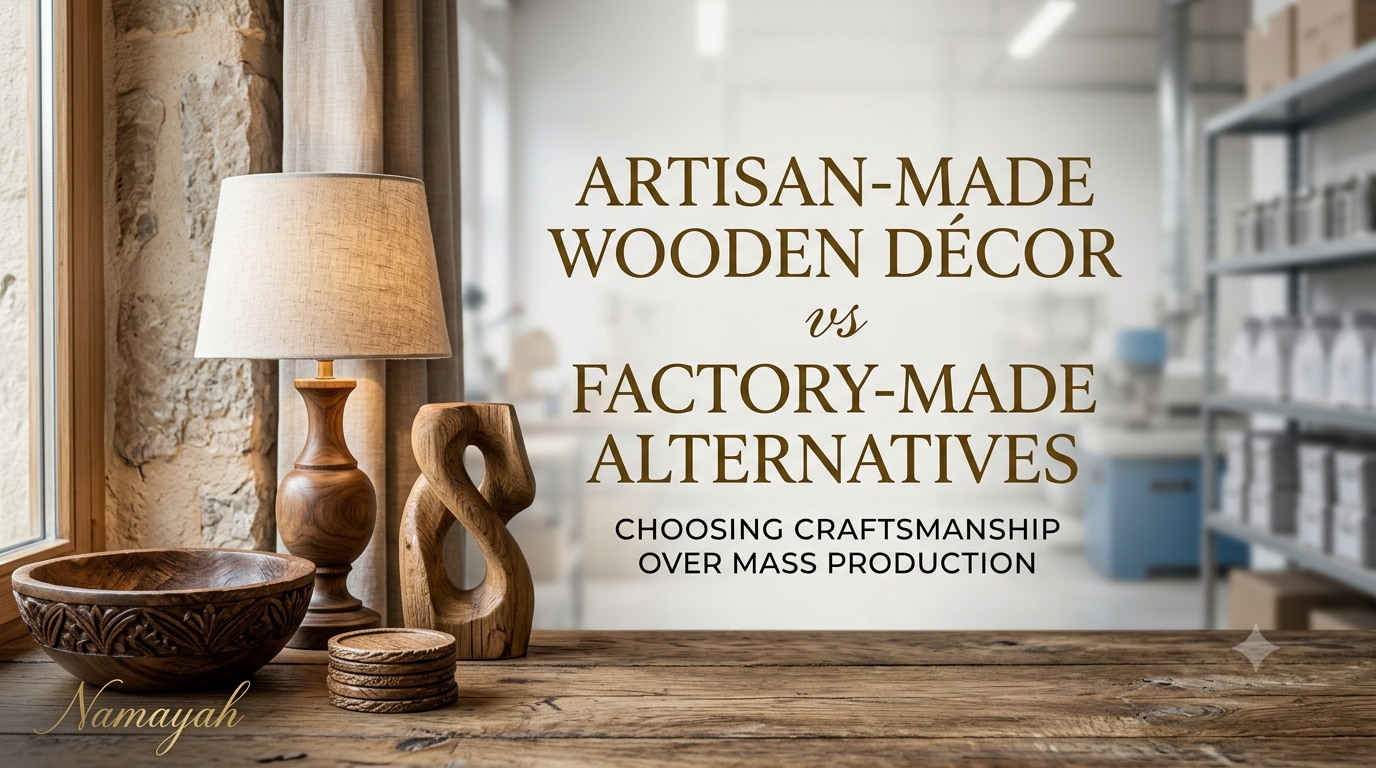
One of the biggest decisions buyers face is Artisan-Made Wooden Décor vs Factory-Made Alternatives. At first glance, both options may appear similar. A wooden shelf is still a shelf, and a carved bowl is still a bowl. Yet the differences become much more noticeable when you examine craftsmanship, materials, durability, sustainability, and overall value.
Handcrafted wooden décor tells a story. Every cut, curve, and finish reflects the artisan’s skill and creativity. In contrast, factory-made products prioritize efficiency, consistency, and affordability through automated manufacturing.
Neither choice is universally right or wrong. The ideal option depends on your budget, decorating goals, and personal preferences. This guide explores both categories in depth, helping you understand their strengths, weaknesses, and long-term value so you can make a confident purchasing decision.
Understanding Artisan-Made Wooden Décor
Artisan-made wooden décor refers to decorative pieces created primarily by skilled craftspeople using traditional woodworking techniques. While modern tools may assist the process, the craftsmanship, finishing, and design decisions remain largely in human hands.
Unlike mass-produced products, artisan pieces emphasize individuality instead of identical replication.
What Defines Handmade Craftsmanship?
Several characteristics distinguish handcrafted wooden décor from factory-produced alternatives.
- Individual attention given to every piece
- Hand-selected wood based on grain and appearance
- Traditional woodworking techniques
- Limited production quantities
- Fine hand-finishing
- Natural variations that make each item unique
An artisan often spends hours—or even days—perfecting a single decorative item. This investment of time results in products that showcase exceptional attention to detail.
Instead of hiding wood imperfections, artisans frequently embrace natural knots, grain variations, and color differences, turning them into design features rather than defects.
Common Types of Artisan Wooden Décor
Handmade wooden décor comes in many forms, including:
- Wall art
- Decorative bowls
- Wooden sculptures
- Floating shelves
- Picture frames
- Candle holders
- Table centerpieces
- Serving trays
- Clocks
- Rustic signs
- Hand-carved figurines
- Plant stands
Many artisans also accept custom orders, allowing customers to choose dimensions, finishes, wood species, and even personalized engravings.
This flexibility makes artisan décor especially attractive for homeowners seeking one-of-a-kind interior designs.
What Is Factory-Made Wooden Décor?
Factory-made wooden décor is manufactured using automated machinery and assembly-line production methods. The primary objective is to produce large quantities efficiently while maintaining consistent quality and affordable pricing.
Large manufacturers use computer-controlled equipment to cut, shape, sand, and assemble products rapidly. Human workers mainly supervise production, perform quality checks, and package finished items.
Mass production allows identical items to be created thousands of times with minimal variation.
Mass Production Explained
Modern factories use advanced technologies such as:
- CNC machining
- Automated sanding
- Laser cutting
- Spray finishing systems
- Robotic assembly
- Precision measuring equipment
These technologies improve production speed while reducing manufacturing costs.
As a result, consumers benefit from affordable furniture and decorative accessories that are widely available through retail stores and online marketplaces.
Popular Factory-Made Home Accessories
Examples include:
- Picture frames
- Decorative shelves
- Storage boxes
- Wall panels
- Wooden clocks
- Table organizers
- Decorative trays
- Candle holders
- Plant stands
- Wall signs
- Kitchen accessories
Many of these products imitate handcrafted aesthetics through printed wood grain patterns, distressed finishes, or machine-carved textures.
Although visually appealing, they often lack the subtle imperfections and individuality that characterize handmade creations.
Artisan-Made Wooden Décor vs Factory-Made Alternatives: Key Differences
Understanding the differences requires looking beyond appearance. Quality, materials, craftsmanship, environmental impact, and long-term performance all play important roles.
Materials Used
Perhaps the biggest distinction lies in the selection of raw materials.
Many artisans carefully choose premium hardwoods, such as oak, walnut, maple, cherry, or teak, based on grain patterns, strength, and visual appeal. They often source wood responsibly from local suppliers or reclaimed materials, giving new life to timber that might otherwise go to waste.
Factory manufacturers, by contrast, may use a wider range of materials depending on the product’s target price. Solid wood is common in higher-end lines, while budget-friendly items frequently incorporate engineered woods like MDF, particleboard, or plywood with wood veneers. These materials can deliver consistent appearance and lower costs, though they may not offer the same longevity or repairability as solid hardwood.
The finishing process also differs. Artisan makers often apply hand-rubbed oils, waxes, or carefully layered stains that highlight the wood’s natural character. Factory products typically rely on automated spray finishes that provide uniform coverage and faster production.
While both approaches can produce attractive results, the choice often comes down to whether you prioritize individuality, premium natural materials, or affordability and consistency.
Craftsmanship and Attention to Detail
When comparing Artisan-Made Wooden Décor vs Factory-Made Alternatives, craftsmanship is often the defining factor. While machines excel at precision and consistency, artisans bring creativity, experience, and personal care to every piece they produce.
A skilled woodworker carefully studies the grain, texture, and natural characteristics of each piece of timber before making the first cut. Rather than forcing the wood into a standard pattern, artisans often adapt their designs to enhance its natural beauty. This thoughtful approach can transform knots, grain variations, and color differences into distinctive design features.
Artisan craftsmanship typically includes:
- Hand-sanded surfaces for a smooth, refined finish
- Carefully joined corners and edges
- Precision carving and detailing
- Multiple layers of protective finishing
- Individual quality inspection before sale
Because every item receives personal attention, even similar designs have unique characteristics that make them truly one of a kind.
Factory-made décor, on the other hand, emphasizes uniformity. Computer-controlled equipment produces identical pieces with impressive accuracy, making it easier to maintain consistent quality across thousands of units. While this approach lacks individuality, it provides dependable products at accessible price points.
Design and Originality
Design plays a significant role in determining how decorative pieces influence the atmosphere of a room.
Artisan-made wooden décor celebrates originality. Since most items are created individually or in small batches, they often feature exclusive designs that cannot be found elsewhere. Many artisans continually experiment with new techniques, blending traditional craftsmanship with contemporary aesthetics.
Some popular artisan design styles include:
- Rustic farmhouse
- Scandinavian minimalism
- Mid-century modern
- Live-edge woodworking
- Traditional carving
- Contemporary geometric designs
- Japanese-inspired simplicity
Many artisans also welcome custom commissions. Customers may request personalized engravings, unique dimensions, specific wood species, or finishes that complement existing furniture.
Factory-made products are generally designed for broader consumer appeal. Manufacturers analyze market trends and create collections that fit current decorating styles. While these products often look attractive, they are intended for mass distribution and therefore tend to prioritize universal appeal over exclusivity.
If creating a distinctive living space is your goal, handcrafted décor usually provides greater opportunities for personalization and creative expression.
Durability and Longevity
Durability is another important factor when evaluating Artisan-Made Wooden Décor vs Factory-Made Alternatives.
Well-crafted artisan pieces are often built using traditional woodworking techniques that have been refined over generations. Strong joinery, carefully selected hardwoods, and high-quality finishes contribute to products that can last for decades when properly maintained.
Common durable construction methods include:
- Mortise and tenon joints
- Dovetail joints
- Floating panels
- Solid hardwood construction
- Reinforced hand assembly
Because artisans typically focus on quality rather than production speed, they often spend extra time ensuring every joint fits perfectly before assembly.
Factory-made décor varies considerably in durability depending on the manufacturer and price range. Premium brands may use excellent materials and engineering, while lower-cost products often rely on engineered wood, staples, or fast assembly methods designed to reduce production costs.
This does not mean all factory-made décor is poorly made. Many reputable manufacturers produce reliable products with excellent quality control. However, lower-priced mass-produced items may show signs of wear sooner than handcrafted solid wood pieces.
If long-term investment is your priority, artisan décor often provides greater durability over time.
Sustainability and Environmental Impact
As consumers become more environmentally conscious, sustainability has become an increasingly important consideration.
Many independent artisans emphasize responsible sourcing by using:
- Sustainably harvested hardwood
- Reclaimed timber
- Salvaged barn wood
- Fallen local trees
- Natural oils and wax finishes
- Low-VOC protective coatings
Working on a smaller scale often allows artisans to minimize waste by incorporating leftover wood into smaller decorative products or creative projects.
Additionally, buying from local craftspeople may reduce transportation emissions associated with large-scale international shipping.
Factory production has made significant progress in sustainability over recent years. Many manufacturers now participate in responsible forestry initiatives, improve energy efficiency, and recycle production waste. However, the environmental impact of mass manufacturing can still be higher due to larger production volumes, packaging requirements, and global distribution networks.
Choosing durable products that remain useful for many years—whether artisan-made or factory-produced—can also reduce waste by decreasing the need for frequent replacements.
Pricing and Value
Price is often one of the first factors shoppers consider.
Artisan-made wooden décor generally carries a higher price tag because it reflects:
- Skilled labor
- Premium materials
- Limited production
- Individual craftsmanship
- Longer production time
At first glance, handcrafted items may seem expensive. However, many buyers view them as long-term investments rather than short-term purchases. A well-made handcrafted piece can remain beautiful and functional for decades, often becoming a cherished part of a home’s décor.
Factory-made alternatives are usually more affordable because manufacturers benefit from:
- Bulk purchasing of materials
- Automated production
- Economies of scale
- Efficient assembly processes
- High-volume distribution
For homeowners decorating an entire house on a limited budget, factory-made décor offers excellent value by making stylish designs more accessible.
Ultimately, value extends beyond the initial purchase price. Factors such as durability, emotional significance, craftsmanship, and longevity all contribute to the overall worth of a decorative item.
Which Option Offers Better Quality?
Quality cannot be judged solely by price or appearance. Instead, it depends on several characteristics that influence both aesthetics and long-term performance.
Signs of Premium Woodworking
Whether purchasing handcrafted or factory-made décor, look for these indicators of quality:
- Smooth, consistent finishes
- Tight-fitting joints
- Stable construction
- Even coloration
- Minimal gaps or cracks
- Well-balanced proportions
- Durable protective coatings
- Solid construction materials
Avoid products with rough edges, uneven finishes, loose joints, or visible adhesive residue, as these may indicate lower manufacturing standards.
How Manufacturing Affects Quality
Manufacturing methods influence both consistency and individuality.
Artisan production allows flexibility throughout the building process. Craftspeople can make adjustments as they work, correcting minor imperfections and enhancing each piece based on the characteristics of the wood.
Factory manufacturing excels in repeatability. Advanced machinery ensures consistent dimensions and finishes across thousands of identical products. While this consistency is valuable, it may also reduce the uniqueness that many homeowners appreciate in handcrafted décor.
Neither approach is inherently superior. The better choice depends on your priorities, budget, and intended use.
The Emotional Value of Handmade Products
One aspect often overlooked in purchasing decisions is emotional connection.
Handcrafted wooden décor carries a story. Each piece represents hours of skilled labor, creative vision, and personal dedication. Knowing that a real craftsperson shaped, carved, sanded, and finished the item adds a layer of meaning that many mass-produced products cannot replicate.
Handmade items also make memorable gifts for weddings, anniversaries, birthdays, and housewarmings because they often feel more personal and thoughtful.
Many families pass handcrafted wooden objects down through generations, transforming them into treasured heirlooms filled with memories and sentimental value.
Factory-made décor, while practical and attractive, is generally designed for convenience rather than personal storytelling. It fulfills functional and decorative needs efficiently but may not inspire the same emotional attachment over time.
Customization and Personalization
One of the greatest advantages in the Artisan-Made Wooden Décor vs Factory-Made Alternatives debate is the level of customization available.
Most artisan woodworkers welcome collaboration with customers. Instead of selecting a product from a fixed catalog, buyers can often request modifications that make the item uniquely theirs. This creates décor that fits a home’s style, dimensions, and personal story.
Popular customization options include:
- Personalized name or family engravings
- Custom dimensions
- Choice of wood species
- Specific stain or paint colors
- Unique carvings or artwork
- Special finishes such as matte, satin, or gloss
- Personalized quotes or meaningful dates
For example, a handcrafted wall sign may include a family’s surname, while a serving board can feature an engraved wedding date. These personalized details make artisan décor especially meaningful as gifts or heirloom pieces.
Factory-made products usually offer limited customization. While some manufacturers allow customers to choose from a small selection of colors or sizes, extensive modifications are uncommon because production systems are optimized for efficiency and standardization.
If personalization is a priority, artisan-made décor provides significantly greater flexibility.
Maintenance Tips for Wooden Décor
Whether your wooden décor is handcrafted or factory-made, proper care helps preserve its beauty and extend its lifespan.
Cleaning
Use a soft microfiber cloth to remove dust regularly. Avoid abrasive materials that may scratch the finish.
For deeper cleaning:
- Use a damp (not soaking wet) cloth.
- Dry immediately after wiping.
- Avoid harsh chemical cleaners.
- Use wood-safe cleaning products when necessary.
Protect Against Moisture
Wood naturally reacts to humidity.
To reduce damage:
- Keep décor away from standing water.
- Avoid placing wooden items in excessively damp environments.
- Maintain stable indoor humidity whenever possible.
Limit Direct Sunlight
Extended exposure to sunlight may fade finishes and dry out natural wood over time.
Whenever possible:
- Position wooden décor away from direct sunlight.
- Rotate decorative pieces occasionally.
- Use curtains or UV-filtering window films in bright rooms.
Apply Protective Treatments
Solid wood benefits from periodic maintenance.
Depending on the finish, occasional application of:
- Natural wood oil
- Beeswax polish
- Furniture wax
- Manufacturer-recommended conditioners
can help preserve moisture and protect the surface.
Always follow the care instructions provided by the maker or manufacturer.
Buying Guide
Choosing between artisan-made and factory-made wooden décor requires balancing quality, budget, design preferences, and intended use.
Before making a purchase, consider the following factors.
Questions to Ask Before Purchasing
Ask yourself:
- What is my budget?
- Am I looking for a unique statement piece or everyday décor?
- Is sustainability important to me?
- Do I want customization?
- Will this item receive heavy daily use?
- Do I prefer natural wood grain or a uniform finish?
- How long do I expect this item to last?
Answering these questions helps narrow your options and ensures you select décor that aligns with your needs.
Where to Buy Quality Wooden Décor
Reliable sources include:
- Local artisan markets
- Independent woodworking studios
- Craft fairs
- Specialty home décor boutiques
- Reputable online marketplaces
- Direct purchases from artisan websites
- Established furniture retailers
When shopping online:
- Read customer reviews carefully.
- Examine product photos closely.
- Verify material specifications.
- Review return policies.
- Check estimated production and delivery times, especially for custom orders.
Supporting local artisans not only provides access to unique products but also helps sustain traditional craftsmanship and small businesses.
Frequently Asked Questions
1. Is artisan-made wooden décor worth the higher price?
For many buyers, yes. Artisan-made décor often uses premium materials, skilled craftsmanship, and durable construction methods. While the initial investment may be higher, these pieces can provide long-term value through longevity, uniqueness, and emotional significance.
2. Does factory-made wooden décor always use low-quality materials?
No. Many manufacturers produce excellent-quality wooden décor using solid wood and modern manufacturing techniques. Quality varies by brand, price point, and materials used, so it’s important to review product details rather than assume all factory-made items are the same.
3. Which option is more environmentally friendly?
It depends on the sourcing and manufacturing practices. Artisan makers frequently use reclaimed or sustainably harvested wood and produce smaller quantities with less waste. Many larger manufacturers also follow responsible forestry and sustainability standards. Look for certifications and transparent sourcing information when environmental impact is a priority.
4. Can handcrafted wooden décor be customized?
Yes. One of the biggest advantages of artisan-made décor is the ability to customize dimensions, finishes, engravings, wood species, and designs to suit your personal preferences or specific spaces.
5. How long does wooden décor typically last?
High-quality wooden décor can last for decades with proper care. Solid hardwood pieces, especially those that are well-crafted and regularly maintained, often remain functional and attractive for generations.
6. Which is better for gifting?
Handcrafted wooden décor is often preferred for special occasions because it feels more personal and unique. Customized artisan pieces make thoughtful gifts for weddings, anniversaries, birthdays, and housewarming celebrations.
Conclusion
The choice between Artisan-Made Wooden Décor vs Factory-Made Alternatives ultimately comes down to your priorities. If you value originality, skilled craftsmanship, customization, and the timeless character of natural wood, artisan-made pieces offer a distinctive experience that goes beyond simple decoration. Their individuality and potential to become treasured heirlooms make them an appealing investment for many homeowners.
Factory-made alternatives, however, remain an excellent option for those seeking affordability, consistency, and wide availability. Advances in manufacturing have significantly improved the quality and design of many mass-produced products, making stylish wooden décor accessible to a broader audience.
Rather than viewing one option as universally superior, consider how each aligns with your budget, aesthetic preferences, and long-term goals. In some homes, a combination of handcrafted statement pieces and well-made factory-produced accents provides the perfect balance of personality, practicality, and value.
By understanding the differences in materials, craftsmanship, sustainability, durability, and customization, you can confidently choose wooden décor that enhances your living space while reflecting your personal style.
SEO Summary
| Element | Content |
|---|---|
| Focus Keyword | Artisan-Made Wooden Décor vs Factory-Made Alternatives |
| Suggested URL Slug | artisan-made-wooden-decor-vs-factory-made-alternatives |
| Recommended Meta Title Length | 55–60 characters |
| Recommended Meta Description Length | 150–160 characters |
| Target Audience | Homeowners, interior design enthusiasts, DIY decorators, eco-conscious consumers |
| Search Intent | Informational / Commercial Investigation |
Further Reading
For additional information on responsible forestry and sustainable wood products, visit the Forest Stewardship Council (FSC): https://fsc.org