
Why Authentic Indian Handicrafts Make Meaningful Home Décor
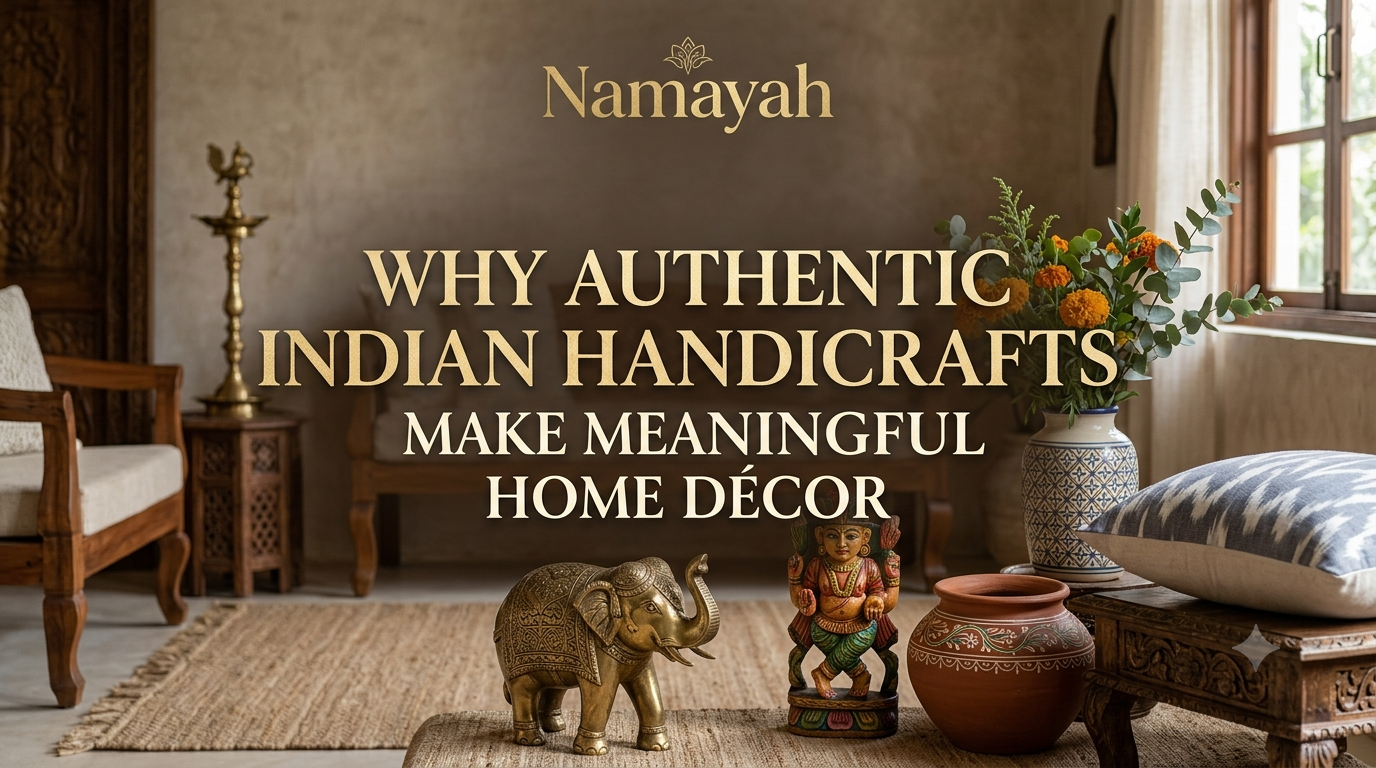
Home décor is not only about filling a room with attractive objects. The pieces we choose can reflect our personality, memories, values, and appreciation for craftsmanship. That is one reason authentic Indian handicrafts make meaningful home décor.
Indian handicrafts bring together materials, techniques, patterns, regional traditions, and human skill. A carved wooden object, handwoven textile, painted panel, metal accent, or terracotta piece can give a room a sense of character that is difficult to achieve with identical mass-produced accessories.
India’s official handicrafts portal highlights the importance of preserving traditions while supporting sustainable livelihoods for artisans. Its programmes include initiatives focused on improving products, skills, marketing, and the preservation of traditions.
What Makes Indian Handicrafts Different?
The defining appeal of handicrafts is the relationship between the maker, material, and finished object.
Unlike factory-made décor produced to look identical from one item to another, handmade pieces can show subtle variations in texture, pattern, finish, or form. These differences are not necessarily imperfections. They can be evidence of the making process.
Indian craft traditions are also remarkably diverse. Different regions have developed distinctive approaches to materials and techniques, including woodwork, weaving, pottery, metalwork, embroidery, painting, cane and bamboo work, and other forms of craftsmanship.
This variety gives homeowners many ways to introduce Indian influences without making every room look the same.
Every Piece Can Carry a Story
One of the strongest reasons to choose authentic Indian handicrafts for home décor is their storytelling potential.
A decorative object can remind you of a particular region, craft tradition, journey, family connection, or cultural experience. Even when you simply appreciate the craftsmanship, the piece can become a conversation starter.
For example, a traditional textile may introduce regional motifs and weaving techniques, while a handcrafted wooden object can bring the visual language of traditional carving into a contemporary setting.
Some Indian crafts also have recognized geographical identities. India’s Geographical Indications system protects products associated with a particular geographical origin and characteristics, quality, or reputation connected with that origin. The official registry includes handicraft examples such as Sankheda Furniture.
That connection between place and craftsmanship can make a décor item feel more significant than a generic decorative accessory.
Craftsmanship Adds Character to a Home
Handmade décor can introduce visual depth through details that invite closer attention.
Consider the difference between a perfectly uniform surface and one that reveals subtle marks from carving, weaving, shaping, painting, or finishing. The latter can create a sense of texture and individuality.
This is particularly useful in contemporary interiors, where a carefully selected traditional object can add contrast.
A minimalist living room, for instance, may benefit from one expressive handcrafted object rather than many unrelated accessories. The contrast between clean architectural lines and detailed craftsmanship can make the room feel warmer and more layered.
Indian Handicrafts Connect Homes With Regional Traditions
Indian handicrafts are closely connected to the places and communities where craft knowledge has developed.
This regional connection is part of what makes Indian décor so visually diverse. Materials, motifs, techniques, and forms can vary considerably from one craft tradition to another.
For buyers, this creates an opportunity to decorate with intention. Instead of choosing an object simply because it matches a colour scheme, you can consider where it comes from, how it was made, and what tradition it represents.
The Government of India’s handicrafts programmes explicitly include preservation of traditions as part of their broader objectives.
Authentic Crafts Can Make Spaces Feel More Personal
A home becomes more personal when its décor reflects the people who live there.
Handicrafts can help achieve that because they do not have to follow a single interior design trend. A handmade object can complement modern, traditional, bohemian, minimalist, rustic, or eclectic spaces.
The key is thoughtful selection.
Instead of decorating every surface with crafts, choose a few pieces that have visual or emotional importance. A handcrafted lamp, textile, sculpture, bowl, or wall hanging can become a focal point while allowing the rest of the room to remain simple.
This approach also prevents traditional décor from feeling overly themed.
Supporting Artisans Through Thoughtful Buying
Choosing authentic handicrafts can also give buyers a more direct connection to the people and skills behind an object.
The Development Commissioner (Handicrafts), Ministry of Textiles, describes its National Handicrafts Development Programme as aiming to create sustainable livelihood opportunities for artisans while improving product quality, design, branding, marketing, and preservation of traditions.
That does not mean every handmade purchase automatically guarantees a particular economic outcome for an individual artisan. Buyers should still look at how a seller sources and represents its products.
However, purchasing from transparent artisan-focused businesses, cooperatives, reputable craft organisations, or clearly identified makers can be a more considered approach than buying an anonymous imitation.
Are Indian Handicrafts Sustainable Home Décor?
Handicrafts can align with thoughtful and potentially more sustainable approaches to decorating, but sustainability should not be assumed simply because something is handmade.
The materials used, production process, durability, transportation, packaging, and sourcing all matter.
A well-made object that is designed to be used for many years may have a different environmental profile from a disposable décor item that is frequently replaced. Natural or locally sourced materials may also be relevant, depending on the specific craft.
The best approach is to ask practical questions:
- What material is the item made from?
- Where was it produced?
- Who made it?
- Is the craft or artisan community identified?
- Is the item designed for long-term use?
- How is it packaged and shipped?
- Are any sustainability claims clearly explained?
Thoughtful buying is more useful than assuming that every handmade product is automatically sustainable.
Popular Indian Handicrafts for Home Décor
There is no single type of Indian handicraft that works for every home. The right choice depends on your space, colour palette, lifestyle, and personal taste.
Handcrafted Wood Décor
Wooden handicrafts can add warmth and natural texture to interiors.
Carved panels, decorative boxes, small sculptures, trays, stools, and furniture can work in living rooms, bedrooms, entryways, and home offices.
Wooden pieces are especially useful when a room needs warmth without adding too many colours.
Handwoven Textiles
Indian textiles can introduce softness, pattern, and colour.
Handwoven cushions, throws, rugs, table runners, wall textiles, and other fabric accents can be used to refresh a room without changing its main furniture.
A practical approach is to pair one expressive textile with neutral furniture and walls. This allows the craftsmanship and pattern to stand out.
Metal and Bell-Metal Crafts
Metalwork can provide a stronger visual accent.
Small sculptures, vessels, lamps, decorative plates, and traditional objects can work particularly well as statement pieces. Their reflective surfaces can also add variation to rooms dominated by wood, fabric, or matte finishes.
Pottery and Terracotta
Pottery and terracotta bring an earthy quality to home décor.
Vases, planters, bowls, lamps, and sculptural objects can be displayed individually or grouped together. Their natural appearance works well with wood, linen, cotton, plants, and other organic textures.
Traditional Paintings and Wall Art
Traditional Indian painting styles can transform a plain wall into a storytelling surface.
Rather than covering an entire room, consider giving one artwork enough space to become the focal point. This creates visual hierarchy and lets the details receive attention.
How to Style Indian Handicrafts in a Modern Home
Traditional craftsmanship does not require a traditionally styled house.
A few simple principles can help.
Start with one statement piece.
Choose a distinctive handcrafted object and let it anchor the space.
Mix old and new.
Pair a traditional craft with contemporary furniture, modern lighting, or simple architectural lines.
Use repetition carefully.
Repeat a material, colour, or texture rather than filling the room with identical motifs.
Leave breathing room.
Handcrafted objects often contain intricate details. Crowding them together can reduce their visual impact.
Think about scale.
A small object may disappear on a large wall, while an oversized piece can overwhelm a compact room.
Create contrast.
A richly textured handmade object can stand out beautifully against a plain background.
How to Choose Authentic Indian Handicrafts
Authenticity deserves careful attention, particularly when buying online.
Start by looking for clear product information. A trustworthy seller should ideally explain the material, production location, craft technique, and maker or artisan community where relevant.
Be cautious of vague claims such as “traditional,” “handmade,” or “authentic” when no supporting information is provided.
For crafts associated with geographical indications, buyers can consult India’s official GI resources. The Intellectual Property India portal provides a register of registered geographical indications and authorised users, offering a useful starting point for checking GI-related claims.
It is also worth remembering that a craft can be culturally meaningful even when it is not GI-registered. GI registration is a specific legal framework, not a universal definition of authenticity.
Most importantly, buy pieces you genuinely expect to live with for years. Meaningful décor is less about collecting many objects and more about choosing objects that have lasting value to you.
Frequently Asked Questions
Why are Indian handicrafts good for home décor?
Indian handicrafts can add character, texture, cultural references, and individuality to a home. Their handmade nature can also create visual variation that differs from uniform mass-produced décor.
What makes Indian handicrafts meaningful?
Their meaning can come from craftsmanship, regional traditions, materials, stories, and the human work behind each piece. Personal memories and connections can make a handcrafted object even more meaningful.
Are Indian handicrafts sustainable?
Some can support a more thoughtful approach to décor, particularly when they are durable and responsibly produced. However, sustainability depends on materials, sourcing, production, transport, packaging, and product lifespan.
How can I make Indian handicrafts look modern?
Combine traditional pieces with contemporary furniture, neutral backgrounds, simple layouts, and restrained styling. One strong handcrafted piece can often make more impact than many smaller accessories.
How do I know whether an Indian handicraft is authentic?
Look for transparent information about the maker, craft technique, material, and production location. For products making GI-related claims, consult official Geographical Indications resources where appropriate.
Can Indian handicrafts work in minimalist interiors?
Yes. Minimalist spaces can provide an effective backdrop for a single detailed handcrafted object. The contrast between simplicity and craftsmanship can make the piece more prominent.
What Indian handicrafts are suitable for living rooms?
Depending on the room, options can include handcrafted furniture, wood décor, textiles, pottery, metal objects, sculptures, and traditional wall art.
Why should I buy directly from artisans or transparent craft businesses?
Buying through transparent channels can help you understand who made the product, where it came from, and how it was produced. It also makes it easier to evaluate claims about craftsmanship and sourcing.
Conclusion
Authentic Indian handicrafts can make home décor more than a matter of appearance. They can introduce craftsmanship, regional identity, texture, history, and personal meaning into everyday spaces.
The best pieces are not necessarily the most expensive or elaborate. They are the ones that fit naturally into your home and give you a reason to appreciate them each time you see or use them.
Whether you choose a handwoven textile, carved wooden object, traditional artwork, terracotta vessel, or metal accent, thoughtful selection can help create a home that feels individual rather than interchangeable.
India’s official handicrafts ecosystem continues to emphasise artisan livelihoods, craft development, product improvement, and preservation of traditions, reinforcing the broader cultural value behind the objects we bring into our homes.
Ultimately, authentic Indian handicrafts make meaningful home décor because they bring human craftsmanship and cultural stories into spaces where we live, gather, and create memories.