
Traditional Metalwork Techniques in Indian Kitchenware
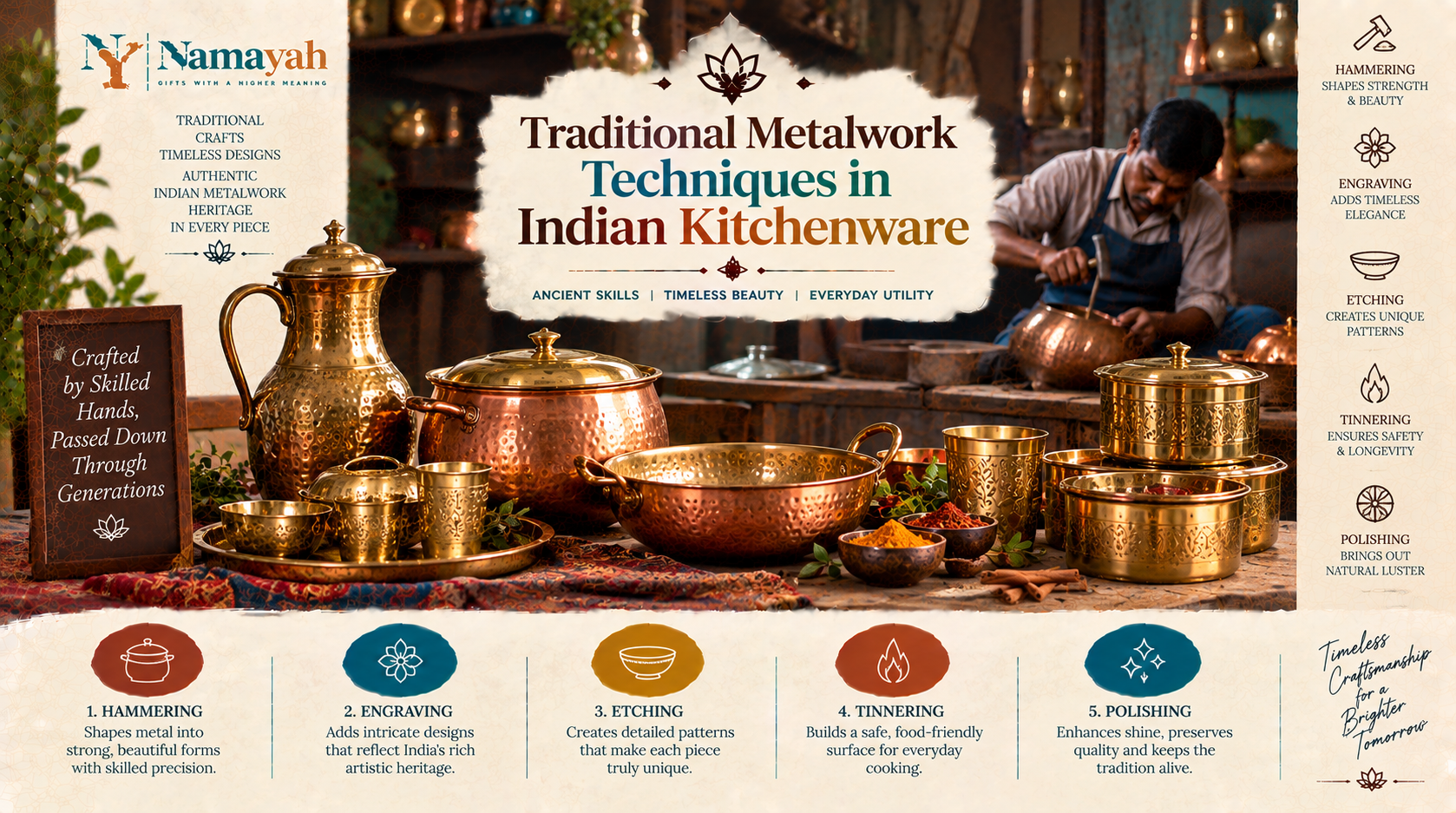
Traditional metalwork techniques have defined the cultural and culinary landscape of India for centuries. These methods are not merely industrial processes; they represent a deep connection between the artisan and the material. When you choose handmade metal kitchenware, you are investing in a legacy of skill passed down through generations. These items carry the weight of history and the warmth of human effort. Understanding how these pieces are made helps us appreciate the true value of artisanal metalwork in our modern homes. Handmade wooden dining set
The Essence of Traditional Metalwork Techniques
At the heart of Indian craft techniques lies the principle of patience. Artisans often spend days shaping a single vessel from raw sheets of brass or copper. Unlike mass-produced items, handmade metal pieces possess unique imperfections that signify their authenticity. The process usually begins with heating the metal to a precise temperature, making it pliable enough for intricate shaping. This transformative stage is where the soul of the craft is born. Furthermore, these methods prioritize the longevity of the product. By using manual tools, the artisan ensures that the internal structure of the metal remains dense and durable. You can learn more about the philosophy behind these enduring practices by visiting our about us page. Traditional metalwork techniques ensure that every piece is balanced, functional, and aesthetically pleasing for daily use in a contemporary kitchen. handcrafted brass kitchenware
The Art of Metal Forging
Metal forging stands as one of the most critical steps in creating high-quality kitchenware. By repeatedly hammering the heated metal, the artisan refines the grain structure of the material. This technique increases the strength and resistance of the finished product. In Indian workshops, you will often hear the rhythmic sound of hammers echoing against anvils, a testament to the labor-intensive nature of this art form.
Achieving Precision Through Hammering
Each strike of the hammer is calculated. The artisan must know exactly how much force to apply to achieve the desired curve or thickness. This level of precision is difficult to replicate with machines. Consequently, the resulting texture on the surface of the metal tells a story of manual dedication. This tactile quality is what sets handmade pieces apart from factory-made alternatives. sustainable luxury handmade indian wood furniture
Exploring Indian Craft Techniques
Indian craft techniques are highly diverse, varying significantly from region to region. Some areas are famous for their intricate engraving, while others specialize in the seamless joinery of metal panels. These traditions have been documented by various cultural organizations, and you can explore more about regional metal traditions through the Indian Ministry of Textiles official guides. Such historical context is vital to preserving these fading skills. Moreover, the tools used in these processes are often as traditional as the techniques themselves. Artisans frequently maintain their own equipment, ensuring that every tool is perfectly suited to their specific style. This creates a feedback loop where the tool influences the technique, and the technique informs the evolution of the tool. It is a harmonious relationship that defines true craftsmanship.
The Role of Handmade Metal in Modern Kitchens
Integrating handmade metal kitchenware into your home is more than just a decor choice. It is a sustainable decision. These items are built to last for decades, often becoming family heirlooms. Unlike disposable plastic or thin stainless steel, copper and brass vessels improve with age and proper care. If you are interested in maintaining your collection, our guide on how to prevent tarnishing provides practical advice for keeping your pieces in pristine condition. Additionally, the thermal properties of these metals are unmatched. Copper, for example, is renowned for its excellent heat conductivity. This makes it an ideal material for cooking, as it allows for even heat distribution. By utilizing these traditional materials, you are embracing a more natural and efficient way of preparing food that aligns with sustainable luxury living standards.
Why Artisanal Metalwork Matters
Supporting artisanal metalwork helps keep these ancient traditions alive. Many young artisans are moving away from manual crafts in favor of urban jobs. By purchasing handmade goods, you provide the economic support necessary for master craftsmen to mentor the next generation. This cycle of mentorship is crucial for the survival of complex metalworking skills. Artisanal home decor aesthetic
Connecting with the Source
When you buy a piece, you are connecting with a specific workshop and a specific master. This connection adds a layer of meaning to the object that cannot be found in a supermarket shelf. You are not just buying a bowl or a pan; you are supporting a community that values quality over quantity. This shift in perspective is at the core of modern luxury and conscious consumption.
Quality Standards and Global Impact
Quality in traditional metalwork is measured by the integrity of the material and the skill of the execution. International trade organizations, such as the World Crafts Council, often highlight the importance of these standards in maintaining the global value of handmade goods. Adhering to these principles ensures that the crafts remain relevant in a global market. It also encourages transparency and ethical practices within the artisan community.
Conclusion: Embracing the Heritage
Traditional metalwork techniques offer a bridge between the past and the present. By choosing to incorporate handmade metal into your kitchen, you participate in a history of excellence and sustainable artistry. These pieces are not just functional objects; they are testimonies to human ingenuity and the enduring power of manual labor. As we move toward a more conscious lifestyle, the value of these ancient skills will only continue to grow. Invest in pieces that tell a story, support the artisans who create them, and bring the timeless beauty of Indian craftsmanship into your daily life.