
Handmade vs Mass Produced Home Decor: Why Quality Wins
Introduction to Conscious Living
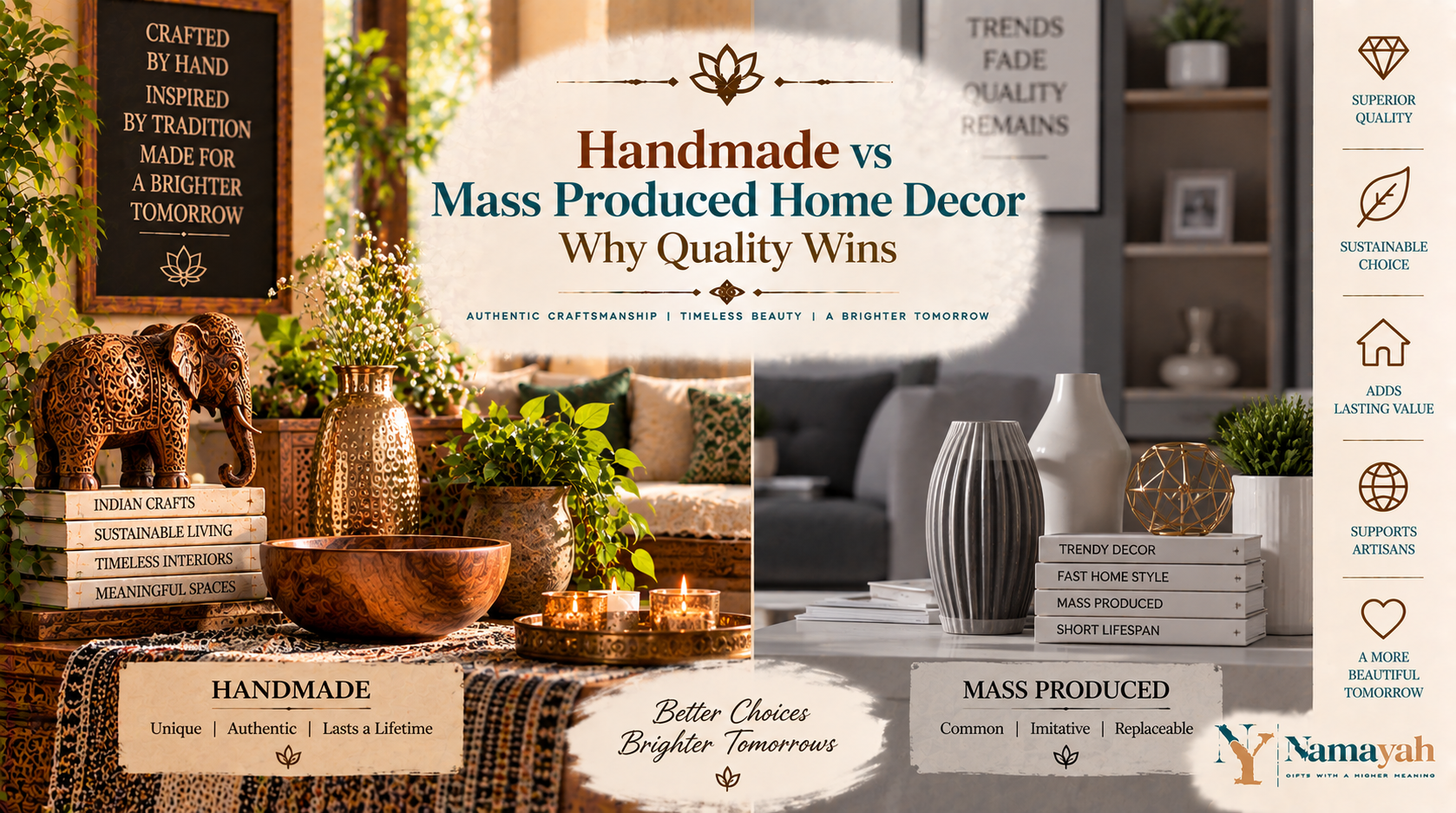
When choosing items to furnish your home, the debate between handmade vs mass produced home decor often boils down to a choice between temporary trends and lasting legacy. While mass-produced items offer instant gratification and low price points, they often lack the soul, durability, and ethical footprint of artisan-made goods. At Namayah, we believe that true luxury lies in the story behind the object, the hands that shaped it, and the materials that endure. Investing in pieces that reflect history and human touch transforms a house into a home, bringing warmth that assembly-line products simply cannot replicate.
Related: wooden home decor trends 2024
Related: styling wooden serveware
Related: cleaning copper home decor
Related: diwali home decor ideas luxury
The True Value of Artisan Craftsmanship
The value of artisan craftsmanship is found in the intricate details that only a human eye can perceive and a human hand can execute. Unlike factory production, where speed is the primary objective, artisan work prioritizes precision, material integrity, and the preservation of traditional techniques. Every mark, curve, and finish is a testament to years of practice, often passed down through generations of skilled craftspeople.
Why Human Touch Matters
When you purchase a handcrafted item, you are buying a piece of someone’s life work. Machine-made goods are designed for uniformity, but artisan goods are celebrated for their subtle, unique variations. These slight imperfections are not flaws; they are the hallmarks of authenticity. By choosing these pieces, you support a culture of slow design that values quality over quantity, ensuring that the object remains a functional and aesthetic asset for decades rather than ending up in a landfill within a few years. You can read more about our commitment to these values in our guide.
Why Choose Handmade Kitchenware?
Choosing handmade kitchenware is a decision that impacts both your culinary experience and your health. Mass-produced kitchen tools are often made from synthetic materials or low-grade alloys that may degrade quickly. In contrast, handmade items—particularly those crafted from brass or copper—offer natural antimicrobial properties and unparalleled heat conductivity. These are tools designed to be used, loved, and passed down.
Durability and Aesthetics
Handmade kitchenware, such as hammered copper pots or carved wooden serving sets, brings a tactile richness to the kitchen. These items do not just perform a task; they invite you to slow down and appreciate the process of cooking. Maintaining these items, as discussed in our blog, becomes a meditative ritual rather than a chore. By opting for artisan tools, you ensure that your kitchen remains a space of quality, tradition, and timeless style.
Sustainable Home Decor Benefits
One of the most significant sustainable home decor benefits is the reduction of the carbon footprint associated with global manufacturing. Mass production relies on high-energy industrial plants, long-distance shipping, and non-biodegradable packaging. Artisan workshops, by contrast, typically source local materials and utilize traditional, energy-efficient tools. This localized approach to production supports a circular economy that respects the environment.
Long-Term Environmental Impact
Sustainable luxury is inherently tied to longevity. When you buy a high-quality, handmade piece, you break the cycle of disposable consumption. According to the United Nations Environment Programme, shifting toward sustainable consumption models is vital for resource efficiency. By investing in durable goods, you contribute to a future where homes are furnished with items that hold value for a lifetime, reducing the demand for fast-fashion furniture that clutters our planet.
Supporting Indian Artisans and Their Heritage
Supporting Indian artisans is about more than just a purchase; it is about keeping ancient traditions alive. India has a rich history of metalwork, woodcarving, and weaving that faces increasing pressure from cheap, synthetic alternatives. By choosing handmade, you provide a livelihood for master craftsmen who keep these intricate skills thriving. This support ensures that specialized techniques—which take decades to master—do not disappear in the face of industrial automation.
Preserving Cultural Identity
Every piece of Indian artisan decor carries the weight of a regional identity. From the specific carving style of a wooden table to the unique patination of hand-hammered copper, these items tell a story of geography and culture. When you bring these items into your home, you aren't just decorating; you are acting as a curator of cultural heritage, preserving a legacy that connects the past to the present.
A Comparison: Handmade vs Mass Produced
| Feature | Handmade Decor | Mass-Produced Decor |
|---|---|---|
| Production Speed | Slow, deliberate | Rapid, automated |
| Uniqueness | High, every piece varies | Low, identical copies |
| Environmental Impact | Low, eco-conscious | High, industrial waste |
| Durability | High, lasts generations | Low, prone to wear |
| Ethical Impact | Supports skilled labor | Often exploits cheap labor |
The Emotional Connection to Your Home
There is an undeniable psychological benefit to living with objects that have a soul. Research from the Harvard Business Review highlights how products with a perceived 'human touch' foster a stronger emotional connection between the user and the item. When you know the history of a piece, or recognize the hand-carved details in a wooden bowl, you are less likely to dispose of it. This emotional durability is the ultimate form of sustainability.
Conclusion
The choice between handmade vs mass produced home decor is ultimately a choice about how you want to live. By prioritizing artisan craftsmanship, you choose to surround yourself with objects that are meaningful, sustainable, and ethically sourced. Whether you are looking for timeless kitchenware or statement pieces that anchor a room, handmade items bring a level of luxury that mass production simply cannot replicate. Embrace the beauty of the imperfect, support the dedicated hands of artisans, and build a home that reflects your values and your appreciation for true, lasting quality.