
Wooden vs. Plastic Kitchen Utensils: Why Handmade is Best
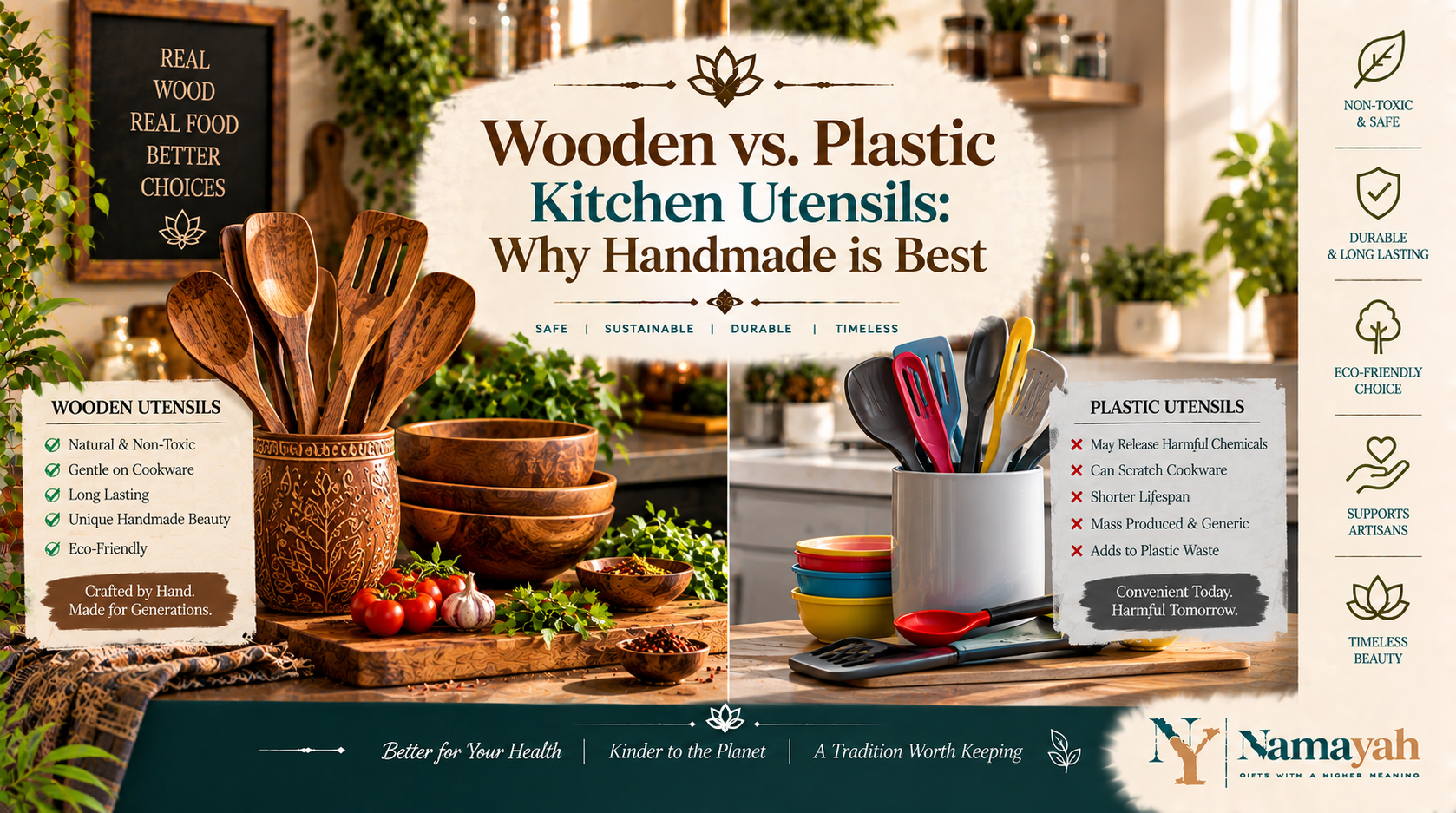
When deciding between wooden vs plastic kitchen utensils, the choice often comes down to balancing convenience with long-term quality and environmental impact. For many home chefs, the allure of lightweight plastic seems practical, yet the superior performance and timeless aesthetic of handcrafted wood offer an unmatched culinary experience. At Namayah, we believe that the tools you use should reflect a commitment to quality and sustainability, turning every meal preparation into an act of mindful artistry. Understanding the benefits of wooden spoons and other natural implements helps you make informed decisions that benefit both your cooking and the planet.
Related: copper home decor benefits
Related: copper water storage benefits
The Durability and Performance of Wood
One of the primary reasons chefs prioritize wood is its inherent durability. Unlike plastic, which can melt, warp, or release harmful chemicals when exposed to high temperatures, high-quality wood remains stable. Handmade wooden serveware is designed to handle the rigors of a busy kitchen without bending or leaching toxins into your food. This resilience makes wood a reliable partner for everything from sautéing vegetables to stirring thick stews. Beyond heat resistance, wooden utensils are exceptionally gentle on your cookware. If you invest in high-end non-stick pans or delicate copper pots, plastic can sometimes scratch the surface over time. Wood provides a soft touch, preserving the longevity of your kitchen essentials. When you choose to integrate [sustainable luxury home decor](https://namayah.com/blog/sustainable-luxury-home-decor-6/) into your space, you are investing in tools that perform as beautifully as they look.
Related: Sustainable Indian Craftsmanship
Why Choose Handmade Wooden Serveware for Your Table
Beyond the stovetop, presentation plays a significant role in modern luxury living. There is a distinct elegance in using artisanal, hand-carved pieces to serve your guests. Why choose handmade wooden serveware? Because each piece carries a unique story and a connection to traditional craftsmanship that mass-produced plastic simply cannot replicate. The grain patterns and natural textures of wood elevate the sensory experience of a meal. Handmade items also offer superior ergonomics. Craftsmen often shape these tools to fit comfortably in the hand, making long cooking sessions less fatiguing. In our Wooden Heritage archives, you can explore how these traditional techniques continue to set the standard for functional art. Whether you are hosting a formal dinner or a casual family gathering, the warmth of wood adds an inviting, organic element to your table setting.
Environmental Impact and Eco-Friendly Kitchen Tools
Sustainability is perhaps the most compelling argument for choosing wood over synthetics. As the world moves toward reducing microplastic waste, the demand for eco-friendly kitchen tools has surged. Plastic utensils are often difficult to recycle and frequently end up in landfills, where they persist for centuries. In contrast, wood is a biodegradable, renewable resource that leaves a significantly lighter footprint on the earth. Choosing wood supports the work of independent artisans and sustainable kitchenware brands that prioritize ethical sourcing. By selecting high-quality wood, you move away from the 'use-and-toss' culture that defines so much of the modern kitchen industry. According to the Environmental Protection Agency, conscious consumption is a pillar of effective waste reduction. When you choose materials that are designed to last for decades rather than months, you are participating in a more sustainable future.
The Health Benefits of Using Natural Materials
Health-conscious home cooks are increasingly wary of the chemicals that can leach from plastic when it degrades or heats up. Phthalates and bisphenol-A (BPA) are common concerns in low-quality synthetic kitchenware. Wooden utensils, when properly finished with food-safe oils, are naturally non-reactive. They do not impart metallic tastes or chemical residues into your sauces, ensuring that the flavor of your ingredients remains pure. Maintenance is simple, though it requires a bit more care than dishwasher-safe plastic. By regularly oiling your wooden spoons with food-grade mineral oil or beeswax, you keep the wood hydrated and prevent it from drying out or absorbing food odors. This ritual of maintenance not only extends the life of your tools but also fosters a deeper appreciation for the objects in your kitchen. It is much like learning how to prevent tarnishing on brass and copper products—a little effort goes a long way in preserving beauty.
A Comparison: Wood vs. Plastic at a Glance
To help you visualize the differences, consider the following comparison table highlighting why wood remains the gold standard for discerning kitchens.
| Feature | Wooden Utensils | Plastic Utensils |
|---|---|---|
| Heat Resistance | Excellent | Poor (can melt) |
| Eco-Friendliness | High (biodegradable) | Low (microplastics) |
| Surface Safety | Non-scratch | Can scratch coatings |
| Longevity | Decades (with care) | Short (prone to cracking) |
| Aesthetic | Timeless/Elegant | Utilitarian/Basic |
Cultivating a Timeless Kitchen Environment
Transitioning to wooden utensils is about more than just swapping out tools; it is about cultivating a kitchen that values quality over quantity. When you curate your home with items that are made with intention, you create a space that feels grounded and authentic. For those interested in the broader philosophy behind this lifestyle, we invite you to contact us to discuss how our collection fits into your vision of a luxury home. According to research from the Sustainable Packaging Coalition, prioritizing renewable materials in the home is a growing global trend among consumers who value both design and ecological responsibility. By selecting wood, you are aligning your home with these values, ensuring that your kitchen remains a place of both function and beauty for years to come.
Conclusion
Deciding between wooden vs plastic kitchen utensils is a choice between fleeting convenience and lasting quality. While plastic may seem easier to replace, the benefits of wooden spoons—including their durability, safety, and environmental friendliness—make them the superior choice for any dedicated home cook. By choosing handmade wooden serveware, you support a tradition of excellence and contribute to a more sustainable world. We invite you to explore our collections and discover how these simple, natural tools can transform your kitchen into a sanctuary of timeless luxury.