
Namayah vs Other Indian Handcrafted Brands: A Guide
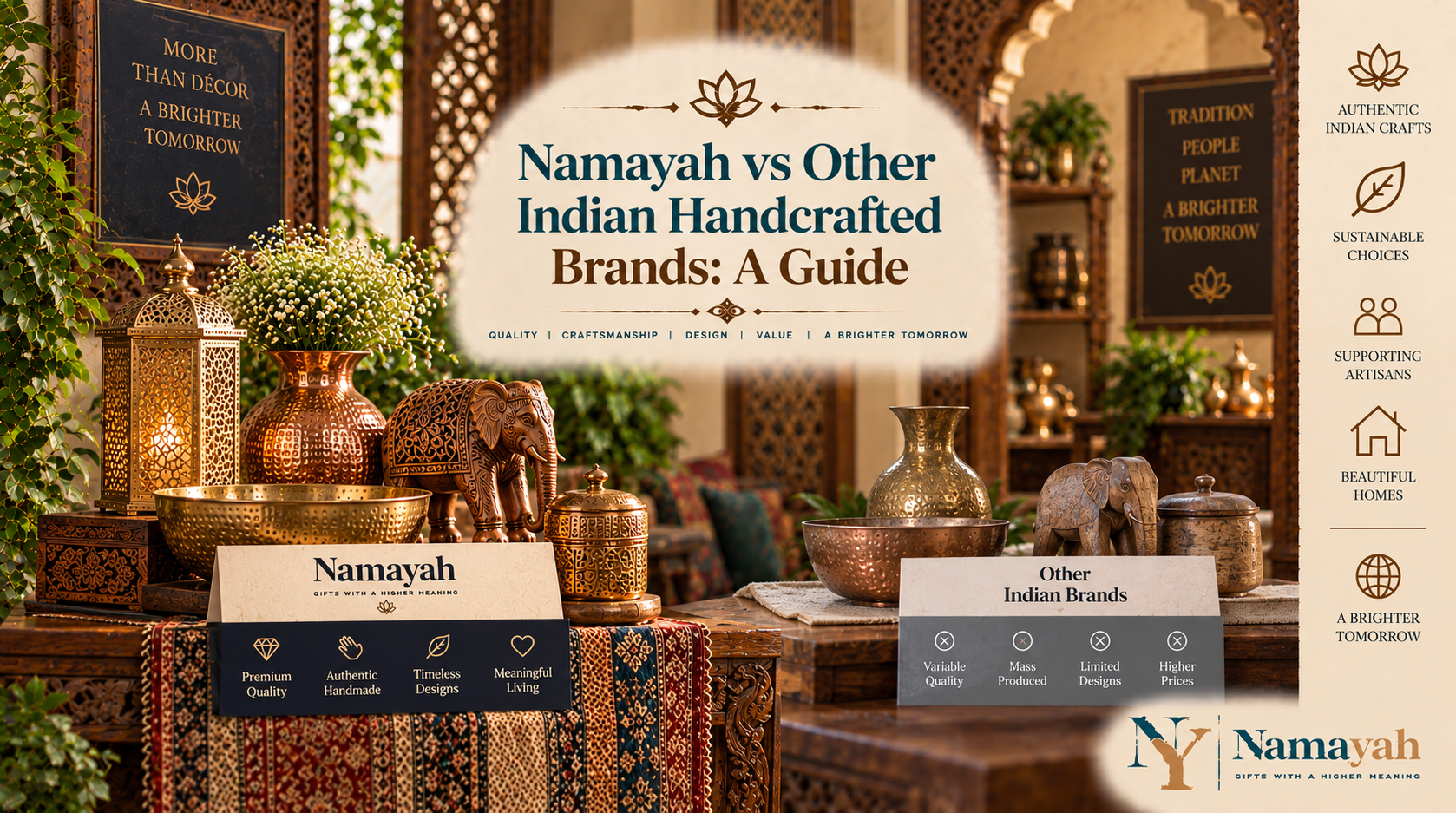
When curating a home with artisanal pieces, choosing the right source is as important as the design itself. In the growing market for Indian heritage goods, understanding how Namayah vs other indian handcrafted brands differ is essential for discerning buyers. While many retailers offer traditional aesthetics, the difference lies in the commitment to authentic techniques, ethical sourcing, and the longevity of the materials used in every piece.
Related: handcrafted brass utensils benefits
The Philosophy of Authentic Craftsmanship
At the heart of the Indian handcrafted décor comparison is the distinction between mass-produced items masquerading as traditional art and genuine artisan-led creations. Many commercial brands focus on high-volume production, which often leads to the dilution of traditional motifs and the use of inferior synthetic finishes. In contrast, our approach at Namayah is rooted in the preservation of ancient techniques passed down through generations. True craftsmanship involves more than just the final aesthetic; it is about the story of the artisan and the physical integrity of the material. Whether it is intricate brass casting or hand-carved woodwork, the process requires patience, precision, and a deep respect for the medium. When you compare these standards, you will find that luxury home décor should not just look beautiful, but should also carry the weight of cultural history and ethical labor practices.
Evaluating Brand Reputation and Artisan Welfare
When researching the brand reputation Indian artisans rely on, transparency is the primary metric. Many large-scale decor brands prioritize profit margins over the fair compensation of the skilled individuals who create their products. This often results in a cycle of diminishing quality as artisans are pressured to work faster and cheaper. A reputable brand ensures that the artisans are not just paid fairly, but are supported in their professional growth and community development. We believe that a brand is only as strong as its relationship with its makers. By fostering direct, long-term partnerships, we ensure that the quality of our Artisan Treasures remains consistent. This commitment to ethical sourcing is a defining factor in the modern luxury landscape, ensuring that your purchase supports a sustainable ecosystem rather than a disposable one.
Understanding the Price of Handmade Home Décor
One of the most frequent questions consumers have relates to the price of handmade home décor. It is natural to wonder why premium artisanal pieces differ in cost compared to factory-made equivalents. The price reflects not just the base materials, but the thousands of hours of training, the rejection of imperfect pieces to ensure quality, and the sustainable supply chain that keeps traditional art forms alive. When analyzing the costs, consider the following breakdown:
| Feature | Mass-Produced Décor | Namayah Handcrafted Décor |
|---|---|---|
| Material Quality | Synthetic or Alloy | Pure Copper, Brass, Aged Wood |
| Production Time | Minutes (Machine) | Weeks (Artisan) |
| Ethical Standards | Unverified | Transparent & Fair Trade |
| Durability | Low (Short Lifecycle) | High (Heirloom Quality) |
By investing in high-quality items, you are often saving money in the long term, as these pieces do not need to be replaced. For those interested in maintenance, you can read our guide on how to prevent tarnishing to ensure your investment lasts for decades.
Craftsmanship Comparison in Materials
When conducting a craftsmanship comparison across different Indian brands, look closely at the finishing. Many brands use chemical lacquers to give a fake shine to metals, which can strip away the natural beauty and longevity of the material. We prioritize traditional finishing methods that allow the metal to age gracefully, developing a patina that actually enhances the object's character over time. Whether you are exploring Brass Artistry or seeking durable Wooden Heritage pieces, the difference in the "feel" of the product is palpable. Authentic handmade items have weight, texture, and a slight individuality—a human touch that a machine can never replicate. According to the UNESCO Creative Cities Network, the preservation of traditional craftsmanship is vital for cultural sustainability, and supporting brands that prioritize this is an act of cultural stewardship.
Sustainability and Ethical Luxury
Modern luxury is increasingly defined by its environmental footprint. The International Trade Centre highlights that sustainable consumption often begins with choosing goods that are durable and ethically produced. Unlike fast-decor brands that contribute to landfill waste through low-quality items, our focus is on creating timeless pieces. We utilize traditional methods that are naturally low-impact, avoiding the harsh industrial chemicals often used in mass manufacturing. When you choose to support Indian artisans through conscious brands, you are contributing to a circular economy that values the earth as much as the object. This is the essence of sustainable living, where every piece in your home serves a purpose and carries a story.
Making the Right Choice for Your Home
Ultimately, the choice between brands comes down to your personal values. Do you prioritize the lowest price, or are you looking for a piece that will be passed down to the next generation? The difference is clear when you experience the texture of hand-hammered copper or the smooth grain of polished, sustainably sourced wood. We invite you to learn more about our commitment to excellence through our About Us page. Choosing a brand is a partnership; you are trusting us to bring the soul of India into your living space. By choosing authenticity, you are ensuring that the traditions of our ancestors continue to thrive in the modern world.
Conclusion
The landscape of Indian handcrafted décor is rich and diverse, but it requires a discerning eye to find true quality. By understanding the true price of handmade home décor, the importance of artisan welfare, and the physical characteristics of authentic materials, you can make an informed decision that benefits both your home and the artisan community. Namayah stands as a testament to what is possible when heritage meets modern luxury, and we are proud to share this journey with you. If you have questions about our collections or our process, please reach out via our contact page so we can help you find the perfect artisanal addition to your home.