
Sustainable Indian Craftsmanship for Modern Luxury Homes
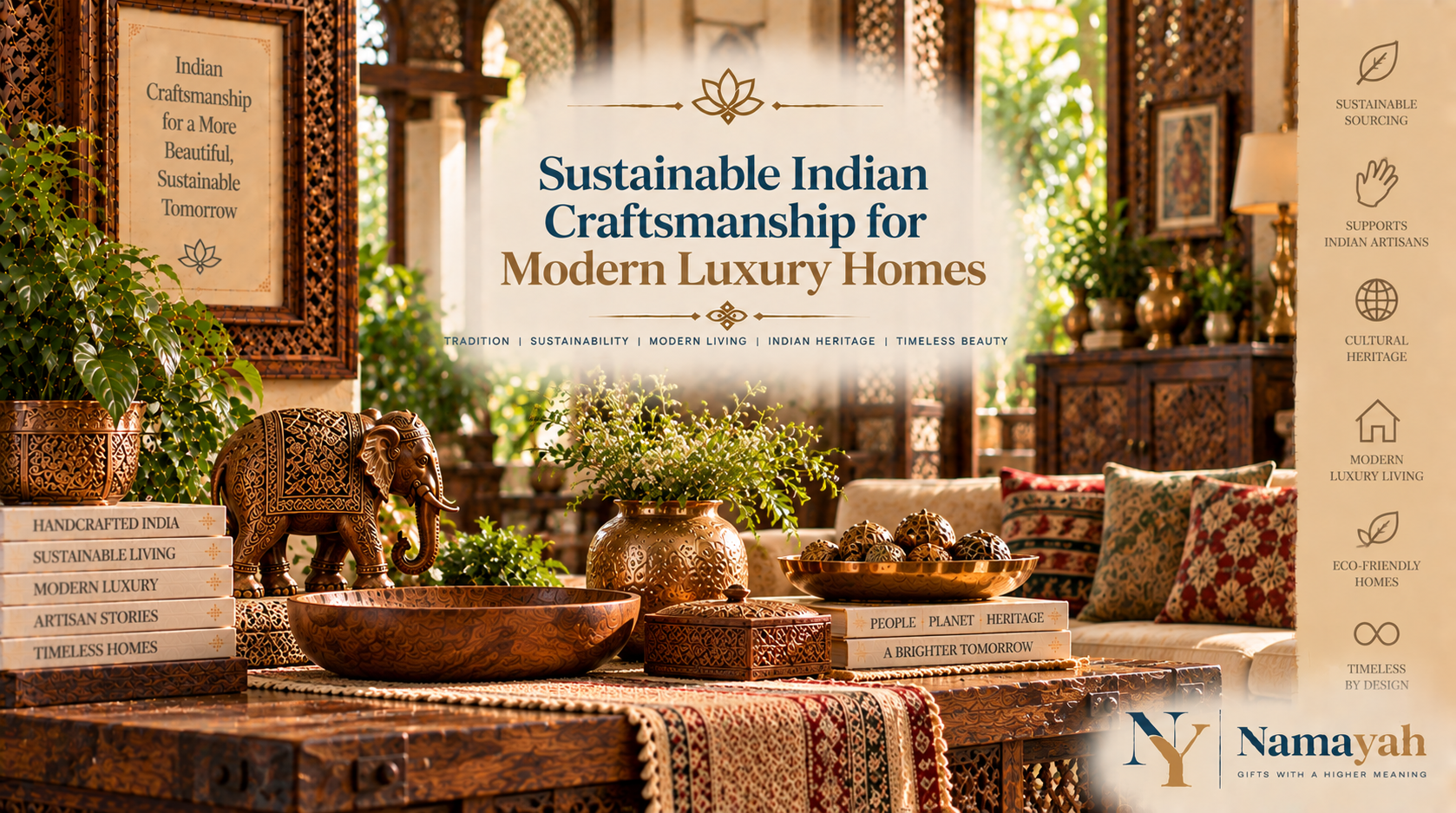
In an era dominated by mass production and fast furniture, the allure of Sustainable Indian Craftsmanship has never been more profound. Discerning homeowners are increasingly looking beyond mere aesthetics, seeking pieces that tell a story, respect the environment, and honor centuries of tradition. At Namayah, we believe that true luxury lies in the hands of the artisan, where every hammer strike and wood carving represents a bridge between our storied past and a conscious future. Choosing artisanal products is more than a design choice; it is an investment in longevity. Unlike synthetic materials that degrade over time, traditional materials like brass, copper, and reclaimed wood develop a unique patina, growing more beautiful with age. This guide explores why heritage-driven design is the ultimate expression of modern luxury and how you can integrate these timeless elements into your own living space.
Related: custom corporate gift boxes india
The Essence of Sustainable Indian Craftsmanship
Indian artisanal traditions are inherently sustainable. For generations, craftsmen have utilized locally sourced materials and natural finishes, minimizing the carbon footprint associated with global industrial manufacturing. This approach aligns with the global movement toward 'Slow Living,' where quality is prioritized over quantity. When we speak of sustainability in the context of Indian heritage, we refer to three core pillars: environmental responsibility, social equity, and cultural preservation. By utilizing metals like copper and brass, which are fully recyclable, and wood sourced from managed forests, artisans ensure that their creations do not come at the cost of the planet. Furthermore, the techniques used are often manual, requiring little to no electricity, further reducing the environmental impact. According to UNESCO, safeguarding intangible cultural heritage is vital for maintaining cultural diversity in the face of growing globalization. By choosing handcrafted items, you are actively participating in this preservation, ensuring that the skills of master carvers and metalworkers are passed down to future generations.
The Material Advantage: Brass, Copper, and Wood
The materials used in Sustainable Indian Craftsmanship are selected for their durability and natural properties. In a luxury home, these materials provide a tactile warmth that plastic or laminate simply cannot replicate.
The Timelessness of Brass and Copper
Brass and copper have been central to Indian households for millennia. Beyond their golden and reddish hues, these metals possess antimicrobial properties, making them ideal for serveware and kitchen accents. In modern interior design, a brass centerpiece or a copper water carafe serves as a functional work of art. These metals are also highly durable; a well-maintained brass vessel can last for centuries, eventually becoming a family heirloom.
The Warmth of Artisanal Wood
Wooden heritage in India is diverse, ranging from the intricate floral carvings of Saharanpur to the robust utility of teak and sheesham. Sustainable woodcraft focuses on using timber that is seasoned naturally. This prevents warping and ensures that the furniture or decor piece remains stable in various climates. Whether it is a hand-carved console table or a simple wooden platter, the grain of the wood tells a story of the tree’s life and the artisan’s patience.
| Material | Sustainability Factor | Average Lifespan | Primary Benefit |
|---|---|---|---|
| Brass | 100% Recyclable | 100+ Years | Antimicrobial & Aesthetic |
| Copper | High Thermal Conductivity | 150+ Years | Health Benefits & Longevity |
| Hardwood | Carbon Sequestration | 50-80 Years | Structural Integrity & Warmth |
| Recycled Wood | Zero New Deforestation | 40-60 Years | Unique Character & Eco-friendly |
The Ethical Impact of Supporting Artisans
Every piece of Sustainable Indian Craftsmanship represents a livelihood. The handicraft sector is one of the largest employers in rural India, second only to agriculture. By purchasing from brands that prioritize artisan welfare, you are contributing to a circular economy that empowers local communities. Organizations like the Ministry of Textiles in India work to promote these crafts, but the real support comes from the global luxury market. When a homeowner chooses a hand-beaten copper bowl over a factory-made alternative, they are providing the artisan with the resources to keep their craft alive. This ethical connection adds a layer of 'emotional luxury' to the home, knowing that your decor has supported a family and a tradition. We invite you to learn more About Us and our commitment to these incredible craftsmen who transform raw materials into heritage treasures.
How to Style Heritage Pieces in Minimalist Interiors
A common misconception is that traditional Indian decor only fits in 'ethnic' or maximalist settings. On the contrary, the clean lines of hand-forged metal and the organic textures of wood are perfect complements to modern minimalism. Here are a few interior design tips to help you achieve a balanced look:
- Create a Focal Point: Use one large statement piece, such as a hand-carved wooden mirror or a large brass floor vase, to anchor a room.
- Layer Textures: Mix the cold, smooth surface of a copper tray with soft linen textiles to create a sensory contrast.
- Embrace Imperfections: Handcrafted items often have slight variations. These are not flaws but 'marks of the hand' that add soul to a modern, sterile environment.
- Focus on Utility: Use luxury serveware for daily rituals. A brass spice box or a wooden fruit bowl brings the heritage experience into your everyday routine.
Sustainable sourcing is also about ensuring the wood used in your home doesn't contribute to deforestation. Organizations like the World Wildlife Fund emphasize the importance of choosing responsibly harvested timber to protect global biodiversity.
Conclusion
Sustainable Indian Craftsmanship is the ultimate intersection of ethics and elegance. By choosing pieces that are handcrafted, environmentally responsible, and culturally significant, you create a home that is not only luxurious but also meaningful. These items do not just occupy space; they carry the spirit of the artisan and the legacy of Indian heritage. As we move toward a more conscious way of living, let us surround ourselves with objects that reflect our values—pieces that are built to last, designed to be loved, and crafted to honor the earth.