
Copper and Brass Home Accessories for Traditional Interiors
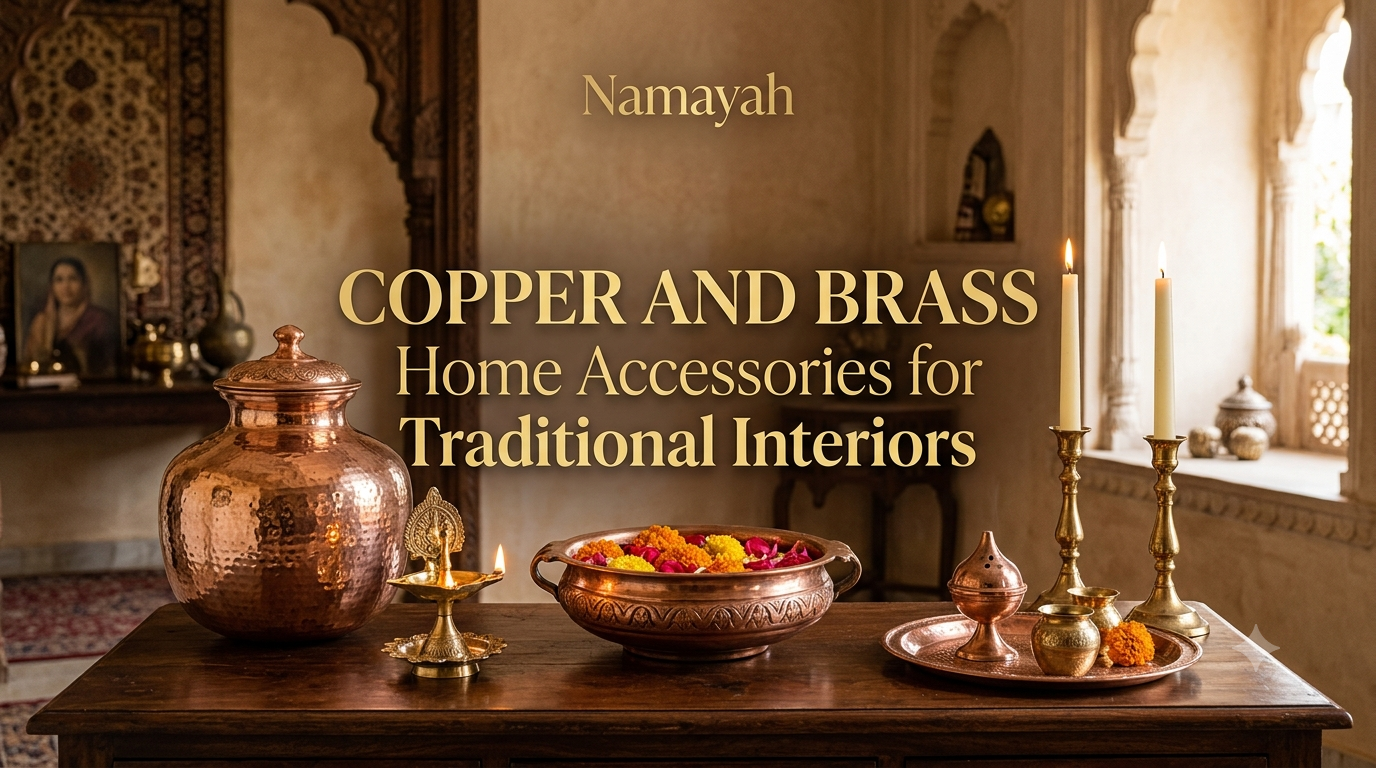
Traditional interiors are built around warmth, craftsmanship, texture, and a sense of history. Copper and brass home accessories can strengthen all of these qualities without requiring a complete room makeover. From brass lamps and decorative trays to copper vessels, mirrors, and handcrafted objects, these metals introduce warmth and visual character to traditional spaces.
Copper and brass have a particularly strong connection with Indian interiors, where metal objects have long appeared in everyday, decorative, and ceremonial settings. Contemporary designers continue to use them because their warm tones work naturally with wood, textiles, stone, and earthy colour palettes.
The key is balance. A few thoughtfully selected pieces can make a room feel collected and timeless, while too many shiny metallic objects can make the space feel crowded.
Why Copper and Brass Work So Well in Traditional Interiors
Traditional interiors often rely on materials that develop character rather than looking overly uniform. Wood furniture, patterned textiles, carved details, ceramics, natural stone, and aged finishes all contribute to this atmosphere.
Copper and brass complement these materials particularly well.
Brass has a warm golden appearance that can introduce an elegant focal point. It works especially well with dark wood, cream, deep green, terracotta, burgundy, and other rich traditional colours.
Copper has a warmer, reddish-orange character. It can make interiors feel more rustic, earthy, and artisanal, particularly when paired with natural wood and handmade textiles.
Metal accents can also provide contrast. A traditional room dominated by wood and fabric can benefit from a reflective brass lamp or copper vessel that catches the light and prevents the overall palette from feeling visually flat.
Interior design coverage has also highlighted the continued appeal of warmer metals, including brass and bronze, as alternatives to cooler finishes when creating spaces with more character and longevity.
Copper vs. Brass for Home Décor
Choosing between copper and brass largely depends on the atmosphere you want to create.
| Feature | Copper | Brass |
| Main colour | Reddish, warm orange | Golden, yellow-gold |
| Overall character | Earthy and rustic | Classic and elegant |
| Works well with | Wood, terracotta, earthy textiles | Dark wood, marble, rich fabrics |
| Best for | Vessels, planters, decorative objects | Lamps, mirrors, hardware, trays |
| Traditional appeal | Strong | Strong |
| Ideal style | Rustic, artisanal, heritage | Classic, refined, heritage |
You do not necessarily need to choose only one. Copper and brass can work together when they are repeated thoughtfully throughout the room.
Best Copper and Brass Home Accessories
Brass Lamps and Candle Holders
Lighting is one of the easiest ways to introduce brass into a traditional room.
A brass table lamp can sit on a side table, console, or desk, while a traditional candle holder can become part of a dining table or mantel arrangement. Larger brass lighting fixtures can serve as statement pieces in living rooms, entrances, or dining areas.
The advantage of using brass in lighting is that it combines decoration with function. Instead of adding another object simply for visual interest, you are incorporating an accessory that contributes directly to the atmosphere of the room.
For an Indian-inspired interior, traditional lamp forms can provide an especially strong heritage reference. Copper and brass lighting have long been used as decorative elements in Indian homes and interiors.
Copper and Brass Vases and Urli Bowls
Vases and shallow metal bowls are versatile accessories for traditional interiors.
A copper vase can be placed on a dining table, console, or open shelf. A brass urli can create a stronger focal point in an entrance or living room. Depending on the design, an urli may be styled as an empty sculptural object or used as a decorative vessel.
For a softer appearance, combine metal vessels with flowers, foliage, or other natural elements.
The goal is not to fill every available surface. One substantial vessel can often have more impact than several small objects scattered around the room.
Mirrors and Decorative Frames
A mirror with a brass frame can combine practicality with traditional ornamentation.
Place a decorative mirror above a console in the entryway, behind a sideboard, or on a feature wall. An aged or antique-style finish can complement traditional furniture particularly well.
Architectural Digest India has specifically highlighted brass-finish mirrors as a way to create visual impact in an entrance, while noting that antique frames and mirrors can add character and texture to a room.
Trays, Bowls and Tabletop Accessories
Decorative trays are useful for creating organized arrangements.
Place a brass tray on a coffee table with a small vase, candle holder, and decorative object. On a dining table, a larger tray can group accessories together instead of leaving individual objects spread across the surface.
Copper bowls can introduce a softer, warmer metallic tone. These pieces work especially well with wooden tables because the contrast between the two materials creates visual depth.
Figurines and Traditional Objects
Small brass or copper figurines can add cultural or personal meaning to a traditional interior.
The best pieces are usually those that connect with the homeowner’s taste, heritage, travels, or interests. Instead of creating a large collection of unrelated objects, select a few pieces that work together.
For Indian traditional interiors, handcrafted metal objects can connect the décor with established metalworking traditions. Historical records also document the importance of brass and copper artware in Delhi’s craft traditions.
Hardware and Small Details
You do not have to rely only on decorative objects.
Brass cabinet pulls, drawer handles, door hardware, hinges, curtain rods, and other small details can reinforce a traditional design scheme.
These elements are particularly useful when you want a subtle transformation. Rather than replacing furniture, updating selected hardware can introduce a warmer metallic note while preserving the original character of the room.
How to Style Copper and Brass in Different Rooms
Living Room
Start with one or two focal pieces.
A brass lamp, copper vase, framed mirror, or decorative tray can work with a traditional sofa, wooden coffee table, patterned rug, and textured curtains.
Avoid placing several metallic objects directly beside each other unless you are deliberately creating a layered display.
Dining Room
The dining room is ideal for brass and copper accessories because metal naturally complements wood furniture and traditional table settings.
Try a brass centerpiece, copper serving vessel, decorative candle holders, or a metal tray on a sideboard.
Keep the dining table functional. Decorative pieces should leave enough space for everyday use.
Entryway
The entryway is an excellent place for a statement accessory.
A brass-framed mirror above a wooden console can establish the design language of the home immediately. Add one copper or brass vessel and a small decorative object rather than filling the entire console.
Bedroom
Use smaller accents for a calmer effect.
A brass bedside lamp, decorative box, framed mirror, or small copper vessel can introduce warmth without making the bedroom feel overly formal.
Traditional interiors benefit from repetition, so consider matching the metal finish of bedside lighting with selected hardware elsewhere in the room.
Kitchen
Copper and brass can work especially well in kitchens with traditional cabinetry.
Copper vessels, brass handles, decorative containers, and selected hardware can add warmth to wood or painted cabinets. However, distinguish between objects intended for decoration and products designed and approved for food use.
How to Mix Copper and Brass Without Overdoing It
Mixing metals can create a more collected look, but there should still be a visual relationship between them.
Try these principles:
- Choose one dominant metal.
Let brass or copper appear most frequently, then use the second metal as an accent. - Repeat each finish.
If copper appears only once, it may look accidental. Repeat it in at least two visually connected areas. - Use other materials as a buffer.
Wood, stone, ceramic, glass, and textiles can separate metallic objects and make the overall arrangement feel natural. - Consider finish as well as colour.
A polished brass object and a heavily aged copper vessel have very different visual weights. - Avoid decorating every surface.
Traditional interiors look richer when they have negative space.
A collected interior is generally more convincing when objects appear intentionally selected rather than purchased as a matching set.
Choosing Finishes for Traditional Interiors
The finish can completely change the impression of a copper or brass accessory.
Polished finishes create more shine and formality. They work when you want a refined, elegant appearance.
Antique finishes tend to feel more established and heritage-inspired. They are useful when the goal is a room that looks naturally aged rather than newly decorated.
Hammered finishes emphasize craftsmanship and texture. They are particularly effective in rustic, artisanal, and eclectic traditional spaces.
Embossed or engraved finishes can become decorative focal points because the surface detail catches light and adds visual depth.
Choose the finish according to the furniture and architecture already present rather than selecting every accessory independently.
Caring for Copper and Brass Accessories
Copper and brass can change appearance over time. Depending on the finish and environment, some pieces may develop a patina, while polished pieces may require more frequent cleaning to retain their original shine.
Before cleaning, check the manufacturer’s instructions and determine whether the piece has a protective coating. Avoid assuming that every brass or copper item should be polished in the same way.
For decorative pieces:
- Dust them regularly with a soft cloth.
- Keep them away from unnecessary moisture.
- Follow the manufacturer’s care instructions.
- Test any cleaning method on an inconspicuous area first.
- Do not aggressively polish an intentionally aged or antique finish.
The right level of patina is ultimately a design choice. A slightly aged surface can reinforce the historic character that makes traditional interiors appealing.
Common Decorating Mistakes to Avoid
Using Too Many Metallic Pieces
Copper and brass are accent materials. Covering every surface with metal can reduce their impact.
Mixing Too Many Finishes
A room can accommodate different finishes, but too many variations may create visual noise. Establish a dominant finish and use alternatives selectively.
Ignoring Scale
A tiny brass object may disappear on a large console, while an oversized accessory can overwhelm a small table.
Match the size of the accessory to the furniture and room.
Choosing Accessories Without Considering Colour
Metal looks different against different backgrounds. Brass can appear especially rich against dark wood or saturated colours, while copper can complement earthy neutrals and warm materials.
Making the Room Look Like a Museum
Traditional does not have to mean old-fashioned or overcrowded.
Modern traditional interiors often work best when heritage pieces are balanced with comfortable furniture, open space, contemporary lighting, and practical layouts. Current design guidance similarly emphasizes using historic details selectively rather than turning a home into a period replica.
How to Create a Timeless Traditional Look
The most effective approach is to build the room gradually.
Begin with your main furniture and architectural elements. Then identify where the room needs warmth, reflection, texture, or a focal point.
Add a brass lamp to a dark wooden side table. Introduce a copper vessel on a console. Hang a brass-framed mirror in the entryway. Add a small metal tray to the coffee table.
These individual choices can work together without making the room feel overly coordinated.
Most importantly, choose pieces that have a reason to be there. Traditional interiors feel authentic when accessories support the story of the space rather than simply following a decorative trend.
FAQs About Copper and Brass Home Accessories
Are copper and brass good for traditional interiors?
Yes. Their warm tones, craftsmanship, and historic associations make them natural choices for traditional interiors. They work particularly well with wood, textiles, stone, ceramics, and earthy colours.
Which is better for traditional décor, copper or brass?
Neither is universally better. Brass generally creates a golden, classic appearance, while copper offers a warmer, more earthy character. The best choice depends on the room’s colour palette and furniture.
Can I mix copper and brass in the same room?
Yes. Use one as the dominant metal and the other as an accent. Repeating each finish in a few locations can make the combination feel intentional.
What are the best brass accessories for a living room?
Brass lamps, mirrors, trays, candle holders, decorative bowls, figurines, and selected furniture hardware are strong options. Choose accessories according to the room’s scale rather than adding too many pieces.
How can I use copper accessories without making my home look rustic?
Combine copper with refined materials such as polished wood, marble, glass, quality textiles, and elegant furniture. Use a few carefully selected copper pieces rather than covering the room in copper.
Do brass accessories need regular polishing?
It depends on the finish and the look you want. Polished brass generally requires more attention if you want to maintain its shine, while some aged finishes are designed to retain or develop a patinated appearance.
Are copper and brass suitable for modern traditional interiors?
Yes. They can bridge traditional and contemporary styles effectively. For a modern traditional look, combine a limited number of metal accessories with clean furniture shapes and traditional materials.
How many metallic accessories should I use in one room?
There is no fixed number. Start with one focal piece and add smaller accents only where they improve balance. The size, layout, furniture, and existing finishes matter more than a specific quantity.
Conclusion
Copper and brass home accessories for traditional interiors offer an effective way to introduce warmth, craftsmanship, and character without redesigning an entire room. Brass lamps, copper vessels, decorative trays, mirrors, figurines, and hardware can each contribute something different.
The strongest results come from restraint. Select accessories that complement your furniture, repeat finishes thoughtfully, and leave enough open space for each piece to stand out.
Whether you are decorating a classic living room, a traditional Indian home, an elegant dining area, or a heritage-inspired entryway, copper and brass can help create an interior that feels warm, personal, and timeless.