
The Enduring Appeal of Indian Copper Craftsmanship
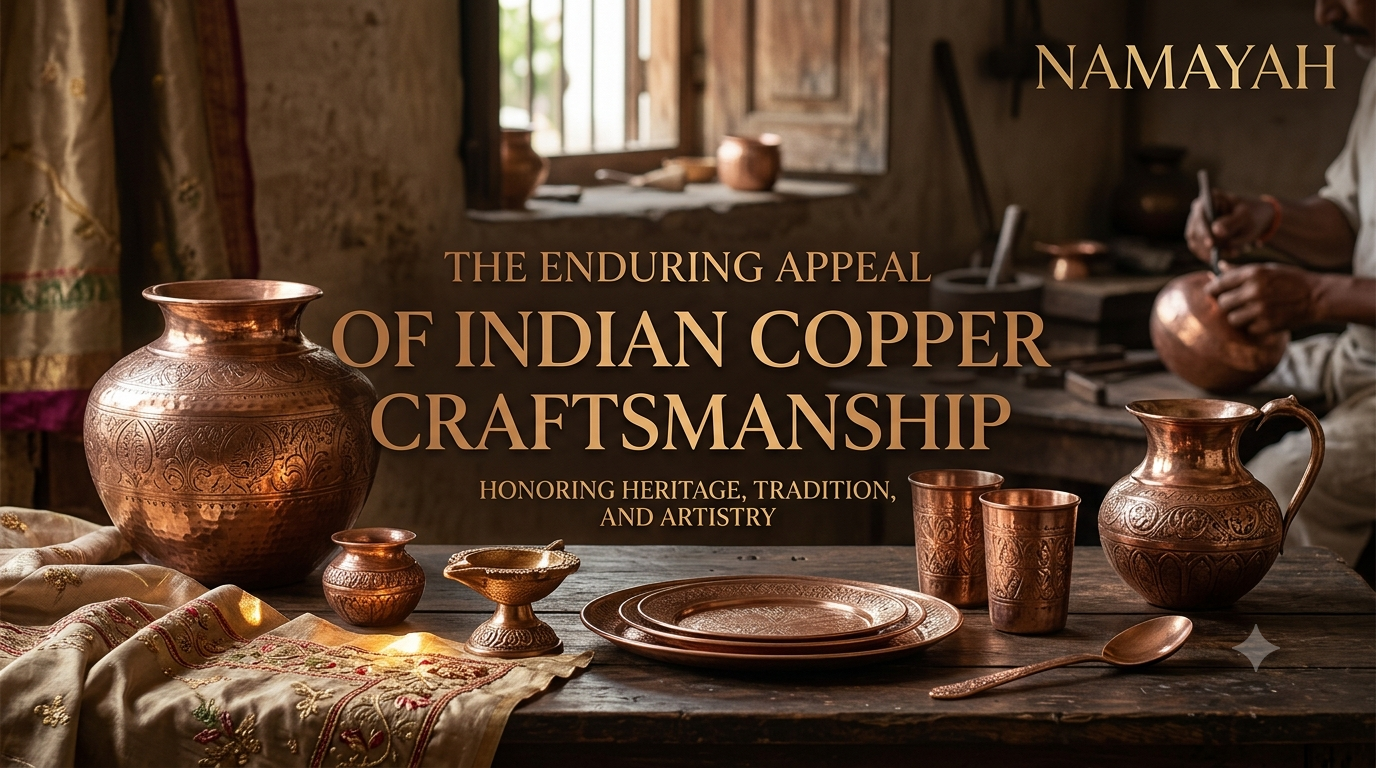
Indian copper craftsmanship is a living expression of the country’s artistic heritage, combining skilled handwork, functional design, regional identity, and generations of knowledge. From traditionally made vessels and household objects to decorative pieces, copper has been shaped by Indian artisans into objects that are both useful and visually distinctive.
The appeal of Indian copper craftsmanship comes from more than the material itself. It lies in the human skill behind every piece: selecting and preparing metal, shaping it with traditional tools, creating textures or patterns, and carefully finishing the surface. India’s official handicrafts classification recognizes several copper-metal craft categories, including Uttarakhand Tamta products, copperware, and other regional copper crafts.
Today, this heritage continues to attract people who value handmade objects, cultural authenticity, and designs that connect contemporary interiors with traditional Indian artistry.
A Craft Rooted in Indian Heritage
Metalworking has a long and varied history across the Indian subcontinent. Artisans have worked with copper and copper-based alloys to create objects ranging from utilitarian vessels to religious, decorative, and artistic pieces.
The Ministry of Textiles describes Indian metal crafts as encompassing intricate work in metals including copper, brass, and silver. Its documentation also identifies numerous regional metalworking traditions and techniques, demonstrating that Indian metal craft is not a single uniform practice but a collection of localized skills.
Copper is particularly interesting because it combines practical qualities with an unmistakable visual character. Its warm metallic surface can appear bright and polished when new and develop a deeper patina as it ages. For many admirers, this changing appearance is part of the material’s charm.
Indian copper craftsmanship therefore occupies an unusual space between utility and art. A vessel can be an everyday object while simultaneously representing the techniques, aesthetic preferences, and cultural history of the community that produced it.
How Indian Copper Craft Is Made
Traditional copper craftsmanship requires considerably more than simply forming a piece of metal. Depending on the region and product, artisans may use processes involving heating, cutting, shaping, hammering, engraving, embossing, polishing, and finishing.
The exact process varies according to the craft tradition and the desired object. Some products begin with copper sheets that are gradually shaped into vessels. Others involve casting, surface decoration, or combinations of metalworking techniques.
Shaping, Hammering, and Finishing
Hand tools remain central to many traditional metalworking processes. The Ministry of Textiles’ documentation of Indian metal crafts describes techniques in which heated metal becomes more workable before artisans shape it using tools such as hammers, mallets, tongs, files, chisels, and related equipment.
This process illustrates one of the defining characteristics of handmade copperware: subtle variation.
Machine-made objects can prioritize uniformity, while handmade pieces may carry small differences in texture, symmetry, or finishing. These variations can provide evidence of the individual process behind an object rather than being viewed simply as imperfections.
Surface treatment also plays an important role. Depending on the tradition, artisans may polish the metal, add decorative patterns, engrave motifs, or combine copper with other materials.
Regional Expressions of Copper Craft
One of the most fascinating aspects of Indian copper craftsmanship is its regional diversity. Different communities have developed distinctive approaches based on local traditions, available materials, cultural preferences, and inherited skills.
The Government of India’s handicraft classification lists Uttarakhand Tamta Product among India’s copper-metal crafts, alongside copperware and other copper traditions.
Uttarakhand’s Tamta Tradition
Bageshwar in Uttarakhand is recognized for its copper craftsmanship. The National Portal of India describes the region’s Tamta products as including kitchenware, utensils, and decorative objects, and notes that copperware production has been passed from one generation to another.
This tradition demonstrates how Indian copper craftsmanship can remain closely connected to a particular place and community.
A regional craft is not simply a manufacturing technique. It can also serve as a marker of local identity. The objects produced by artisans carry associations with the landscape, history, and cultural practices of their region.
Copper in India’s Broader Metalworking Traditions
Copper also appears within broader Indian traditions involving alloys and mixed-metal techniques.
For example, the Government of India describes Bengal Dokra as a metal-casting tradition using the lost-wax method. Artisans create detailed pieces using brass, bronze, or copper, producing objects such as figurines, lamps, ornaments, and jewellery.
Other traditions incorporate copper into decorative techniques. Mainpuri Tarkashi, for instance, involves fine metallic wires being inlaid into surfaces including wood, brass, and copper.
These examples show that copper’s role in Indian craftsmanship extends beyond standalone copper vessels. It can also become part of complex artistic systems involving casting, inlay, engraving, and surface decoration.
What Makes Indian Copperware Distinctive?
Several qualities contribute to the enduring appeal of Indian copper craftsmanship.
Handmade character: Traditional techniques can produce subtle differences from one object to another.
Material warmth: Copper has a naturally warm metallic appearance that can complement both traditional and contemporary settings.
Decorative potential: The metal can be shaped, textured, engraved, embossed, polished, or incorporated into other metalworking techniques.
Cultural connection: Regional copper traditions can reflect local histories and inherited artisan knowledge.
Functional design: Many copper objects have historically been created for practical purposes, allowing craftsmanship to become part of everyday life.
Together, these characteristics make Indian copperware more than decorative metalwork. It can function as a bridge between craftsmanship and daily living.
Copper Craftsmanship in Everyday Life
Indian metal crafts have historically included many objects designed for practical use. Vessels, utensils, containers, lamps, and other household articles demonstrate how traditional craftsmanship can exist within ordinary routines.
This relationship between function and beauty remains one of the strongest aspects of Indian craft.
A handcrafted copper vessel, for example, does not need to be displayed in a museum to have cultural significance. Its form, surface, and method of production can bring traditional craftsmanship into a kitchen or dining space.
This practical dimension also helps explain why traditional crafts can survive across generations. Objects that serve a purpose are more likely to remain relevant as lifestyles change.
At the same time, buyers should distinguish cultural appreciation from unsupported claims about health benefits. Copper objects may have a long history of use in Indian households, but claims about specific health effects should be evaluated using appropriate scientific and medical evidence rather than assumed from tradition alone.
From Traditional Utility to Modern Décor
The contemporary appeal of Indian copper craftsmanship extends well beyond traditional household use.
Copper’s warm appearance works naturally with many interior styles. A handcrafted vessel can complement an earthy, traditional room, while a simple copper object can add contrast to a minimalist interior.
Modern consumers also increasingly encounter handmade metalwork as:
- Decorative bowls and vessels
- Lamps and lighting accents
- Wall décor
- Sculptural objects
- Kitchenware
- Tabletop accessories
- Religious and cultural objects
- Artisan-made gifts
The appeal is partly visual, but it is also connected to the desire for objects with a recognizable human story.
In a world filled with standardized products, handmade copperware can offer a different experience. Its surface may reveal the marks of tools, repeated hammering, polishing, and other stages of production.
The Importance of Artisan Skill
The most valuable element of traditional copper craftsmanship is often the least visible: knowledge.
An experienced artisan understands how metal responds to tools, pressure, heat, and repeated shaping. Such knowledge is difficult to reduce to a simple set of instructions because much of it develops through practice and observation.
India’s handicraft institutions continue to document and classify metal crafts, while government initiatives also recognize copper-metal craft categories for skill-development programs. A 2025–26 Ministry of Textiles document, for example, lists several copper-metal craft areas including Moradabad Metal Craft, Banaras Metal Repousse Craft, and Uttarakhand-related craft categories.
Preserving this knowledge is therefore about more than preserving objects. It means maintaining the skills and cultural practices that make those objects possible.
Preserving India’s Copper Craft Traditions
Traditional craftsmanship faces the challenge of remaining economically and culturally relevant in a changing market.
Preservation can take several forms. Documenting techniques is one. Training younger artisans is another. Creating opportunities for craftspeople to reach contemporary consumers can also help traditional skills remain viable.
Geographical Indication systems can contribute to the recognition of regional crafts. Moradabad Metal Craft, for example, is registered as a GI product in India’s official GI database.
It is important, however, to understand that India’s metal-craft landscape is highly diverse. A GI registration applies to a specific recognized product and geographical tradition; it should not be treated as a blanket certification for every copper or metal product sold in a region.
For consumers, supporting genuine artisan work can also mean learning about where a product comes from, how it was made, and which craft tradition it represents.
How to Appreciate and Choose Handmade Copper Craft
When choosing Indian copper craftsmanship, look beyond appearance alone.
Consider the following:
- Ask about the craft tradition. Find out whether the object is associated with a particular region or artisan community.
- Learn about the production method. Handmade, cast, hammered, engraved, and machine-produced pieces can have very different characteristics.
- Examine the finish. Look for details in the surface, edges, joints, engraving, or decorative work.
- Understand the intended use. Decorative objects and functional vessels may require different standards of construction and care.
- Ask about maintenance. Copper changes over time, and different finishes may require different cleaning methods.
- Value the maker’s skill. The price of a handmade object can reflect labor, experience, materials, finishing, and the preservation of a specialized craft tradition.
Choosing thoughtfully can turn the purchase of copperware into a way of engaging with India’s living craft heritage rather than simply acquiring a decorative object.
Frequently Asked Questions
What is Indian copper craftsmanship?
Indian copper craftsmanship refers to traditional and contemporary practices in which artisans shape, decorate, cast, engrave, or finish copper and copper-based materials to create functional and decorative objects. It includes multiple regional traditions rather than one standardized craft.
Which regions of India are known for copper crafts?
Several Indian regions have copper or copper-related metalworking traditions. Uttarakhand is known for Tamta copper products, while copper also appears in broader traditions such as Dokra and other regional metal crafts. India’s official handicraft classification lists multiple copper-metal categories.
What techniques are used in traditional copper craft?
Techniques vary by tradition and product but can include heating, hammering, shaping, cutting, engraving, embossing, casting, polishing, and other finishing processes. Some Indian metalworking traditions also use copper alongside other metals.
Why is handmade copperware valued?
Handmade copperware is valued for its craftsmanship, material character, regional identity, and the human skill involved in its production. Small variations can distinguish handmade pieces from standardized mass-produced objects.
Is Indian copper craftsmanship still relevant today?
Yes. Traditional copper craftsmanship continues to appear in functional objects, home décor, decorative arts, gifts, and cultural products. Its combination of heritage and visual versatility allows it to adapt to contemporary settings.
What is Uttarakhand Tamta copper craft?
Uttarakhand Tamta is a recognized copper craft associated with Bageshwar and other parts of Uttarakhand. The National Portal of India describes products including kitchenware, utensils, and decorative objects and identifies the craft as an intergenerational tradition.
How is copper used in other Indian metal crafts?
Copper can be used as a primary material or as part of an alloy or mixed-metal technique. Bengal Dokra, for example, can involve copper alongside brass and bronze in lost-wax casting.
How can consumers support Indian copper artisans?
Consumers can support artisans by purchasing from transparent craft businesses, learning about the origin and production method of products, valuing handmade labor, and choosing pieces connected to documented regional traditions.
Conclusion
The enduring appeal of Indian copper craftsmanship comes from its ability to connect past and present. It represents material knowledge passed between generations while continuing to find a place in contemporary homes, collections, and decorative spaces.
From the Tamta copper traditions of Uttarakhand to copper’s role in wider Indian metalworking practices, the craft demonstrates remarkable regional diversity. Official Indian handicraft records recognize copper as part of a broad landscape of metal-based traditions, underscoring how deeply skilled metalworking is embedded in India’s craft heritage.
Ultimately, the value of Indian copper craft lies not only in the finished object. It lies in the artisan’s hands, the techniques behind the work, the regional story it carries, and the continuing ability of traditional craftsmanship to find meaning in modern life.