
The Cultural Significance of Handmade Décor in Indian Homes
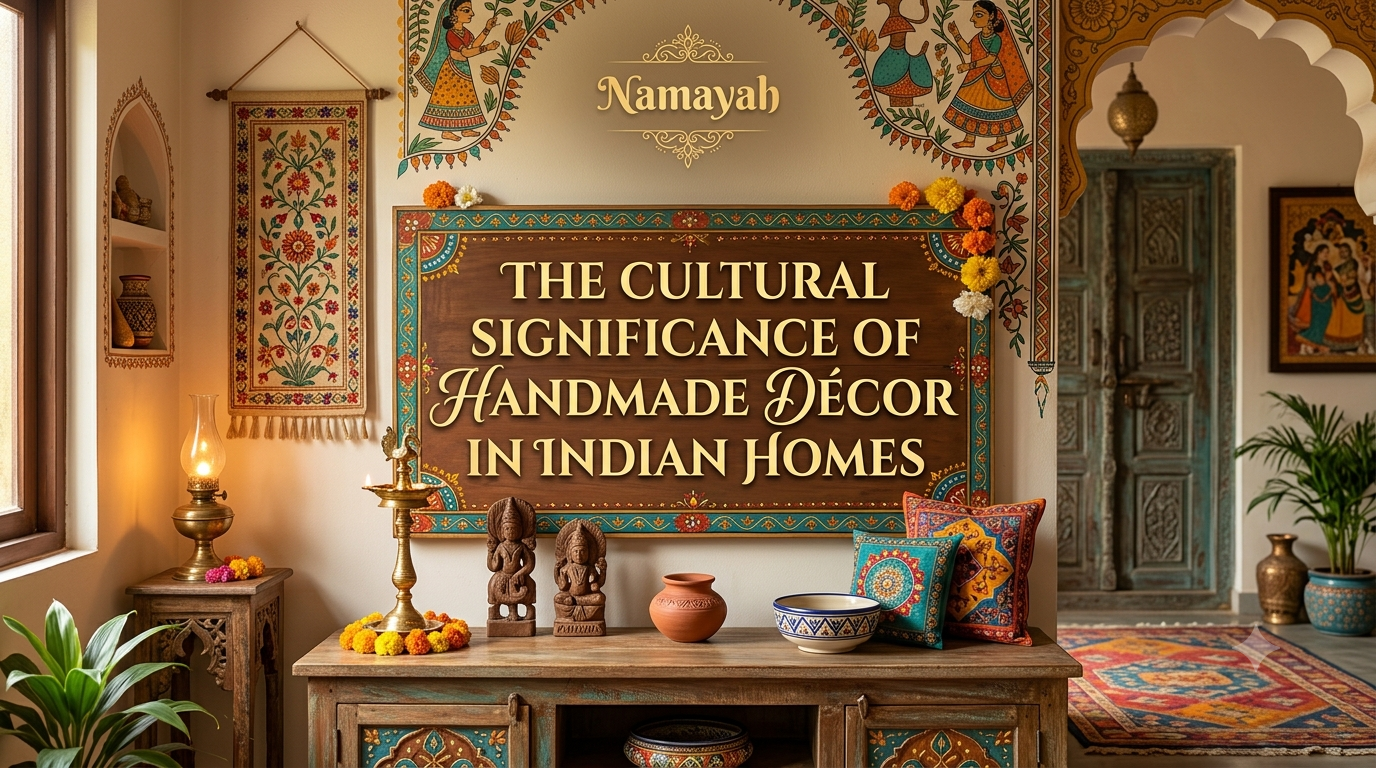
A home is more than a collection of furniture and decorative objects. In India, it can also be a place where family memories, regional traditions, craftsmanship, festivals, and cultural identity come together. Handmade décor in Indian homes carries cultural significance because it can preserve traditional skills, express regional identity, connect families with artisans, and bring stories from India’s diverse craft traditions into everyday spaces.
From handwoven textiles and carved wooden objects to terracotta pieces, metalwork, baskets, paintings, and embroidered furnishings, handmade items can give an interior a sense of history and individuality. India’s official handicrafts portal describes the country’s crafts as deeply connected to cultural heritage and regional identity, while also noting that traditional crafts continue to evolve alongside modern aesthetics.
Why Handmade Décor Has a Special Place in Indian Homes
Handmade décor is different from mass-produced decoration because the making process itself can carry cultural meaning.
A hand-crafted object may reflect the materials available in a particular region, techniques passed through generations, local visual traditions, or the personal skill of an artisan. This makes the object more than an interior accessory.
For many Indian households, decorative objects can also become part of family life. A brass lamp may appear during festivals, embroidered textiles may be passed between generations, and locally made pottery may become part of everyday routines.
This connection between usefulness, beauty, and tradition is one reason handmade décor continues to find a place in contemporary Indian interiors.
Handmade Décor as a Link to Indian Heritage
India has an exceptionally diverse craft landscape. Government sources identify traditional forms ranging from handloom weaving, block printing, and embroidery to terracotta, metalwork, and papier-mâché. These crafts are associated with different communities, regions, materials, and techniques.
The cultural value of these crafts goes beyond their visual appearance. India’s Ministry of Culture describes crafts as part of the country’s wider intangible cultural heritage, alongside traditions such as rituals, languages, music, and dance.
When handmade objects enter a home, they can therefore act as everyday reminders of this heritage.
A carved object on a shelf or a handwoven textile on a sofa does not necessarily turn a home into a museum. Instead, it can allow traditional craft to remain part of ordinary life.
That everyday use matters because cultural traditions are often strongest when they continue to be practiced, adapted, and appreciated rather than treated only as historical artifacts.
Regional Crafts Bring Local Identity Indoors
One of the defining characteristics of Indian handmade décor is its regional diversity.
Craft traditions vary according to geography, available raw materials, community practices, historical influences, and local aesthetics. A home featuring Indian handmade décor can therefore communicate a sense of place.
For example, a homeowner might choose:
- Handwoven textiles for warmth and texture
- Terracotta pieces for an earthy character
- Carved wooden décor for visual detail
- Metal craft for a traditional accent
- Embroidered cushions for colour and pattern
- Woven baskets for functional storage
- Regional paintings for storytelling
- Handcrafted lamps for festive or ambient lighting
The Government of India’s handicrafts resources organize crafts by categories and regions, illustrating the breadth of India’s craft traditions.
Textiles and Handwoven Traditions
Textiles have an important role in Indian homes because they can combine decoration with everyday function.
Handwoven fabrics, embroidered textiles, block-printed materials, rugs, throws, cushions, and wall hangings can introduce traditional patterns without overwhelming an interior.
Textiles can also change with the seasons or occasions. A family may use particular fabrics during festivals, weddings, religious celebrations, or other gatherings.
This flexibility allows traditional craft to coexist with contemporary furniture and minimalist interiors.
Terracotta, Clay, and Pottery
Clay-based crafts have a natural relationship with the home.
Terracotta pots, diyas, planters, figurines, and decorative vessels can bring an earthy visual quality to interiors. During festivals, clay lamps and related objects can also become part of household decoration and ritual practices.
Their appeal is not only aesthetic. Clay connects decoration with the physical resources and traditional techniques of particular communities.
Wood, Metal, and Stone Craft
Wood carving, metalwork, and stone craftsmanship can introduce durability and visual character into a home.
Objects made from these materials may include lamps, trays, sculptures, boxes, furniture details, wall pieces, or religious and ceremonial objects.
In some cases, the material itself becomes part of the story. A crafted wooden object can reveal carving techniques, while a metal object can demonstrate shaping, engraving, casting, or finishing skills.
India’s handicrafts institutions continue to document and promote such craft categories as part of the country’s wider handmade heritage.
The Role of Handmade Décor in Festivals and Rituals
Indian homes often change visually during festivals and important family occasions.
Diwali lamps, festive textiles, rangoli-related decorations, floral arrangements, traditional vessels, decorative hangings, and handcrafted objects can transform everyday spaces for celebrations.
In this context, décor is not simply about making a room look attractive. It can help mark a transition from ordinary days to a special occasion.
Handmade items can also carry symbolic associations. Their meaning depends on the specific tradition, region, community, and context, so it is better to understand an object before assigning a universal meaning to it.
This is particularly important when incorporating crafts from cultures or communities outside one’s own background.
Handmade Décor and the Story of the Artisan
Every handmade object represents human labour.
Unlike factory-made products designed for uniformity, handmade craft can retain small variations caused by the artisan’s technique, materials, tools, and working process. These variations can become part of the object’s character.
Buying handmade décor can therefore create a closer connection between the home and the person who made the object.
The Office of the Development Commissioner (Handicrafts), Ministry of Textiles, identifies artisan development, marketing, technical support, and promotion of craft forms as important parts of its work. It also notes the role of handicrafts in providing livelihoods in rural and semi-urban areas while helping preserve cultural heritage.
This gives handmade décor an economic dimension as well as a cultural one.
Supporting Artisans Through Thoughtful Home Décor
Choosing handmade décor can be one way to participate in the continued market for traditional craftsmanship.
That does not mean every handmade purchase automatically benefits an artisan equally. Buyers can make more informed choices by looking for transparent information about the maker, craft tradition, materials, production location, and seller.
Geographical Indications can also help identify products associated with particular regions. India’s intellectual-property authorities explain that GI protection can help preserve traditional knowledge and skills while strengthening regional identity and economic value.
For consumers, this makes provenance worth considering alongside colour, size, and price.
Handmade Décor in Modern Indian Interiors
Traditional décor does not have to mean traditional interior design.
A modern apartment can combine clean architectural lines with one or two carefully selected handmade pieces. A neutral living room might feature a handwoven cushion, a sculptural ceramic object, or a carved wooden accent. A contemporary dining space could incorporate handcrafted serving pieces or textiles.
The key is balance.
Instead of filling every surface with decorative objects, homeowners can choose pieces that have visual or personal significance.
A simple approach is:
- Choose a focal piece.
- Give it enough surrounding space to stand out.
- Pair traditional objects with contemporary furniture.
- Repeat a material or texture subtly.
- Avoid turning every room into a themed display.
This approach allows handmade décor to become part of the home’s identity without sacrificing modern functionality.
UNESCO has highlighted projects that bring rural craft traditions into contemporary lifestyles and connect rural artists with designers, domestic markets, hospitality, interior decoration, and other modern applications.
How to Choose Meaningful Handmade Décor
When selecting handmade décor for an Indian home, aesthetics are only one consideration.
1. Learn the craft’s background
Find out where the craft comes from and how it is traditionally made.
2. Consider the maker
Whenever possible, look for information about the artisan, craft cluster, cooperative, studio, or organization behind the product.
3. Choose useful pieces
Functional objects can keep handmade traditions integrated into everyday life rather than limiting them to occasional display.
4. Look at materials
Natural or locally associated materials can add tactile character, although sustainability should not be assumed simply because something is handmade.
5. Buy fewer, better pieces
A carefully selected handmade object can have greater personal value than a room filled with generic decorations.
6. Respect cultural context
Some objects may have religious, ceremonial, or community-specific significance. Learn about their intended context before using them purely as decoration.
Preserving Authenticity While Avoiding Cultural Stereotypes
Appreciating Indian handmade décor also requires nuance.
India is not a single design tradition. Its crafts represent numerous regions, languages, communities, histories, and artistic practices.
Calling every traditional object “Indian style” can erase the differences that make these crafts meaningful in the first place.
A more respectful approach is to identify the craft where reliable information is available and learn about its regional or community context.
This also makes the home more interesting. Instead of describing a piece simply as “traditional décor,” a homeowner can understand the technique, material, place, and people associated with it.
The result is a deeper connection between design and culture.
Why Handmade Décor Will Remain Relevant
Modern technology has changed how homes are designed and decorated, but it has not removed the appeal of human craftsmanship.
In fact, handmade décor can provide something that highly standardized products often lack: a visible connection to process and place.
India’s government continues to develop digital platforms, craft clusters, exhibitions, artisan programs, and market initiatives aimed at supporting the handicrafts sector. The current Indian Handicrafts portal, for example, highlights artisan registration, training, events, craft clusters, and GI-related activities.
At the same time, traditional crafts are evolving.
The future of handmade décor is therefore unlikely to be about preserving every object exactly as it once was. It is more likely to involve adaptation—traditional techniques applied to contemporary products, new colour palettes, modern furniture, updated lifestyles, and changing consumer preferences.
That balance between continuity and innovation can help keep craft traditions relevant.
FAQs About Handmade Décor in Indian Homes
What is the cultural significance of handmade décor in Indian homes?
Handmade décor can preserve traditional craftsmanship, express regional identity, support artisans, and connect everyday living spaces with India’s cultural heritage. Its significance often comes from the combination of material, technique, history, and community associated with the object.
Why is handmade décor important for preserving Indian culture?
Handmade décor keeps traditional techniques visible and in use. When craftspeople continue producing objects for contemporary homes, traditional skills can remain connected to living markets rather than existing only as historical artifacts.
What are common types of handmade Indian home décor?
Common categories include handwoven textiles, pottery, terracotta, wood carving, metalwork, baskets, embroidered furnishings, traditional paintings, handcrafted lamps, and decorative objects. The exact styles vary widely by region and craft tradition.
How does handmade décor support Indian artisans?
Purchasing authentic handmade products can contribute to demand for artisan-made goods and craft-based livelihoods. The Indian handicrafts sector is supported through government programs involving development, marketing, training, and craft promotion.
Can handmade Indian décor work in a modern home?
Yes. Handmade objects can work particularly well as accents in contemporary spaces. A single textile, ceramic piece, carved object, or handcrafted light can add texture and cultural character without requiring an entirely traditional interior.
How can I choose authentic handmade décor?
Look for information about the craft, maker, region, materials, and production process. When relevant, check whether the product has recognized geographical or craft credentials. Be cautious of vague claims about authenticity that provide no information about origin.
Is handmade décor always sustainable?
Not necessarily. Handmade production can involve natural or locally sourced materials, but sustainability depends on the material, production process, transportation, durability, and sourcing practices. Consider the full product story rather than assuming that “handmade” automatically means sustainable.
Why should homeowners learn about the origins of traditional crafts?
Understanding a craft’s origins can make décor more meaningful and encourage respectful appreciation. It can also help homeowners distinguish between genuine cultural appreciation and generic use of traditional motifs without understanding their context.
Conclusion
The cultural significance of handmade décor in Indian homes lies in its ability to connect people, place, craftsmanship, memory, and everyday life.
A handcrafted object can be beautiful on its own, but its deeper value may come from the story behind it—the region where it originated, the materials used, the technique practiced by the artisan, and the cultural traditions that helped shape it.
As Indian homes become increasingly contemporary, handmade décor does not need to disappear. Instead, it can evolve with modern lifestyles while retaining connections to traditional craftsmanship.
Choosing handmade décor thoughtfully is therefore not simply an interior-design decision. It can also be a way to appreciate India’s diverse craft heritage and keep the work of artisans visible in everyday life.