
A Guide to India’s Rich Tradition of Handmade Home Accessories
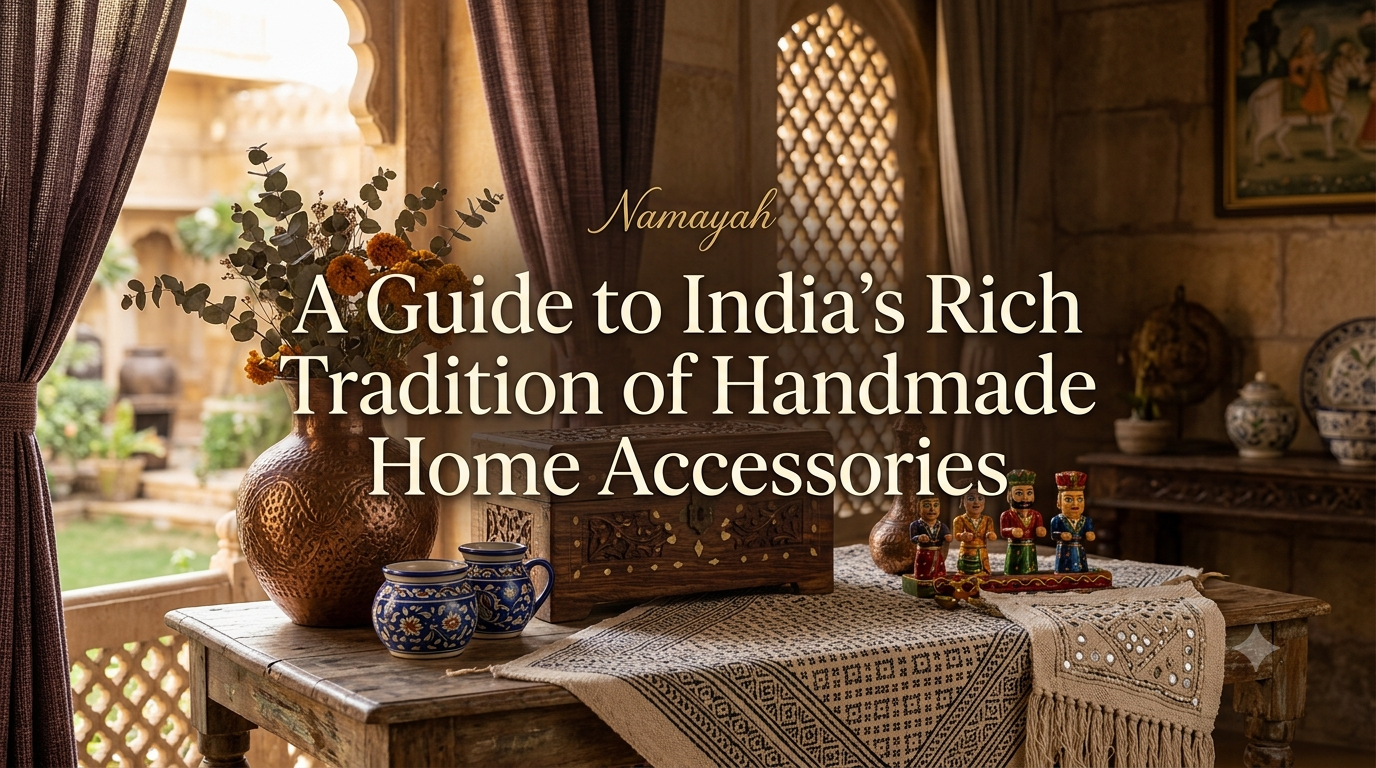
India’s handmade home accessories reflect centuries of artistic knowledge, regional identity, and skilled craftsmanship. From hand-painted pottery and woven textiles to carved wooden pieces, brass décor, cane baskets, and bamboo accessories, traditional Indian crafts offer a wide range of ways to bring character and cultural depth into a home.
Unlike mass-produced décor, handmade pieces often show subtle variations in color, texture, shape, and finish. These differences are part of their appeal. They can make an interior feel more personal while connecting everyday objects with the communities and techniques that produced them.
Why Handmade Home Accessories Matter in India
Handicrafts have long been connected to India’s cultural and economic life. Craft traditions differ considerably across the country because artisans work with locally available materials, inherited techniques, regional aesthetics, and community knowledge.
A handmade accessory can therefore communicate more than a decorative style. A woven textile may represent a particular weaving tradition, while a carved wooden object can reflect local artistic practices. Pottery, metalwork, embroidery, basketry, and other crafts similarly carry distinctive regional characteristics.
For homeowners, this diversity creates an enormous range of options. Handmade accessories can work in traditional, contemporary, minimalist, rustic, bohemian, or eclectic interiors.
India’s Regional Craft Traditions
India’s craft heritage is too diverse to fit into a single design style. Different regions have developed distinctive approaches to materials, patterns, colors, and techniques.
Rajasthan
Rajasthan is widely associated with colorful textiles, pottery, woodwork, metalwork, and decorative crafts. Traditional patterns and vibrant colors can make Rajasthani-inspired accessories particularly effective as accent pieces.
Handcrafted textiles, painted objects, decorative boxes, mirrors, and pottery can add warmth to neutral rooms without requiring a complete change in the interior.
Gujarat
Gujarat has a strong textile and embroidery heritage. Decorative fabrics, embroidered pieces, woven accessories, and traditional patterns can introduce texture and visual interest to living spaces.
A hand-crafted textile can be used as a cushion cover, table accent, wall hanging, or other decorative element, depending on its construction and care requirements.
Kashmir
Kashmir has a distinctive tradition of textiles, embroidery, carpets, and woodcraft. Detailed patterns and intricate workmanship are characteristic features of many Kashmiri decorative traditions.
Wooden accessories and finely worked textiles can add an ornamental layer to interiors, especially when combined with simpler contemporary furniture.
Northeast India
The northeastern states have rich traditions involving bamboo, cane, grasses, wood, textiles, and other natural materials. Baskets, mats, trays, lampshades, furniture, and storage accessories can demonstrate how functional objects can also become decorative features.
Natural-fiber accessories are especially useful for interiors that emphasize organic textures and materials.
Popular Types of Handmade Home Accessories
Pottery and Ceramics
Handmade pottery can bring an earthy quality to interiors. Vases, planters, bowls, candle holders, serving pieces, and decorative vessels are among the ways ceramics can be incorporated into a home.
Small variations between pieces are normal in handmade pottery. Rather than treating these differences as flaws, buyers can view them as evidence of the individual making process.
When selecting pottery, consider where it will be used. Decorative pieces may have different care requirements from food-safe or functional ceramics.
Handwoven Textiles
Indian textile traditions offer an extensive range of textures, patterns, and techniques.
Home accessories can include cushion covers, throws, table runners, wall hangings, rugs, curtains, and other textile accents. Even a single handwoven or handcrafted textile can change the visual character of a room.
For a balanced interior, pair highly patterned textiles with relatively simple furniture and surfaces.
Wood and Stone Crafts
Wood has been used by Indian artisans to create functional and decorative objects for generations. Depending on the regional tradition, handcrafted wooden accessories may include boxes, trays, sculptures, frames, stools, and decorative panels.
Stone is another important craft material, with artisans producing objects that range from small decorative pieces to larger architectural elements.
Wood and stone accessories can work particularly well when an interior already contains natural materials such as cotton, linen, jute, or cane.
Metal Crafts
Metalwork adds a different visual quality to handmade interiors. Brass and other metals can be shaped or worked into lamps, bowls, trays, figurines, bells, candle holders, and decorative objects.
Metal accessories can provide contrast in spaces dominated by softer materials. A handcrafted brass object, for example, can become a focal point against a neutral wall or wooden surface.
Because metal finishes can change with handling and exposure, buyers should follow appropriate care instructions for the specific material and finish.
Cane, Bamboo, and Natural-Fiber Accessories
Cane and bamboo crafts demonstrate the design potential of natural materials. Artisans can transform these materials into baskets, trays, lampshades, organizers, furniture, and other household objects.
Their woven textures are especially suitable for relaxed interiors. They can also complement indoor plants, wooden furniture, cotton textiles, and other organic materials.
How Indian Artisans Make Handmade Accessories
The production process depends on the craft, material, region, and individual artisan.
A handmade ceramic object may involve preparing clay, shaping it, drying it, firing it, and applying a glaze or surface treatment. Textile production can involve spinning, dyeing, weaving, printing, or embroidery. Woodcraft may require selecting and preparing wood before carving, shaping, sanding, and finishing it.
Some traditions combine several specialized skills. This makes the final object the result of a chain of knowledge rather than a single production step.
Modern tools may also be used alongside traditional techniques. Handmade does not necessarily mean that every stage must be performed without contemporary equipment. The important distinction is often the role of skilled human craftsmanship in shaping, decorating, finishing, or assembling the piece.
How to Style Indian Handmade Accessories at Home
You do not need a fully traditional interior to use Indian handmade home accessories.
A few carefully selected pieces can work within a contemporary space.
Start with one focal piece. A distinctive textile, vase, mirror, sculpture, or handcrafted lamp can become the visual anchor of a room.
Mix textures. Combine smooth surfaces with woven, carved, hammered, or naturally irregular materials.
Use repetition carefully. Similar materials or motifs can connect different areas of a room without making everything look identical.
Balance color. If your accessories are highly colorful, use neutral furniture and walls to give them visual space.
Combine old and new. Contemporary furniture paired with traditional handmade objects can create contrast while allowing the craft to remain the focus.
Think about function. Baskets, trays, pottery, textiles, and storage pieces can make handcrafted design part of everyday life rather than treating it solely as decoration.
How to Choose Authentic Handmade Pieces
Authenticity can be difficult to judge from appearance alone. A handmade-looking product is not necessarily produced using a traditional craft process.
When buying, consider the following:
- Ask about the material and production technique.
- Look for information about the artisan, craft community, or workshop when available.
- Check whether the seller clearly describes how and where the product was made.
- Be cautious of exaggerated claims about heritage or origin.
- Expect reasonable variations in handmade products.
- Compare the product description with the item’s actual construction.
- Consider whether the price appears consistent with the amount of skilled labor involved.
Buying directly from artisans, reputable craft organizations, established cooperatives, or transparent retailers can make it easier to understand a product’s origin.
Caring for Handmade Home Accessories
Different materials require different care.
Keep textiles clean according to their specific washing instructions. Protect wood from excessive moisture and prolonged exposure to unsuitable environmental conditions. Handle pottery and ceramics carefully, particularly pieces with delicate finishes. For metal objects, follow the maker’s recommendations rather than assuming that every metal accessory should be polished.
Natural-fiber products such as cane and bamboo should generally be kept in suitable indoor conditions and protected from excessive moisture.
Most importantly, retain the care instructions supplied with the product. Proper maintenance can help preserve both the appearance and functionality of handmade pieces.
The Future of India’s Handmade Craft Tradition
India’s craft traditions continue to evolve. Contemporary designers and artisans increasingly combine traditional techniques with modern forms, colors, and uses.
This evolution matters because craft traditions are not static. New products can make traditional skills relevant to contemporary homes while retaining connections to established techniques.
Consumers also play a role. Learning about the origin of a product, purchasing from transparent sources, caring for handmade objects properly, and valuing skilled work can contribute to a healthier craft ecosystem.
The most meaningful handmade accessory may therefore be one that satisfies two purposes: it works beautifully in the home and encourages appreciation for the craftsmanship behind it.
FAQs About Indian Handmade Home Accessories
What are popular handmade home accessories from India?
Popular categories include pottery, handwoven textiles, embroidered décor, wooden objects, brass and metal accessories, cane and bamboo baskets, lampshades, trays, mirrors, sculptures, and decorative vessels.
Why are Indian handmade home accessories unique?
Their uniqueness comes from India’s regional diversity, traditional techniques, locally used materials, and the individual work of artisans. Handmade production can also create subtle differences between individual pieces.
Which Indian regions are known for handicrafts?
Many parts of India have distinctive craft traditions, including Rajasthan, Gujarat, Kashmir, Uttar Pradesh, West Bengal, Odisha, Kerala, and the northeastern states. Craft specialties vary considerably by region and community.
Are handmade products better than mass-produced products?
Not necessarily in every situation. Handmade products can offer distinctive craftsmanship, materials, and variation, while mass-produced products may offer greater consistency, scale, or affordability. The right choice depends on the buyer’s priorities.
How can I decorate a modern home with Indian handicrafts?
Use selected handmade pieces as accents. A handcrafted textile, pottery collection, wooden object, brass accessory, or natural-fiber basket can add texture and personality without requiring a traditionally styled room.
How can I identify a genuine handmade product?
Look for transparent information about materials, production methods, origin, and the artisan or workshop when available. Product variations can be consistent with handmade production, but appearance alone cannot prove authenticity.
Are handmade Indian accessories suitable as gifts?
Yes. Small handcrafted objects such as pottery, textiles, trays, baskets, decorative boxes, and metal accessories can make distinctive gifts. Choose according to the recipient’s style and the product’s practical use.
How should handmade Indian décor be maintained?
Maintenance depends on the material. Follow the maker’s care instructions, protect delicate materials from unsuitable conditions, and handle fragile objects carefully.
Conclusion
India’s rich tradition of handmade home accessories offers far more than decorative variety. It reflects regional identities, material knowledge, artistic traditions, and the skills of individual craftspeople.
From pottery and textiles to wood, metal, bamboo, and cane, these crafts can bring texture and individuality into modern homes. The best approach is to choose pieces thoughtfully, learn about their origins, care for them properly, and give skilled craftsmanship the value it deserves.
When traditional craft meets contemporary living, everyday home accessories can become meaningful connections between design, culture, and human creativity.