
How to Make Your Dining Room Feel More Luxurious
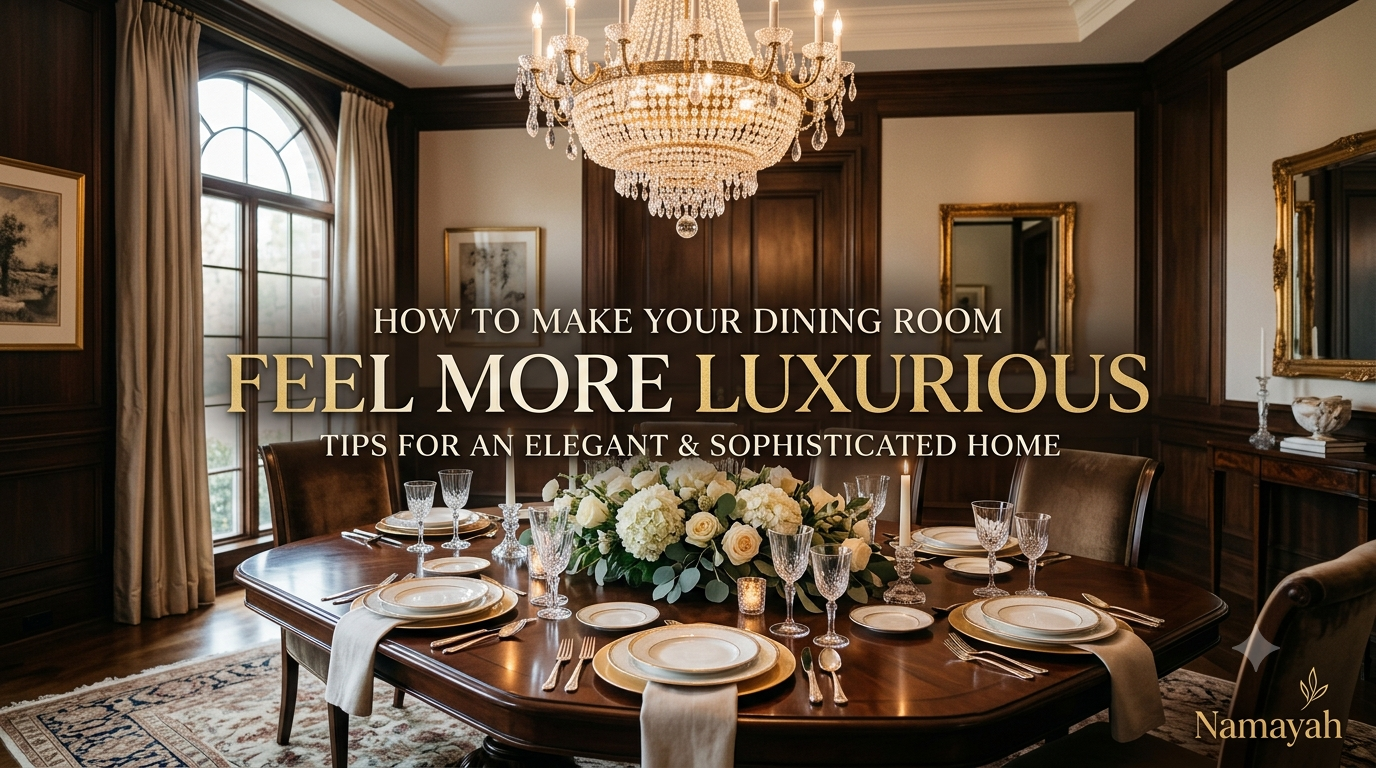
A luxurious dining room is not necessarily filled with expensive furniture or elaborate decorations. The feeling of luxury usually comes from proportion, lighting, quality-looking materials, thoughtful color choices, comfort, and visual restraint.
To make your dining room feel more luxurious, start with a cohesive color palette, choose a dining table and chairs with strong proportions, introduce layered lighting, add rich textures, dress the windows, and finish the space with carefully selected artwork and accessories. Even a few targeted changes can make the room feel more polished and inviting.
Start With a Refined Color Palette
Color is one of the easiest ways to change the atmosphere of a dining room.
A sophisticated palette does not have to mean plain white, black, or beige. Instead, choose a small group of complementary shades and repeat them throughout the room.
Consider combinations such as:
- Warm white with natural wood and brass-style accents
- Soft beige with walnut tones
- Deep green with warm neutrals
- Charcoal with cream and wood
- Muted blue with natural materials
- Taupe with black or dark bronze accents
The key is consistency. If every element introduces a completely different color, the room can feel visually busy rather than luxurious.
For a particularly polished appearance, use one dominant color, one secondary shade, and one or two subtle accent colors.
Upgrade the Dining Table
The dining table is often the visual anchor of the room, so upgrading it can have an immediate impact.
Look for a table with a substantial silhouette and proportions that suit the room. Natural wood can create warmth and character, while stone or stone-look surfaces can produce a more contemporary appearance.
If you already own a good table, you may not need to replace it. Consider refinishing the surface, changing the chairs, improving the lighting above it, or adding a sophisticated centerpiece.
The goal is not simply to buy the most expensive table available. It is to create a table-and-room combination that looks intentional.
Choose Comfortable, Statement-Making Chairs
Dining chairs should complement the table rather than compete with it.
Upholstered chairs can immediately add softness and visual richness. For a more contemporary look, consider sculptural silhouettes or chairs with clean lines.
When choosing chairs, pay attention to:
- Seat comfort
- Fabric or material
- Chair height
- Backrest shape
- Scale relative to the table
- Color coordination
- Ease of cleaning
A dining room feels more luxurious when people actually want to sit in it. Comfort is therefore just as important as appearance.
Use Lighting as a Design Feature
Lighting can completely change how a dining room looks and feels.
Instead of relying on a single ceiling fixture, create layers of light. A statement pendant or chandelier can provide a strong focal point above the table, while wall lights, lamps, or indirect lighting can add softer illumination around the room.
When selecting a central fixture, consider the size and shape of your table. A long table may suit an elongated fixture or multiple pendants, while a round table can work well with a centered chandelier or pendant.
Dimmers are also useful because they allow you to adjust the atmosphere for everyday meals, entertaining, or special occasions.
Add Rich Textures
Luxury is often as much about texture as appearance.
A room filled with flat, hard surfaces can feel cold. Introduce contrasting materials to create depth and visual interest.
Try combining:
- Wood
- Upholstery
- Glass
- Metal
- Stone
- Woven materials
- Linen
- Wool
- Velvet or other tactile fabrics
For example, a wood dining table paired with upholstered chairs, a textured rug, linen curtains, and metal lighting can feel significantly more layered than a room where every surface has the same finish.
Dress the Windows
Bare windows can sometimes make an otherwise finished dining room feel incomplete.
Floor-length curtains can add height and softness, particularly when they are hung high and allowed to extend toward the floor. Choose fabrics and colors that complement the room rather than introducing another competing pattern.
Neutral curtains can work beautifully in an understated dining room, while heavier or more textured fabrics can create a richer atmosphere.
If privacy or light control is important, combine decorative curtains with functional shades or blinds.
Create an Elegant Focal Wall
A dining room does not need every wall decorated. One thoughtfully designed focal wall can have more impact than several unrelated pieces.
Options include:
- Large-scale artwork
- Decorative molding
- Wallpaper
- A mirror
- Built-in shelving
- A textured wall finish
- A curated gallery arrangement
If your dining room is small, a large mirror can also help reflect light and create a greater sense of openness.
Layer the Table Setting
You do not need to set a formal table every day to make the dining room feel sophisticated.
Instead, create a simple foundation that can be dressed up when needed.
A polished everyday table might include:
- A runner or understated centerpiece
- Coordinated dinnerware
- Attractive glassware
- Cloth napkins
- A small vase or natural arrangement
Avoid filling the entire table with decorations. Leaving some open space can make the arrangement feel more intentional.
For entertaining, introduce additional layers such as candles, seasonal flowers, place cards, or decorative serving pieces.
Use a Large Rug to Define the Space
A rug can make a dining area feel more finished by visually connecting the table and chairs.
Choose a size that allows the chairs to remain on the rug even when they are pulled away from the table. A rug that is too small can make the furniture arrangement feel disconnected.
When selecting a rug, also consider maintenance. Dining rooms are prone to spills and crumbs, so a beautiful rug should still be practical for the way the room is used.
Patterns can hide everyday marks, while subtle textures can add sophistication without overwhelming the space.
Add Art and Decorative Accessories
Artwork gives a dining room personality, but luxury usually benefits from editing rather than excess.
Choose fewer, more intentional pieces instead of covering every available surface.
A large artwork above a sideboard, an oversized mirror, or a carefully arranged collection can create a stronger impression than many small decorative objects.
For accessories, consider materials that introduce contrast:
- Ceramic
- Glass
- Metal
- Wood
- Stone
- Natural greenery
Repeat materials or finishes in small ways throughout the room to create cohesion.
Keep Clutter Under Control
One of the simplest ways to make a dining room feel more luxurious is to remove visual clutter.
Clear unnecessary objects from the dining table, sideboard, shelves, and floor. Keep useful items accessible, but give frequently used pieces a designated storage location.
A streamlined room allows architectural details, furniture, lighting, and artwork to stand out.
Luxury is not about having more. In many cases, it is about choosing better and displaying less.
Mix Materials for a High-End Look
Rooms often feel more sophisticated when they combine several materials instead of relying on one finish.
For example, you could pair:
| Element | Material or Finish | Effect |
| Dining table | Wood | Warmth |
| Chairs | Upholstery | Comfort |
| Lighting | Metal or glass | Contrast |
| Rug | Wool or textured fiber | Softness |
| Sideboard | Wood or lacquer | Structure |
| Accessories | Ceramic or stone | Detail |
| Curtains | Linen or another textured fabric | Softness |
The important part is balance. Too many competing finishes can make the room feel chaotic, while a thoughtful mix creates depth.
Make the Room Feel Luxurious on a Budget
You do not need to renovate your entire dining room to improve its appearance.
Start with changes that create the greatest visual impact.
1. Improve the lighting.
Replacing an outdated fixture can transform the room’s focal point.
2. Upgrade textiles.
Curtains, cushions, napkins, and rugs can add texture without requiring structural work.
3. Declutter.
Removing unnecessary objects costs nothing and can make the room feel immediately more refined.
4. Rearrange the furniture.
Better spacing can improve proportion and make the room easier to navigate.
5. Add one strong artwork.
A well-scaled piece can create a focal point without requiring an entire gallery wall.
6. Style the table.
Simple dinnerware, cloth napkins, and a restrained centerpiece can make everyday meals feel more considered.
The best approach is to prioritize proportion, lighting, and cohesion before spending heavily on decorative items.
Common Mistakes to Avoid
Even expensive furniture can look underwhelming when the overall room lacks balance.
Avoid these common mistakes:
- Choosing a rug that is too small
- Using lighting that is too harsh
- Filling every surface with décor
- Mixing too many unrelated styles
- Choosing furniture that is too large for the room
- Ignoring chair comfort
- Using too many competing colors
- Hanging artwork at an unsuitable scale
- Blocking natural light with heavy treatments
- Buying decorative pieces before establishing the overall design
A luxurious dining room should feel comfortable and usable, not like a showroom.
Final Styling Checklist
Before considering your dining room finished, ask:
- Does the color palette feel cohesive?
- Is the dining table appropriately scaled?
- Are the chairs comfortable?
- Does the main light fixture complement the table?
- Is there enough layered lighting?
- Are textures varied?
- Do the curtains enhance the room?
- Is the rug large enough?
- Does the artwork have enough visual impact?
- Is the table styled without being overcrowded?
- Are unnecessary items stored away?
- Do the materials and finishes work together?
If the answer is yes to most of these questions, your dining room is likely to feel significantly more polished.
FAQs
What makes a dining room look luxurious?
A cohesive color palette, appropriately scaled furniture, layered lighting, rich textures, quality-looking materials, well-chosen artwork, and minimal clutter can make a dining room feel more luxurious.
What colors make a dining room look expensive?
Warm neutrals, deep greens, muted blues, charcoal, cream, taupe, and natural wood tones can create a sophisticated atmosphere when used as part of a cohesive palette.
How can I make my dining room look luxurious on a budget?
Start with lighting, decluttering, textiles, artwork, and furniture arrangement. These changes can have a significant visual effect without requiring a complete renovation.
What type of lighting is best for a luxurious dining room?
A combination of statement lighting over the dining table and softer secondary lighting can create a more layered atmosphere. Dimmable lighting also allows the mood to change throughout the day.
Should a dining room have a rug?
A rug can help define the dining area and add warmth and texture. Choose one large enough to accommodate the table and chairs, including when chairs are pulled out.
How do I style a dining table elegantly?
Use a restrained centerpiece, coordinated dinnerware, attractive glassware, and cloth napkins. Keep enough open space on the table so the arrangement does not feel crowded.
What makes a dining room look less expensive?
Visual clutter, poor furniture proportions, insufficient lighting, too many competing colors, and undersized rugs or artwork can make a dining room feel less polished.
How can I make a small dining room feel luxurious?
Use appropriately scaled furniture, a restrained color palette, good lighting, mirrors or reflective surfaces, and carefully selected décor. Avoid overcrowding the room.
Conclusion
Making your dining room feel more luxurious is less about spending more and more about designing with intention.
Begin with the elements that have the biggest visual impact: color, furniture proportions, lighting, textiles, and layout. Then add artwork, table settings, and accessories gradually. Keep the room edited, combine complementary materials, and prioritize comfort alongside appearance.
The result should not simply look expensive. It should feel welcoming, balanced, comfortable, and thoughtfully designed.