
12 Designer-Inspired Ways to Style Handmade Home Accessories
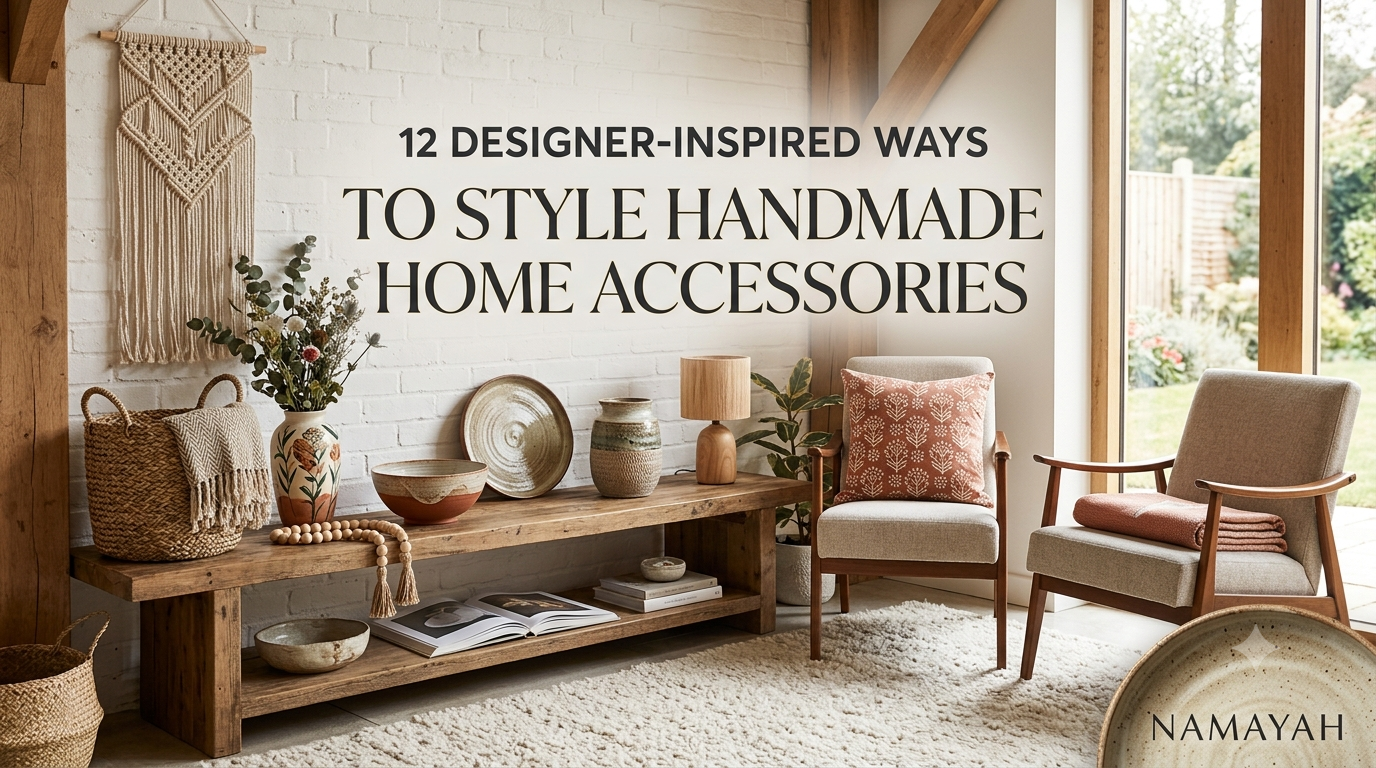
Handmade home accessories can bring warmth, texture, and personality to an interior, but the key to a polished look is thoughtful styling. Instead of filling every surface with decorative objects, treat handcrafted pieces as part of the room’s overall composition. Mix textures, repeat colors, create focal points, and leave enough negative space for individual pieces to stand out.
The result can feel collected rather than cluttered—and personal rather than overly coordinated.
Whether you’re styling a new home or refreshing one room, these 12 designer-inspired ideas can help you make handmade home accessories feel intentional and sophisticated.
1. Create a Layered Look
One of the easiest ways to make a room feel more considered is to layer accessories at different heights and depths.
For example, a console table might feature:
- A large handmade vase at the back
- A framed artwork leaning behind it
- A smaller ceramic object in front
- A stack of books beneath a decorative bowl
Layering prevents everything from sitting on the same visual plane. It also gives the eye several points of interest.
The important thing is to vary scale. Pairing one large accessory with several smaller pieces often creates more impact than displaying objects that are all approximately the same size.
2. Mix Textures, Not Just Colors
A sophisticated interior does not necessarily need lots of colors. Texture can create just as much visual interest.
Pair smooth handmade ceramics with woven baskets, carved wood, textured textiles, hammered metal, or natural stone. Even when the colors are similar, differences in texture can make the arrangement feel rich and dimensional.
For a calm look, try combining several materials within a restrained palette. Cream ceramics, natural wood, woven fibers, and linen, for example, can create warmth without overwhelming the room.
3. Use Handmade Pieces as Focal Points
Not every accessory needs to compete for attention.
Choose one particularly distinctive handmade item and make it the focal point of a shelf, coffee table, sideboard, or entryway.
This could be an unusually shaped vase, an expressive piece of pottery, a sculptural object, or a handcrafted wall accent.
Once you’ve chosen the hero piece, keep the surrounding accessories relatively quiet. This creates hierarchy and allows the craftsmanship of the main object to become part of the room’s story.
4. Build a Neutral Foundation
Neutral interiors provide an excellent backdrop for handmade accessories.
White, beige, cream, warm gray, natural wood, and other understated finishes can allow handcrafted objects to become visual accents.
This doesn’t mean the room needs to be completely monochromatic. Instead, use the neutral foundation to control the overall composition.
A colorful handmade bowl or patterned textile can have much more impact when it is surrounded by quieter tones.
5. Group Accessories in Odd Numbers
When arranging small decorative objects, try experimenting with groups of three or five.
An odd-numbered arrangement can create a more relaxed, organic appearance than a perfectly symmetrical collection.
For instance, place three handmade ceramics together:
- One tall piece
- One medium-sized piece
- One smaller object
Varying their heights and shapes can make the grouping feel naturally collected.
This approach works especially well on coffee tables, shelves, mantels, and bedside surfaces.
6. Combine Old and New
Handmade accessories don’t have to live exclusively in rustic or traditional interiors.
They can also add warmth to contemporary spaces.
Try pairing a modern sofa with a handcrafted ceramic vessel, or place a traditional woven accessory on a sleek console.
The contrast between clean-lined furniture and organic handmade forms can make a room feel more individual.
Rather than matching every item, look for relationships between them—similar colors, materials, shapes, or proportions.
7. Style Open Shelves With Intention
Open shelving can quickly become visually crowded.
Instead of filling every available space, create small moments of interest.
Alternate between:
- Decorative objects
- Books
- Small plants
- Framed artwork
- Handmade vessels
- Functional pieces
Leave some shelves partially empty. Negative space gives the eye a place to rest and prevents handcrafted accessories from getting lost among competing objects.
You can also shift objects between shelves until the overall arrangement feels balanced from across the room.
8. Bring Natural Materials Indoors
Natural materials are particularly effective for creating a warm, tactile interior.
Consider handmade accessories made from or inspired by materials such as:
- Wood
- Clay
- Ceramic
- Rattan
- Wicker
- Linen
- Stone
- Natural fibers
These materials can soften rooms dominated by glass, metal, or polished finishes.
They can also complement houseplants and other organic elements, creating a cohesive connection between the interior and the natural world.
9. Repeat a Color or Material
A room doesn’t need matching accessories to feel cohesive.
Instead, repeat one visual characteristic throughout the space.
For example, if you have a handmade terracotta vase, you could echo its warm tone in a cushion, artwork, rug, or smaller decorative object.
The same principle works with materials.
A handcrafted wooden bowl might relate visually to a timber side table, while woven accessories can connect with a natural-fiber rug.
Subtle repetition helps different objects feel like parts of the same design story.
10. Leave Some Negative Space
One of the most useful styling lessons is knowing when to stop.
A beautiful handmade accessory can lose its impact when surrounded by too many other objects.
Negative space—the intentionally open area around décor—allows individual pieces to breathe.
Instead of asking, “What else can I add?” ask, “What can I remove?”
Try taking one or two items away from a display. You may find that the remaining pieces look more substantial and deliberate.
11. Style Accessories by Room
Different rooms call for different types of decorative styling.
Living Room
Use handmade vases, bowls, cushions, baskets, throws, and sculptural objects to add warmth around sofas, coffee tables, and shelving.
Bedroom
Keep the arrangement calmer. Handmade lamps, bedside ceramics, textiles, and small decorative pieces can add character without making the space feel busy.
Entryway
Choose one or two distinctive objects that create a welcoming first impression. A handcrafted bowl, vessel, mirror, or wall accent can work particularly well.
Kitchen and Dining Area
Functional handmade pieces can combine decoration with everyday use. Think serving bowls, pottery, trays, boards, textile accessories, and storage baskets.
12. Let Imperfection Become Part of the Design
One of the biggest attractions of handmade home accessories is that they can carry visible signs of craftsmanship.
Slight variations in shape, texture, glaze, weave, or finish can make an object feel individual.
Rather than trying to make handmade pieces look mass-produced, let those characteristics contribute to the room.
A slightly irregular ceramic vase can feel more expressive than a perfectly uniform decorative object. A handwoven textile can introduce subtle variation that adds depth to an otherwise polished space.
The goal isn’t perfection. It’s personality.
How to Make Handmade Home Accessories Look Designer
The secret is not necessarily buying more expensive accessories. It is creating relationships between the pieces you already have.
Start by selecting a few items you genuinely like. Then consider their:
- Scale
- Color
- Texture
- Shape
- Material
- Placement
- Relationship to surrounding furniture
Use larger pieces as anchors and smaller objects as supporting details. Repeat colors or materials across the room to create cohesion, and use empty space to keep the arrangement visually comfortable.
Most importantly, don’t try to make every object match.
Designer-inspired interiors often feel collected because different elements complement rather than duplicate one another.
Frequently Asked Questions
How do you style handmade home accessories?
Style handmade accessories by combining different scales, textures, and materials while maintaining a consistent color story. Use distinctive pieces as focal points, group smaller objects thoughtfully, and leave negative space around important items.
Can handmade décor work in a modern home?
Yes. Handmade accessories can add warmth and visual contrast to modern interiors. Pair organic materials and irregular shapes with contemporary furniture, clean lines, and restrained colors.
How many decorative accessories should I use in one room?
There is no universal number. Focus on balance rather than quantity. A smaller collection of well-placed accessories can often have more visual impact than a room filled with decorative objects.
What materials work best for handmade home accessories?
Popular choices include ceramic, clay, wood, woven fibers, rattan, linen, stone, and other natural materials. The best combination depends on the room’s existing furniture, colors, and textures.
How can I make a shelf look less cluttered?
Create groups of objects rather than filling every space. Vary heights, incorporate books or artwork, and deliberately leave some open areas. Removing unnecessary pieces can also make the remaining accessories more noticeable.
Should handmade accessories match each other?
Not necessarily. Instead of matching them exactly, look for shared characteristics such as color, material, shape, or texture. This creates cohesion without making the room look overly coordinated.
Are handmade accessories suitable for minimalist interiors?
Yes. In a minimalist space, one carefully selected handmade object can provide texture and personality without compromising the simple aesthetic. Choose fewer, more meaningful pieces.
How do I mix different decorative styles?
Find a common element that connects them. A shared color palette, material, finish, or scale can help different styles work together. Contrast can add character as long as the overall composition remains balanced.
Conclusion
Handmade home accessories can transform a room because they bring more than decoration—they introduce texture, craftsmanship, and individuality.
To create a designer-inspired look, focus on how pieces relate to one another rather than simply collecting more of them. Layer different heights, combine textures, repeat colors, mix old and new, and give standout pieces enough space to be appreciated.
Start with a few handmade accessories that you genuinely love, then build the room around them. The most successful arrangement will feel intentional while still reflecting your personality.