
How to Choose a Gift That Reflects Indian Heritage
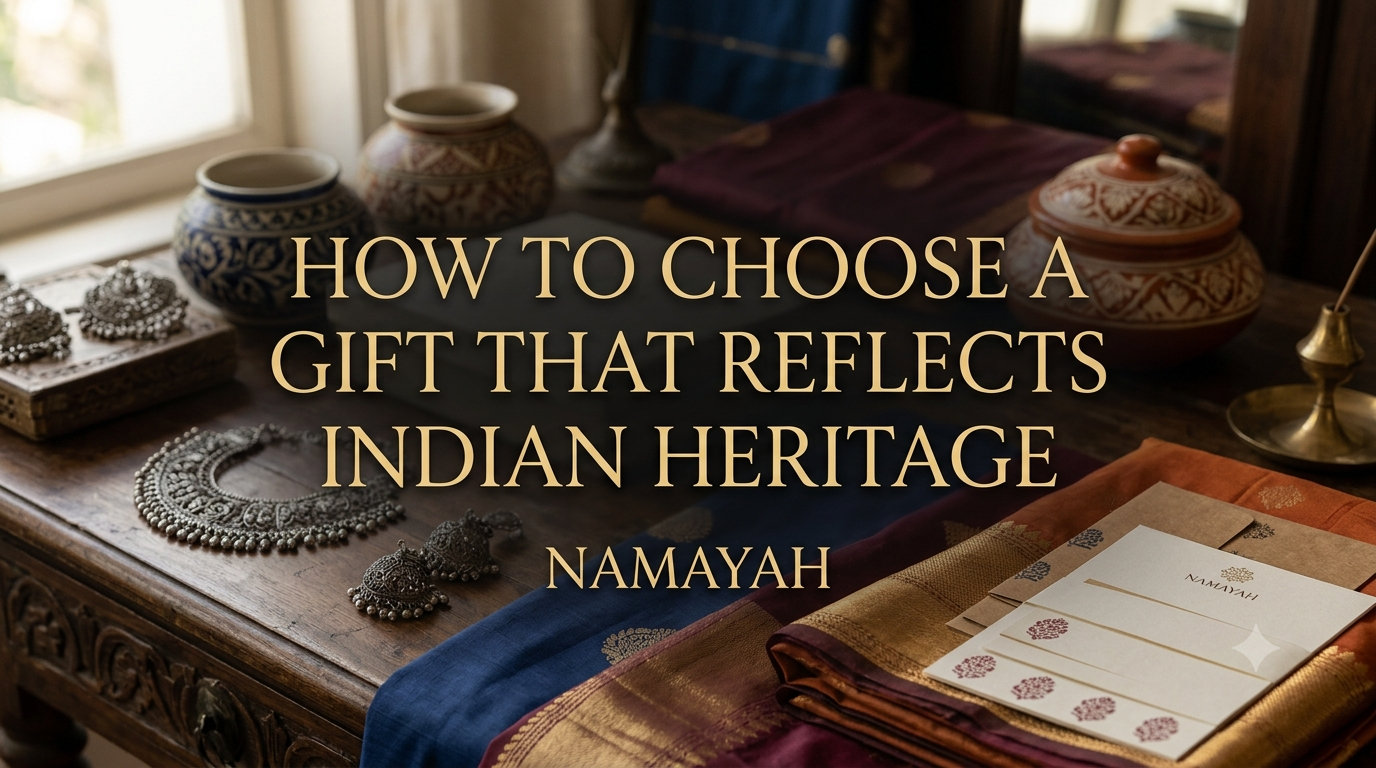
Choosing a gift that reflects Indian heritage is about more than picking an item with traditional colors, patterns, or decorations. A meaningful Indian heritage gift connects the recipient with a region, craft, material, story, tradition, or artisan skill.
The best choice usually starts with the recipient and then considers the gift’s cultural connection, craftsmanship, authenticity, usefulness, occasion, and presentation. Handloom textiles, regional handicrafts, traditional artwork, handcrafted home décor, jewelry, and culturally inspired objects can all work when they are selected thoughtfully.
India has a remarkably diverse craft tradition, and the Government of India’s Development Commissioner (Handicrafts) describes its work as supporting craft forms, artisan skills, marketing, and the preservation of cultural heritage.
What Makes a Gift Reflect Indian Heritage?
An Indian heritage gift does not need to be old-fashioned or purely decorative. Its cultural connection can come from several elements:
- Regional origin: The item may be associated with a particular state, city, community, or craft cluster.
- Traditional technique: Weaving, embroidery, carving, painting, pottery, metalwork, or other established techniques can give an object cultural depth.
- Local materials: Natural fibers, traditional textiles, wood, clay, metal, and other regionally significant materials can contribute to its identity.
- Motifs and patterns: Designs may be inspired by nature, architecture, folklore, celebrations, or regional traditions.
- Artisan involvement: Handmade products can provide a stronger connection to the people and skills behind the object.
- Story: A short explanation of where the item comes from and how it was made can make the gift more meaningful.
The important distinction is cultural connection rather than decoration alone. An item does not become an authentic expression of Indian heritage simply because it uses paisley patterns or traditional-looking colors.
Start With the Recipient
Before choosing the product, think about the person receiving it.
Ask yourself:
- What do they enjoy?
- Do they prefer useful or decorative gifts?
- Do they appreciate textiles, art, food, jewelry, books, or home décor?
- Is there a particular Indian region or family tradition that matters to them?
- Will they need to carry or ship the gift?
- Is the gift for a personal milestone or a professional occasion?
For example, a handwoven textile may be ideal for someone who appreciates fashion, while a handcrafted decorative object may suit someone interested in interiors.
A heritage gift becomes more personal when it reflects both Indian culture and the recipient’s personality.
Choose a Region or Cultural Tradition
India’s heritage is not one single style. Different regions have their own textiles, crafts, materials, motifs, and techniques.
Instead of searching for a generic “Indian gift,” consider choosing a regional tradition.
For example, Indian textiles include traditions such as Banarasi, Kanchipuram, Chanderi, Pochampally Ikat, and Patan Patola. Recent coverage of these GI-registered textiles highlights how different regions are associated with distinctive weaving and design traditions.
This approach can make the gift more specific:
| Direction | Possible Gift Type |
| Regional textile tradition | Stole, scarf, fabric, sari, or home textile |
| Traditional painting | Framed artwork or art print |
| Craft tradition | Handcrafted décor or utility object |
| Embroidery tradition | Textile accessory or decorative piece |
| Pottery tradition | Serving, décor, or tableware |
| Metal craft | Decorative object or functional accessory |
| Natural-fiber craft | Basket, mat, organizer, or home accessory |
The goal is not to memorize every Indian craft. Choose a tradition that has a genuine connection to the recipient or occasion.
Look for Traditional Craftsmanship
Craftsmanship is one of the strongest ways to give cultural meaning to an object.
A handmade product may show variations in texture, pattern, shape, or finish. Rather than automatically treating these differences as flaws, learn whether they are characteristic of the making process.
The Government of India’s handicrafts resources provide information on Indian craft clusters, artisans, products, and craft categories. Its official portal also highlights themes including needlework, tribal crafts, natural-fiber and eco-friendly crafts, fashion accessories, and festive decorations.
When shopping, look for descriptions that explain:
- Where the product was made
- What craft tradition it represents
- Which materials were used
- Whether it is handmade or machine-produced
- How it was made
- Who made or supplied it, where that information is available
A clear product story can help distinguish a culturally meaningful purchase from a generic decorative product.
Consider Handicrafts and Handloom Gifts
Handicrafts and handloom products offer many options because they combine cultural identity with practical or decorative uses.
Possible gifts include:
- Handwoven scarves or stoles
- Traditional textiles
- Embroidered accessories
- Handcrafted bags
- Pottery
- Wooden crafts
- Metal crafts
- Traditional paintings
- Decorative boxes
- Baskets and natural-fiber products
- Artisan-made home décor
The Government of India’s handicrafts portal states that its programs support artisans while preserving traditions and improving the development and marketing of handicrafts.
For textile gifts, you can also explore whether the product has a recognized geographical identity. The Ministry of Textiles has promoted GI registration for Indian handloom and handicraft products, and official government information provides resources relating to GI-tagged crafts and textiles.
Understand Symbolism and Motifs
Patterns can add another layer of meaning to a heritage gift, but avoid assuming that every Indian motif has one universal meaning.
A motif may have different associations depending on the region, craft tradition, religious context, or community.
Before choosing an object because of its symbolism, check the seller’s explanation or a reliable cultural source.
A better approach is to ask:
What tradition does this motif belong to, and how is it used within that tradition?
This simple question encourages more respectful and informed gifting.
Check Authenticity and Provenance
If cultural authenticity matters, investigate the product before buying it.
Useful questions include:
- Is the stated craft or textile tradition clearly identified?
- Is the region of origin specified?
- Does the seller explain the production method?
- Is the artisan, cooperative, producer, or craft cluster identified?
- If a GI claim is made, can it be verified through an authoritative source?
- Are material and care details provided?
Do not assume that a product is authentic merely because its description uses words such as “traditional,” “heritage,” or “handcrafted.”
The Development Commissioner (Handicrafts) maintains official resources covering Indian handicrafts, GI information, craft clusters, publications, and artisan-related initiatives.
Match the Gift to the Occasion
The occasion should influence both the type and presentation of the gift.
Weddings
Consider textiles, handcrafted home décor, traditional artwork, or another refined item that can become part of the recipient’s home or wardrobe.
Festivals
Festival-related gifts can include decorative crafts, traditional textiles, artisan-made objects, or culturally relevant household items.
Birthdays and Personal Milestones
Choose something connected to the person’s interests. A regional craft or handmade object can be more memorable than a generic souvenir.
Corporate Gifts
For professional gifting, prioritize tasteful, useful, well-presented items. A regional craft with a concise story about its origin can communicate cultural appreciation without becoming overly personal.
Gifts for International Friends
Choose an item that is easy to explain and represents a specific Indian tradition. Include a small card describing the craft, region, material, and technique.
Choose Between Decorative and Useful Gifts
A beautiful object is not necessarily the right gift.
Think about how the recipient lives.
Someone with limited space may prefer a small textile or functional accessory rather than a large sculpture. Someone passionate about interiors may appreciate a handcrafted decorative piece.
Useful heritage gifts can include:
- Scarves and stoles
- Bags and accessories
- Table textiles
- Baskets
- Stationery
- Serving pieces
- Small home décor
- Artisan-made organizers
The strongest gift often balances heritage, beauty, and everyday usefulness.
Consider Gifts for People Living Abroad
Indian heritage gifts can be especially meaningful for someone living outside India, but practicality matters.
Choose products that are:
- Easy to pack
- Durable
- Relatively lightweight
- Simple to explain
- Appropriate for the recipient’s home or lifestyle
- Supplied with care instructions when necessary
A small handcrafted item may sometimes communicate heritage more effectively than a large souvenir because it can become part of the recipient’s everyday life.
Adding a short story makes the gift even stronger. Explain the region, craft, material, and technique instead of simply saying that it is “Indian.”
Choose Sustainable, Artisan-Made Options
If sustainability and artisan support are important to you, research the seller and production process rather than relying only on marketing language.
Look for transparent information about:
- Materials
- Production
- Artisan or cooperative involvement
- Packaging
- Product durability
- Care requirements
- Place of manufacture
Government handicrafts resources emphasize artisan development and the preservation of craft traditions, making artisan-focused purchasing one way to connect a gift with the broader craft ecosystem.
Avoid making broad assumptions about sustainability simply because an item is handmade. Consider the actual materials, manufacturing process, packaging, and product lifespan.
Set a Budget Without Losing Meaning
A meaningful heritage gift does not have to be expensive.
Start by deciding your budget and then choose the craft category that fits it.
For a modest budget, consider a small textile accessory, handcrafted stationery, pottery, basketry, or another compact artisan product.
For a larger budget, you might explore a more elaborate textile, artwork, furniture piece, or finely crafted object.
Price should not be the only measure of cultural value. The quality of craftsmanship, connection to a particular tradition, usefulness, and story can matter just as much.
Common Mistakes to Avoid
Choosing a Generic “Indian-Looking” Product
Traditional colors or motifs alone do not establish cultural authenticity. Look for a clear connection to a craft or regional tradition.
Ignoring the Recipient
A culturally interesting object may still be a poor gift if the recipient will not use or appreciate it.
Making Unverified Symbolic Claims
Do not repeat claims about the meaning of a motif unless the meaning is supported by a reliable source or the craft tradition’s own documentation.
Assuming Handmade Means Authentic
A product can be handmade without representing a particular heritage tradition. Investigate its origin and production story.
Buying Only for Appearance
Consider material, construction, care, durability, and usefulness alongside aesthetics.
Overlooking Presentation
Packaging can support the gift’s story. A simple card explaining the craft and region can add context without overwhelming the product.
A Simple Indian Heritage Gift Checklist
Before purchasing, ask:
- Does this gift have a clear connection to Indian heritage?
- Can I identify its region or craft tradition?
- Do I understand how it was made?
- Is the seller transparent about its origin?
- Does it suit the recipient?
- Is it appropriate for the occasion?
- Will the recipient actually use or display it?
- Is it practical to transport or ship?
- Are care instructions available if needed?
- Can I explain the story behind the gift?
If most answers are yes, you are probably moving beyond a generic souvenir and toward a more thoughtful heritage gift.
FAQs
What is a good Indian heritage gift?
A good Indian heritage gift is an item connected to a specific region, craft, material, technique, or cultural tradition. Handloom textiles, regional handicrafts, traditional artwork, pottery, and artisan-made home décor are possible choices.
How do I choose an authentic Indian handicraft?
Check whether the seller identifies the product’s region, craft tradition, materials, production method, and maker or producer. For products making specific GI-related claims, verify the information through authoritative sources.
What Indian gifts are suitable for someone living abroad?
Compact textiles, small handicrafts, artwork, accessories, and durable home décor can work well. Consider portability, customs requirements, care instructions, and the recipient’s lifestyle before purchasing.
Are handmade gifts better than mass-produced gifts?
Not necessarily. Handmade products can provide a closer connection to artisan skills, but the most appropriate gift depends on the recipient, product quality, authenticity, usefulness, and budget.
What makes an Indian gift culturally meaningful?
A gift becomes more culturally meaningful when it has a genuine connection to a particular Indian tradition, region, craft, material, technique, or story rather than simply using Indian-inspired decoration.
Should I choose a gift from the recipient’s region?
If you know the recipient has a connection to a particular state, city, community, or family tradition, a gift from that cultural context can make the choice more personal.
Are GI-tagged products good heritage gifts?
A GI designation can help identify products associated with a particular geographical origin and recognized characteristics. However, you should still consider the product’s quality, seller, suitability, and authenticity claims.
How can I make an Indian heritage gift more personal?
Choose a craft that relates to the recipient’s interests or background and include a short note explaining the item’s region, craft tradition, materials, and making process.
Conclusion
Learning how to choose a gift that reflects Indian heritage starts with one simple principle: choose the story, not just the appearance.
Think about the recipient, then explore a region, craft, material, technique, or tradition that fits them. Check the product’s origin and authenticity, consider whether it is useful, and match it to the occasion and your budget.
India’s handicraft and handloom traditions offer an enormous range of possibilities. Official handicrafts resources document craft clusters, artisan initiatives, GI-related information, and traditional skills, providing useful starting points for more informed choices.
Ultimately, a thoughtful Indian heritage gift does more than look traditional. It gives the recipient something they can appreciate, use, display, or remember while preserving a meaningful connection to the craft and culture behind it.